The traditional leader helping girls escape child marriage in Zambézia
Under Queen Joana Viline Togua Machel leadership, communities in Milange district have helped dissolve 244 child marriages, giving girls another chance to continue their education and choose their own futures.

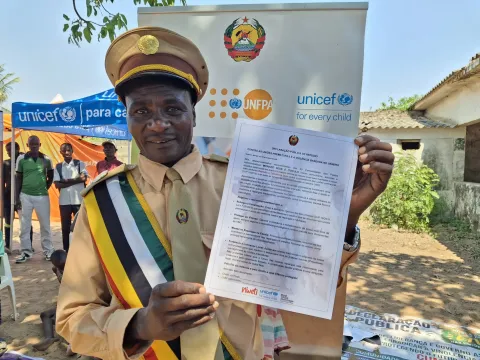
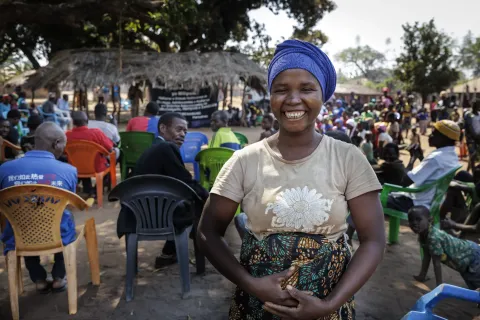
Milange, Zambezia - Since becoming a traditional leader in 2014, Queen Joana Viline Togua Machel has made protecting girls from child marriage one of her priorities. Under her leadership, communities in Milange district have helped dissolve 244 child marriages, giving girls another chance to continue their education and choose their own futures.
Known as Queen Nhazombe, she is a mother of six and comes from a traditional leadership lineage spanning more than seven generations. Her authority extends across four Sapandas and nine Fumos, local administrative structures within the traditional leadership system.
Her efforts to tackle child marriage gained momentum in 2023, following a community meeting in Sapanda Mbize to introduce an initiative supported by the UNFPA-UNICEF Global Programme to End Child Marriage.
Determined to put Mozambique's Law No. 19/2019, which prohibits child marriage, into practice, Queen Nhazombe began mobilising local chiefs, community leaders, families and young people.
“Our role is to protect children. The law exists to be implemented and to safeguard the future of our girls,” she says.
That year, community efforts helped dissolve 103 child marriages. In 2024, another 76 marriages were dissolved, followed by 59 in 2025. In 2026, six more cases were identified and addressed in Siliua, a community subsequently recognised as free from child marriage.
For Queen Nhazombe, the impact goes beyond the figures.
“It means more girls remain in school and have the opportunity to choose their own future,” she says.
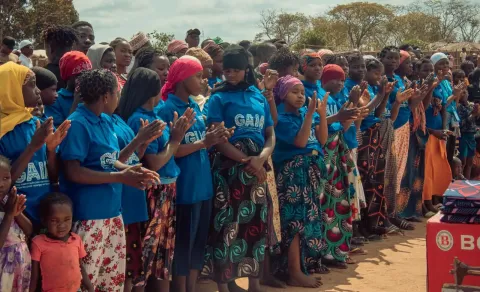
The progress has been driven by community dialogues, awareness-raising activities, school reintegration efforts and stronger child protection services. Community Child Protection Committees in Cartela and Nhazombe have also been revitalised to help identify and respond to cases.
When a suspected child marriage is identified, community leaders first engage with the families involved. If the situation cannot be resolved, the case is referred to formal child protection services, where girls can receive support and alleged perpetrators can be referred to the authorities.
Queen Nhazombe keeps detailed records of cases in her area to monitor progress and identify where further action is needed.
“The secret is working together. Communities, government, and partners must move in the same direction,” she explains.
Her commitment to protecting children is matched by her determination to continue learning.
Having spent much of her life in Malawi during Mozambique's civil war, she spoke only Chichewa when she became a traditional leader. She subsequently learned Portuguese and returned to education. Today, she is studying for a law degree to strengthen her ability to defend the rights of children and women.
Despite poor roads and limited transport, she continues travelling to remote communities, often using her own resources to follow up on cases and raise awareness.
She also advocates for the return of mobile courts to improve access to justice in rural areas.
For Queen Nhazombe, the work is far from over. She remains determined to ensure that more girls can stay in school, enjoy their childhood and make their own decisions about their futures.
UNICEF and UNFPA support efforts to prevent and respond to child marriage through the Global Programme to End Child Marriage, with generous funding from the Governments of Belgium, Canada, Italy, the Netherlands, Norway and the United Kingdom, and Zonta International.