Back home, back in school, building a future
UNICEF supports the programme for children formerly associated with armed groups in Cabo Delgado with the generous support of the Government of Canada.

Note: Names and identifying details in this story have been changed or withheld to protect the identities and safety of the children and family members involved.
Cabo Delgado, Mozambique - Seventeen-year-old João smiles as he talks about school. He is in Grade 5, Portuguese is his favourite subject, and he is proud of his results.
“I like being back at school,” he says. “I’m getting good grades and I’ve made new friends.”
After classes, João is learning to repair refrigerators and air conditioners through an internship.
“I can fix them. I can rebuild them,” he says. “I want to get a job doing this when I finish school.”
For João and his family, these ordinary plans for the future carry special meaning.
Several years ago, an armed group attacked João’s village. His father was killed, and João and his brother were taken away. João spent nearly three years associated with the armed group, moving through different parts of Cabo Delgado. His brother has still not returned.
When João eventually came into contact with the authorities, he was injured and needed medical treatment.
Through a programme supporting children formerly associated with armed groups, João received medical and psychosocial support. Family tracing helped locate his relatives and reunite him with his mother and grandparents.
Reintegration was not easy.
“When he first returned, he was angry and aggressive,” says Casemiro, who works with FDC, a UNICEF partner organization that is supporting João’s reintegration. “Now he is back with his family and back in school and doing really well.”
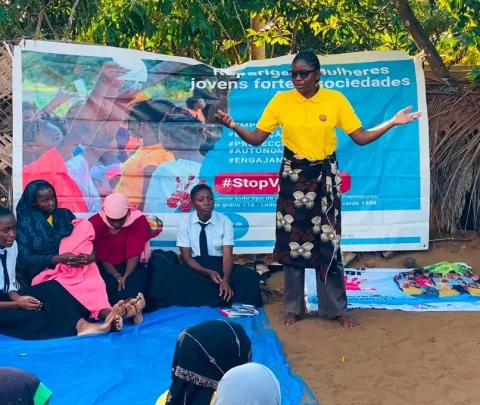
The programme provides individual counselling, group therapy, case management, family tracing, and support to return to school. Children can also attend multipurpose centres, where they play football, dance, sing, draw, read and spend time with their peers.
“I like playing Ludo and football, and reading and writing,” João says. His favourite part has been “meeting other children and playing with them, having fun together.”
Older adolescents can also take part in practical training to prepare for future employment. João chose refrigeration and air-conditioning repair.
His grandmother has watched his confidence grow.
“I have seen a very positive change in him recently,” she says. “He really likes to work with electrical things and knows how to fix them. I see a good future ahead for him.”
But the family’s happiness remains mixed with uncertainty.
“We are very happy João is home, but it is still very difficult because one grandson is still away with the armed men,” she says.
Across Cabo Delgado, conflict has exposed thousands of children to violence, displacement, family separation and the risk of abduction, recruitment and use and other grave violations by armed groups.
In 2026, 81 children were registered with the programme at the time of this interview. Children may be referred by community leaders, community child protection committees or authorities after leaving armed groups.
“We create the bridge between the child and the services,” Casemiro says.
For João, rebuilding his life now means focusing on school, his family and the future.
“I am really happy to be home now and reunited with my family,” he says. “I have learned a lot of new things.”
Alongside his hopes of working with refrigerators and air conditioners, he has another ambition.
“I also want to learn how to drive and have a car when I grow up.”
His grandmother is hopeful.
“It is up to him now,” she says. “He needs to keep working hard.”
UNICEF supports the programme for children formerly associated with armed groups in Cabo Delgado with the generous support of the Government of Canada.