When theatre starts a conversation on child marriage
Through the UNICEF-supported Global Programme to End Child Marriage and the Rapariga Biz Programme, 159 communities have publicly declared themselves free of child marriage.

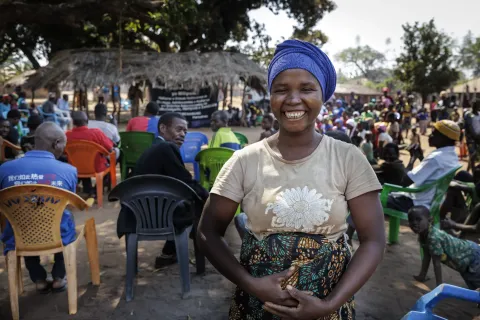
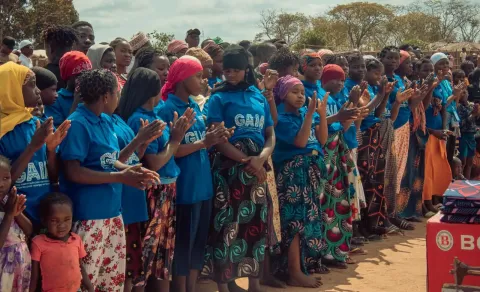
Angoche, Nampula - By three in the afternoon on Wednesday, 29 July, the shade beneath the trees had become the community gathering place.
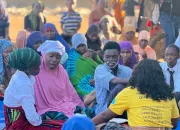
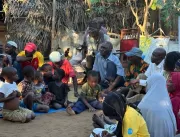
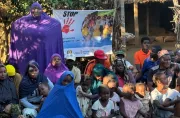
Banners reading “End Violence Against Children” and “End Child Marriage” hung overhead as families filled blue tarpaulins spread across the sand. Those arriving after the tarpaulins filled sat on the bare ground rather than turn back.
At the centre of the gathering was a nine-person theatre group with a story about child marriage. Their performance had taken only half an hour to create and stage, but the conversation it opened would continue after the actors finished.
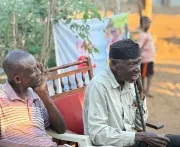
The intergenerational dialogue was led by peer educators from the Horizonte Azul Sociocultural Association (ASCHA), with support from UNICEF. Using Theatre of the Oppressed techniques, they encouraged parents, young people and community leaders to discuss child marriage together.
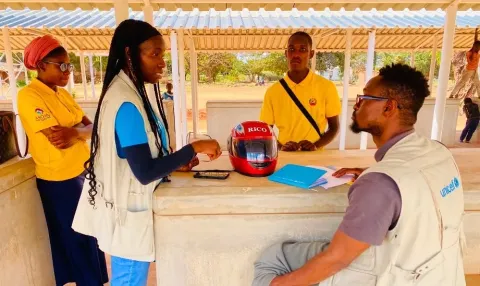
Among those guiding the discussion was Aniceta Januario Sábado, 27, a peer educator and mentor with ASCHA. Dressed in a yellow polo shirt, she addressed a circle of people ranging from six to 60 years old.
I met Aniceta the following day during a Public Community Declaration ceremony in neighbouring Boila-Nametória to understand how the performance came together. Her role was to portray a community mentor, known locally as a maraparede, guiding the story from within.
“Why theatre?” I asked.
“First, to grab the community’s attention,” she said.
Unlike a formal meeting, she explained, theatre brings together people who might not otherwise gather to watch the same story unfold.
“We needed something visual that people would remember, something they’d keep talking about even after the dialogue ended,” she said.
When I asked how long it took to prepare the performance, her answer was simple.
“On average, it takes us about 30 minutes to create a piece and perform it. Thirty minutes, nine people, start to finish,” she said.
There is no single writer. The performers develop each play together, drawing on situations they have witnessed. They build characters inspired by parents, teachers, traditional healers and community leaders, making the stories familiar to their audiences.
The group has staged plays on several issues, including gender-based violence, but its members often return to child marriage.
“We looked more at our own community,” Aniceta said. “Some places still haven’t normalized that child marriage is a crime, and people still don’t take seriously the harm it causes girls.”
According to the 2022/23 Demographic and Health Survey, 48.4 per cent of women aged 20 to 24 in Mozambique were married or in a union before turning 18. In Nampula Province, the figure rises to 55.9 per cent.
For Aniceta, the most important part begins after the performance.
She recalled fathers raising subjects that rarely surface in school meetings, including questions about contraceptive implants. The play created space for concerns parents might not raise in more formal settings.
“Creating that play made some parents bring forward information that was very important to us,” she said.
Not everyone agrees with the group’s message. When discussions become difficult, the performers do not try to answer every question immediately. Instead, they calm the discussion and record the concerns. Some questions are later addressed by government representatives, while others become the focus of follow-up dialogues.
Through the UNICEF-supported Global Programme to End Child Marriage and the Rapariga Biz Programme, 159 communities have publicly declared themselves free of child marriage.
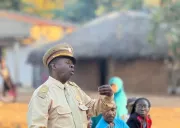
At the ceremony in Boila-Nametória, a traditional leader told those gathered: “From today, no child in our community should be forced into marriage. Our responsibility is to protect them and make sure they stay in school.”
For Aniceta and the other performers, the work continues through the questions raised, the disagreements carried forward and the conversations that begin when nine people turn familiar experiences into a story.
This activity was supported by the UNICEF-UNFPA Global Programme to End Child Marriage, funded by the Governments of Canada, Italy, the Netherlands, Norway and the United Kingdom, and Zonta International.