UNICEF WASH: Challenges and Responses in Combating the Cholera Outbreak in Angola.
Prevention measures and treatments are implemented to control the spread of the disease.

- Portuguese
- English
Since the first case was recorded on January 7, 2025, Angola has faced a cholera outbreak that has spread rapidly, leaving a trail of concern in communities. With more than three thousand confirmed cases so far, the outbreak has mainly affected the provinces of Luanda, Bengo, Icolo and Bengo, Huambo, Malanje, zaire, and Huíla.
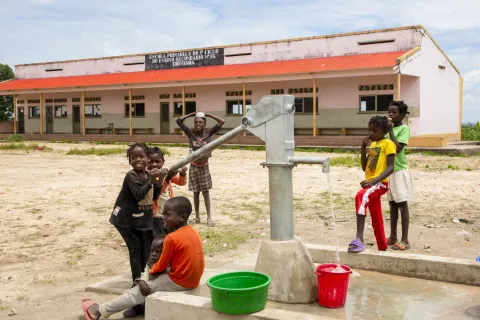
The situation is particularly serious in the municipality of Cacuaco, Luanda province, where the lack of drinking water, hygiene, and basic sanitation has accelerated the spread of the disease. Entire families live at risk, without access to adequate means to treat water,r and many without even understanding the risks and origin of the disease. Children in the most affected age group are 2 to 5 years old, followed by the 10- to 14-year-old age group.
In the face of this health emergency, the Ministry of Health, in collaboration with UNICEF and the World Health Organization, have played an important role in combating cholera by providing essential communication materials for behavior change, and for water treatment and hygiene such as calcium hypochlorite, bleach, 20L water drums, soap, and residual chlorine and field PH test kits to monitor water quality.
Cholera Treatment Centers (CTCs) Were inaugurated in various areas of Luanda as part of this collaboration. These centers have been an essential line of defense to ensure that infected patients receive the emergency treatment needed in their locality.
With oral rehydration units, vital medicines, and appropriate medical equipment, CTCs have been strategically placed in the most affected areas, such as Cacuaco, to reduce mortality and facilitate access to immediate medical care.
In addition to the immediate response, UNICEF in support of the Angolan Government has also invested heavily in prevention, community mobilization, and training of volunteers to ensure that information and solutions reach those who need it most.

Community mobilization: knowledge saves lives
In the most affected neighborhoods, information has been one of the most powerful weapons against cholera. Through awareness campaigns, UNICEF together with WHO and the Ministry of Health have been working hand in hand with community leaders, teachers, and health workers, to ensure that the messages reach everyone.
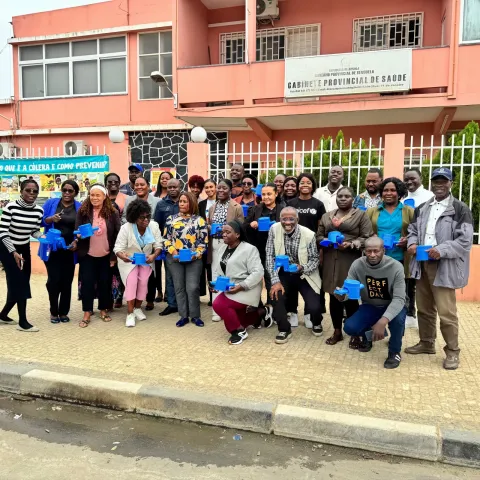
ADECOS (Association for Community and Health Development), created by the Angolan Government in partnership with UNICEF and WHO, has played a key role in raising awareness in the community, teaching and encouraging good hygiene practices, and ensuring access to information in a clear and accessible way.
Rosalina Graciano is an example of the impact of this work. As an agent of ADECOS (Community and Health Development Agents), he walks the streets of Cacuaco daily, door to door, teaching basic biosecurity measures.
"When the outbreak started, many families didn't know what to do. Today, we mainly teach women and children how to treat water, wash their hands properly and identify the first symptoms." Spoke.

The impact of ADECOS on communities has been visible, especially in the most affected areas. Through continuous work of awareness and education, they have promoted changes in hygiene habits and water treatment. In addition, by involving the residents themselves in the process, they have strengthened the sense of responsibility and encouraged the population to face this public health problem more effectively.
Alexandre João, a resident of the Ângelo neighborhood in the Municipality of Cacuaco, reported the changes in his neighborhood since the implementation of community mobilization:
"In the beginning, there was a lot of fear and misinformation. But since the awareness began, people have become more careful. We don't see so many sick children here in the neighborhood anymore."

Community leader Ntsambo Augusto reinforced the importance of mobilization:
"Cholera is not only fought with medicine, but also with knowledge. We have promoted meetings, lectures and even campaigns in churches to ensure that everyone knows how to protect themselves. Everyone does their part".

Cunha Miranda, president of the Residents' Association of the Havemos de Voltar neighborhood, one of the neighborhoods affected by Cholera, appealed for more resources, but also praised the strength of the Angolan people:
"Our neighborhood faces great difficulties in water supply, we are facing a crisis within another crisis, but we will not give up. If we remain united, we can stop the outbreak."
The Resident also appealed to pay greater attention to the most affected areas to strengthen the water supply.

The fight against cholera in Angola is still far from over, but the response has been positive. To ensure the safety of the most vulnerable communities, it is essential that everyone continues to adopt prevention measures.
Proper hygiene, which involves washing hands frequently with soap and water or ash, treating water at home before consuming it, and avoiding the consumption of raw or unsensitized food, are simple but vital steps to break the chain of transmission. In addition, it is essential that communities follow the guidelines of the health authorities, participate in awareness campaigns, and seek treatment immediately if symptoms appear.