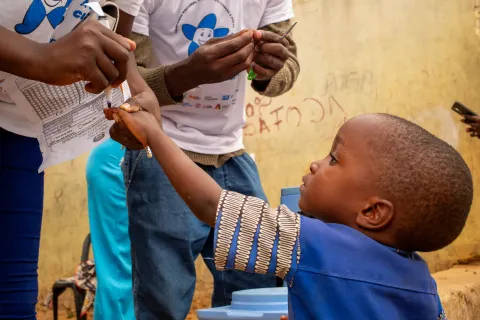
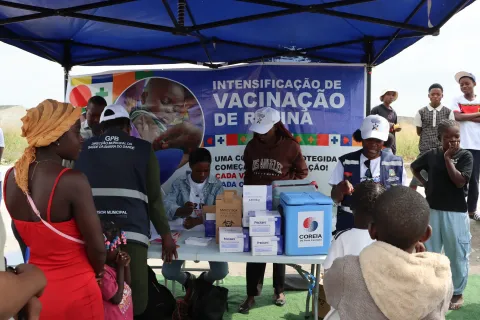
Vaccination campaign in Lunda Norte, two million doses of cholera vaccines.
Angola has received 2 million oral cholera vaccines, in a joint effort between the Ministry of Health, Gavi, WHO and UNICEF.

- Portuguese
- English
On July 4, 2025, Angola received 2 million oral cholera vaccines, in a joint effort between the Ministry of Health, Gavi – Global Alliance for Vaccines, the World Health Organization (WHO), UNICEF, the European Union and other health sector partners.
"We are living at a crucial moment in the fight against cholera. The arrival of these vaccines strengthens our integrated response, allowing us to act more effectively in municipalities with active outbreaks and preventively protect populations at risk. Cholera vaccines are not a stand-alone solution, but a powerful tool, used at the right time, in conjunction with other health measures," said Angola's Minister of Health, Dr. Sílvia Lutucuta.
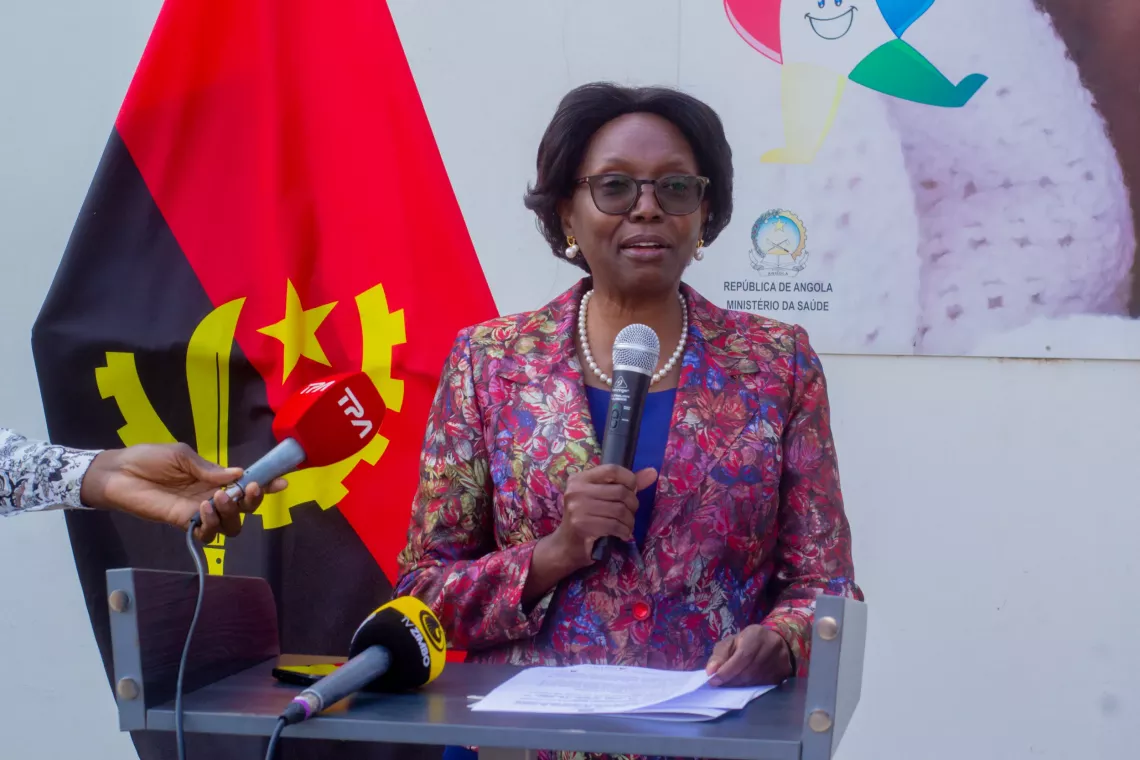
The ceremony took place in Luanda and was attended by Her Excellency, Minister of Health, representatives of the United Nations, WHO and UNICEF.
"Allow me also to thank Gavi for its support, recalling that this generous donation reinforces a previous support that allowed the acquisition of about 300 thousand doses of cholera vaccine. " declared UNICEF Representative Antero de Pina.
Antero de Pina also points out that "Gavi's support has also made it possible to reinforce the planning actions and the entire operational component of the vaccination campaigns carried out to date. With these more than two million doses now received, it will be possible to increase the vaccination rate and thus ensure that more people can be protected against cholera."

Between January and June 28, 2025, Angola recorded a total of 27,008 cholera cases and 759 deaths, with a cumulative case fatality rate of 2.8%. The outbreak has affected 18 of the 21 provinces and more than 150 municipalities. In recent weeks, the country has reported 352 new cases and 7 deaths, representing a reduction of 47% and 30%, respectively, compared to previous weeks. The provinces with the highest number of cases in the last week were Lunda Norte, Cuanza Sul and Huíla.
The arrival of the 2 million oral cholera vaccines came at a decisive moment, when there is a sustained reduction in the number of cases and deaths. The current dry season offers a unique window of opportunity to control cholera transmission before the rainy season begins.
In this sense, the Angolan Ministry of Health carried out, on July 12, a vaccination campaign against cholera in some priority municipalities in the provinces of Cabinda, Cuanza Sul, Huíla, Lunda Norte, Namibe and Zaire, where there is active transmission of cholera. The selected municipalities were defined as priorities based on daily epidemiological analyses carried out by the health authorities.
This campaign covers all people from 1 year of age and will be part of a broader response, including enhanced surveillance, access to safe water and sanitation, timely handling of cases, as well as risk communication and community engagement activities.

The vaccine used was Euvichol-S, oral and single-dose, recently donated by the Global Alliance for Vaccines (Gavi). It is a vaccine made available through a global allocation process coordinated by the International Coordination Group (ICG), following negotiations with Gavi at the highest level, and is part of a joint effort to support countries with active outbreaks and high risk of transmission.
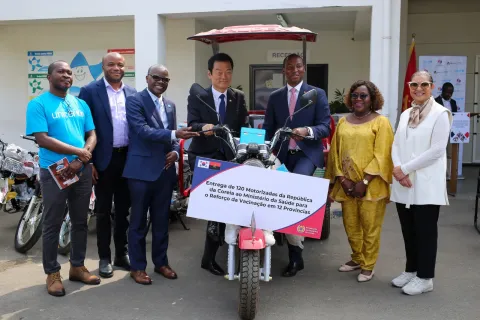
"We want to take this opportunity to thank the availability and financial and logistical support of partners such as the European Union, Gavi and the Government of Korea, who have joined UNICEF to support the Government of Angola in this fight from the first moments of the outbreak. " UNICEF representative Antero de Pina during the vaccination campaign in Cafunfo, Lunda Norte province.

Antero de Pina also points out that but it is important to remember: the vaccine, by itself, is not enough. We must continue to promote access to clean water, water treatment, the use of safe latrines and frequent handwashing. Prevention starts at home and depends on the active participation of each community.
We must be faster than cholera to save lives, especially the lives of our children.