FONAS 2025.
Strengthening Coordination in Angola’s WASH Sector.

- Portuguese
- English
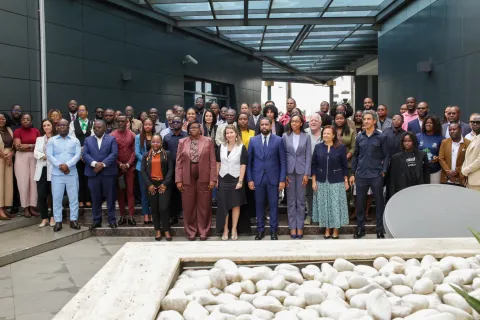
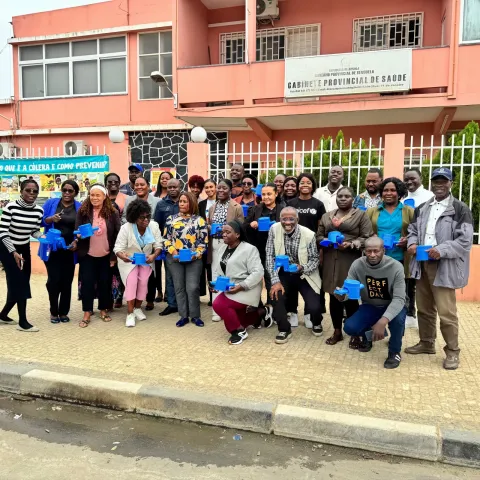
On October 14–15, Luanda hosted FONAS 2025, Angola’s national forum for water, sanitation, and hygiene—known as the WASH sector. Organized by MINEA, the Ministry of Energy and Water, with support from UNICEF, the event brought together leaders from government, education, health, agriculture, civil society, and development partners to strengthen coordination, integrate efforts across the sector, and drive progress.
“FONAS is needed because it brings stakeholders from the Angolan WASH sector into one space. This year’s forum stood out because all the fundamental sectors in the field were actively involved in tackling urgent issues together—like how to finance sanitation in the face of a cholera outbreak” said Edson Monteiro, WASH Project Officer at UNICEF.
A key theme was the need to build human capacity. Angola faces a shortage of trained professionals in WASH, and this year’s forum emphasized the role of universities in preparing the next generation.
“We’re not just talking about infrastructure—we’re talking about people. FONAS helps us ask how the education system can support the sector, not only through research but by training technical professionals who are ready to contribute” Monteiro added.

The World Bank played a central role in supporting MINEA, alongside partners such as UNICEF, the African Development Bank, and the French Development Agency. Their involvement extended beyond financing, contributing global expertise, and helping shape a long-term action plan.
“FONAS is a unique platform with people at the forefront of these efforts. It’s where we define priorities for short-, medium-, and long-term interventions—and where critical gaps are finally being addressed. Identifying the problems is the first big step, and that is the most important objective of FONAS 2025,” said Marco Aguero, Senior Specialist at the World Bank.

This year’s discussions focused on identifying weaknesses in development, sustainability, and legal frameworks—laying the groundwork for future reforms. The presence of national and international keynote speakers from Mozambique, Portugal, and Spain enriched the dialogue, enabling a valuable exchange of experiences on institutional models and sector financing.
FONAS 2025 also aligned with the global meeting of ministers organized by Sanitation and Water for All (SWA), held in Madrid on October 22–23. This connection reinforced Angola’s active engagement in the international WASH agenda and highlighted its commitment to global collaboration.
The participation of managers from all 18 public water and sanitation companies (EPASs) across Angola, along with representatives from several municipal administrations, underscored the event’s national reach and relevance—bringing local voices into the conversation on sector-wide transformation.
“FONAS 2025 was a milestone for Angola’s WASH sector, it demonstrated the country’s commitment to inclusive dialogue and institutional strengthening, while connecting national efforts to global platforms like SWA. The presence of EPAS managers and municipal leaders shows that we’re building progress from the ground up” said Marcelo Velha, Project Management Specialist at UNICEF Angola.

FONAS 2025 wasn’t just a conference—it was a moment of alignment. By connecting sectors and encouraging collaboration, Angola is laying the foundation for stronger, more sustainable water and sanitation services across the country.
“We still see duplication in the WASH sector. We don’t always know who is doing what and where. That’s why coordination—within sectors and between partners—is essential” Monteiro noted.
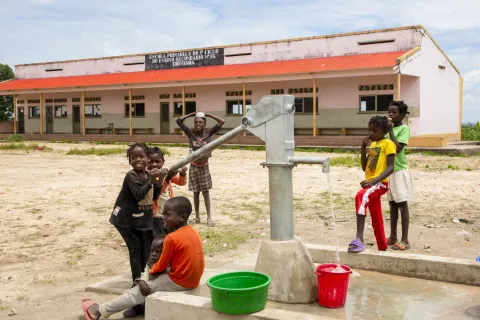
As Angola continues to face challenges like cholera outbreaks and rural water access, FONAS remains a vital space for shared solutions and long-term impact.