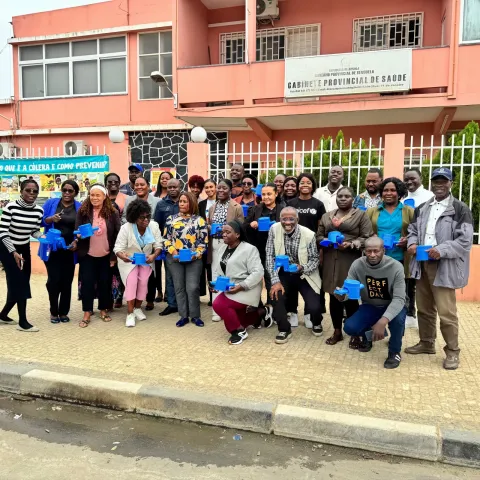
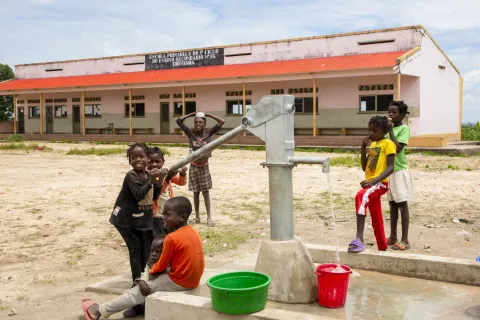
Training on water treatment and hygiene in the market of the thirty in Icolo and Bengo.
Training of community agents and sanitation actions in the markets contribute to prevention in the fight against cholera.
- Portuguese
- English
Lack of access to clean water and adequate sanitation in large markets can contribute to the spread of the disease. For this reason, health authorities have developed several actions in the markets, particularly in the areas of greatest risk.
One of the markets to benefit from these actions is Mercado do Trinta. It is a market located in the province of Icolo and Bengo, an area of great commercial movement, particularly food, and also a critical point for the spread of cholera, especially during outbreaks such as the one Angola has been facing since January 2025.
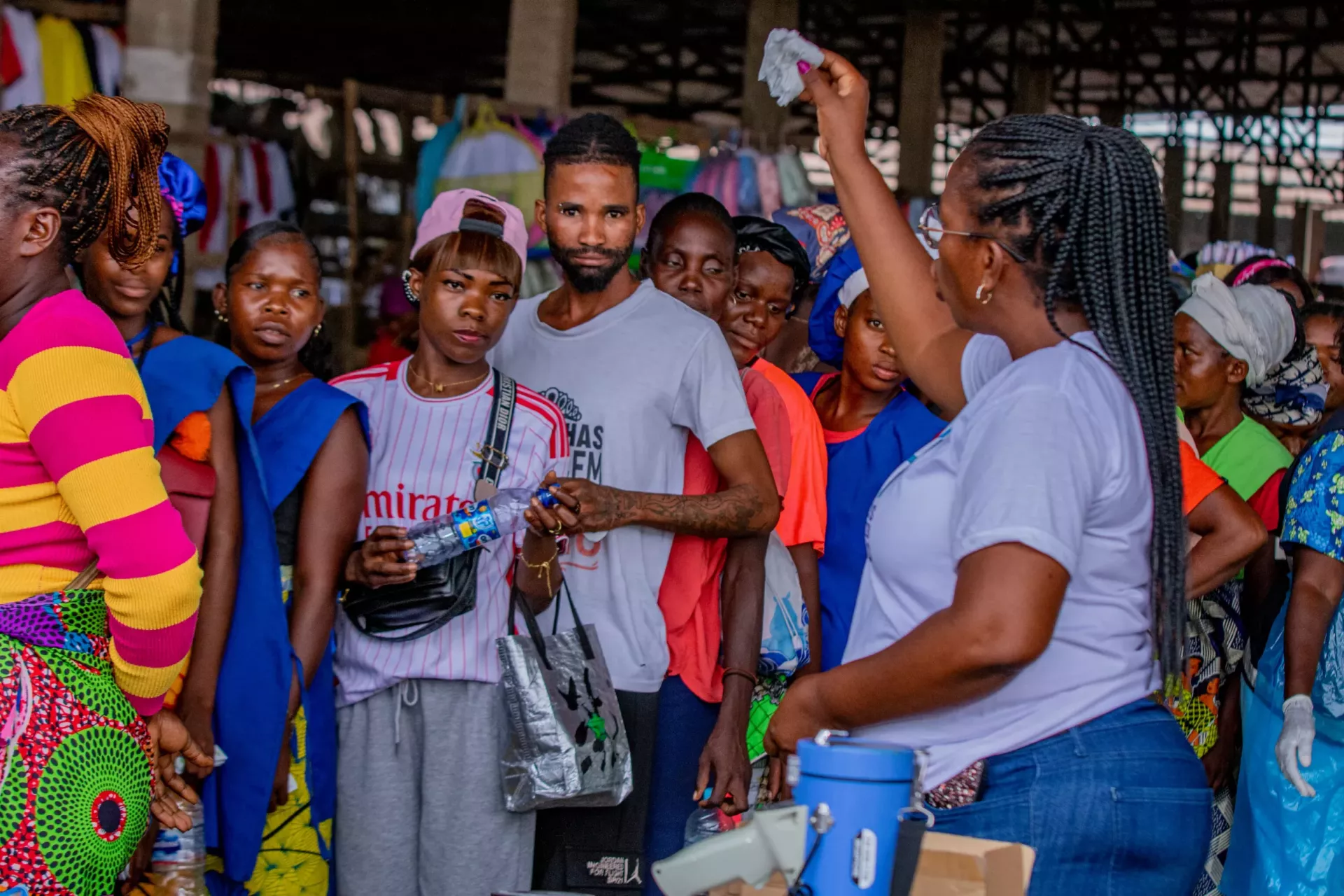
According to Luzolo Michel, head of the Public Health Section of the municipality of Sequele, the work in the market consists of promoting changes in behaviors related to hygiene and water treatment, using educational materials and carrying out community activities.
"We publicized it, entered the communities where we have been teaching and met with all the coordinators to discuss how to prepare the calcium hypochlorite mother solution for water treatment."
In collaboration with UNICEF and thanks to the support of The Church of Jesus Christ of Latter-day Saints, the Ministry of Health distributed products such as calcium hypochlorite and bleach to purify the water consumed by the population.
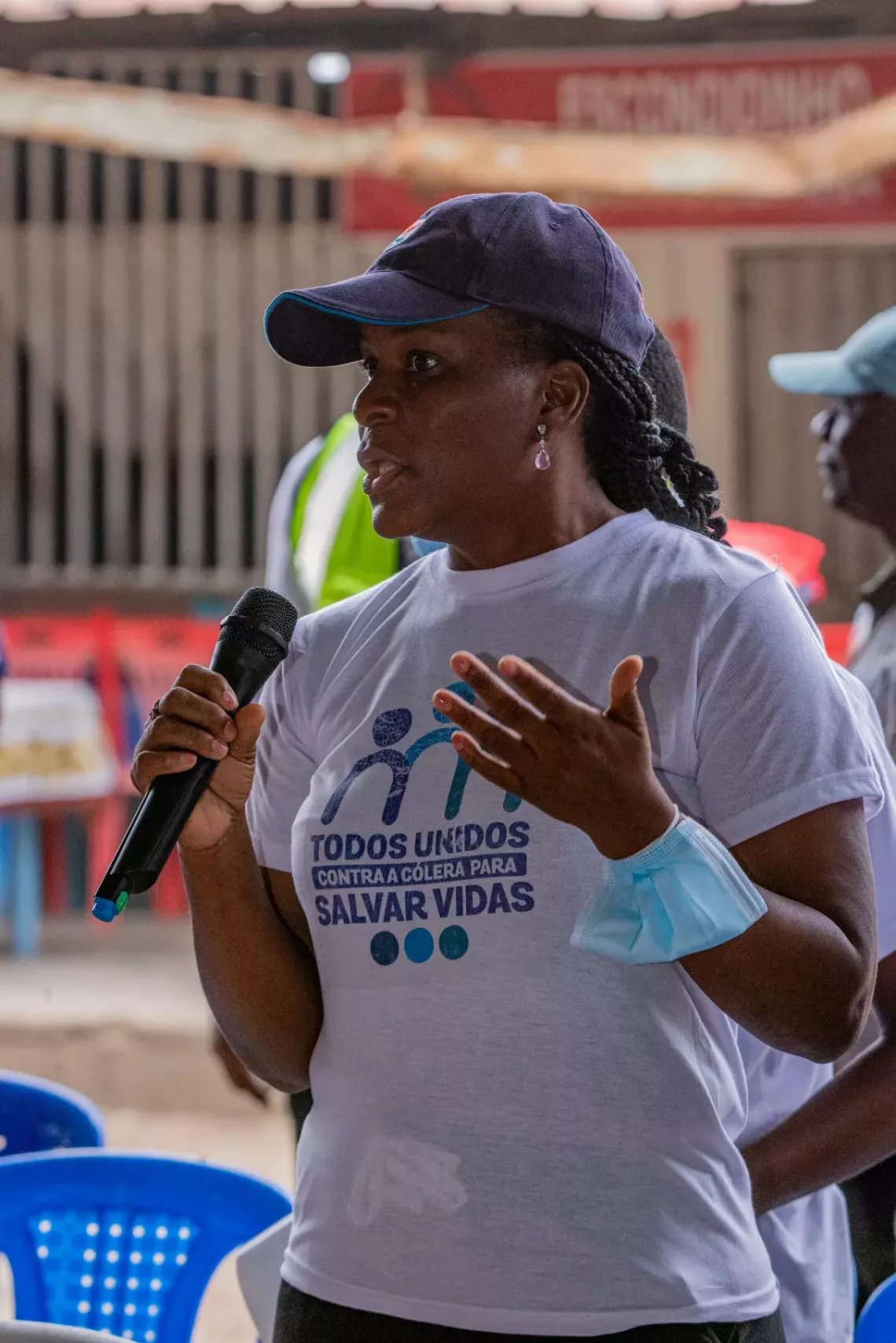
Daily, social mobilizers, trained for this purpose, visit the stands with megaphones and leaflets in their hands to transmit life-saving information. Another group holds lectures in a space prepared for this purpose, where they address the cleanliness of the market, the hygiene of the food sold, and the consumption of treated water.
"The market's activity also serves to alert workers to the signs and symptoms of cholera, so that they can be quickly identified and referred to health units".
Collaboration between local authorities, UNICEF and the community has been essential to ensure the effectiveness of the measures implemented.