National Workshop: Presentation of the National Early Childhood Policy in Angola.
Government and partners address challenges and opportunities to implement the Policy and reinforce commitment to early childhood development.

- Portuguese
- English
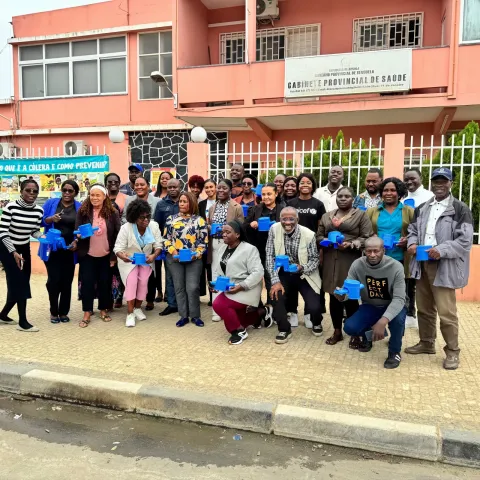
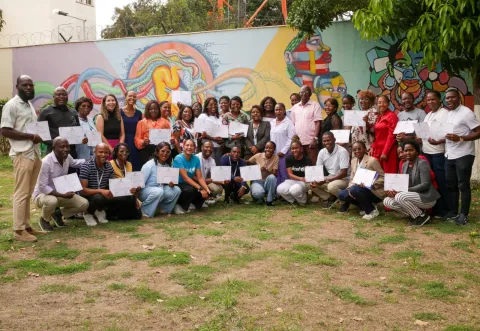
Early childhood development (ECD) has been a growing priority in Angola, given the lasting impact that the early years of life have on children's health, education, and well-being. To strengthen this agenda, the Ministry of Social Action, Family and Promotion of Women (MASFAMU), in collaboration with UNICEF, held on September 13, in Luanda, a national workshop to present the National Early Childhood Policy (PNPI), a document prepared over 15 years, and which seeks to meet the rights of children from birth.
This event, which Secretaries of State attended from different ministerial departments, the UNICEF Representative in Angola, civil society organizations, and representatives of municipal administrations, highlighted the importance of ensuring that Angolan children grow up in healthy, protected environments with access to essential care, reaffirming the Angolan government's commitment to promoting the integral development of children, with a special focus on the first five years of life.
During the event, several challenges and opportunities for promoting child development were addressed. Among the challenges, for example, the high neonatal mortality and the high rates of teenage pregnancy stand out.
These factors undermine children's well-being and their chances of reaching their full potential. In addition, issues such as malnutrition, maltreatment, limited access to health care and education, and violence against children were highlighted as significant obstacles.
Alcina Kindanda, Secretary of State for Family and Promotion of Women, reinforced the importance of a joint effort to protect children from 0 to 5 years of age. "We can and must do much more to improve the child protection system through a concerted effort."
"The knowledge acquired in this workshop, combined with the exchange of experiences, should inspire new ideas and initiatives that allow the unreserved realization of children's rights," he said.

In his speech, Antero de Pina, UNICEF representative in Angola, stressed that early childhood development must be a key priority worldwide.
"Investing in early childhood development is not just good practice; It is a strategic need that will have a huge return for society," he said.
Antero de Pina also highlighted that in Angola many challenges continue to affect children's development, with limited access to health care, nutrition, and protection, which prevents them from reaching their full potential.

Opportunities for policy implementation
During the event, some implemented interventions with some impact on the children's lives were presented. This is the case of the multisectoral approach that has already benefited several children in several provinces of the country, called Todos Unidos pela Primeira Infância (TUPPI), a community initiative launched in 2018 by the Ministry of Education in partnership with UNICEF.
The program aims to promote the integral development of children from zero to six years old and prepare families to carry out educational actions at home, contributing to the reduction of repetition and school dropout rates in Primary Education.
The children who participate in the TUPPI, from three months to five years old, do not fail or give up, which shows the positive impact of this type of school education in ensuring educational quality. However, there are still challenges to be faced, such as care that does not reach the desired levels.

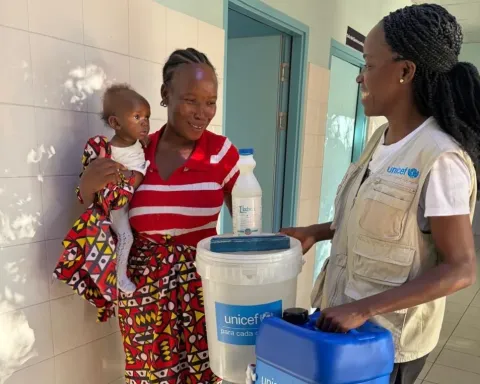
In the field of health, the workshop also addressed the importance of ensuring that children have access to primary health care, such as vaccination, growth monitoring, and promotion of healthy eating, with an emphasis on the implementation of breastfeeding programs and combating malnutrition.
The document also includes health care and adequate social conditions for pregnant women, free and quality access to health and nutrition services, including the inclusion of HIV-positive pregnant women in the Program for the Prevention of Maternal-Fetal Transmission (PTMF). Care for children with disabilities or special needs and protection against social, cultural, or religious practices that harm children's full development are also highlighted.
The PNPI establishes a set of guidelines and specific objectives that aim to ensure the full development of children in Angola, involving actors such as families, technicians, civil society, and State institutions. Among the priority actions are the strengthening of neonatal and obstetric care, the promotion of breastfeeding, the prevention of malnutrition and anemia, and the guarantee of access to quality preschool education.
The document also proposes the creation of a more robust child protection system, which integrates the action of various institutions and involves the community in safeguarding the rights of minors. Avoidance of paternity, violence against children, and accusations of witchcraft against children under five years of age were mentioned as practices that need a more coordinated and incisive response.
The PNPI presentation workshop reinforced the commitment of the Government and its partners to prioritize early childhood development as an essential strategy for the future of the country. The focus is now on the effective implementation of the proposed policies, with the involvement of all actors in society. Ensuring that Angolan children are born, grow up, and develop in dignified conditions is a priority that, as mentioned by the participants, will bring benefits to the entire nation and to future generations.