Bairro José Tchindongo António, a community that became a family.
The transformative power between authorities, community and partners.

- Portuguese
- English
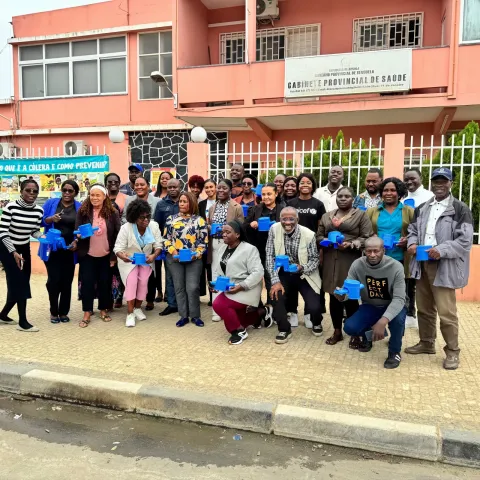
The José Tchindongo António neighborhood, known locally as KM 19, in the municipality of Tômbwa, Namibe province, underwent a profound transformation throughout 2025. What was once an area with few inhabitants became, in a short time, a reception space for hundreds of families relocated as a response to the cholera emergency registered in the municipality. The creation and expansion of the neighborhood represented an essential measure of immediate protection, but the physical change did not, by itself, eliminate the vulnerabilities that these families already faced.
Mostly composed of families whose main source of livelihood is artisanal fishing on the beaches of Cabo Negro and Rocha, the KM 19 community continued to deal with structural challenges related to access to basic services, health, education and child protection. To the pre-existing difficulties were added new barriers associated with the relocation process, requiring a more integrated, sustained and people-centred response, especially children.
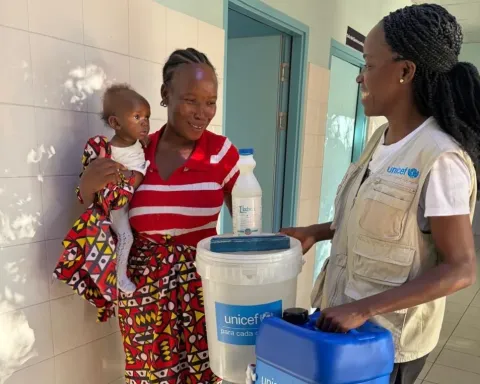
It was in this context that several actors mobilized to support the community in its process of reconstruction and adaptation. UNICEF, with the financial support of the European Union Humanitarian Aid (ECHO), and making available its experience in emergency contexts, supported the Municipal Directorate of Health (DMS) in the implementation of a health post in the neighborhood. This service, in partnership with PanAfricare, started to ensure essential care for the population, including the active screening of children with acute malnutrition carried out by Community Health Agents, ensuring timely referral and access to appropriate treatment.

At the same time, UNICEF supported the expansion of the educational response, with the creation of new classrooms in two tents installed in the local school, allowing to absorb the increase in the number of children and ensure the continuity of learning in a safer and more structured environment. However, as interventions progressed, it became increasingly clear that, despite this progress, important challenges persisted, in particular the vulnerability of children during the daytime, when many parents and caregivers are at sea or involved in fishing activities that provide for the family.
The response to this challenge was born from dialogue and articulation between partners, local authorities and the community itself. A social intervention plan was prepared and discussed with the Municipal Administration of Tômbwa, in a meeting held on February 26, which went beyond the protocol character and was affirmed as a true joint planning exercise. In this space, intervention strategies were defined, responsibilities were clarified and a common vision for the protection and well-being of the children of the neighbourhood was established. The Municipality's Social Action Directorate took the lead in the intervention, under the supervision of the Municipal Administration, reinforcing the role of local government in coordinating the response.

The next step was the direct engagement of the community. On March 4, representatives of the 24 blocks of the neighborhood met in a meeting led by Soba, with organizational support from the Organization of Youth Solidarity of the Neighborhood. In addition to the definition of implementation methodologies, the number of beneficiaries and the age group to be covered, this meeting confirmed something fundamental: the community's strong commitment to the protection of its children. Active participation, a sense of collective responsibility and a willingness to contribute were central elements of this process, reinforcing the sense of belonging and unity.
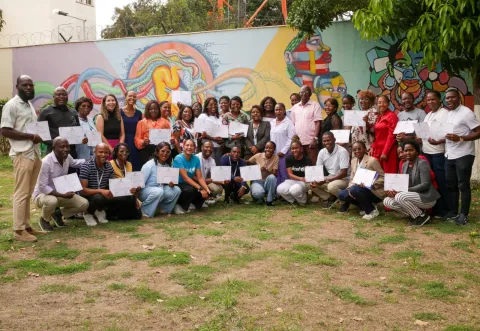
From 10 March, community mobilisation was intensified, allowing more than 300 children aged between 6 and 59 months to directly benefit, as well as their caregivers, especially mothers and those responsible for preparing food within the family. To ensure the quality of the intervention, four women from the community, including young people and mothers, were trained in cooking techniques, hygiene and food safety, as well as in appropriate nutritional combinations, using previously tested methodologies and materials. The training favored the use of local ingredients, demonstrating that it is possible to guarantee nutritious and balanced meals even in contexts of limited resources.
The children began to receive a daily meal, from Monday to Friday, at the local school facilities. In addition to food, caregivers and families benefit from regular information and education sessions on health and nutrition, water, sanitation and hygiene, and child development, reinforcing knowledge and practices essential for children's healthy growth.

The impacts of the intervention are already beginning to be clearly felt in the community, reflected in the improvement of children's well-being, the active involvement of caregivers and the feeling of hope shared by the residents of the José Tchindongo António neighborhood. The experience of KM 19 demonstrates that when local authorities, humanitarian partners and communities work together, even simple responses can generate profound and lasting change. A meal prepared with care, shared knowledge and a strong spirit of community solidarity show that protecting children is also about building a fairer and more resilient future for all.