Hygiene and dignity in schools.
Safe Haven Initiative promotes access to water and sanitation in schools in drought-affected areas of Cunene.

- Portuguese
- English
In 2019, UNICEF, with funding from Banco de Fomento Angola (BFA), launched the " Safe Haven" project, with the main objective of mitigating the impacts of drought in the municipality of Ombadja, Cunene province, through humanitarian support and the creation of sustainable social services, ensuring access to water, sanitation, nutrition, and other essential services for affected communities.
The drought in Cunene has been a recurring crisis, affecting thousands of people, especially children and women, by compromising food security and access to clean water. The project seeks to reduce the effects of this emergency by strengthening the resilience of communities by promoting long-term solutions to minimize the vulnerability of the local population and reinforce the commitment to ensuring decent sanitation and hygiene conditions for schools in Ombadja.
In this context, UNICEF, in partnership with the Non-Governmental Organization, World Vision, and the Municipal Administration of Ombadja, has started the construction of several latrines in several public schools in the municipality. Each facility will have six compartments: three for girls and three for boys, including accessibility for people with disabilities, thus contributing to the inclusion, dignity and health of students.
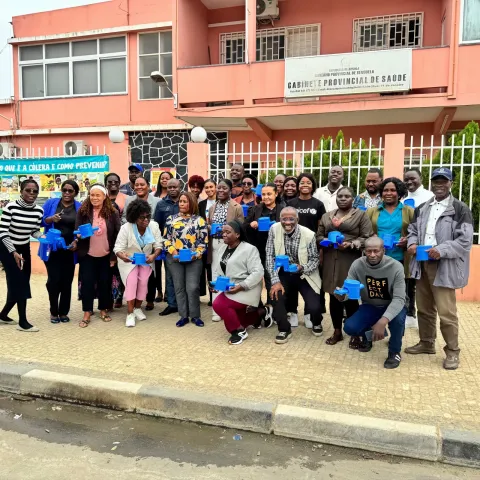
On 12 February, a team went to the municipality of Ombadja to carry out technical visits to two primary schools: Augusto Ngangula Primary School and Mujombe Primary School in order to monitor the progress of the construction of the latrines and ensure that the facilities are functional.
The lack of adequate sanitation facilities has been a persistent problem in Ombandja schools. With no alternatives, many children are forced to resort to the "bush" for their physiological needs, a situation that compromises not only hygiene, but also the dignity, health and physical integrity of students.
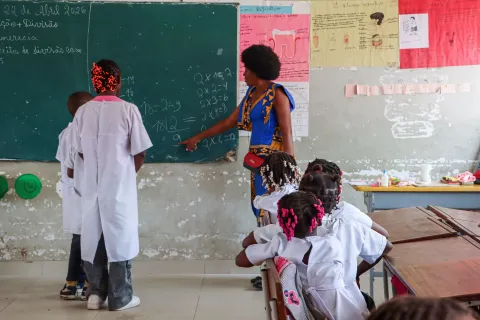
Thus, a combination of physical infrastructure and education will be key to ensuring that improvements have a lasting impact, reducing the risk of disease and promoting a safer and healthier school environment.
Edmundo Isaías, Teacher at Mujombe Primary School, expressed his satisfaction with the project:
“We have faced several challenges because we do not have latrines. Students are forced to leave the school grounds, which affects their well-being and even their safety. The construction of these latrines came at a good time, because it will greatly improve the hygiene of the school and allow children to learn in a healthier environment.”

The construction of the latrines is proceeding at a good pace, with technical recommendations already pointed out to ensure greater efficiency, durability and accessibility of the infrastructures.
According to Flávio Sajuluka, Water, Sanitation and Hygiene technician at World Vision, the works are in the final phase, expected to be completed in April this year.
The technician stated that "the impact of this project will be significant for the community, for the children of these schools and for society in general. In many of the local cultures, the issue of sanitation facilities is still a taboo."

Hygiene clubs in schools play an essential role in promoting good hygiene and sanitation practices. Composed of students and teachers, these groups raise awareness in the school community about hand washing, the proper use of latrines and menstrual hygiene, in addition to helping to keep sanitary facilities clean. Through educational campaigns, they encourage healthy habits that benefit both students and their families, contributing to a safer and healthier school environment.
"We are taking advantage of this initiative to promote awareness through hygiene clubs, encouraging changes in behavior with regard to hygiene and sanitation." Added Flávio Sajuluka.

The project also foresees the construction of 60 latrines, of which 24 will be new and 36 rehabilitated, according to the guidelines of the Municipal Directorate of Education. In Ombadja, 18 schools will be covered, some of which, although they will not receive new sanitary infrastructure, will benefit from educational programs in hygiene and sanitation.
In addition to the construction itself, this intervention aims to promote social and behavioral changes in schools and communities, aligning with the Community and School-Led Total Sanitation approach, promoted by UNICEF.
Through this project financed by Banco de Fomento Angola, 9.94700 children, including 5.092 girls and 4.855 boys, should benefit from a safer and more adequate learning environment, being protected against infections and diseases related to lack of water, sanitation and hygiene. The implementation of the new infrastructures and educational campaigns will contribute to the improvement of school results, ensuring that students can attend classes more frequently and in decent conditions.
In addition, the impact of the project will extend beyond schools, reaching at least 11,849 children from neighboring communities. Awareness-raising actions in Community-Led Total Sanitation and behavior change campaigns will transform habits and reinforce the importance of hygiene, benefiting not only students and teachers, but also families in the communities.