

Sanitation
Sanitation is essential to children’s survival and development.
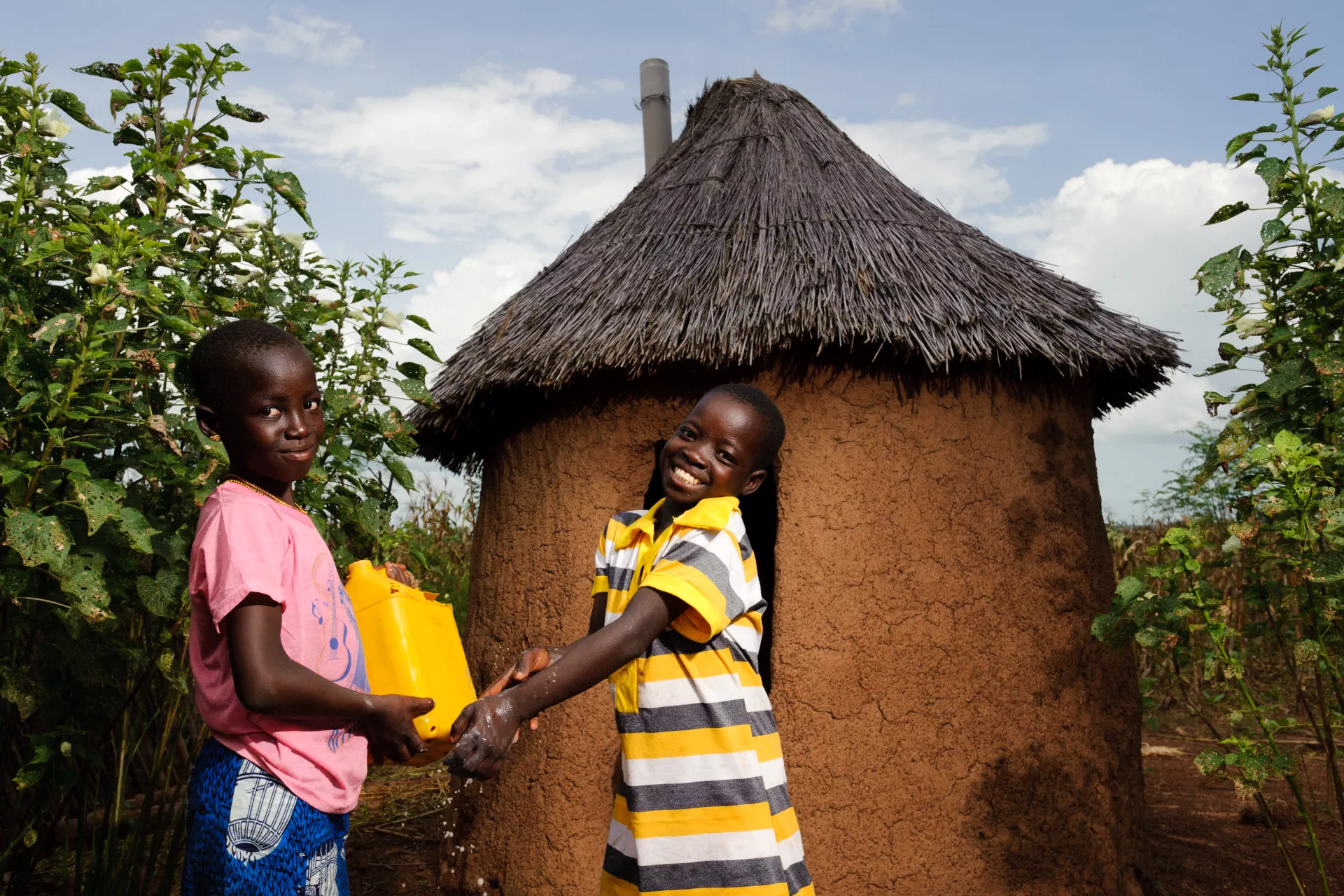
Sanitation is about more than just toilets. Behaviours, facilities and services together provide the hygienic environment children need to fight diseases and grow up healthy.
3.5 billion people still do not have safe sanitation services, while 419 million people practice “open defecation”.
Poor sanitation puts children at risk of childhood diseases and malnutrition that can impact their overall development, learning and, later in life, economic opportunities. While some parts of the world have improved access to sanitation, millions of children in poor and rural areas have been left behind.
Lack of sanitation can be a barrier to individual prosperity and sustainable development. When children, especially girls, cannot access private and decent sanitation facilities in their schools and learning environments, the right to education is threatened. As adults, wage earners who miss work due to illness may find themselves in financial peril. And when health systems become overwhelmed and productivity levels fall, entire economies suffer.
Without basic sanitation services, people have no choice but to use inadequate communal latrines or to practise open defecation, posing a risk to health and livelihoods.
Even in communities with toilets, waste containment may not be adequate. If they are difficult to clean or not designed or maintained to safely contain, transport and treat excreta, for example, waste might come into contact with people and the environment. These factors make sustainable development nearly impossible.
Open defecation
The practice of defecating in the open (such as in fields, bushes, or by bodies of water) can be devastating for public health.
Exposed faecal matter contaminates food, water and the environment, and can spread serious diseases, such as cholera. Coupled with poor hygiene practices, exposure to faecal matter remains a leading cause of child mortality, morbidity, undernutrition and stunting, and can negatively impact a child's cognitive development.
Harmful to community health and well-being, open defecation can also undermine individual dignity and safety – especially for girls and women. When forced to travel greater distances from home to reach adequate hygiene facilities, girls are women are put at greater risk of violence.
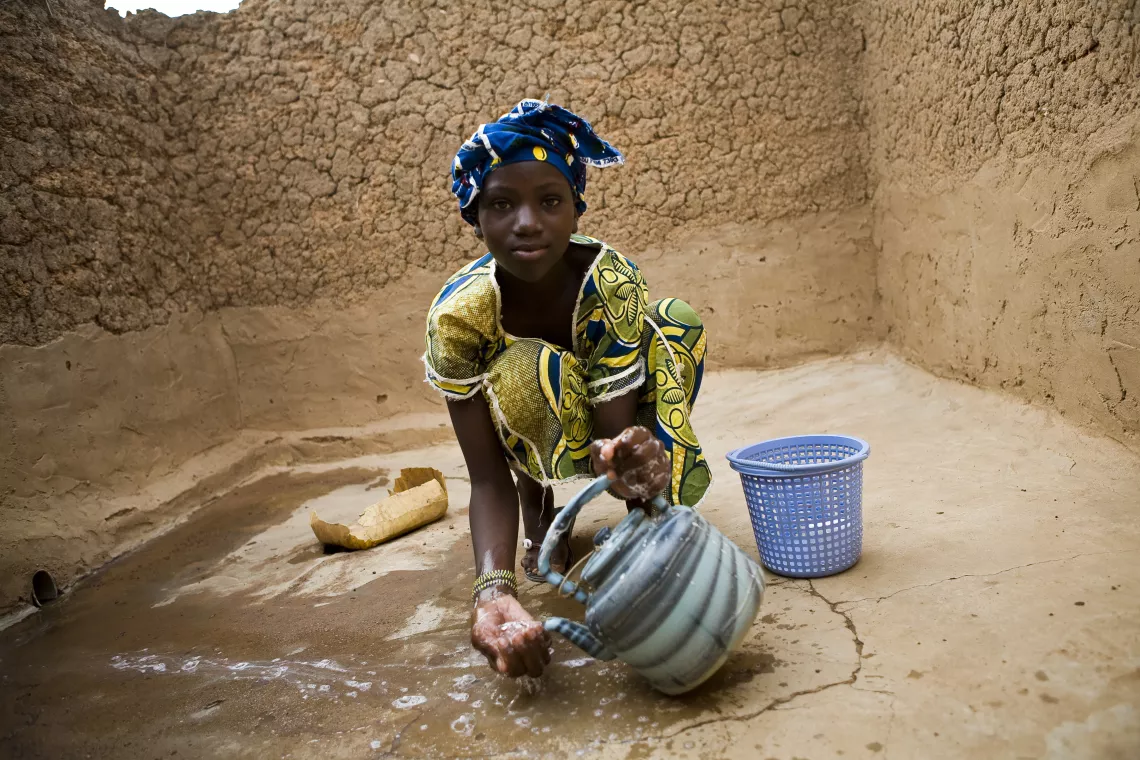
UNICEF's response
UNICEF is on the ground in more than 100 countries to provide safe sanitation for the world's most vulnerable communities in rural and urban areas, and during emergencies.
We mobilize communities, build markets for sanitation goods and services, and partner with governments to plan and finance sanitation services.
In emergencies, UNICEF provides urgent relief to communities and nations threatened by disrupted services and the risk of disease outbreak.
We also support innovation in sanitation; improving sanitation technology; ensuring basic toilets are affordable, accessible and safe; and finding effective, sustainable solutions for sanitation challenges that harm children.
Ending open defecation
Ongoing investment in sanitation services by households, communities and governments is necessary to shift community behaviour so that ‘toilet use by all’ becomes the new norm.
Many countries are off track to end open defecation by 2030. UNICEF’s commitment to meet this challenge has been mapped in our ‘game plan’ to end open defecation, a strategy for reaching the 26 countries that account for over 90 per cent of global open defection.
We support governments through community- and market-based approaches in rural areas and in urban slums, where most people defecating in the open live. Communities are encouraged to carry out an analysis of existing defecation patterns and to use local resources to build low-cost household toilets and ultimately eliminate the practice.