REACH Framework
Applying Behavioural Science to Address Environmental Health Threats Affecting Children

Highlights
This is a practical guide designed to help practitioners and advocates apply behavioural science to protect children from environmental health threats. Grounded in evidence and real‑world experience, the guide translates behavioural insights into actionable strategies that can shift norms, improve risk communication, and drive healthier choices at individual and community level. REACH supports child‑centred approaches that make invisible risks visible—and turn awareness into sustained action for healthier environments where children live, learn, and play.
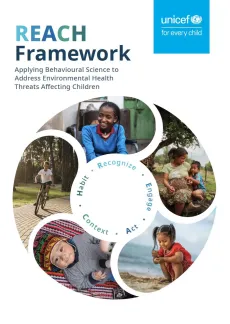
The approach is organised around the REACH framework:
- Recognise addresses detection, understanding, and interpretation of invisible threats through sensory enhancement, causal understanding, and risk calibration.
- Engage creates personal relevance and emotional connection for environmental health protection through competing daily priorities using personalisation, value-aligned framing, and social influence.
- Act enables consistent protective behaviour through capability-building, confidence, and collective efficacy.
- Context addresses the structural and contextual conditions that determine intervention effectiveness.
Habit ensures protective behaviour persists through routines, cues, and environmental design that sustain automatic responses.
The guide concludes with a three-phase application process: understanding the situation through a diagnostic assessment of each REACH component, deciding where to focus based on the severity of barriers and the leverage available, and designing an integrated intervention that sequences individual-facing and structural approaches.