

Kin Rai Dee #HungryForHope
Feeding the future – better nutrition for better young lives
- English
- ไทย
Every child deserves good nutrition – starting today.
World Children's Day is UNICEF’s annual day of action for children, celebrating the Convention on the Rights of the Child. This includes the all-important right to nutrition.
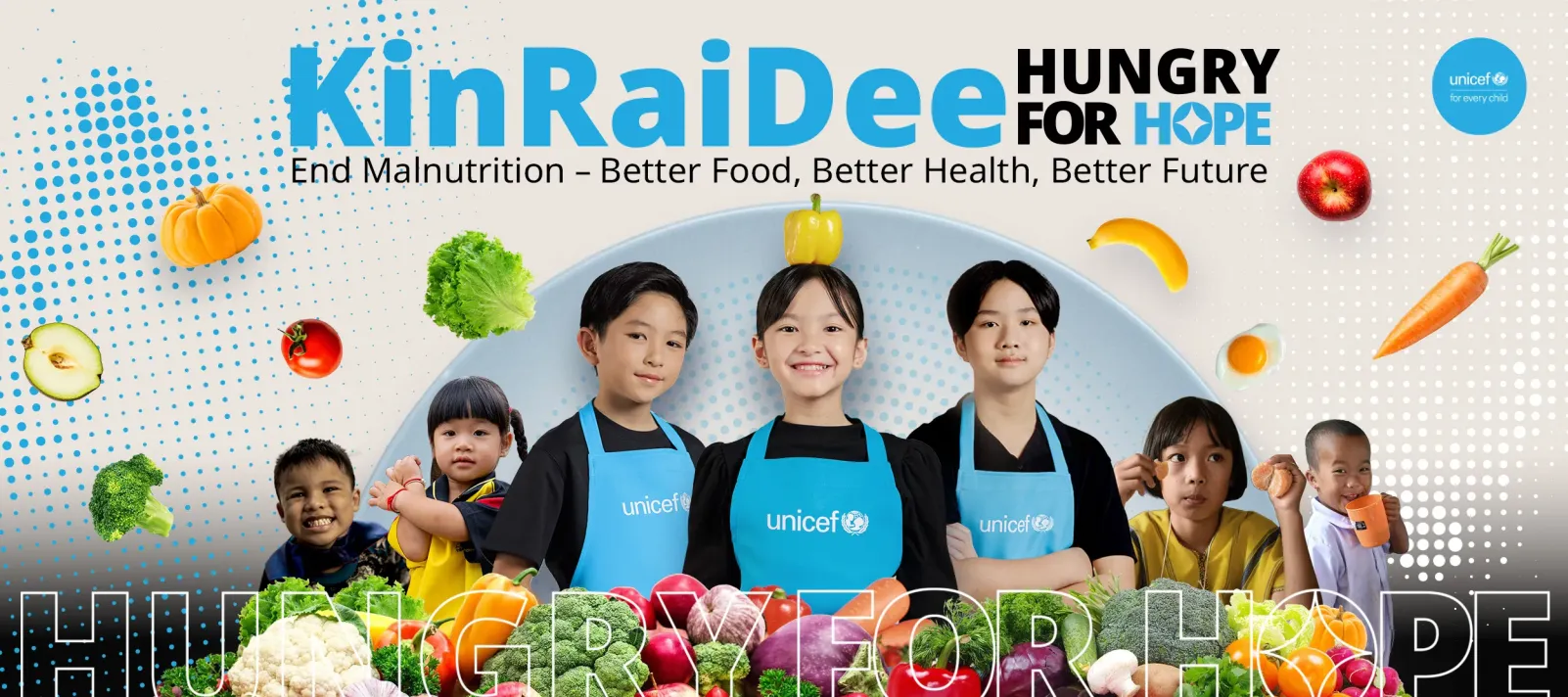
All children deserve to be healthy and thrive and the right food at the right time unlocks that potential. That’s why UNICEF Thailand’s Kin Rai Dee-Hungry for Hope campaign is striving to make sure children have good food on their plates and big dreams in their hearts.
However, this isn’t the reality for too many children. Globally, 1 in 4 children grow up stunted, while overweight affects 427 million children and adolescents. Despite remarkable progress, child nutrition in Thailand still faces many challenges. Stunting still affects 1 in 10 children. Meanwhile, obesity and overweight have doubled in 25 years. Both harm children's health and futures.
Our campaign calls for us all to transform how we think about food and the future. Working with children, youth, parents, schools, and communities, we can together make food environments and diets healthier. Help us create a world where every child has access to nutritious food to survive and thrive.
Little Chefs, Big Voices
Meet our superstar junior chefs! Watch the videos to learn more about this amazing trio of children who love cooking and know healthy food can taste delicious. You’ll discover how some children lead the way when it comes to good nutrition and even learn some of their top cooking tips.
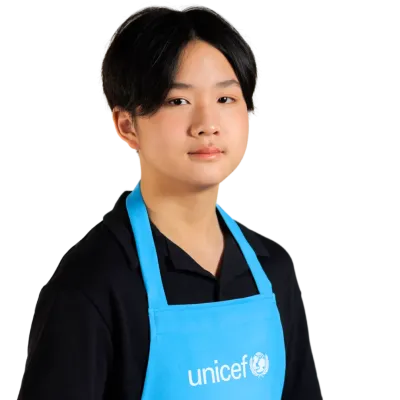
Sanji Kannapakorn Apiboonumpia - a calm and composed boy who started cooking at the age of five and became the winner of MasterChef Junior Thailand Season 3. His menu of hope is Steamed Pork Wrapped in Cabbage.
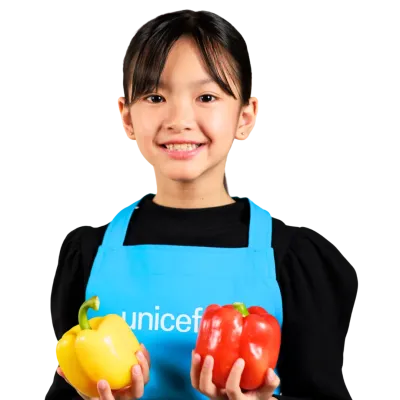
Alina Marie Chang - a girl with a passion for making delicious desserts. She dreams of becoming a chef so she can make her little brother happy with yummy food. Her menu of hope is Arancini — Italian-style Fried Rice Balls.
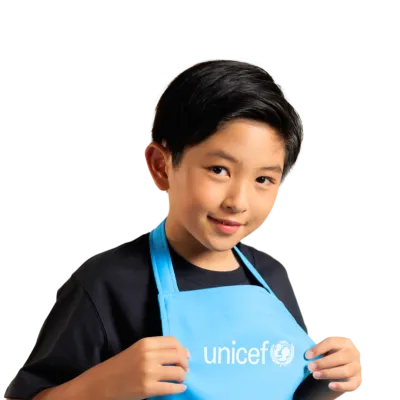
Copter Nuttawat Sriwanichpoom - a boy who loves cooking and music. His smile and positive energy bring joy to those around him. His menu of hope is Minced Pork with Salted Egg Stew.
Michelin chefs unite on a mission for nutrition
Thailand’s leading Michelin-starred chefs are joining forces, using their skills and unique culinary styles to help fill the plates of hungry children and to ensure every child has access to good, healthy nutrition.
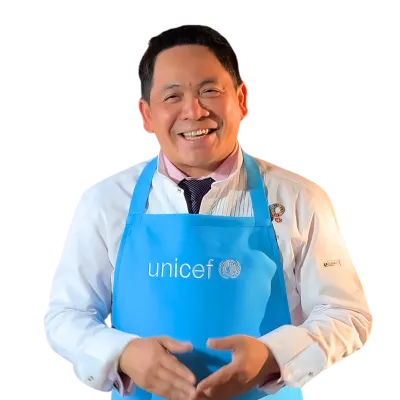
Chef Chumpol Jangprai — the chef at R-Haan, a fine-dining Thai restaurant which has been awarded two Michelin stars for consecutive years. Known for his mastery of classic Thai cuisine, showcasing authentic Thai ingredients and herbs with a refined technique.
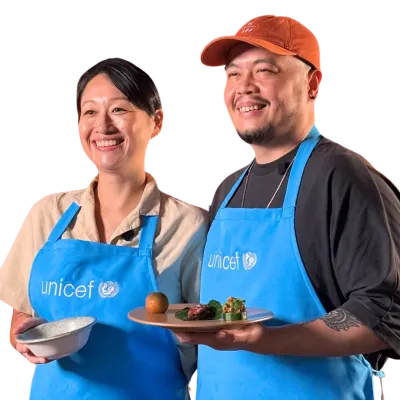
Chef Joe Napol Jantraget and Chef Saki Hoshino — the duo behind Kwann and Nawa Thai Cuisine, one-Michelin-starred restaurants. Their cooking is deeply inspired by their mothers, who instilled in each of them a love for food.

Chef Prin Polsuk — co-founder of Samrub Samrub Thai, a one-Michelin-star restaurant that reimagines traditional Thai cuisine using regional techniques and rare ingredients.

Chef Sachin Poojary — chef of INDDEE, a two-Michelin-star restaurant that offers modern Indian fine dining in an atmospheric restored century-old mansion.

Chef Tam Chudaree Debhakam — chef and owner of Baan Tepa, the first Thai female chef to receive two Michelin stars. Her cuisine reflects Thai heritage, sustainability, and farm-to-table principles, using seasonal ingredients sourced from local farmers.
Why Good Nutrition Matters - For Every Child
Good nutrition is a child’s right and the foundation of their health and growth, shaping whole lives by improving physical, cognitive and emotional development. Without it, children are vulnerable to disease, struggle in school, and miss the opportunity to reach their potential. This harms children and society.


The Taste of Change: UNICEF improving nutrition
Read these stories of UNICEF in action to improve nutrition, together with our supporters.

Finding Purpose by the Mekong
Kornkanok Mukthaisong’s Volunteer Journey of Contribution and Change with UNICEF Thailand.

Right food, right time
How UNICEF supports good nutrition in a child's critical early years through the Parenting School.

Giving Because We Refuse to Look Away
Inspired by compassion, Khun Nares Khamchue helps UNICEF reach children in need — proving that every act of care can shape a child’s future.

Feed the child, feed the future
Improving early childhood development in Mae Hong Son by improving nutrition, empowering teachers, and supporting families through ECD centres.
Help Us Create a Future Where No Child Goes Hungry
Food poverty – lacking enough nutritious food to meet basic needs – threatens children’s lives and futures. 1 in 10 children under 5 lives in food poverty in Thailand. Globally, that number is 181 million, with 10 million suffering life-threatening severe malnutrition right now.
It doesn’t have to be this way. Medical care, supported by therapeutic food, helps malnourished children survive and live up to their potential. Learn more from our generous supporters in these videos.
20 Baht a day can provide enough life-saving therapeutic food to help a malnourished child survive and have the chance to thrive you can, please donate.
Together, we can save lives and shape a better future.
Want to help children eat well? Start here!
Getting children to eat healthily can sound difficult but doesn’t have to be! We’ve put together top tips, parenting advice and handy resources to help your children eat well and thrive. Change doesn’t have to happen overnight, it can be gradual, bringing your family closer together.

Learn more about World Children's Day
Discover the history, goals and key activities surrounding World Children’s Day.
Additional information about World Children’s Day.
World Children’s Day is a global day of action for children, by children, marking the adoption of the Convention on the Rights of the Child (CRC).
On this day, UNICEF advocates and raises awareness to protect and fulfill the rights of every child, without discrimination.
World Children’s Day takes place each year on 20 November. The day marks the United Nations General Assembly’s adoption of the Declaration of the Rights of the Child in 1959 as well as the Convention on the Rights of the Child (UNCRC) in 1989.
Child rights are human rights. They are non-negotiable. But in too many places today children’s rights are being misunderstood, disregarded, or even denied and attacked. World leaders must uphold their obligations under the Convention on the Rights of the Child and respect, protect and fulfill the rights of every child, everywhere.
Investing in children today secures a better future for them, and us all.
World Children’s Day provides an opportunity to focus on the issues that matter most to children.

Frequently asked questions on child nutrition in Thailand and UNICEF’s work to improve it.
FAQs
Good nutrition is the bedrock of child survival and development and has been at the heart of UNICEF’s mission throughout its 80 years. Founded in the devastating wake of World War II, when tens of millions of children faced starvation, UNICEF prioritised emergency food relief and saved countless young lives. Thailand was no exception. When UNICEF first arrived in 1948, malnutrition and disease claimed the lives of almost one in five children before the age of five—and the tragedy was that both were preventable. In Thailand, just as in many other countries, UNICEF worked to provide emergency food, and then developed more sustainable, long-term nutrition programmes which have saved tens of millions of lives.
However, many children are still suffering, both globally and in Thailand — too little food, or too much of the wrong kind, still costs children their lives.
Globally, one in five deaths among children under five is due to severe wasting as a result of malnutrition, making it one of the top threats to child survival.
Malnutrition in Thailand remains a significant problem. Stunting affects one in ten children, and child obesity in Thailand among 6–14-year-olds have doubled in 25 years. Both stunting and obesity can lead to lifelong physical and mental health problems, and in severe cases, can be deadly.
Globally, UNICEF works in 190 countries, including conflict zones and the most remote regions, and provides 80 per cent of the world’s life-saving therapeutic food for acutely malnourished children. We have helped roll out growth monitoring, vitamin A supplementation, universal salt iodisation, and—especially—the promotion of breastfeeding. These actions, supported by our donors, save lives and transform futures.
Thailand’s children still face serious nutritional challenges, as outlined in the answer above. That’s why UNICEF Thailand continues working towards a future where all children receive good nutrition, adopting a whole-of-society approach. That means partnering with families, the Royal Thai Government, health services, schools, civil society, the private sector and communities to tackle malnutrition in all its forms. To give just a few examples, we are currently working on restrictions on the unhealthy food marketing to children, creating dietary guidelines with the Bureau of Nutrition, and pushing forward policies to remove unhealthy foods—and their marketing—from schools. We work in Early Childhood Development centres to foster good eating habits, provide nutrition advice directly to parents of young children, and support hospitals to pass on the best nutritional advice to parents. For UNICEF World Children’s Day 2025 we will be shining a spotlight on nutrition and engaging all of society in a robust response.
Overweight children or obese children can face as much risk as those suffering from undernutrition – this is sometimes called the double burden of malnutrition. Overweight and obesity greatly increase the risk of non-communicable diseases such as diabetes, hypertension, and heart disease, that can shorten or impair a child’s life. This is a serious problem around the world and in Thailand, where overweight and obesity rates have doubled over the past 25 years, increasing from 6 per cent to 13 per cent among children aged 6-14.
Often but not necessarily. For example, 1 in 10 children under 5 in Thailand experience severe food poverty. Food poverty means they eat no more than two food groups per day. To meet the dietary diversity required for healthy development, children should eat five food groups. Sometimes it is the lack of diversity in diet that can cause profound problems.
As mentioned above, obesity can lead to non-communicable diseases such as diabetes, hypertension, and heart disease, that can shorten or impair a child’s life. Underweight can damage development at a critical stage, which can lead to children dying or not developing to their full physical or cognitive potential. They too are vulnerable to many non-communicable diseases (sometimes referred to as diet-related NCDs). Malnutrition in both its forms can also lead to mental health problems in later life. All of these chronic diseases in children are preventable and we must act against them.
Yes there is, and this is indeed a great challenge and one of the goals of the Kin Rai Dee campaign is to highlight some of the affordable options to create healthy diets.
Children are greatly shaped by food environments, and the modern world unfortunately makes it easier and more convenient to access unhealthy and ultra-processed foods than the healthier kind. Improving these food environments and providing support and encouragement are the priority, and this may include encouragement of exercise.
Please share our content on social media – such as news on UNICEF junior chefs, our Beyond the Bites event, our blue star gala, or more - and pass on the message of good nutrition to everyone you know, letting children know they should eat well, eat enough. Whether you are concerned about childhood obesity in Thailand, malnutrition or both, one of our core goals is to improve knowledge of healthy eating for children and to eliminate as much unhealthy food for children as possible. We want to create healthy food environments for kids and continue promoting healthy eating habits - and you can play a powerful role in spreading the word. Please support child nutrition!