

“What’s Good to Eat?” Choose wisely for a healthier future
A healthier lifestyle begins with what you eat
- English
- ไทย
What’s Good to Eat?
The daily question we all face…
In a world full of tempting food choices, it’s easy to forget how some options can quietly affect our health over time.
Ready-to-eat meals like cup noodles and fast food, or grab-and-go options like salty snacks and sugary drinks — they’re quick, affordable, and super tempting. But what seems convenient comes with a hidden cost. These foods are often highly processed and packed with sugar, sodium, and fat but containing few nutrients. They are marketed everywhere—especially to children and teens—gradually pushing healthier choices aside. Even if you are slim and feel fit, this can lead to chronic health issues like diabetes, high blood pressure, and heart disease.
But here’s the bright side! Unhealthy eating habits don’t have to be our future.
Let’s take a moment and ask ourselves: What’s Good to Eat? By making small, mindful choices and building habits that match our lifestyle, we can take better care of our bodies and minds.
Join us on a journey to eat well, live well, and embrace a healthier future!
Will our health tomorrow pay for bad habits today?
In today’s fast-paced world, quick and easy foods and sugary drinks are often go-to favourites as they are convenient, affordable and everywhere. But these options often come at the expense of our future health — being highly processed and loaded with high sugar, sodium, unhealthy fats, and additives like preservatives, colourants, and artificial flavours. Over time, this builds up a ‘health debt’ that leads to chronic diseases.
Don’t let your health bill grow beyond your control. Healthy lifestyle starts with better food choices right now. Eat wisely—not just to satisfy hunger, but to build lasting well-being.
The #KinRaiDee #WhatsGoodToEat campaign invites us all to rethink our food choices. Our eating habits shape our health more than we realise. Let’s embrace a healthier lifestyle together!
What I Eat In A Day!
What do you eat in a day?
We all have our favorite go-to meals, but did you know your food choices can help predict your future health?
Take this fun 5-minute quiz to discover what your daily diet says about your well-being!

You can try the U-Report Quiz on 3 platforms!
Just send “KinRaiDee” in the chat!


What’s Good to Eat?
A Balanced Meal on One Plate
Eating a balanced diet every day is more doable than it seems. By diversifying and balancing your food choices, you'll feel energized and ready to seize the day.
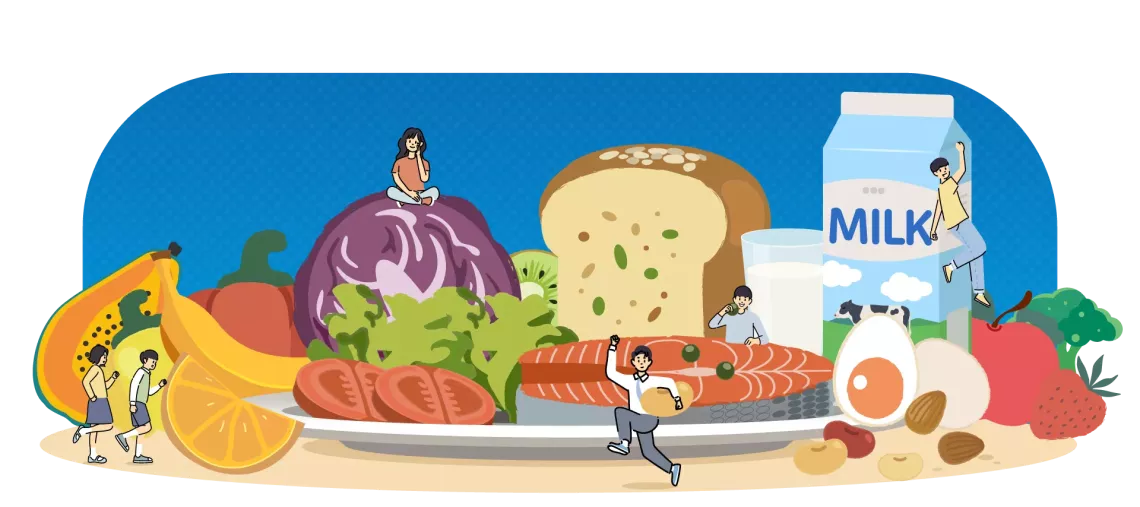
The five basic food groups we’ve known since childhood are the building blocks of good health. Yet, many of us aren’t getting all five in every meal. Let’s take a closer look at these five food groups, packed with essential nutrients, and explore how we can make better choices for a healthier future.
Group 1: Protein – Building Blocks for a Strong Body
Protein is an essential nutrient that plays a crucial role in building and repairing tissues, creating muscles, and promoting growth. Eat a variety of healthy proteins such as eggs, milk, fish, and lean meats. For those avoiding animal products or milk, plant-based options like soy milk, tofu, and beans are excellent alternatives.
Group 2: Carbohydrates – Long-Lasting Energy for Your Day
Carbohydrates are the body's main source of energy, helping to keep you stay full longer and reducing hunger. However, it's important to choose the right type and amount of carbs. Instead of refined options like white rice or white bread, switch to unrefined carbs like brown rice, whole grains, or starchy vegetables like taro and sweet potatoes. These provide fibre, which supports digestion and overall health.
Group 3: Vegetables – A Rainbow of Nutrients for Your Health
Vegetables are packed with essential vitamins, minerals, fibre and antioxidants that keep your body functioning at its best. Adding a variety of colourful vegetables to your meals helps boosts immunity, aids digestion and enhances overall health. Try mixing vegetables like morning glory, tomatoes, carrots, onions, garlic or eggplants to create dishes that are both vibrant and nutritious, with a terrific combination of flavours and health benefits.
Group 4: Fruits – Natural Sweetness and Vital Nutrients
Fruits provide a refreshing, delicious way to get a boost of vitamins, fibre, and other micronutrients—bringing benefits that are just as valuable as vegetables. They offer natural sweetness, aid digestion, and brighten up your meals. Including colourful fruits like apples, guavas, grapes, papaya, banana and oranges in your diet ensures you get a wide range of nutrients and a burst of refreshing flavour, whether enjoyed as a tasty snack or to top off your meal for a healthy boost!
Group 5: Healthy Fats – Fuel Your Body and Stay Warm
Fats are an essential source of energy, helping your body stay warm and absorb fat-soluble, crucial vitamins like A, D, E, and K. Healthy fats also play a key role in growth and development. Choose unsaturated fats found in foods like fish, nuts, and seeds. Keeping your intake of fats to small amounts ensures your body gets the benefits without the drawbacks. Try to avoid the saturated and trans fats often found in fried and fast foods.
Don’t forget milk!
Milk and dairy products are excellent sources of calcium and protein that support bone health and overall growth. Adding milk to your daily diet is an easy way to give your body the boost of nutrients it needs to stay strong and healthy.
“Cut Out Sweet, Salty, and Fat”
Tasty Yet Healthy Choices
"I’m stressed, my blood sugar’s low." "BBQ will fix everything." "My body needs something salty." These are phrases we often hear, but did you know that too much sugar, salt, and fat can increase your risk of non-communicable diseases (NCDs) over time? Small changes build better health.
Making simple adjustments to your eating habits – like cutting back on the triple threats of sugar, sodium and fat - can help you enjoy meals while improving your health over time. Here’s how to build better habits for a healthier future:
Cutting Back on Sugar:
Our bodies only need a small amount of sugar to function well—ideally not more than 6 teaspoons per day. Excessive sugar intake from snacks and sugary drinks can affect your health and lead to issues like tooth decay and higher risk of chronic conditions. Fresh fruits are a great alternative when cravings hit—naturally sweet and packed with nutrients and fibre that help keep you full and energised.
Keep Salt in Check:
Too much salt can affect your health, especially when it comes from highly processed foods, like sausage or salty snacks, or those extra dashes of fish sauce added to your dishes. It’s best to keep your sodium intake to no more than 1 teaspoon of salt or 4 teaspoons of fish sauce (2,000 milligrams per day). Gradually cutting back helps your taste buds adjust, allowing you to appreciate natural flavours more.
Be Careful with Fats:
Fats are essential for your body, but the key is choosing the right types and consuming them in small amounts. Keeping your fat intake to under 6 teaspoons per day ensures your body gets the benefits without the drawbacks. Healthy fats from sources like fish, nuts, seeds, and avocados are beneficial, but fats from the likes of fried foods, donuts, and packaged snacks can be harmful. Choose cooking methods like baking, steaming, or boiling to reduce unhealthy fats and enjoy delicious meals with health benefits.

Easy Tips for a Healthier Balance
It's all about making small, manageable changes that add up over time.
For Sweet Cravings: Gradually reduce sugar by opting for drinks with less sugar or which are unsweetened. Keep fresh fruits like oranges, apples, pomelos, or papayas with you to satisfy your sweet tooth naturally.
For Salt Lovers: Taste your food before reaching for the salt shaker. Gradually cut back on salty condiments like fish sauce and soy sauce, and try enhancing flavour with fresh herbs and spices instead. Avoid highly processed foods and snacks, as they often contain high sodium.
For Fat Lovers: Love grilled or hotpot meals? Choose lean cuts of meat and add healthy fats from nuts, seeds, or olives for a balanced and tasty boost.
Check Nutrition Labels: Before buying packaged foods, take a moment to read the labels. Being aware of sugar, fat, and sodium content helps you make better choices for your health

"Water" – Drink It Right, Reap the Benefits
Don’t underestimate the power of water. Many people skip it for sugary or flavoured drinks, but those are often full of additives and heaps of sugar that can harm your health in the long run.
Water is essential to our bodies, making up 60-70% of our total weight. We lose about 2 litres of water daily, which is why it’s so important to stay hydrated.
Many people reach for sugary drinks like bubble tea, soda, or fruit juices when they’re thirsty. While these drinks might seem like nice alternatives, they don’t hydrate as effectively as water. In fact, drinking them regularly can increase the risk of NCDs over time.
To stay healthy and keep your body functioning well, aim to drink at least 2 litres (that’s about 8-10 glasses) of water each day. A simple tip is to sip water throughout the day, rather than drinking large amounts at once. Try to avoid water that’s too hot or too cold.
Drinking water regularly doesn’t just keep you feeling refreshed – it also helps you stay mentally alert and reduces the risk of dehydration. It’s a simple habit that leads to better health and wellbeing, every day.
Explore Your Fridge Today for Your Child’s Health!
Providing your children with a healthy food environment and instilling good eating habits from a young age - with vegetables and fruits in every meal - helps them develop healthy eating behaviors that last into adulthood.
Your home is where healthy eating habits begin. While creating a balanced diet seems simple, it can be challenging—especially with the temptation of convenience foods and sweets all around us.
One easy step you can take to start is checking your fridge. By organizing meals to include all five food groups, your child will get the essential nutrients they need to grow and have the energy to learn every day. Here's how to make it happen, step by step:
Prepare Balanced Meals – Don’t Forget the Veggies & Fruits!
Make meals varied with all five food groups, and rotate them daily to keep things interesting. Always include vegetables and fruits in every meal.
Boost Energy with Easy-to-Digest Proteins
Include proteins like fish, lean meats, eggs, tofu, and beans. Avoid highly processed foods and those high in sodium, sugar, and unhealthy fats.
Avoid Sugary Drinks in the Fridge
Stocking sodas and sugary drinks isn’t ideal. If your child craves something sweet, choose freshly squeezed fruit juice without added sugar. This helps curb a taste for overly sweet flavours. Also, try to use less sugar when cooking.
Swap Unhealthy Snacks for Healthier Options
Choose fresh fruits like guava, apples, papaya, oranges, and bananas, or go for healthy snacks like unsalted boiled beans, plain milk, baked sweet potatoes, or natural yogurt.
Regularly check your fridge to ensure meals are nutritionally balanced. Always read labels before purchasing and opt for foods with milder flavours. By limiting added sugar, salt, and fats, you help your child appreciate the natural taste of healthy foods. These simple steps will help your child build healthy eating habits that support growth, strength, and reduce the risk of non-communicable diseases (NCDs)

Start Healthy Eating Habits with Your Child Today
Tempting and convenient foods are everywhere—but they’re not always healthy. That’s why it’s important for parents to help little ones build good eating habits—starting at home, one meal at a time.
Good nutrition is essential for your child’s growth—both body and mind. But today’s world is full of highly processed foods that are sweet, salty, and fatty. These foods are often replacing nutritious options like fruits and vegetables on our children’s plates.
The good news? Parents can shape their child’s eating habits in simple, fun ways—starting right now. By building healthy routines early, you’re building the foundations of a lifetime of better health and well-being.

Make mealtimes fun
Invite your child to help out with small tasks like washing vegetables, cracking eggs, or setting the table. Even better—take them along for grocery shopping! These little moments make eating more exciting and help children feel involved.

Create a relaxed and positive atmosphere
Don’t pressure your child to eat something they don’t like. Instead, introduce new foods gently. For example, if they dislike tomatoes, try dicing them into a favorite dish. You can even bring in playful food-themed toys to spark interest!

Praise every little effort
If your child tries a new fruit or vegetable, even just one bite, give them a cheer or a smile. Positive words go a long way in helping children feel proud and open to trying again next time.

Let them help plan the menu
Ask your child what they’d like to eat for special meals, like on weekends. Giving them a choice of healthy options builds excitement and helps them take ownership of their food in a healthy way.

Lead by example
Children learn by watching. Show them how you enjoy your veggies, reach for fruits instead of candy, and choose water over sugary drinks. When they see you making healthy choices, they’re more likely to follow you.
More importantly, mealtimes are about more than just eating, they’re moments to connect. Sit down together, put away phones, and talk about your day. These shared moments make mealtimes feel warm, fun, and full of love. By making small, steady changes today, you’re helping your child grow up with a healthy relationship with food—reducing their risk of future health problems and giving them the best start in life.

Choose Healthy Eating, Together
From “What should I eat?” to “What’s good to eat?” — choosing nutritious foods is the foundation of a healthy lifestyle. But in today's world, the convenience of food choices often leads us to reach for what's easy, rather than what's best for our health. Everywhere we turn, we’re surrounded by highly processed foods high in sugar, sodium, and fat, making it harder to stick to healthier options—especially for children and adolescents. Research shows that almost two thirds of 6-14 year olds consume snacks, 1 in 4 drink bottled beverages and 13% consume fast food at least three times per week.*
That’s why UNICEF, in collaboration with a wide range of partners, is working to improve access to healthier food options. We advocate for making nutritious choices like fruits and vegetables more affordable and accessible. We support policies that reduce children's exposure to unhealthy snacks, and we help families build strong, healthy eating habits at home — where lasting routines begin.
Our goal is to help every child and adolescent make better food choices every day — both now and in the future. Because this journey isn’t one you need to take alone. We're with you, every step of the way, helping children grow up healthier, happier, and ready to thrive.
* 6th National Health Examination Survey 2019-2020. Children's health. Bangkok: Faculty of Medicine, Ramathibodi Hospital, Mahidol University. 2023.