Katanyou Wuttichaitanakorn’s love for nature started in childhood, when his parents introduced him to the world of wildlife. They often took him to zoos and, later, into the wild to observe animals in their natural habitats. As his interest deepened, his family encouraged him by enrolling him in nature camps, where he began birdwatching—both in the city and the forests. “Birdwatching felt like playing a game—each time I spotted a new bird, I’d tick it off a list, just like collecting Pokémon,” he says with a laugh, emphasizing how the thrill came from observing, not capturing.
His fascination with birds eventually led him to wildlife photography, a passion that began when he was just 10 years old. Starting with a compact camera his mother bought for him, he quickly transitioned to his father’s DSLR when his own camera broke. His early experiences involved mimicking professional photographers, learning by watching how they worked. However, his real lessons came from understanding the ethics behind wildlife photography. Katanyou realized the importance of respecting the animals' space, understanding that when entering their natural habitat, it’s crucial not to disturb them. “Chasing the perfect shot isn’t worth damaging nature,” he says, a lesson that has guided his approach to photography ever since.


At 15, Katanyou captured a striking image of a Bryde’s Whale, affectionately known as “Mae Kanya” (Mother Kanya), as she fed on anchovies in the Gulf of Thailand. The close-up shot, highlighting the whale’s pink lips, went on to win him the Young Wildlife Photographer of the Year 2022 award, an international recognition. Katanyou says it remains one of his favorite photos. It wasn’t just a successful shot—it was a moment that demonstrated the power of photography to reveal nature's wonders and bring people closer to the environment.

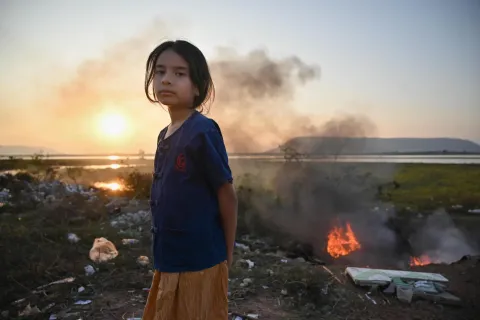
Now a zoology student at Kasetsart University, Katanyou continues his photographic work, though he has become increasingly concerned about the changes he’s observed in the wild. On recent trips to places like Kaeng Krachan National Park, he’s noticed a disturbing decline in wildlife. The bird populations that once flourished are diminishing, and other species are becoming harder to find. While species loss can be part of the ecosystem’s natural balance, Katanyou points out that humans are accelerating this process unnaturally, and new species aren’t emerging to replace those that are disappearing.

Katanyou is passionate about raising awareness of environmental issues, especially among those who may not feel a direct connection to wildlife. He says people don’t need to be wildlife experts to understand the importance of their actions. “You don’t have to know about wildlife, but you should understand the environment and how your actions affect it,” he explains. One example he often shares is the issue of microplastics. Plastic waste discarded in the ocean breaks down into tiny particles that marine animals ingest, which eventually find their way back into the human food chain. Katanyou highlights how this invisible cycle—where humans eventually consume the same plastic they throw away—could lead to serious health issues like cancer.
His frustration with environmental degradation is palpable, especially when it comes to the role of large corporations. He points out that despite public campaigns encouraging people to reduce plastic use, the real issue lies with factories and multinational companies that continue to pollute the environment. “I’m angry at multinational corporations that don’t care about the environment, but we can’t do anything to stop them,” he says, adding that systemic change is needed to address the problem at its source.

UNICEF’s #CountMeIn campaign, launched in early September, aims to address these issues by raising awareness about the challenges children face due to climate change and other environmental harms. The campaign stresses the importance of including children in discussions and solutions related to the climate crisis, as they are directly affected and will shape the future of the planet. Katanyou’s environmental advocacy aligns with this initiative, as he believes that engaging younger generations is crucial in finding sustainable solutions for the future.
Katanyou also warns about how desensitized society has become to the idea of climate change. He believes people have grown too accustomed to blaming global warming for environmental issues without truly grasping the long-term consequences and need to act. “People are so used to hearing about global warming that they’ve stopped seeing it as a threat. My generation might live long enough to cope with the consequences, but no one knows what will happen after that,” he cautions.
Ultimately, Katanyou frames environmental conservation as not just a moral duty, but a matter of survival. “Conserving the environment is really about protecting ourselves,” he says. Whether people care about wildlife or not, he believes they should be concerned about a potential future without clean seafood or other essential resources. “We don’t need to care about wildlife, we just need to care that one day there might be no more seafood to eat.”
For Katanyou, photography remains a powerful tool to communicate these pressing issues, and through his lens, he hopes to inspire others to reconnect with the natural world—before it’s too late.

Children bear the greatest burden of climate change, but their voices and needs are often overlooked. They suffer most and will face its effects the longest. So why are they often excluded in discussions and solutions about the climate crisis?
UNICEF Thailand launched #CountMeIn campaign to raise awareness of the challenges children and young people face, while providing a platform for them to express their views and needs.
We all need to ensure that children and youth are included in the conversations and solutions surrounding the climate crisis, as they are the ones most affected and will inherit this planet for many more years to come.
UNICEF - in Thailand and globally - calls on governments, businesses, and decision-makers to urgently protect children from the escalating climate crisis by adapting essential services to fit children’s needs, preparing them to thrive in a climate-affected world, and prioritizing them in climate funding.
In Thailand, UNICEF works with the government and partners to promote climate education which helps children and youth better understand climate change and learn ways to protect the environment. We also advocate for their increased participation and involvement in climate discussions and actions.