

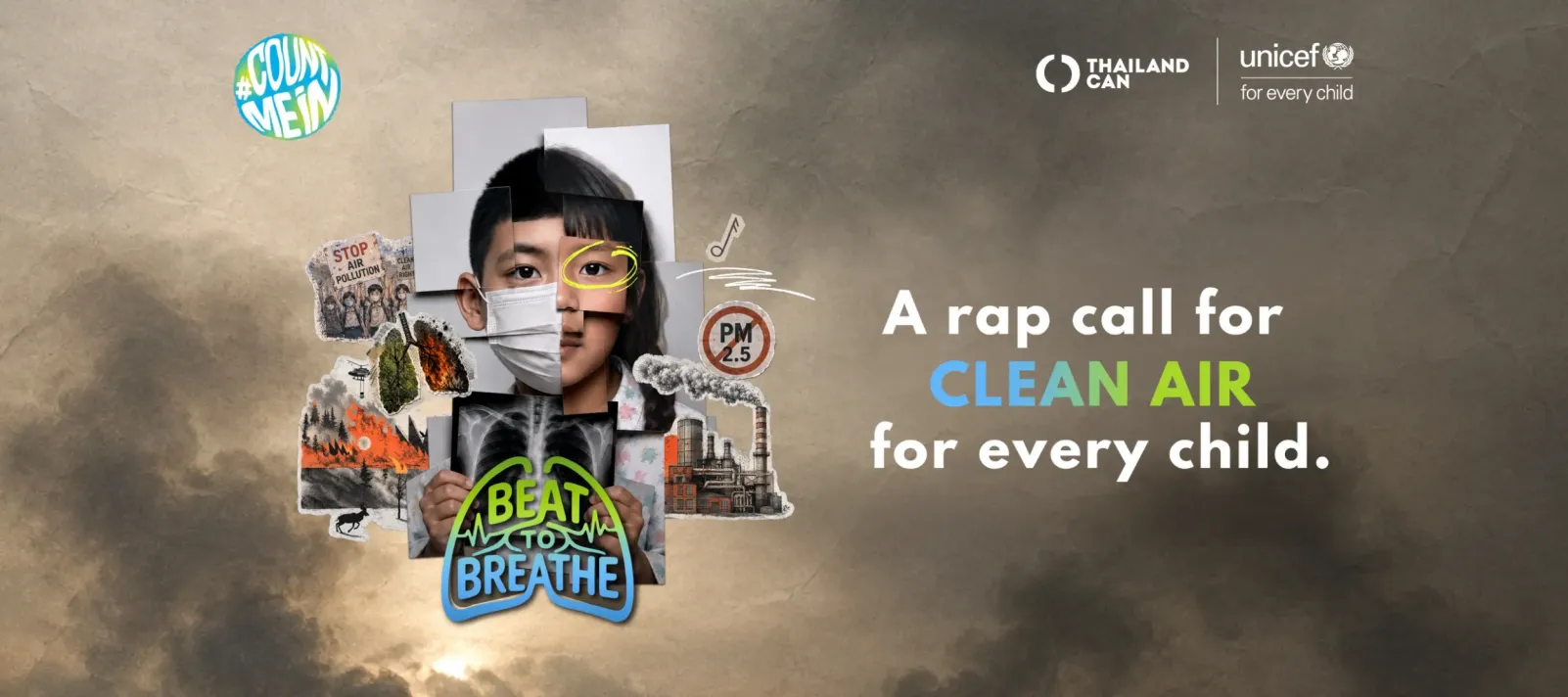
BEAT TO BREATHE: A Rap Call for Clean Air for Every Child
All our lives depend on the air we breathe – but children face the greatest harm from dangerous pollution. It’s time to make some noise for change.
- English
- ไทย
11 million children across Thailand are regularly exposed to hazardous concentrations of PM2.5 air pollution. Air pollution is silent and often invisible, but that doesn’t make it any less harmful to health. In the most polluted areas, the damage is visible in nose bleeds and people struggling to breathe.
For children, the threat is particularly urgent because their lungs, brains, and bodies are still developing. This leaves them vulnerable to lifelong health problems caused by pollution and can prevent them from reaching their full potential. In the worst cases, it may even lead to death. Research indicates that air pollution is linked to the deaths of over 100 children under five every single day across the Asia and Pacific region - including Thailand.
Introducing BEAT TO BREATHE and the Lung Test Challenge
We can bring back fresh air, but only if we all raise our voices to demand change. This year, as part of our ongoing #CountMeIn climate action campaign, UNICEF Thailand and the Thailand Clean Air Network (THAICAN) are turning the very sound of breath into a powerful call for every child’s right to clean air — we’re calling it #BEATtoBREATHE.
Every word and every song begins with a breath. Especially in rap music, breath control is essential to staying on beat and hitting the right flow. That’s why we’re using rap to call for change.
BEAT TO BREATHE invites children and young people to rap along - a fun way to check in on their lung health while using their voices to demand their right to clean air.
Meet TangBadVoice, our BEAT TO BREATHE rapper
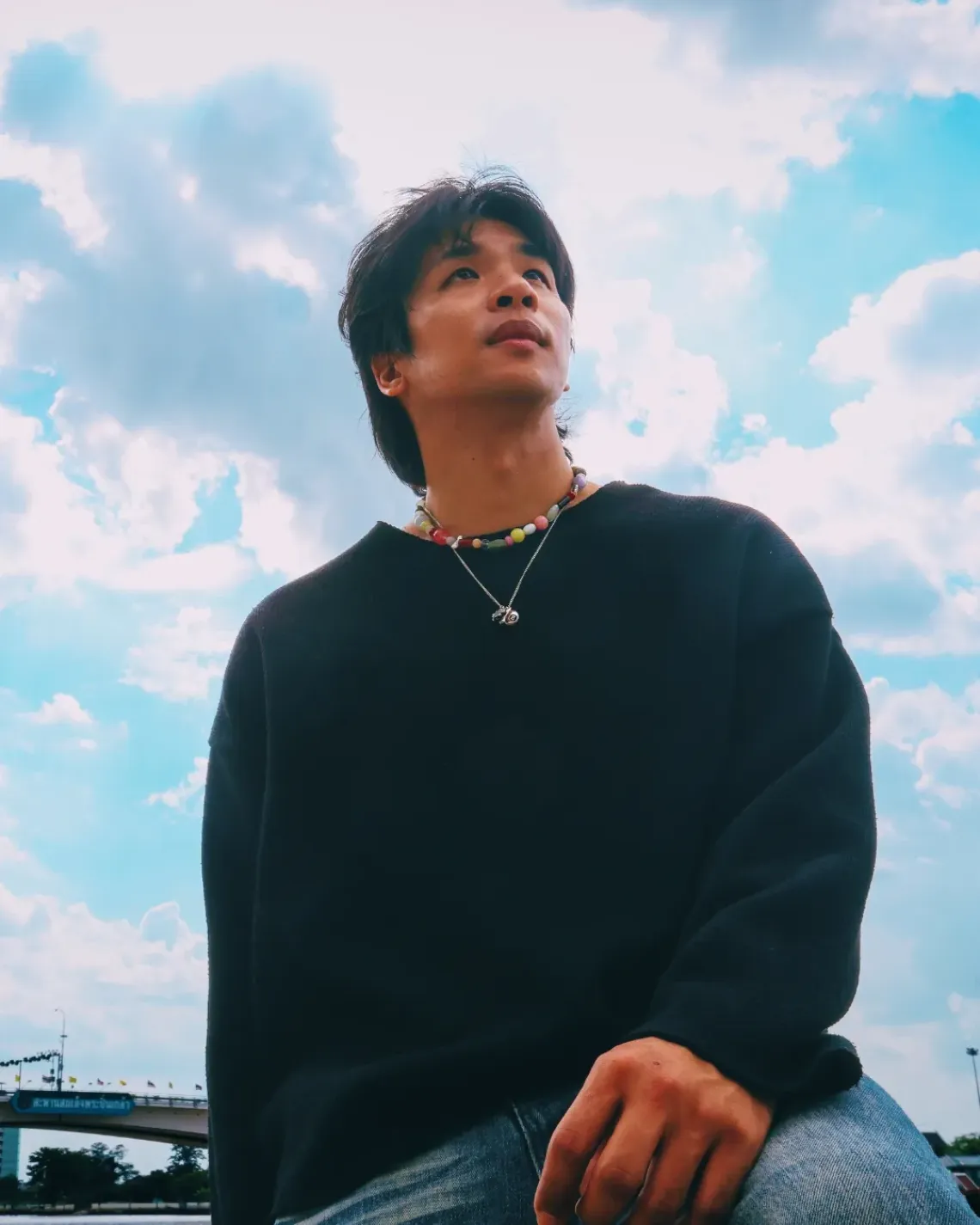
TangBadVoice is an artist who turns serious and complex issues into rap anthems that people feel, understand and connect with. For this campaign, Tang is using rap to transform the sound of breath into a powerful call for every child’s absolute right to clean air, as enshrined in the Convention on the Rights of the Child.
Tang grew up with his parents in Chiang Mai, a city that faces the PM2.5 crisis year after year and is often named internationally as “the most polluted city in the world”. He knows first-hand what it’s like to live with air pollution. When he learned how many children are growing up breathing polluted air, he wanted to use his song to make people stop, listen, and pay attention to a threat that is causing so much harm.
“The people I most want to hear this song are children. I hope as many young people as possible will join the Lung Test rap challenge, so their voices can reach adults—and hopefully, those with the power to make change will listen.”
Take a deep breath then read these alarming pollution facts
How Does Toxic PM2.5 Affect Kids’ Bodies and Brains?
Stories of Children and Young People Affected by Air Pollution
The pollution statistics above are not just numbers – they are real children and young people suffering right now. Below you can read more in-depth stories of disrupted childhoods, health and loss.
We must act now, so stories like this become a thing of the past.
Lung Test Roadshow in Schools
In November 2026, UNICEF Thailand and THAICAN will visit piloted schools in Bangkok, where, for the first time, medical doctors will train teachers and students to conduct lung health screenings. This will help schools identify potential concern early, with children who may be at risk referred to appropriate care. The results will provide a concrete, on-the-ground picture of children’s lung health and help inform broader discussions on policies and legislation to tackle air pollution.
Join the call for the right to clean air
Clean air is everyone’s right. And so is the right to speak up for it.
We want to turn music → awareness → action → change.
Join your voices with schools, families and communities to make sure that our message can be heard across the nation, particularly by decision-makers.
You can take part in our campaign by:
📚 Learning about pollution and spreading the word
Learn more about the harm PM2.5 pollution causes to children and share what you learn with your family and community.
🎵 Sharing the song “Lung Test” and the Beat Test Challenge
Help spread the message by sharing the song and challenge in real life and online, so more people can test their current lung power.
💪 Staying informed and helping drive action
Keep learning about progress on the Clean Air Act in the news, follow our partner, Thailand Clean Air Network and speak up in support of laws and policies that tackle pollution at its source.
👂 Listening to children’s voices
Create space for children and young people to share their experiences and take part in decisions about the air they breathe, so critical to their futures.
About Count Me In
As the climate crisis and environmental pollution increasingly harms children’s lives — from the air they breathe to the places where they live, learn and grow — it’s ever more important we speak out and take action.
Since 2024, UNICEF’s Count Me In campaign has brought children, young people and partners together to achieve change. One important step towards progress is creating spaces for children and young people to share their experiences, speak up about what matters to them, and make sure their voices are heard as we shape a safer, more sustainable future.
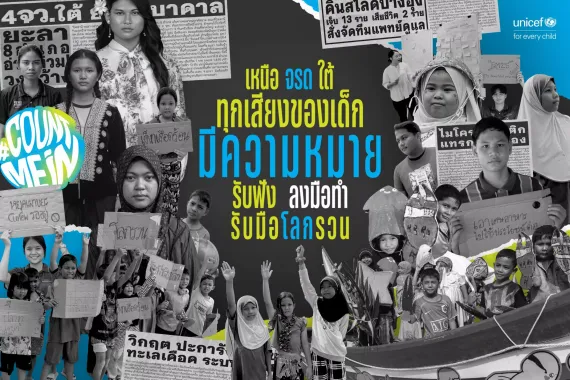
In 2025, the Count Me In campaign expanded its focus, showing that climate action can take many forms — from small, everyday choices to large-scale community initiatives. Every action counts, no matter how big or small.
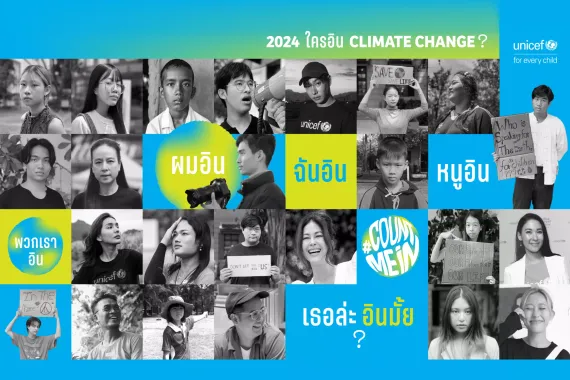
Launched in 2024, the Count Me In campaign puts children at the heart of climate action. As well as creating a space where children and youth share views and ideas, we then work directly with young people on national consultations which become recommendations for action delivered to policy-makers.
In 2026, BEAT TO BREATHE will bring even more voices together to make sure our message is heard loud and clear.