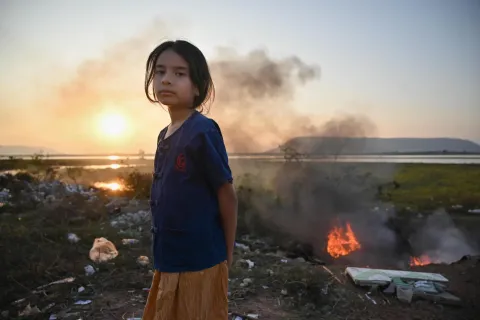
Climate change is unlike any threat humanity has faced before due to its global scale, cumulative impact, and its ongoing nature. Climate change can create particular anxiety for children and young people because it is already happening but will continue to evolve as carbon is added to our atmosphere. From record-breaking heatwaves to more frequent and severe flooding, climate change increasingly affects both physical and mental health. In Thailand, recent severe floods vividly illustrate how climate change is already causing significant stress and distress, particularly among children and young people. This distress has a name: eco-anxiety.
Eco-anxiety refers to feelings of worry, sadness, anger, fear, and helplessness regarding the present and future impacts of climate change. Caroline Hickman is a psychotherapist and lecturer at the University of Bath in the United Kingdom who has researched children and young people’s emotional responses to climate change.
She observes, “Children and young people are affected more than adults. They are still developing physically and emotionally. They are also impacted more because climate change is affecting their whole future – studying, school and future careers… Their care for the planet is not a diagnosis or a mental health issue, it is a positive sign of mental health and awareness, reflecting their empathy and responsibility toward environmental well-being.”
Research supports Hickman’s perspective. In 2021, the University of Bath and several partners launched the largest global survey on eco-anxiety, involving 10,000 young people aged 16-25 across ten countries. The research confirmed alarming levels of distress:
- Nearly 3 in 5 youths reported feeling very or extremely worried about environmental problems.
- Between 50% and 67% experienced feelings such as sadness, fear, anger, and helplessness related to climate change.
- 45% stated these emotions negatively impacted daily life activities like sleeping, concentrating, learning, and playing.
The survey also highlighted a sense of betrayal among young people, with 64% believing that governments were failing to take meaningful action on climate change.
Eco-anxiety can affect children more profoundly than adults, primarily because they have less power to take action and must live with the consequences longer than adults. Severe climate-related events can be considered as an Adverse Childhood Experience, similar to exposure to war or violence. This can potentially result in lifelong mental health harm, including post-traumatic stress disorder or depression.
Tshiamo Matabane, a clinical psychologist from South Africa, notes, "Children under 13 years, especially those who have experienced or been exposed to the devastation caused by climate-related events like floods, wildfires, or droughts, may start worrying about such events happening – or happening again.”
But there are ways parents and caregivers can help children manage eco-anxiety and build resilience. Caroline Hickman says, "The most important thing a parent can do is to talk with their child. Ask them how they feel and what they think. Validate their experience, even if you do not fully share it.”
Parents can further support their children by:
- Taking their concerns seriously and recognizing these emotions as positive signs of care and empathy.
- Engaging them in relaxing, enjoyable activities such as walking, cycling, cooking, or playing games when they feel overwhelmed.
- Educating themselves and their children about climate change to help them understand the actions already being taken and how to contribute positively to efforts to mitigate the impact of climate change.
- Encouraging children to join environmental groups at school or in their community to express their feelings and take constructive action.
- Modeling pro-environmental behaviors at home, such as recycling, composting, and planting trees together.
John Aruta, Associate Professor at De La Salle University, Philippines says taking action together is one of the best methods of addressing eco-anxiety: "Climate action is the antidote for climate anxiety.”
It is also important for parents and caregivers to be aware of signs indicating a child may need professional support. Persistent sadness, insomnia, self-destructive behavior, difficulty concentrating, panic attacks, and pronounced anxiety are indicators that additional help may be necessary.
Caroline Hickman advises parents to "seek advice and help if your child withdraws and is not communicating with you. And be patient, sometimes the timing is not right to talk.”
As the impact of climate change continues to grow, it's more vital than ever for parents, caregivers, and communities in Thailand and worldwide to support children and young people. This will help them become active participants in building a sustainable, healthier future for all.
Source: What is eco-anxiety?, Climate anxiety