Where the need is greatest: Strengthening child protection systems
From vision to impact with philanthropist Barrie Landry
Growing up in Ghana, Emelia Allan witnessed many girls around her suffer forced marriage and female genital mutilation.
"I will never forget the day my older cousin was abducted," Emelia recalls. "We were at the market when a group of young men took her and tried to force her into marriage. In her struggle to escape, she was severely injured and died a few days later. The only reason I was spared from this fate was because my father rejected these practices."

UNICEF/UN0794422/Yebuah
Emelia’s battle is far from isolated. Globally, around 640 million girls and women living today were married as children, and at least 200 million girls and women have been subjected to female genital mutilation.
The violence is more than physical. It perpetuates gender inequalities, limits girls’ educational opportunities and traps them in cycles of poverty.
And it happens in every country, even in the places where children should be safest.
In some parts of the world, children suffer physical or emotional abuse at home, with no one to turn to for help.
In others, children are caught in the crossfire of ongoing conflict, their lives marked by fear, displacement and uncertainty.
“This is not just a conclusion drawn from research. It is a painful reality I have witnessed firsthand,” Emelia emphasizes.
It's also the reason she does what she does today.
A global imperative
Child protection is a fundamental part of a just, equitable society.
Yet, many countries still lack the infrastructure or resources to build effective systems that can safeguard the rights of every child. Strengthening these systems means not just establishing and enforcing laws but ensuring that the people tasked with implementing them are adequately trained and supported.
This also means working not only with governments – but with local NGOs, civil society and faith-based organizations, and children themselves.

“We talk about child protection systems now, as though the system has always been there. But there was a time when there was no child protection training,” says Sheema Sen Gupta, Director of Child Protection at UNICEF.
Paving the way for experts
Recognizing the need to strengthen child protection systems worldwide, philanthropist Barrie Landry partnered with UNICEF to invest in solutions that are not only immediate but interconnected.
“Without a well-equipped workforce, the laws, policies and programmes designed to protect children cannot be effectively implemented, leaving children vulnerable,” says Barrie.
“If we don’t invest in workforce development, there can be no true sustainable systemic change in child protection.”

Barrie’s investments support initiatives that help countries strengthen child protection systems. One such initiative led to the establishment of three programmes at Harvard including a certificate programme, an online open-access course, and the G. Barrie Landry Child Protection Professional Training program at the FXB Center for Health and Human Rights at Harvard University, designed to train professionals who will address these complex challenges within communities around the world.
Since 2014, the programmes have trained thousands of professionals, among them Emelia, who today stands on the frontlines as UNICEF’s Chief of Child Protection in Zambia.

“It was through taking the course that I truly understood the spirit behind the UN Convention on the Rights of the Child. This is what guides me today when I work with governments. I look beyond the text to its deeper principles. It opened my eyes to dimensions of child protection I had never considered," says Emelia.
After completing the programme, Emelia went back to Ghana and began advocating for the integration of child protection into university curricula. What began there soon expanded and child protection is now taught as part of the core curriculum in some major universities.
The urgency for change
Through the Landry Legacy Fund, Barrie also made a multi-million-dollar investment over three years to help protect 2.5 million children and caregivers from violence, abuse and exploitation. This initiative will train an estimated 50,000 social service workers in six countries across Eastern and Southern Africa and in Latin America and the Caribbean, empowering them to respond more effectively to the protection needs of children.
Barrie’s recent investment builds on a decade of contributions, adding up to over US $15 million, in support of child protection.
Her support has strengthened Viet Nam’s social service workforce, where the number of training institutions grew from 4 to 37, and social worker positions were established in hospitals and schools. It also contributed towards a 25 per cent global increase in government investment in social workers from 2017 to 2021.

In Mexico, Barrie’s support helped implement alternative solutions to child detention, with the open-door shelter model becoming the national standard. Barrie also contributed financially to the development of U-Report for children on the move, a platform that empowers children to voice concerns and access vital support.

Reflecting on her commitment, Barrie shares, "Philanthropy should be grounded in both compassion and expertise. UNICEF’s strength lies in its ability to do just this; enabling the organization to partner with governments, nonprofits and philanthropists like me to strengthen child protection systems around the world.”
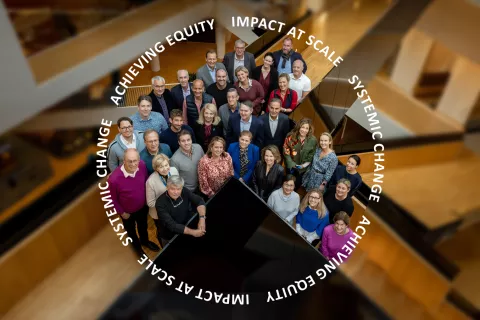
Together with philanthropists like Barrie and other members of our International Council – a community of over 160 philanthropists and influential partners – UNICEF works to protect the rights of every child, especially the most disadvantaged.
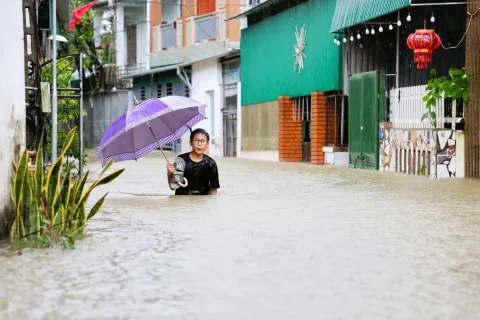
There is still work to be done. Systems must evolve to become shock-resilient, able to protect children in the face of economic instability, conflicts, pandemics and extreme weather events caused by climate change. Because the future of child protection depends on the strength of our partnerships and the impact of our investments.