Overcoming the odds: Finding refuge in learning
From vision to impact with philanthropist HE Abdul Aziz Al Ghurair
- English
- العربية
“There are things that make life in this camp bearable. We have schools here, and we have Makani centres. I’ve been attending this Makani centre since I was in fifth grade and it has changed my life,” says Nagham, aged 14.
Nagham, originally from Syria, now lives in Za’atari, one of the world's largest refugee camps, located in Jordan.
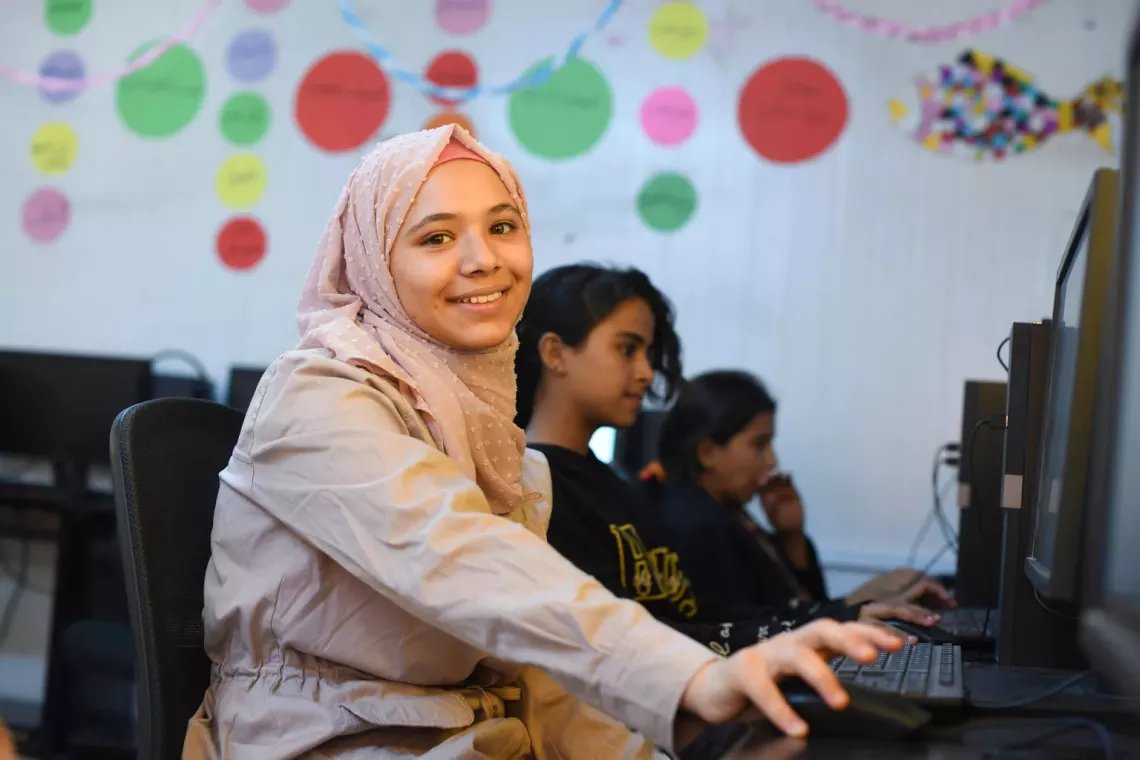
Life in Za’atari is challenging. The camp is situated in the middle of the desert, where temperatures soar during the day, making it hard for children to focus on their education.
“Although we adapted to life here in the camp, it is still a very harsh place to grow up,” Nagham reflects.
In another part of the camp, Abdulhamid, 12, reflects on a life largely shaped within its boundaries. He’s lived here since he was just 18 months old. For Abdulhamid, the learning support classes at the Makani centre have offered more than just an education; they’ve become a source of belonging.
“The best days of my life have happened at the Makani centre. It is very important to me because I get to be with my friends, play and have fun,” says Abdulhamid.
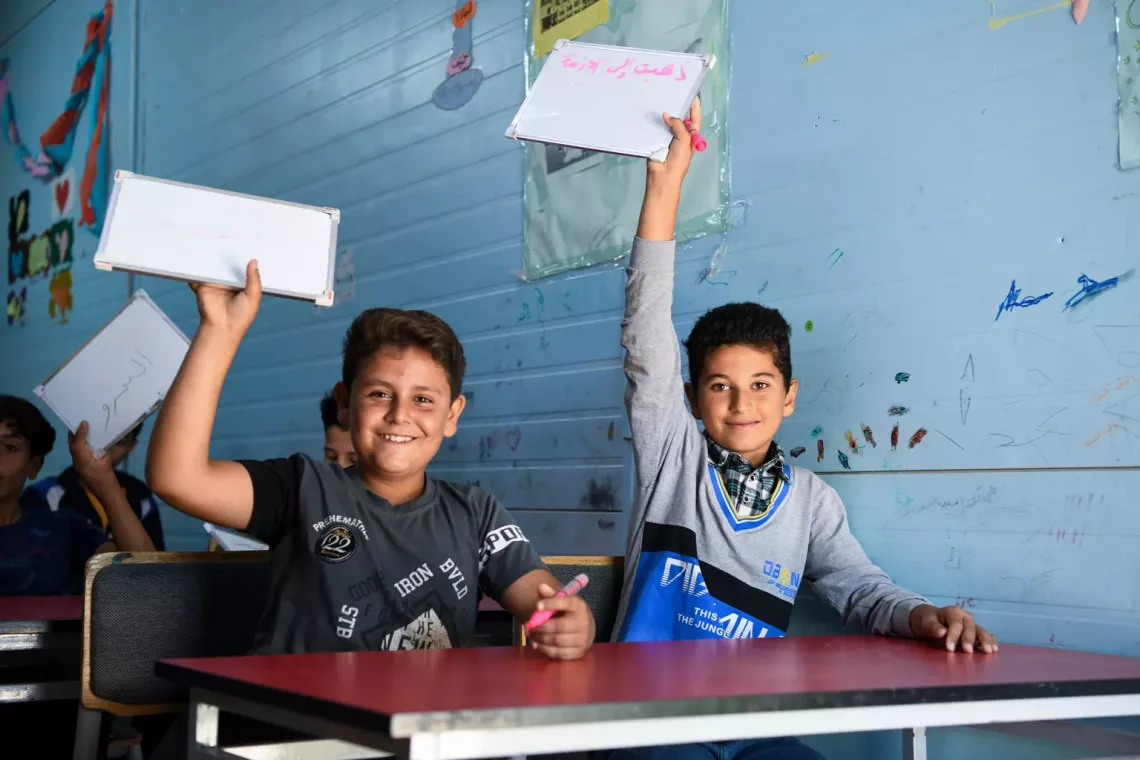
Educational opportunities like Makani centres provide a lifeline in Za’atari. These centres, supported by UNICEF and partners, offer essential literacy and numeracy classes, vocational training and psychosocial support to help prepare refugees for their return home.
Every child has the right to an education, no matter their circumstances. Yet, refugee children are too often confronted with obstacles ranging from language barriers and psychological trauma to limited resources and social exclusion that deny them access to this fundamental right.
Safeguarding futures
Displacement takes a severe toll on children globally. Nearly half of the world's refugees are children and between 2010 and 2023 the global number of children displaced due to conflict more than doubled.
For many, including Nagham and Abdulhamid, prolonged displacement — often lasting many years — disrupts their childhood and education.
"Education has always been the key to unlocking the potential for individuals to rise, for families to thrive and for communities to grow stronger. In our family, this belief is deeply rooted in our Arab values and Emirati traditions passed down through generations. That’s why we’ve made education the heart of our philanthropic work,” says HE Abdul Aziz Al Ghurair, a philanthropist in the region and a member of the UNICEF International Council.


The stakes are high. If children miss the chance to learn essential skills now, their futures are at risk. Many are already up against challenges like work permits and legal barriers, but a lack of educational attainment closes doors to jobs and careers, including in technology and innovation among other emerging fields.
From the region, to the region, for the region
Since 2018, Abdul Aziz Al Ghurair Refugee Education Fund has been committed to expanding access to education as a pathway to opportunity for refugee youth and their communities. Initially aiming to reach 20,000 young people, the Fund has now supported over 100,000. Through its partnership with UNICEF, the Fund has also helped strengthen Makani centres in Jordan to empower displaced communities and build more self-reliant futures.
The term Makani means ‘my place’ in Arabic, embodying a sense of belonging and stability amid the uncertainty of life in refugee camps for children who need a space where they can feel secure and engaged.
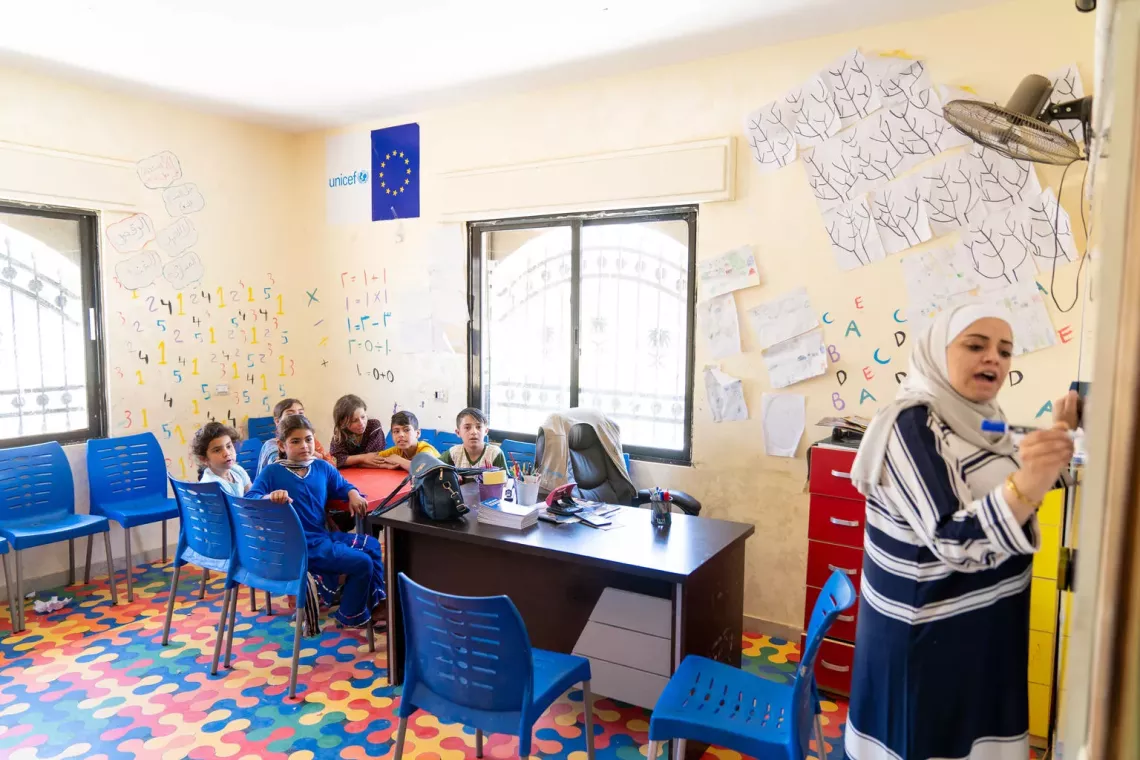
“These children have suffered a lot. Through arts and play, we help bring back a sense of normality to their lives,” explains Abeer, a facilitator at one of the Makani centres.
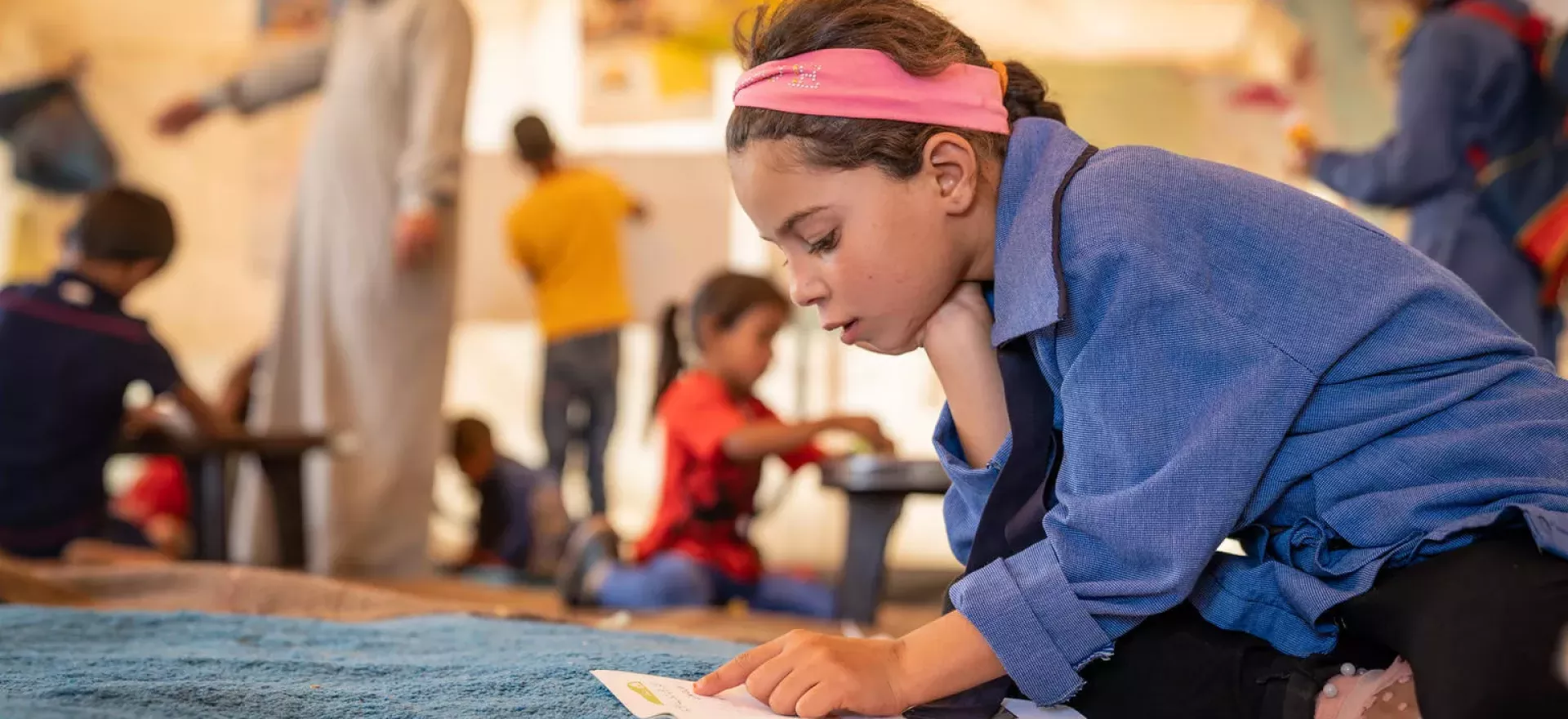
UNICEF/UN0239902/Herwig
“I like school. I need to keep going so I can grow up and become a teacher," says Malak, 9.
“UNICEF is a trusted organization, and trust is key in our connected world, where our giving needs to be connected,” says HE Abdul Aziz Al Ghurair. Speaking about the International Council, he adds, “as part of the council, we can leverage our support beyond just giving funds. We share our knowledge, influence, networks and, with UNICEF’s expertise, identify opportunities that maximize our impact."
This collaborative approach has led the Refugee Education Fund to support over 60,000 children and young people in Jordan, Lebanon and conflict-affected children within the United Arab Emirates, with contributions supporting various partners, including UNICEF.
By delivering high-impact education programmes at secondary, vocational and tertiary levels, the Fund helps tackle critical gaps in education, health, nutrition, water and sanitation, early childhood development and youth empowerment.
UNICEF/UNI503343/Bseiso
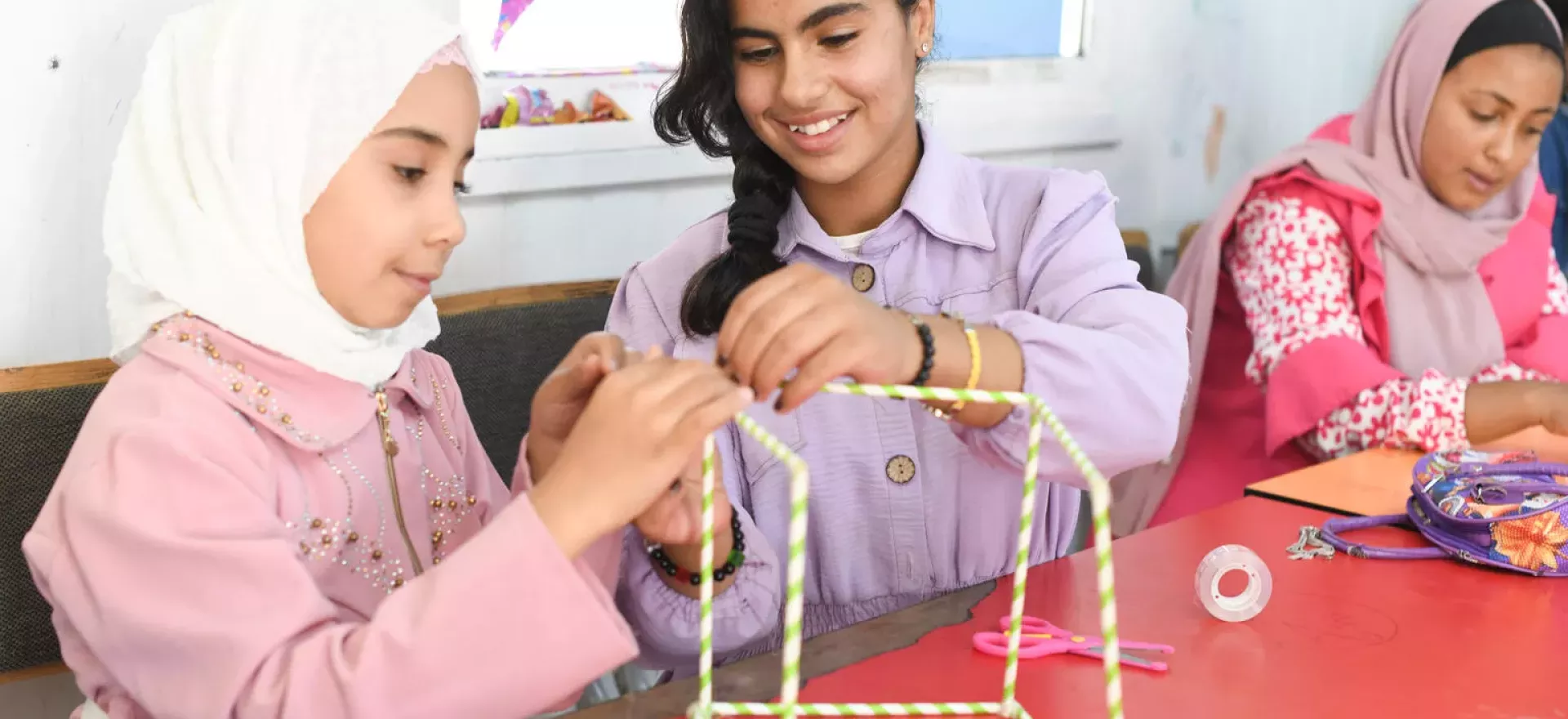
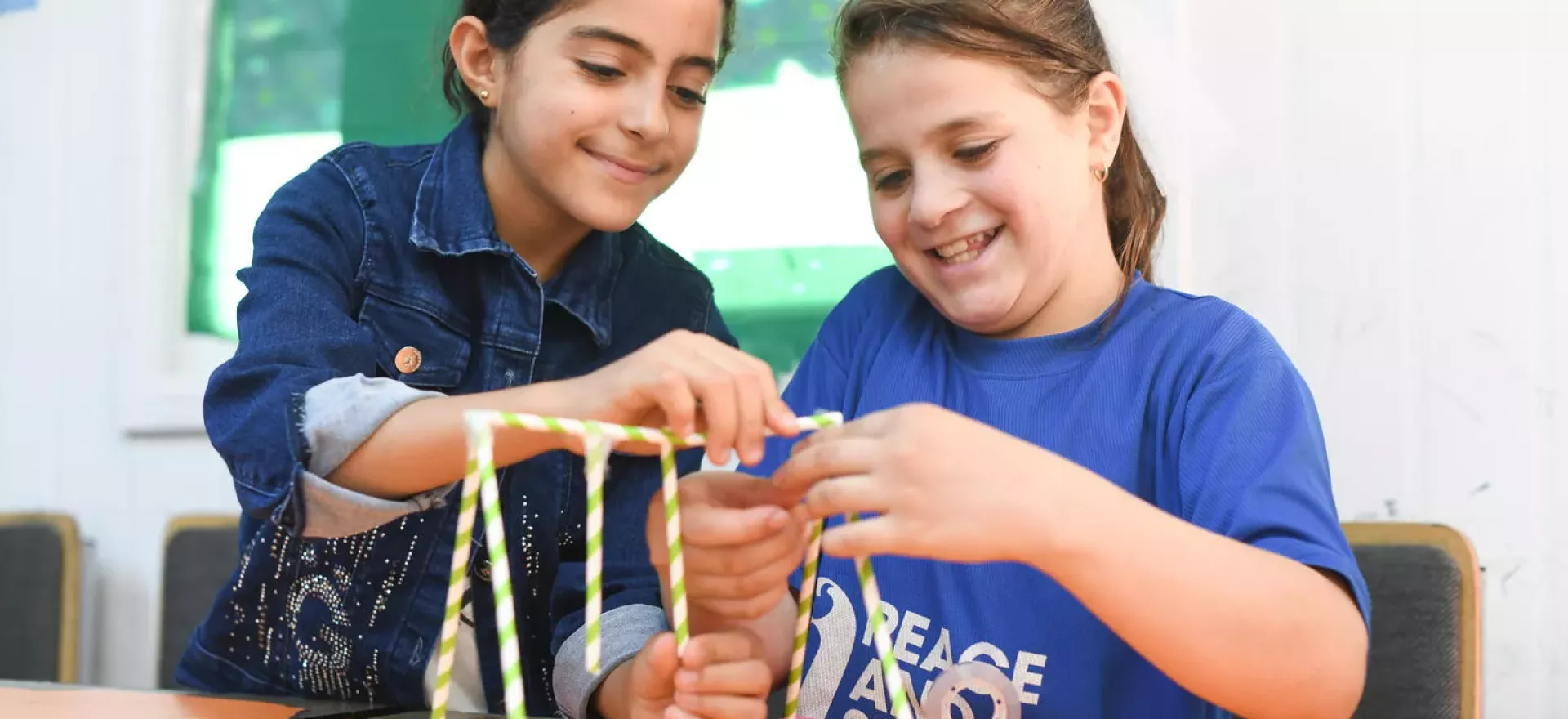
When asked about her days at the centre, Ayah, 11, says, "Today, my teacher told us to work in pairs and construct something that represents our feelings. My friend and I built a house that represents the Makani centre and our friendship. We call it the ‘house of friendship’. Without friendship, life wouldn’t have any colour. Here I have many friends who I love, and this is the only place that we can go to do fun activities together.”
UNICEF/UNI503351/Bseiso
“The Makani centre is part of my identity,” says 11 years old Malak. “It has given me hope for a better future. I want to grow up and become a facilitator here at this Makani centre because I want to carry on the good work they do. One day, I want to give hope to children just like my facilitators do for me now.”
This is just the beginning of the story, because these young people will graduate and enter the workforce. This is the kind of investment that yields dividends for a lifetime,” says HE Abdul Aziz Al Ghurair, who is also a board member of Generation Unlimited and is its Champion of Youth for the Middle East region. Generation Unlimited is a leading global public-private-youth partnership, bringing together global organizations and leaders to co-create and deliver innovative solutions.
At UNICEF we continue to work closely with the Government of Jordan and regional partners to build a more inclusive and accessible education system for all children, regardless of their background or circumstances - creating opportunities that will help empower future generations.
UNICEF Jordan Makani Centres are supported from partners committed to our mission, including the Abdul Aziz Al Ghurair Refugee Education Fund, Australia, EU, France, Germany (KfW), Ireland, KOICA and USA.
Al Ghurair provided flexible funding to Generation Unlimited and supports Makani in both refugee and host communities. They also support entrepreneurship and on-the-job training programmes.