Confronting a changed childhood in Crete
In Greece, young people are grappling with water scarcity amid climate change.
Crete, one of Greece's most iconic tourist destinations, is experiencing a severe water crisis that reflects the broader challenges posed by climate change. Years of reduced rainfall and rising temperatures have left reservoirs critically low, impacting agriculture, daily life, and the wellbeing of the island's youth.
The Aposelemis Dam, which supplies water to the capital Heraklion is at just 14 per cent capacity. Similarly, Lake Kournas – a vital habitat for migratory birds and protected area – has reached a state of emergency.
Many municipalities of Crete have declared a state of emergency due to water scarcity.
A general view of Kournas Lake, Crete on 24 November 2024. Lake Kournas — a vital stopover for migratory birds, part of the Natura 2000 network and which provides water to nearby villages — has reached a state of emergency due to low water levels.


Lake Kournas, which provides water to surrounding villages, is at dangerously low levels underscoring the growing severity of water scarcity in the region.
Children and climate change: A disproportionate burden
Climate change poses distinct risks to children, who are often the most vulnerable during environmental crises. Half of all children in Europe and Central Asia face frequent heatwaves, with Greece seeing some of the most severe impacts. While Crete is surrounded by water, it is ground zero for the island’s water scarcity crisis. Rising temperatures, over-tourism, and insufficient infrastructure exacerbate the problem, affecting children’s rights to education, health, and development as guaranteed by the Convention on the Rights of the Child.
Children and young people living on touristic islands like Crete, are disproportionately bearing the brunt of these escalating challenges posed by climate change.
Sixteen-year-old Giannis Matzanas, U-Reporter and member of UNICEF's Greece Child & Youth Advisory Board, has witnessed the effects firsthand in his village of Pentamodi, 17 kilometers from Heraklion. His family, though not reliant solely on agriculture, has seen their supplementary income from his grandmother’s olive oil production dwindle due to drought.
Bags of olive leaves being emptied into an olive mill in Pentamodi village, Crete. Olive oil production has been massively reduced in Crete due to the lack of rain in the island. In 2024 many municipalities of Crete have declared a state of emergency due to water scarcity.


We used to earn extra income from my grandmother’s olive trees. Last year, we didn’t.
"Last year was a record-breaking year for Crete – in a negative way," Giannis explains. "The lack of water is so severe that many families, especially those dependent on agriculture, will struggle financially. While my family isn’t as severely affected because my parents are teachers, we used to earn extra income from my grandmother’s olive trees. Last year, we didn’t."

UNICEF/UNI698525/Pantelia
In Giannis' mountainous village, extreme weather often results in flooded or blocked roads, cutting off access to school and basic services.
For Giannis and his peers, the impacts of climate change extend beyond economic concerns. "There were times when heavy rains either flooded the roads or caused landslides, and we couldn’t reach the city center. For me, this meant missing classes," says Giannis.
In a poll, 70 per cent of students in Greece reported being unable to attend classes at some point in the school year (2023-2024), due to adverse weather conditions, uncovering how climate change disrupts education.
Increased anxiety and unequal burdens
The psychological toll of climate change is another growing concern for children in Crete and across Greece. A recent survey found that 44 per cent of children in affected regions report heightened anxiety linked to climate change.
Sixteen-year-old Erietta Pantelaki, another student in Crete, reflects on this growing worry: "The effects of climate change are so obvious, and they make me really anxious. If it’s already this bad, what will happen in the future? We’re just starting our lives, and we’re seeing these consequences," she says.
We’re just starting our lives, and we’re seeing these consequences.
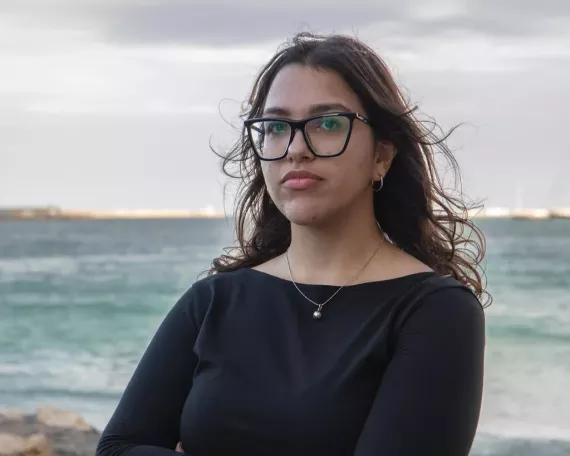
Many neighborhoods across Crete experience frequent water cuts during the summer, leaving families dependent on private water tanks.
Giannis’ classmate, George Orfanidis, describes how his family copes: "I live just outside the city center, and in the summer, when the island is packed with tourists, the water pressure in our house is often too low to meet our needs."


Thankfully, we have a water tank, but it feels unfair that hotels always have water for their pools while residents like us struggle.
A national challenge
The issues faced in Crete reflect broader climate challenges across Greece. The year 2023 was the warmest in the last 30 years in Greece. During the summer of 2024, 25 municipalities across Greece declared a state of emergency due to drought and water stress. Regions like Thessaly, the Peloponnese, and Western Greece are at particularly high risk of disasters.
Children are especially vulnerable, with 307,763 children in Greece estimated to be at high risk from climate change. Despite these alarming statistics, national climate adaptation policies often fail to account for the specific needs of children or to involve them in solutions.


A global call to action
The water crisis in Crete is not an isolated phenomenon; it reflects a global challenge that disproportionately affects children and youth. Across Europe, nearly half of all children face frequent heatwaves, and the psychological toll of climate change – manifesting as eco-anxiety and climate grief – is on the rise.
Youth play a pivotal role in addressing these challenges, emphasizing the need for safe spaces, emotional support, and education on resilience.

For young people like Giannis, Erietta and George, the impacts of climate change are not distant projections but lived realities. Their stories echo those of millions of children worldwide who grapple with disrupted education, health risks, and environmental uncertainty. Addressing these issues requires a global commitment to sustainable practices, inclusive policymaking, and empowering youth voices in climate solutions.
As Giannis poignantly asks: "If we don’t act now, what will the future hold for us?" His question serves as a reminder that the urgency of climate action transcends borders, demanding collaboration, innovation, and a shared vision for a resilient future.
"If we don’t act now, what will the future hold for us?" - Giannis Matzanas
Climate change is changing children
UNICEF's Greece Child and Youth Advisory Board – of which Giannis is a member – was established in January 2025 to strengthen the participation of children and youth in issues that affect their lives. They've expressed their goals as "... fight for the rights of those children who do not have the opportunity to do so, and to give a voice to those who are on the margins."