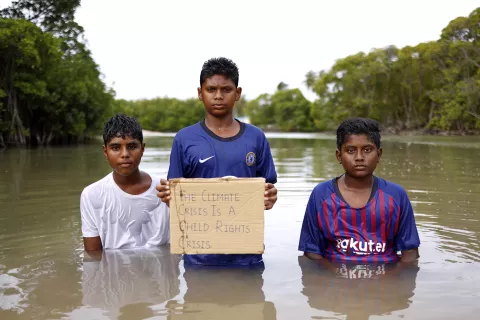
Hope and resilience in a climate-changed world
Children and families in the Philippines strive in the aftermath of a deadly typhoon.
It was the week before Christmas when Typhoon Odette made landfall on the island of Siargao in the Philippines, in December 2021.
Three years on, families are still struggling to rebuild their lives as they confront the impacts of climate change, water shortages, and forced relocation.
The changing climate is causing natural disasters to occur more frequently and with more intensity. Children are the most vulnerable to the urgent crises caused by these events and their aftermath.
But hope prevails. Below are glimpses of resilience in the face of a climate-changing world.
What’s left after Odette
UNICEF/UNI631737/Voisard
“Nothing can replace the memories we made in our old house.”
When Typhoon Odette made landfall on 16 December 2021, Jasmine Sultana couldn’t have imagined what was to come.
Not much remains of life before the typhoon except for rows of damaged houses and a halfway built seawall. This is Siargao Island where Jasmine Sultana’s family used to make a living as farmers, and where Typhoon Odette made landfall during the rice harvest season.

"It was so strong, the water came up to the house." - Jasmine Sultana
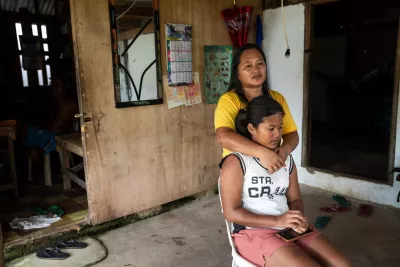
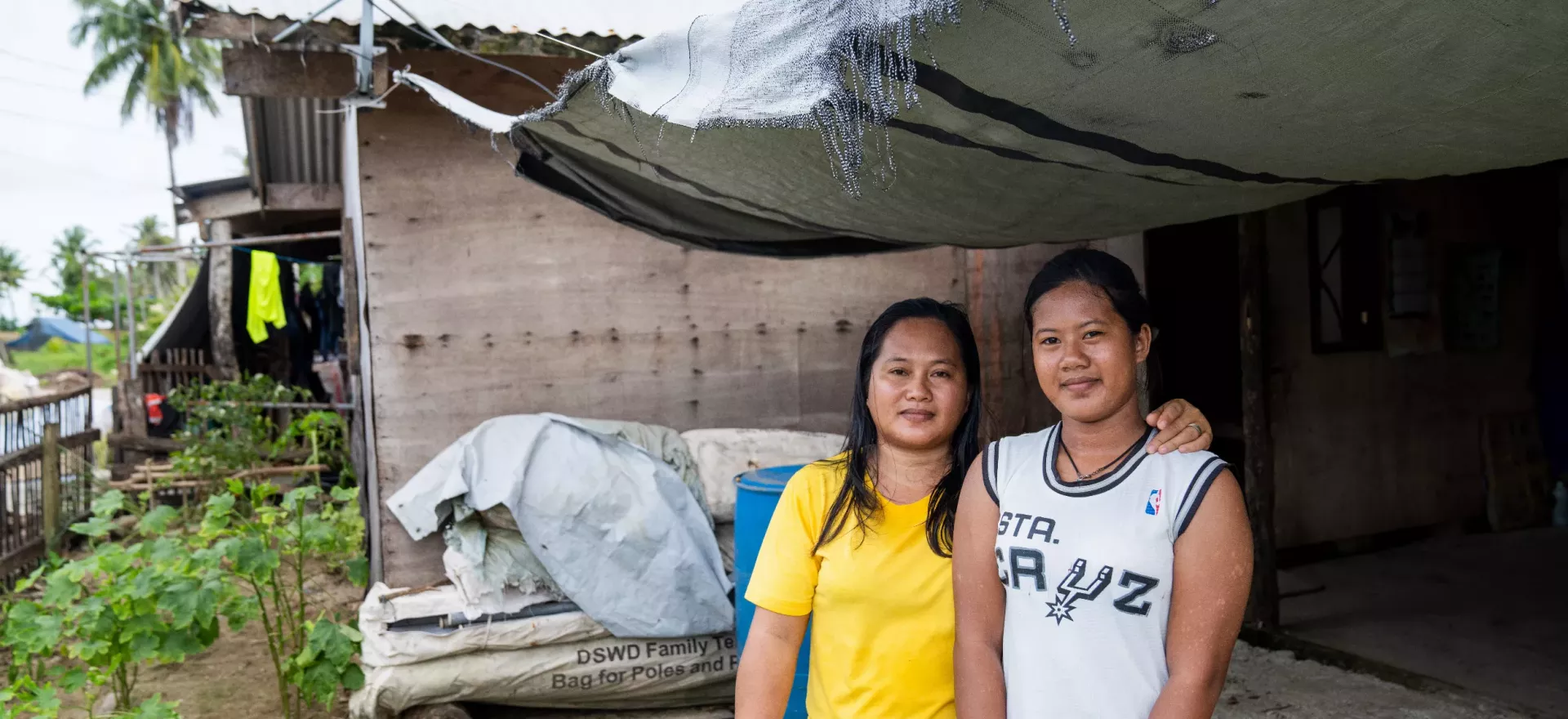
“We really didn’t expect this,” says Jasmine, an arm wrapped around her daughter Jerilyn in their rebuilt home. Official announcements calling for evacuation had not concerned them too much at first. “We are used to heavy rains here,” she explains.
As a precaution, Jasmine sent her two children to her mother’s home with instructions not to come back. But she stayed on with her husband.
And then, it happened. "The water came up to the house," she says. That was the signal for them to leave as well.


When they came back three days later they found everything had been destroyed. Even the road to her home had all but disappeared. Jasmine felt weak from the shock and her husband was left speechless. “Our tears just flowed in silence,” she recalls.


They started rebuilding their home a few yards away from the shore. But the cost is making it a difficult task. The roof is already rusty and in need of repairs.

Her daughter Jerilyn shares “I was sad when I came back. It hurts because nothing was left.” The typhoon swept away so much of their everyday life. She says she misses the plates the most because her daily chores included washing the dishes.
“He’s a good kid but that’s the one thing he won’t do,” she says smilingly of her brother.
Water scarcity has been an ongoing issue on Siargao Island. Since Typhoon Odette, accessing potable water has become harder.
Living a life relocated

A family struggles to access water while trying to pick up the pieces after Typhoon Odette.
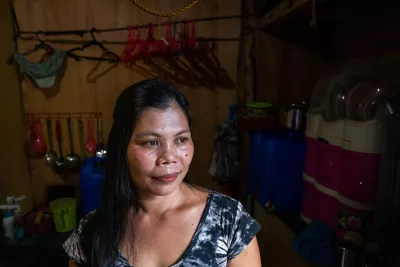
The San Benito relocation centre is home to 12 families displaced by Typhoon Odette. Ian Baro lives here with her husband Jeffy and their two small children.
After Typhoon Odette destroyed their home, Ian and her husband moved to higher ground. They built a makeshift house with materials collected from what the typhoon had left behind. This left them exposed to the elements. After a few months they were able to move into a relocation centre.
Ian says she likes living here. “I prefer the quiet neighbourhood,” she says. “But water is a big problem here.”
"Water is a big problem here." - Ian Baro
Sometimes her husband Jeffy will fetch water from the nearby river. But his work as a contract labourer often keeps him away from the family. It falls on Ian to take care of their children and to ensure the family has access to drinking water.


Rainwater is their main source of water for everyday use like cooking and bathing. When it is not raining, Ian has to walk some distance to fetch water but she cannot leave her young children unattended for too long.
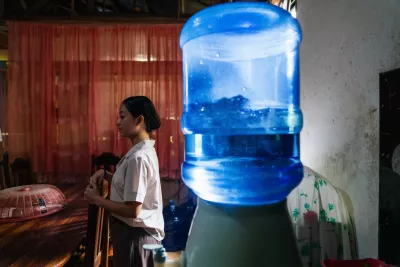
For drinking water, families here rely on cans they buy on the highway up the hill. “There is no other water source for drinking here,” says Ian.


Ian uses a rainwater harvester built by high school students as part of the Kids Innovation, Design and Research Challenge, a partnership between UNICEF Philippines and the Philippines Science High School.

Ian talks about how she uses the rainwater collection and water filtration system installed outside her door. “This is useful, and can help my family,” she says.
A climate-changed childhood

Grade school students Althea and Mary Joy balance school and housework while their families deal with chronic water shortage.
Althea Patino is a grade 12 student who lives with her family in Siargao Island. She manages a household of five people, and is responsible for the money her father, who works in Manila, sends to them.
Frequent power cuts and damaged pipes from heavy rains cause frequent water shortages.
But this year the area has not seen much rain. “Because of the extreme heat, we do run out of water,” she says.


Althea collects water from a public tank near her school or from a stream behind her home. “This is the last option because it’s uphill and muddy so it's kind of hard to carry the water, but it’s the nearest.”
Another source of water is the nearby river where they wash clothes. "It can be hard to cook, and during our periods we sometimes have to go to the neighbour's to clean ourselves."

"It can be hard to cook, and during our periods we sometimes have to go to the neighbour's to clean ourselves." - Althea Patino
Althea’s day starts around 3 am when she sits down to do schoolwork. She then wakes up her siblings and starts preparing breakfast. After school, she cleans the house before cooking again.
Althea attends the nearby San Benito High School with her classmate Mary Joy. Despite a busy routine involving schoolwork and taking care of their families, they are both high academic achievers.

Mary Joy Dramayo, 17, lives with six other family members in a house still under construction.
To avoid future typhoons, Mary Joy’s family had to relocate away from the shore. Her new home is a “a work in progress” as she calls it.
Standing in her kitchen, she recollects the day they were able to start building their new home and breaks down in tears.

The kitchen sink still does not have a faucet. “We’ll put a tap when we have money,” she says.
The tap in the bathroom is the only water source in the house. The water is boiled and stored in plastic containers, and then used for cooking and drinking.


The water supply here runs through multiple puroks (neighbourhoods) before reaching Mary Joy’s family. And it often runs out.
Sometimes it becomes murky during the rains and can’t be trusted for purity. They then need to buy water or use a nearby stream to wash clothes and take baths.
For drinking water, they rely on the nearby waterfall, which is effectively a stream trickling down a pipe. During heavy rains, this water can also get murky.

“This waterfall source has been tested and declared safe,” says Mary Joy reassuringly.
Children are uniquely vulnerable to extreme weather
Typhoon Odette that struck the Philippines in 2021, is one of many extreme weather events exacerbated by the climate crisis that is endangering children's lives and well-being. UNICEF is working to protect all children from the effects of climate change. You can get involved too. Visit #Climate Action to know more.
Photographer: Amanda Voisard; Editor: Supreet Mahanti. Produced in collaboration with UNICEF Philippines.
Thanks to Lely Djuhari, Chief Advocacy and Communications; and Marge Francia, Advocacy and Communication Specialist.