4 ways UNICEF is supporting children in the Democratic Republic of the Congo
Conflict and displacement are taking a heavy toll on families. UNICEF is working with partners to support them.

- English
- Français
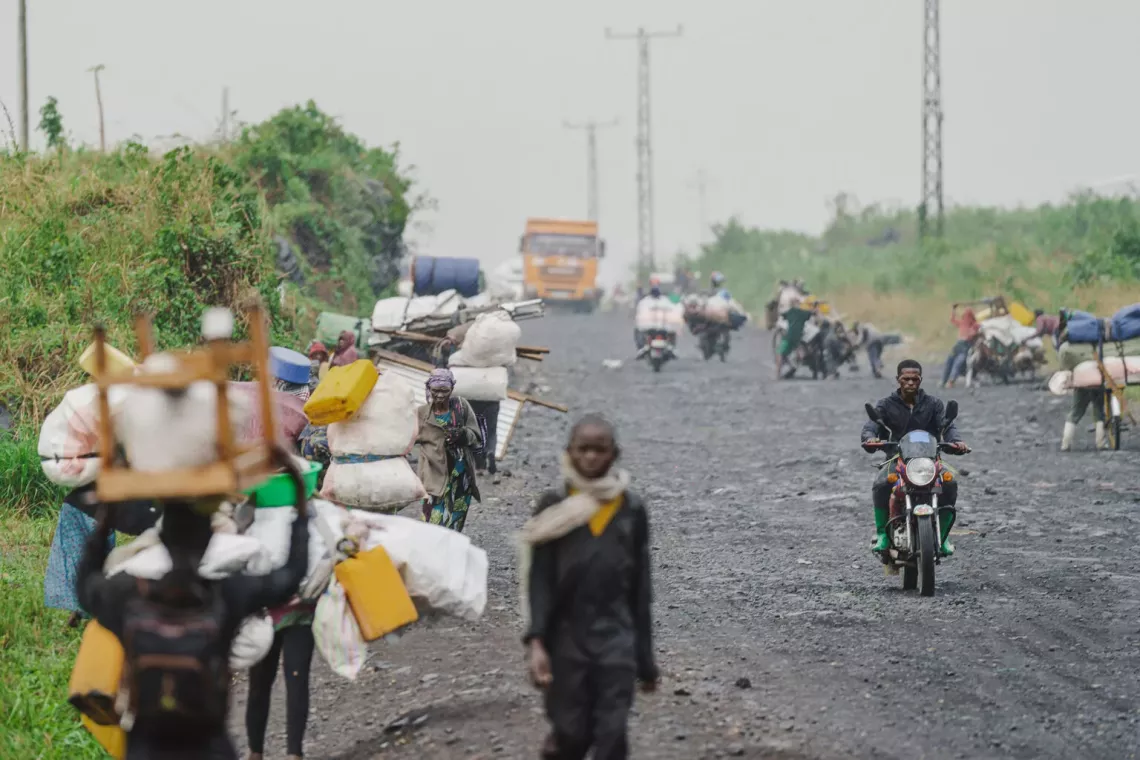
The Democratic Republic of the Congo (DRC) is experiencing one of the world’s most complex crises. Armed conflict and intercommunal clashes have sent hunger soaring and left children ever more vulnerable. The number of internally displaced families has spiraled as armed groups take control of more territory and as violence spreads. Conditions for those who have been displaced are often dire and fraught with danger.
The escalation of violence in eastern DRC has led to the collapse of essential services. Thousands of schools remain closed, children have been separated from their families, and the lack of security and justice services – along with fighting, emptying of prisons, availability of weapons and unexploded ordinance – are leaving children particularly exposed.
With humanitarian funding dwindling, UNICEF-led humanitarian interventions are focused on providing food, safe water, shelter, basic health care, education, and protective services for the most vulnerable, particularly women and children. UNICEF’s support includes:
Protecting children from violence
The violence in eastern DRC has seen the deliberate targeting of civilians, displacement camps, hospitals and schools. Amid the chaos, thousands of children have been separated from their families, exposing them to heightened risks of abduction, recruitment and use by armed groups, and sexual violence. Children’s rights to a safe childhood are being shattered.
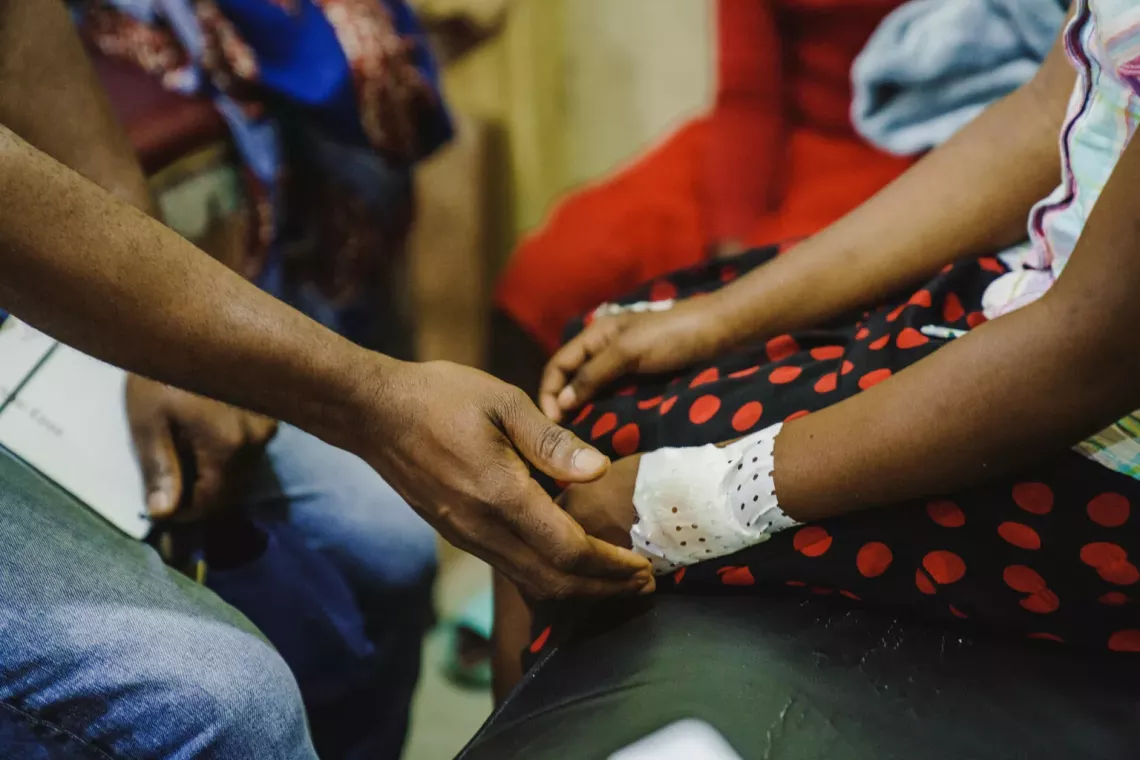
UNICEF remains committed to ensuring that every child’s right to protection is upheld. Despite the increasingly volatile and insecure situation, UNICEF has remained on the ground and has continued to collaborate with partners to deliver frontline child protection services. This work includes urgently registering unaccompanied and separated children, placing them with temporary foster families, and ensuring that they receive essential medical and psychosocial care. UNICEF has also provided child protection services to thousands of children formerly associated with armed groups, unaccompanied and separated minors, and survivors of sexual violence.
Ensuring access to life-saving vaccines
Vaccines are among the greatest advances in global health and development. But conflict and displacement can cut many children off from life-saving health services, including immunizations. The emergence of a new, more deadly, variant of the mpox virus in 2024 compounded the challenges already facing many children and families living through ongoing conflict, displacement, cholera and polio outbreaks, and malnutrition.

As part of its response to the mpox emergency, and in line with the Government’s National Preparedness and Response Plan, UNICEF has enhanced community-based surveillance, trained health workers, hygienists, and community engagement teams, and supported the deployment of thousands of community workers to raise awareness, with dozens of local radio stations broadcasting public health messages. As a result, more than 50 million people received information on mpox prevention, symptoms and health services through SMS, digital platforms, media, influencers, and face-to-face engagement.
In addition to the mpox response, UNICEF also worked with partners to support vaccinations for cholera, measles and polio.

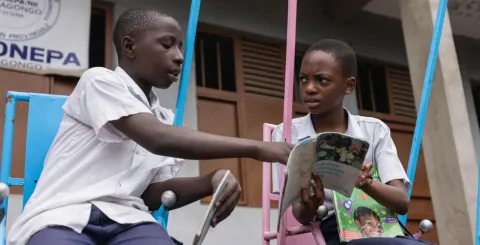
Helping children resume their education
In eastern DRC, violence by parties to the conflict means hundreds of thousands of children who should be safely learning in classrooms have instead been displaced by violence, and often unable to attend school. Many schools have been attacked; others are being used by parties to the conflict as shelters or by those who have been displaced by the violence.

UNICEF and partners support schools, including by setting up emergency temporary learning spaces in camps for displaced people and in locations where internally-displaced people have moved back to help children resume their education. UNICEF is also distributing school supplies, providing remedial classes and psychosocial support, and supporting play-based and peacebuilding activities.

Providing safe water
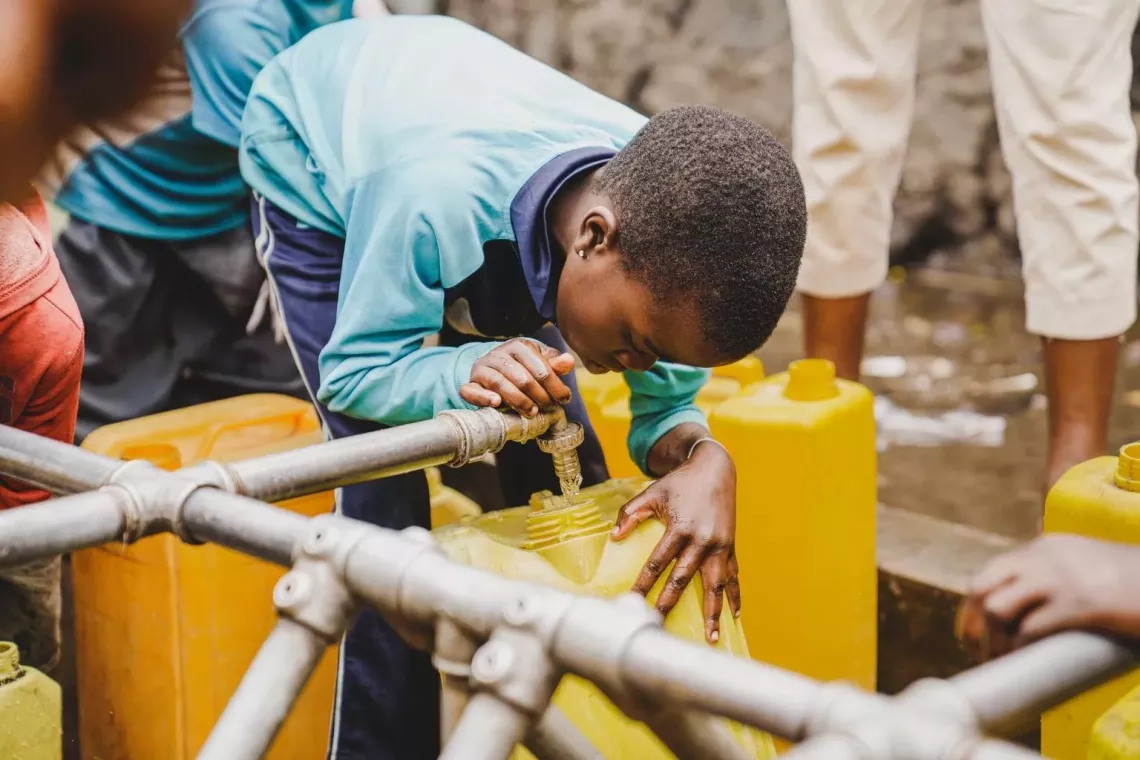
Inadequate access to safe water has forced many displaced families in the DRC to reduce or ration their water supplies or else drink water that’s clearly contaminated. For children, the consequences can be deadly, as water- and sanitation-related diseases remain among the leading causes of death in children under five. Inadequate access to safe water also increases the risk of gender-based violence for women and girls collecting water and firewood.

Following the intensification of fighting in the eastern city of Goma in early 2025, UNICEF and partners provided life-saving clean water supplies to hundreds of thousands of people a day – more than half of them children – following breaks in the water supply. UNICEF and partners also set up dozens of chlorine sites along the side of the lake to help limit the cholera outbreak in the area. By early March 2025, UNICEF and partners were continuing to provide clean water to more than 100,000 people daily in Goma and Minova, in north and south Kivu, respectively.
Despite the support, humanitarian needs in DRC far exceed the assistance currently being provided. Access is increasingly challenging, and resources are extremely stretched. Families in the Democratic Republic of the Congo continue to face a humanitarian catastrophe of massive proportions. They need support and they need peace, now.