UNICEF Executive Director Catherine Russell remarks at the COP30 Leaders Summit – General Plenary of Leaders
Checked against delivery
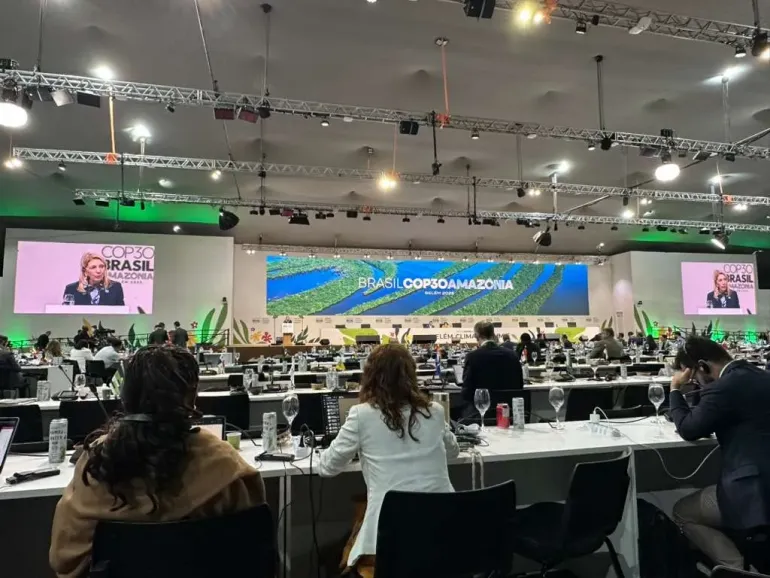
BELEM, BRAZIL, 7 November 2025 – “Excellencies, thank you very much for giving me the floor. And thank you to His Excellency President Lula and the COP30 Presidency for convening us here in Belém.
“Children today live in a world that is hotter and more polluted than the one we grew up in.
“This climate crisis is, at its heart, a child rights crisis.
“Children make up one-third of the world’s global population and half of all people living in extreme poverty. Half the world’s children live in countries at extreme risk of climate chaos. And because children are smaller with less developed systems, they are much more vulnerable to climate change than adults are.
“The risk to children begins even before they take their first breath. For every one-degree Celsius increase in temperature, the odds of a pregnant woman experiencing a preterm or stillbirth rise by 5 per cent.
“Once born, the threats continue. During heatwaves, children’s bodies heat up faster and sweat less efficiently, putting them at greater risk. They also breathe twice as fast as adults — which means they inhale more polluted air.
“By the 2050s, children’s exposure to heatwaves is projected to increase eightfold. Already, one in five children experiences at least double the number of extremely hot days each year compared to when their grandparents were children.
“Climate events are growing in frequency and severity.
“The science is clear about what needs to be done. What is less clear is will we meet the challenge? Will the world act to protect children?
“We know what we must do, which is urgently reduce emissions. A just energy transition will bring enormous benefits for children — reducing air pollution, which accounts for 15 per cent of all under-five deaths, and creating new opportunities for young people in the green economy.
“We must scale up investments in adaptation and in the response to loss and damage — particularly in the basic services children rely on to survive and thrive: health, education, water and sanitation, nutrition, and social protection.
“UNICEF welcomes the growing recognition of children’s needs in national plans and in the COP process.
“Today, 70 per cent of the Nationally Determined Contributions include child-sensitive commitments, and 70 governments have signed the Declaration on Children, Youth and Climate Action. We commend your leadership and reaffirm UNICEF’s readiness to support your efforts.
“Children need and deserve a cleaner, safer planet. The question for all of us is will we meet the challenge?
“Thank you.”
#####
Media contacts
About UNICEF
UNICEF, the United Nations agency for children, works to protect the rights of every child, everywhere, especially the most disadvantaged children and in the toughest places to reach. Across more than 190 countries and territories, we do whatever it takes to help children survive, thrive, and fulfil their potential.
Follow UNICEF on X, Facebook, Instagram and YouTube