New SMART survey provides updated assessment of child and maternal nutrition in accessible areas of Gaza
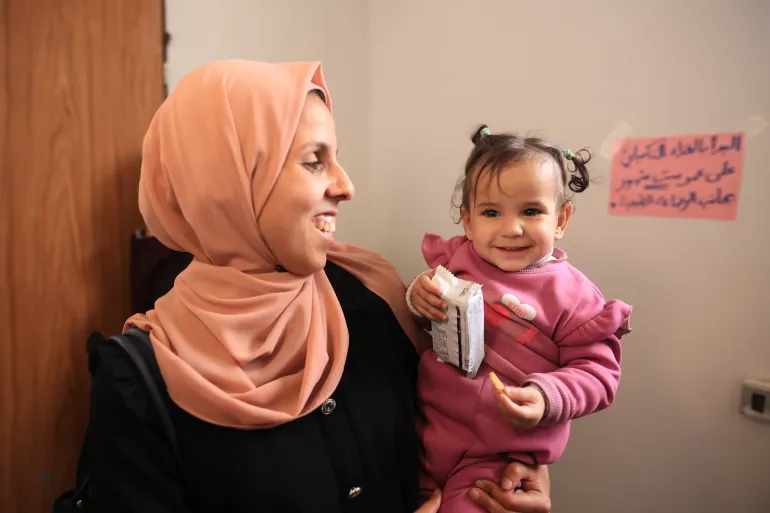
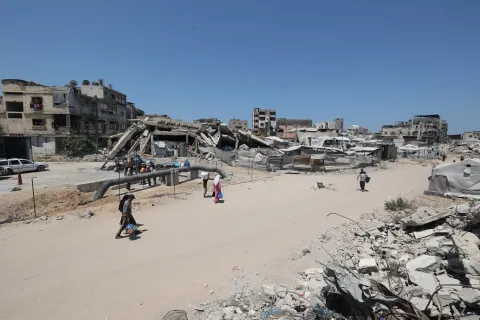
AMMAN, 24 August 2026 – A new population-based nutrition survey conducted in accessible areas of the Gaza Strip shows a complex nutritional picture: relatively low acute malnutrition among children in the accessible population, concerning rates of chronic malnutrition (stunting), maternal malnutrition, very poor dietary quality, suboptimal infant and young child feeding practices, and a substantial burden of childhood illness.
Acute malnutrition among children under five was low. Chronic malnutrition, or stunting - an indicator of impaired linear growth that reflects cumulative nutritional and health conditions over time - affected 12.2 per cent of children under five. Overweight affected 4.0 per cent. The coexistence of stunting, wasting, and overweight in the same population points to poor dietary quality rather than food quantity alone: 73.0 per cent of children aged 6–23 months had consumed unhealthy foods in the previous day, and only 22.4 per cent received a minimum acceptable diet. Some 37.1 per cent of children under five had experienced diarrhoea during the two weeks preceding the survey. Maternal malnutrition was also documented among girls and women aged 15–49.
The survey was conducted between 31 May and 15 June 2026, following a substantial expansion of humanitarian assistance after the October 2025 ceasefire. In the months before the ceasefire, including August 2025, when the Integrated Food Security Phase Classification (IPC) confirmed Famine in Gaza, severe access constraints and supply disruptions meant that blanket supplementary feeding - a principal means of preventing acute malnutrition – had largely ceased across Gaza. Some programmes to detect and treat malnutrition continued to operate, but the supplies and access needed to prevent children becoming malnourished in the first place were not reaching them. Following the ceasefire, the resumption of aid and commercial traffic have meant that while admissions for treatment of acute malnutrition peaked at nearly 17,000 children in August 2025, they had fallen to under 3,000 by March 2026.
“Children’s nutrition improves when aid and commercial supplies reach them - and deteriorates just as quickly when it does not. The improvements we are seeing are fragile and depend on sustained humanitarian access, adequate funding and functioning commercial markets. Without them, progress could be reversed within months, and children will again pay the highest price,” said UNICEF Regional Director for the Middle East and North Africa, Edouard Beigbeder.
Different nutrition indicators capture different dimensions of nutritional wellbeing and reflect conditions over different periods and lengths of time. Acute malnutrition reflects more recent nutritional status, while stunting reflects cumulative nutritional and health conditions over a longer period. The survey findings should therefore be considered together rather than using any single indicator to characterise the overall nutritional situation.
"Acute malnutrition can improve within weeks. The wider damage does not," said Beigbeder. "Children need safe water, health care, and diverse and nutritious food, not only enough calories to survive."
The survey is representative of accessible areas. Around 17 per cent of Gaza's population, some 358,000 people, was excluded from the sampling frame before cluster selection because of access and security constraints.
UNICEF calls for sustained and unimpeded humanitarian access, including for fuel; continued funding for nutrition, health, and water and sanitation services; and open commercial markets, to protect children from renewed deterioration.
#####
Notes for editors:
*The Gaza SMART Survey was conducted by the State of Palestine Nutrition Cluster, which UNICEF leads. Data was collected between 31 May and 15 June 2026, and 1,335 children aged 0–59 months were measured across 147 clusters. A SMART survey is cross-sectional. It measures a defined population at a single point in time, over a short window. It carries no information about conditions before or after that window, and is not designed to assess earlier periods or to serve as a nationally representative statistic for international comparison.
About UNICEF
UNICEF, the United Nations agency for children, works to protect the rights of every child, everywhere, especially the most disadvantaged children and in the toughest places to reach. Across more than 190 countries and territories, we do whatever it takes to help children survive, thrive, and fulfil their potential.
Follow UNICEF on X, Facebook, Instagram and YouTube