Hunger and malnutrition crises persist in Somalia as projected floods and funding shortfalls threaten vulnerable populations
Hunger and malnutrition crises persist in Somalia as projected floods and funding shortfalls threaten vulnerable populations
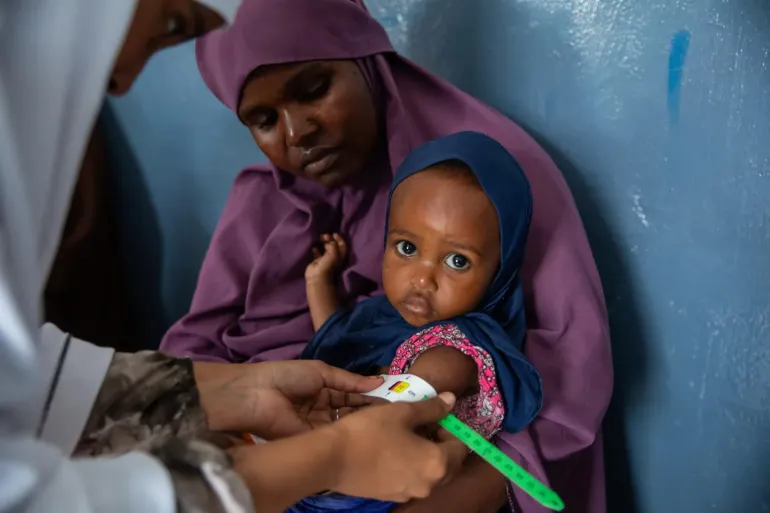
MOGADISHU, 23 September 2026 – Millions of people across Somalia continue to face high levels of hunger, while acute malnutrition among children is set to worsen over the coming months as heavy flooding associated with the anticipated El Niño is expected to worsen the situation during October to December 2026, the Federal Government of Somalia and the United Nations (UN) warned today.
The latest Integrated Food Security Phase Classification (IPC)* analysis projects that 5.4 million people will face crisis levels of hunger or worse between October and December 2026, including 1.5 million people facing emergency levels of hunger or worse. According to the IPC analysis, 1.92 million under-five children will require treatment for acute malnutrition between July 2026 and June 2027, including 433,000 children with severe acute malnutrition - the deadliest form. Nearly 62 per cent of the country's malnutrition burden is concentrated amongst rural populations, while internally displaced people in Belet Weyne and pockets within the displacement sites in Baidoa are projected to reach Extremely Critical levels (IPC Acute Malnutrition Phase 5) as anticipated flooding disrupts access to services.
According to the assessment, acute malnutrition in Burhakaba district, Bay region, which was at risk of famine in April, has improved, as a combined result of the Gu rains and a scale-up of the humanitarian response in that district. The current analysis, however, indicates a risk of famine in Baidoa, also in Bay region, where internally displaced people (IDPs) face both catastrophic hunger risk and extremely critical malnutrition classifications. As the risk of famine assessment for Baidoa IDPs is based on data collected in April 2026, a follow-up assessment is planned for October 2026 to gather new evidence and confirm the level of risk.
“The humanitarian crisis in Somalia remains dire, and millions of people are at risk due to these high levels of hunger and malnutrition,” said George Conway, Humanitarian Coordinator for Somalia. “The projected threat of El Niño-related flooding will further undermine already fragile livelihoods, displace vulnerable communities and increase the risk of disease. We call for urgent action and additional resources to protect lives, strengthen preparedness and prevent this crisis from deteriorating further.”
The period from October to December 2026 carries the highest risk, as floods are projected due to heavy El Niño-induced rains that will hit rural riverine and agropastoral communities hardest — destroying crops and livestock, cutting households off from markets and income, and triggering new waves of displacement. According to the Somalia Disaster Management Agency (SODMA), 2.5 to 3.5 million people could be exposed to flooding, with 1 million likely to be displaced from areas where they farm and graze livestock, swelling the ranks of people already facing acute hunger.
“We are deeply concerned by the worsening food insecurity and malnutrition situation, particularly as we prepare for the potential impacts of El Niño,” said Mohamuud Moallim Abdullahi, Commissioner, Somalia Disaster Management Agency (SODMA). “The Government is working closely with humanitarian partners and state authorities to address the multiple crises that Somalia is facing. We urge all partners and donors to support these efforts so that we can act early, protect lives and livelihoods, and reduce human suffering.”
The Federal Government of Somalia and the UN are calling for immediate action to protect and finance the continuity of both general food and cash assistance and treatment for severe and moderate acute malnutrition; pre-position food, emergency livelihoods and nutrition supplies, and enhance cash readiness in rural and flood-prone areas before flooding restricts road access in October; and scale up integrated food security, nutrition, health, and water and sanitation outreach, as well as screening for rural host communities and IDPs alike in the highest-risk districts. With limited funding, a sustained investment in seasonal food security, nutrition and mortality assessments and monitoring is urgently needed to inform prioritisation decisions and support timely action. Funding decisions taken in the coming weeks will determine whether both food and treatment are available when the October deterioration begins — and whether these can still reach communities once roads are cut.
Agropastoral communities across the country, already weakened by successive poor seasons including the below-average 2026 Gu rains, are among the most affected. Rural areas account for two-thirds of the malnutrition burden. El Niño-induced flooding anticipated during the Deyr (October to December) season is expected to exacerbate existing vulnerabilities, disrupt food production and drive further displacement, food insecurity and malnutrition.
"Families already facing hunger cannot afford to lose their harvests or livestock to floods," said Etienne Peterschmitt, FAO Representative in Somalia. "Urgent funding is needed to turn early warnings into action, to save lives, protect livelihoods, and support early recovery for rural populations as this crisis deepens."
“Millions across Somalia are struggling to recover from drought, insecurity and high food costs, with many families having exhausted the resources they relied on,” said Hameed Nuru, WFP Representative and Country Director in Somalia. “As flooding threatens to bring yet another shock, WFP is preparing for the months ahead, delivering assistance to communities most in need, and supporting early action to protect lives and livelihoods. The support we receive now will determine how many families we can support before the crisis deepens.”
“Between 2021 and 2025, UNICEF, together with the Government of Somalia and partners, supported more than 2.25 million admissions of children with severe acute malnutrition. Timely access to treatment has saved lives and given children the opportunity to recover and thrive,” said Sandra Lattouf, UNICEF Representative in Somalia. “Today, these critical services are under increasing pressure due to funding shortages. Urgent support is needed to help Somali authorities and partners maintain treatment services through the end of the year and ensure that essential nutrition supplies reach the children and communities that need them most before access routes become more constrained.
The UN in Somalia is scaling up integrated nutrition, health, water and sanitation, and food security assistance in the highest-risk districts, prioritising areas classified at Phase 4 and above and displacement settlements in Beledweyne and Baidoa.
#####
Media contacts
Additional resources
About UNICEF
UNICEF, the United Nations agency for children, works to protect the rights of every child, everywhere, especially the most disadvantaged children and in the toughest places to reach. Across more than 190 countries and territories, we do whatever it takes to help children survive, thrive, and fulfil their potential.
Follow UNICEF on X, Facebook, Instagram and YouTube