New UNICEF advocacy brief reveals millions of children in Nepal are growing up on the frontlines of the climate crisis
Ahead of COP31, UNICEF calls for greater investment in child-responsive climate action as children face escalating climate and environmental risks
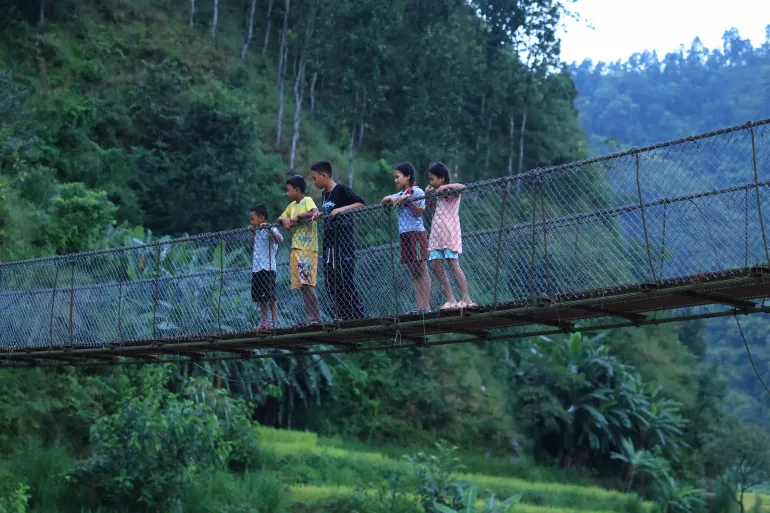
KATHMANDU, 5 November 2026 – A new UNICEF advocacy brief launched today warns that millions of children in Nepal are facing escalating and overlapping climate, environmental and disaster risks that threaten their health, nutrition, education, protection and future prospects. Based on analysis of multiple national and global data sources, Growing Up in a Climate Hotspot: The Risks Shaping the Lives and Futures of Nepal's Children, highlights how climate change is already reshaping childhood across Nepal and calls for urgent action to place children at the centre of climate policy, financing and action.
The findings paint a stark picture:
- 9.9 million children are exposed to unhealthy levels of air pollution, making air pollution one of the most widespread environmental threats facing children in Nepal.
- 7.3 million children are exposed to drought, threatening water security, livelihoods, food production and nutrition.
- 5.7 million children are exposed to extreme hot days, with rising temperatures jeopardizing children's health, wellbeing and learning.
- 2.9 million children are exposed to rainfall-triggered landslides
- An estimated 2.4 million children are exposed to multiple high-intensity climate hazards, compounding risks and making recovery more difficult.
The brief notes that climate change is not only increasing children's exposure to hazards but also placing growing pressure on the services they rely upon. While Nepal has made significant development gains, major vulnerabilities remain. Only 47.5 per cent of the population has access to safely managed drinking water, one in four children under five is stunted, 22 per cent of children live in multidimensional poverty, and climate-related shocks continue to increase risks of child labour, child marriage, disease outbreaks and learning disruption.
"The climate crisis is increasingly becoming a child rights crisis," said Ms Alice Akunga, UNICEF Representative to Nepal. "Children have contributed least to climate change, yet they are among those bearing its greatest consequences. Every flood, drought, heatwave and pollution episode threatens children's health, nutrition, education and protection. As Nepal prepares to engage in global climate discussions at COP31, we have an opportunity and responsibility to ensure children are placed at the centre of climate action, climate finance and adaptation efforts."
The brief emphasizes that climate risks are not experienced equally. Children living in poverty, girls, children with disabilities, children from historically marginalized communities, and those living in remote and climate-vulnerable areas face disproportionately higher risks while having fewer resources to cope and recover.
In a significant step towards advancing child- and youth-responsive climate action, the Government of Nepal formally endorsed the Declaration on Children, Youth and Climate Action during the National Climate Summit on 29 October. The first-of-its-kind global declaration, launched at COP25 and endorsed by 78 countries to date, commits governments to advancing climate action that responds to the rights, needs and contributions of children and young people. Building on Nepal's global recognition for having one of the world's most child-responsive climate plans, the signed Declaration will be formally handed over to UNICEF representatives at COP31 in Türkiye, further showcasing Nepal's leadership in placing children and young people at the centre of climate policy and action.
Ahead of COP31, UNICEF Nepal is calling on:
- The Government to integrate children's needs and rights across climate policies, adaptation plans, disaster risk reduction strategies and climate financing frameworks.
- Governments, development partners and climate finance institutions to increase investments in child-responsive adaptation and loss and damage, including resilient health, nutrition, WASH, education, child protection and social protection, with access approaches responsive to age, gender and disability
- National and subnational governments to use disaggregated, child-focused climate risk evidence to guide planning and prioritize the most vulnerable communities.
- The private sector to support climate-resilient infrastructure, clean energy solutions and innovations that protect children's wellbeing.
- All stakeholders to ensure children and young people are meaningfully included in climate decision-making processes at local, national and global levels.
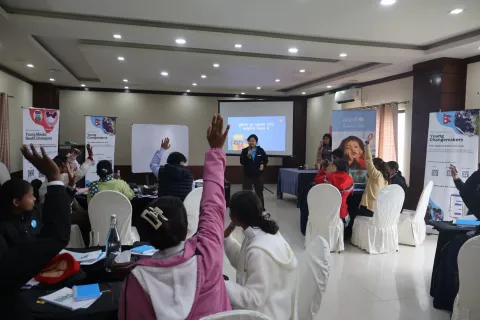
The brief also highlights the importance of listening to children and young people, who are already leading local climate action and advocating for stronger responses.
"Climate change is not a future problem for children; it is already affecting our lives today," said Ms Jayanti Bam, UNICEF Nepal Youth Advocate for Climate Action. "When floods damage schools, children don't just lose classrooms. We lose learning opportunities, routines, friendships and a sense of safety. Young people want to be part of the solution. We are asking decisionmakers to invest in climate-resilient schools and services, listen to children's voices, and give us meaningful opportunities to help shape the future we will inherit."
###
NOTE to editors:
Growing Up in a Climate Hotspot: The Risks Shaping the Lives and Futures of Nepal's Children draws on evidence from the Global Child Hazard Database, Nepal's Children's Climate Risk Index-Disaster Risk Model (CCRI-DRM), the Nepal Multiple Indicator Cluster Survey (NMICS) 2024-25, and UNICEF Nepal's Climate Landscape Analysis for Children (CLAC). Together, these datasets provide the most comprehensive picture to date of children's exposure to climate hazards and the vulnerabilities that amplify their impacts.
The advocacy brief is available at: https://www.unicef.org/nepal/reports/growing-climate-hotspot
Media contacts
About UNICEF
UNICEF promotes the rights and wellbeing of every child, in everything we do. Together with our partners, we work in 190 countries and territories to translate that commitment into practical action, focusing special effort on reaching the most vulnerable and excluded children, to the benefit of all children, everywhere.
For more information about UNICEF and its work for children, visit www.unicef.org
Follow UNICEF Nepal on Facebook, Instagram, YouTube, X and TikTok