“Our school is gone, where will we study?”
Eleven-year-old Aakanshya still fears another flood, but a UNICEF-supported temporary learning centre in Nuwakot is giving her a place to learn, play and begin to recover
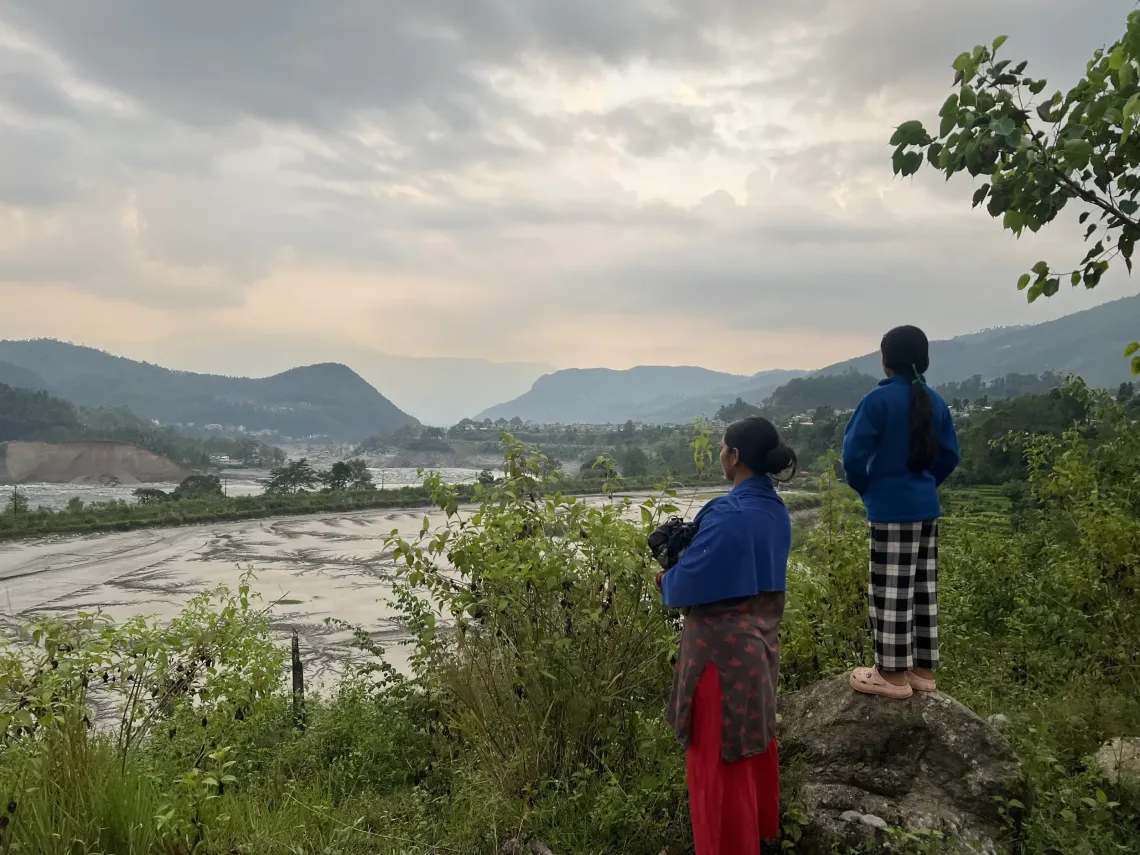
NUWAKOT, Nepal: “We suddenly felt the house shaking, and there was a loud noise. That's when we saw this huge flood coming our way. It was swirling and gushing, and it had broken through this bar of land, making a big gap,” recalls Aakanshya, 11.
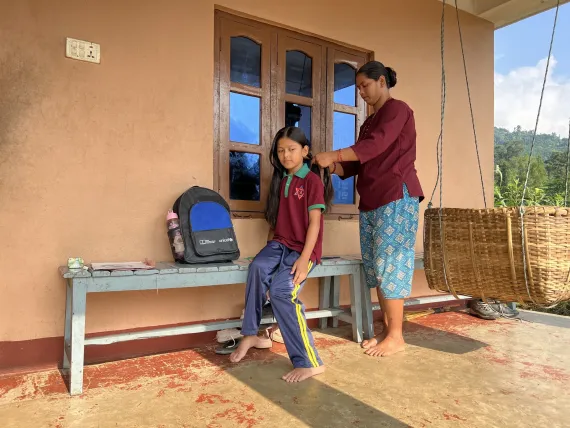
On 26 August 2026, Aakanshya was getting ready for school. Her mother, Parbati, was combing her hair when the house began to shake and dust filled the air. Not knowing what was happening, they ran to a neighbour’s house and climbed onto the roof.
From there, Aakanshya watched the flash flood surge towards them, carrying trees, boxes and debris. “I was very, very scared. I think I was panicking,” she says.
“I was scared the water would get to where we were. That's what I kept repeating over and over: ‘Mommy, it's going to come here, it's going to come here.’”
Her father, a driver, was away on a work trip, her younger brother was at school, and other family members were elsewhere. The water did not reach their home, but the fear stayed.
“I still feel scared now,” she says.
Their home stands on the edge of land vulnerable to landslides, and heavy rain leaves the family anxious. “When there is heavy rain, Aakanshya starts to cry, saying she doesn't want to stay here. But where else can we go?” says Parbati. “This house is all we have.”
For 10 to 12 days after the floods, the children were traumatised and afraid another flood would come. One night at around 4 a.m., when people said the Bhotekoshi River was flooding again, Parbati took the children and ran towards a nearby forest.
The loss of her school added to the distress. Aakanshya had not seen it swept away, but when she went to look afterwards, everything was gone.
“Our school is gone, where will we study?” she asked her mother.
She worried about missing an entire year. “And I had that fear in my heart that another flood might come,” she shares.
For a child who loves learning, it was another painful loss. “She hates missing school, even for a day. She refuses to stay home even when she's sick,” says Parbati. “She loves learning.”
Back to school

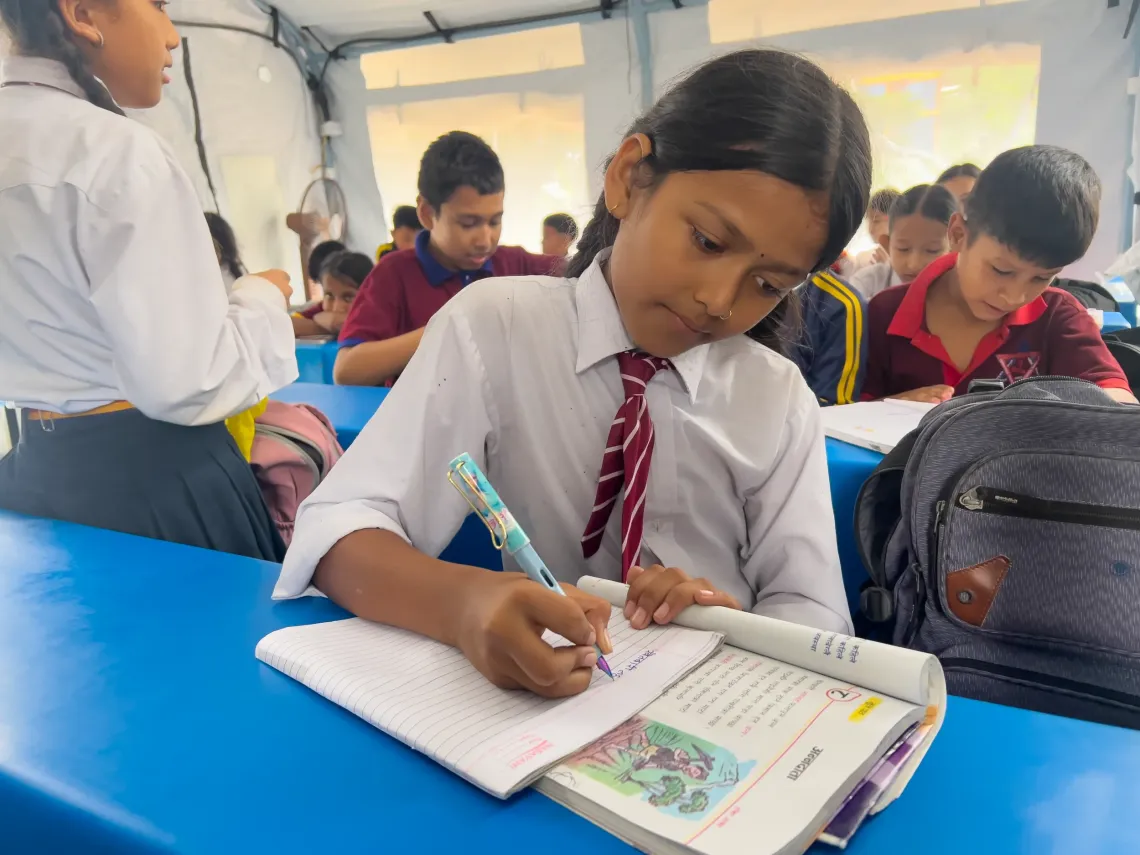

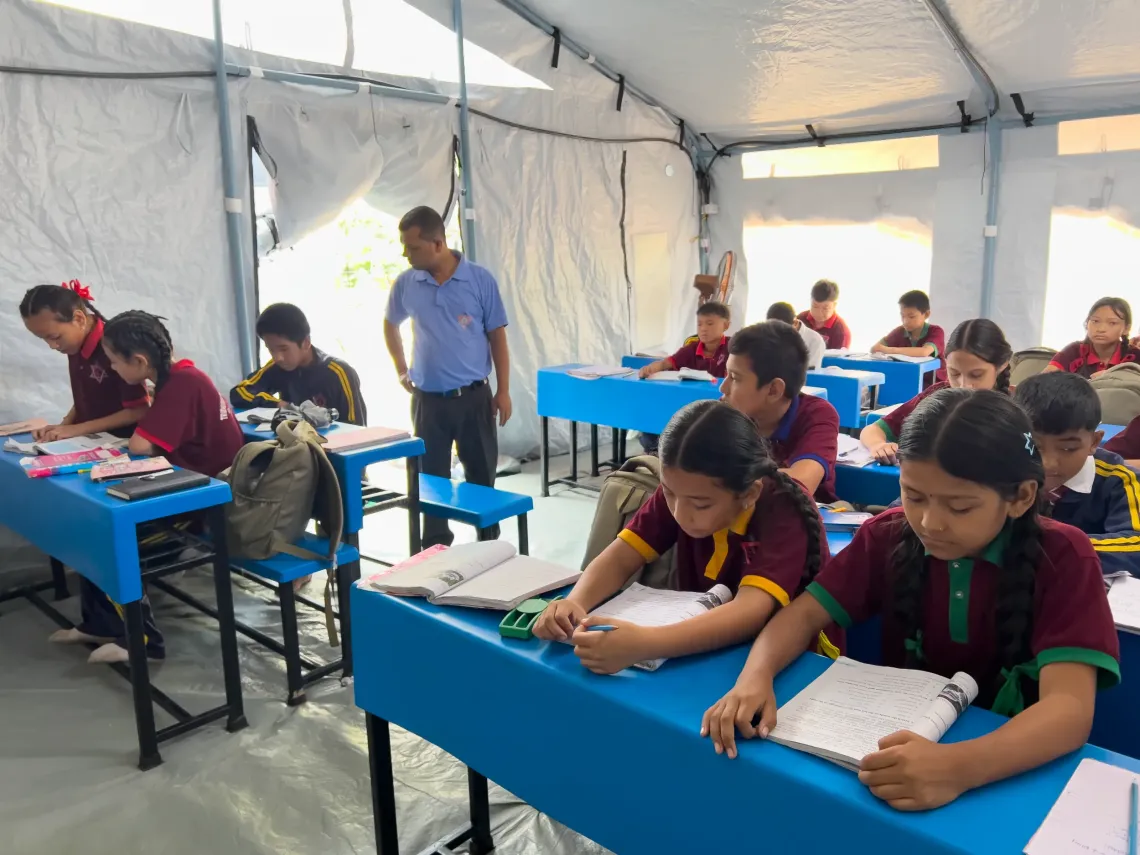

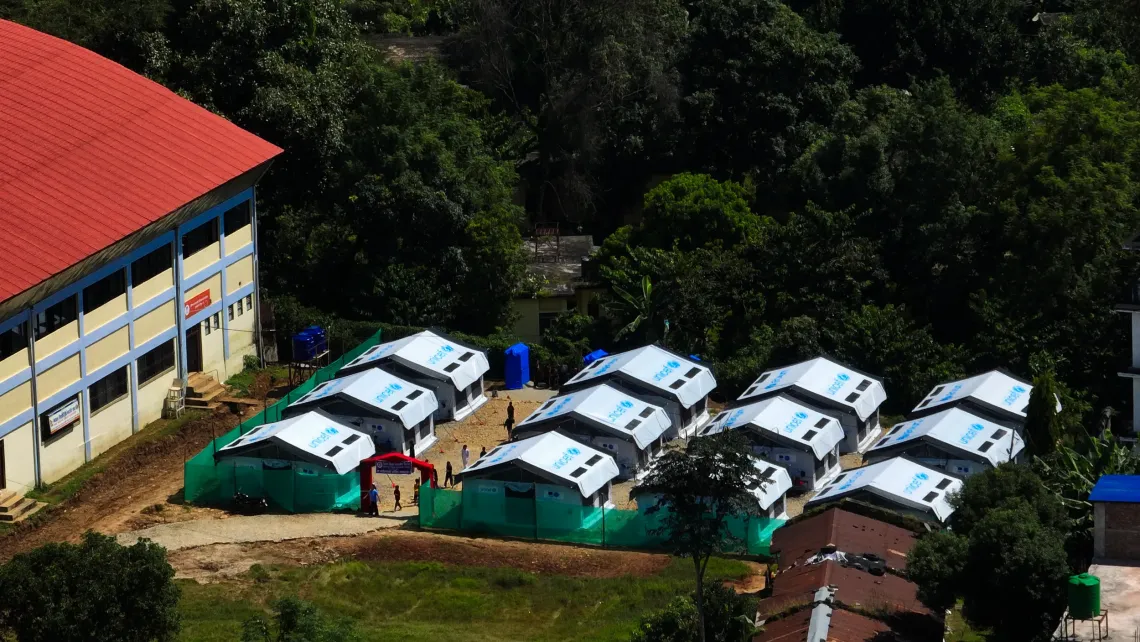
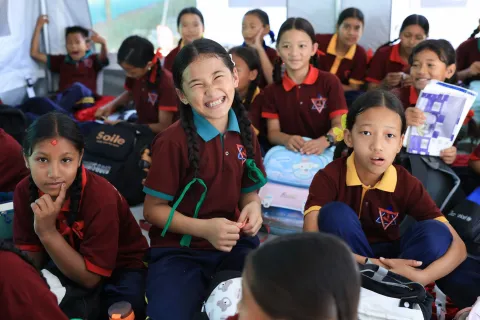
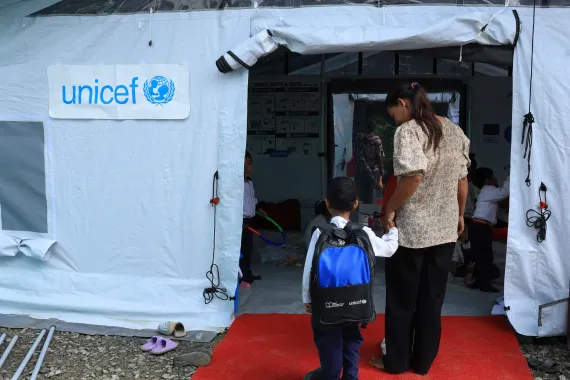
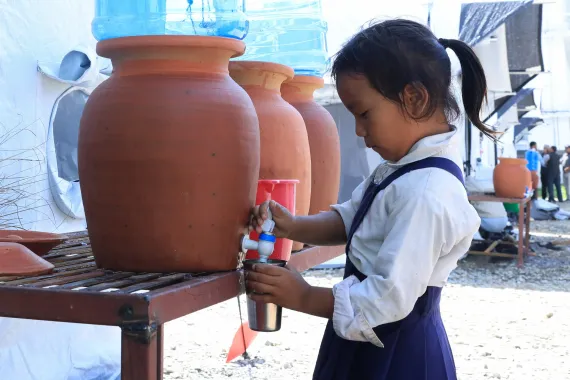
After nearly a month of staying home, Aakanshya was able to return to learning at Tribhuvan Trishuli Secondary School in a UNICEF-supported temporary learning centre in Nuwakot. The classrooms are set up in tents, with benches for older children, cushions for younger ones and two fans in each. Drinking water is available nearby.
To date, UNICEF has supported 52 temporary learning centres, helping more than 1,500 children continue learning in safer environments with inclusive WASH facilities. School and learning materials have also been distributed to around 5,800 children to help them resume their education.
Aakanshya also received a school bag and learning materials through UNICEF support.
“I'm feeling good about school right now. I have fun when I go to class, learning in the tents, playing with my friends.”
Aakanshya’s favourite subject is science, and she enjoys learning about different weather conditions to photosynthesis and how plants grow. She also loves drawing, crafting and dancing, and hopes to become a doctor or a nurse so she can save lives. The floods have shaped how she thinks about safety, too. She has learned about the dangers of rising water and the importance of moving uphill to a place that is safe from landslides.
The response around her left a mark, too. “From seeing how so many people have been distributing relief materials and helping those who have been affected, I've also learned that it's important to help people and not neglect them in times like these,” she says.