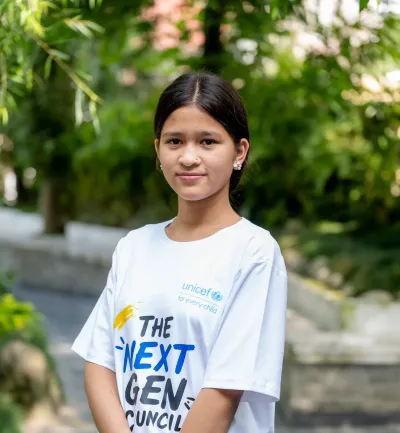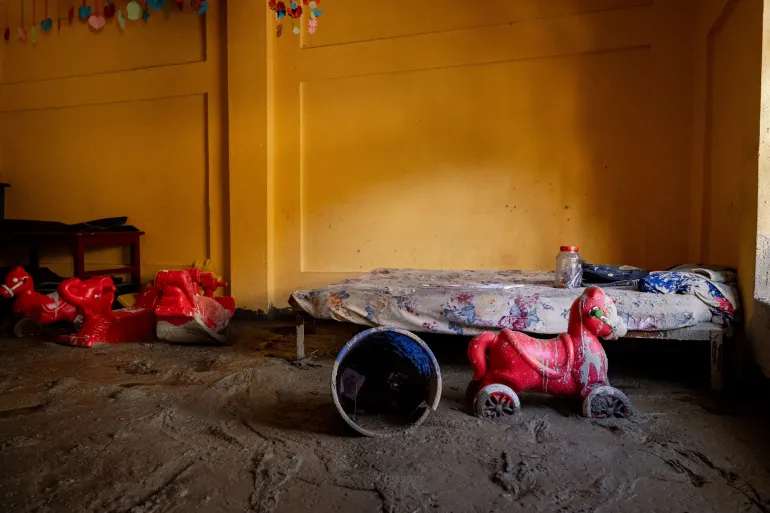
For a long time, I believed that climate change was something I would only read about in textbooks. Then, two years ago, flooding caused by unexpected rains forced my school to close. I still remember the day we saw the video announcing our school was going to be closed for a few days due to the flooding. On other days, a message indicating school closure would have delighted me, but that day looking out at the unseasonal downpour drowning our streets, it brought a heavy sense of dread and lack of control. For the first time, climate change stopped being a distant concept and became part of my daily life. Since then, one question has continued to trouble me: if climate change is already disrupting our lives today, how much more severe will its impacts be in the future?
When I think about it, living far from direct exposure to many of these risks, I feel like I am fortunate compared to many other children in Nepal. But what about children living in remote communities who face the risks of climate-related disasters such as floods, landslides and extreme heat year after year? How do they continue their education when their schools are damaged or destroyed? The truth is, climate-related disasters not only come uninvited, but they also bring a cascade of other challenges with them. Children can lose access to safe drinking water, healthcare and shelter, leaving them vulnerable at a time when they need protection and security the most. Food shortages and poor nutrition can lead to malnutrition and affect their health, growth and ability to learn, with consequences that can last much longer than the disaster itself. At the same time, as disaster outbreaks become more common, the resulting disruption can expose children to greater risks of violence, exploitation and neglect. That is why climate change is not just an environmental crisis. It is also a child rights issue.
Climate change affects everyone, but not everyone experiences its impact equally. Children and young people have contributed very little to creating this crisis, yet we are among those who bear its greatest consequences.
The floods on 26 August and the devastation that continues to affect affected an estimated 84,270 people, including 32,021 children in Rasuwa, Nuwakot and Dhading districts, have left me deeply saddened. I cannot even begin to imagine how difficult it must have been for children my age, and for those even younger than me, to watch their homes, schools and communities get swept away before their eyes. Losing a home or a school is not only about losing a building. It means losing learning opportunities, daily routines, friendships, a sense of safety and often hope for the future. As families become caught up in the struggle to rebuild their lives, children’s dreams and aspirations also gradually begin to fade. And then, little by little, the carefree moments, the uninterrupted joy and the sense of safety that define childhood are also left behind.
Floods do not just wash away roads, bridges and classrooms. They wash away children's opportunities, dreams and childhoods.
Our generation is perhaps the first generation to be born into the direct impacts of this climate crisis, to grow up alongside it, and we will continue living with its consequences for the rest of our lives. We have never known a life without the impacts of climate change and will sadly never know.
When my parents talk about their childhoods, they remember predictable seasons, clean air and a more stable environment. Every year around June, I get to hear from my parents how rains arrived with such perfect symmetry during their youth that their entire village knew when exactly to gather in the fields. Now, as they are forced to ‘guess’ when to sow seeds with the unpredictable weather, my mother keeps talking about how ‘the weather gods have forgotten their calendars.’ Needless to say, the reality of our youth is different as we grow up amid floods, pollution, school closures, climate anxiety, and uncertainty about our futures.
And yet, despite all this, most of us remain excluded from the decisions that shape our future – from the local to global levels.
Protecting children from climate change is essential, but protection alone is not enough. Children and young people must also have agency and a meaningful voice in the decisions, policies and investments that affect our lives.
Too often, young people are invited into meetings simply to fulfil a requirement. Meaningful participation means more than having a seat in the room. It means our perspectives are heard, valued and reflected in decisions and actions.
We have first-hand experience of how climate change is changing our childhoods. Living amidst the fear and uncertainty caused by climate-induced disasters, we experience the reality of having our access to education, safe drinking water, and nutritious food disrupted in our daily lives. And because we are directly facing these impacts, we not only understand the challenges but also have our own perspectives on the solutions that can address them. We have ideas, solutions and a strong determination to create change. And we are already driving climate action in our communities in whatever ways we can. For instance, I lead initiatives in my school and community focused on tree plantation, waste management, water conservation and raising awareness about environmental and climate-related issues. We, children, are not just victims of the climate crisis, we also hold the capacity to be equal partners for bringing solutions. Adults must thus not only protect us but also give us opportunities to drive change.
Nepal’s Nationally Determined Contributions (NDC 3.0) is considered one of the most child-friendly climate plans in the world. Such prioritization of children’s needs is highly commendable. However, these commitments must not remain on paper.
When schools are damaged or forced to close, children’s education must not come to a halt. Safe temporary learning spaces and alternative learning options must be established to ensure that no child is left behind. Children at risk must also have access to safe drinking water and health services; and must be protected from all forms of off-and-line violence, abuse and exploitation, including child marriage. Climate action must lead to tangible changes in our schools and communities.
Every child deserves to grow, learn and fulfill their dreams in a safe and healthy environment. This is not just what we hope for. It is our right.
As leaders prepare to make decisions about our collective future at the upcoming COP31 conference, I ask them to remember one thing: the future you are discussing is not an abstract concept, it is our future and we must see ourselves in it. Prioritize child-friendly climate policies and investments that safeguard our rights to education, health, nutrition, safety and a healthy environment, so that every child can grow up with hope, opportunities and dignity.
This article was originally published in The Kathmandu Post on 5 November 2026