Empowered to choose: Atija says no to violence and child marriage
“With Girls Are In Action (GAIA) programme I learned to say no to any type of violence. I learned to respect myself and others. I discovered that marriage should only happen after the age of 18."

- Português
- English
Ancuabe, Cabo Delgado - Sixteen-year-old Atija Bacare lives in the Nanona resettlement centre in Ancuabe after being forced to flee her home in Mucojo, Macomia district, due to the armed conflict in Cabo Delgado province.
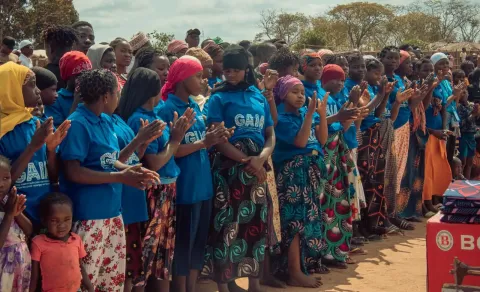
Like many displaced girls, she arrived with fear, uncertainty and a deep sense of vulnerability. Over time, she was enrolled in the Girls Are In Action (GAIA) programme, an initiative that promotes the rights of adolescent girls through life skills, economic empowerment and gender-sensitive child protection sessions.
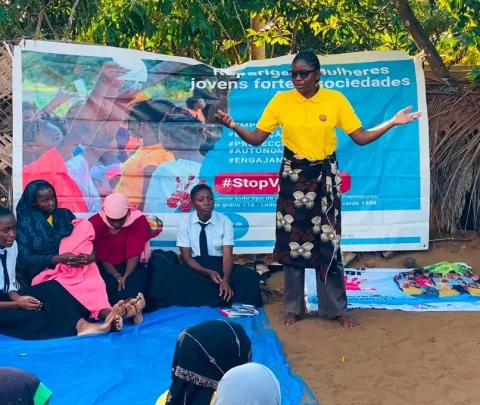
During these sessions, Atija learned how to identify and report abuse, understand her rights and recognise her value. One of the lessons that marked her most was understanding that violence includes any act carried out without her consent. “No one can touch me or force me to do something I do not want,” she says.
“With GAIA, I learned to say no to any type of violence. I learned to respect myself and others. I discovered that marriage should only happen after the age of 18,” she adds with confidence.
In addition to the theoretical sessions, the programme offers hands-on activities that help girls and boys rebuild their lives with dignity and hope. Atija has taken part in practical training such as sieve production and is already thinking about how to earn an income from her new skills. “It was difficult in the first few days, but with willpower I managed to finish my sieve. It was a unique experience. Now I want to make more to sell,” she explains.
The impact of GAIA extends beyond the girls. Caregivers, parents and community leaders also take part in activities that encourage collective protection.
Ntiwe Mamad, 14, also fled Mucojo and now lives in the centre. She participates in the sessions alongside Atija and shares what she learns with her family and friends. “There have been a lot of changes since I joined the programme. I talked to my parents about what we learned, especially about child marriage. My friends, who thought it was all a lie, changed their minds and now they also participate,” she says.
GAIA’s activities have brought meaningful improvements to the physical, emotional and social well-being of the girls. Atija and Ntiwe now dream of learning embroidery, sewing, carpentry and other skills that can help them build a brighter future.
“Today I walk with more confidence and hope,” says Atija, smiling, her expression reflecting the strength of a girl who is reshaping her own story.