França’s stitches of hope in Mocimboa da Praia
Through GAIA, girls like França are learning that they have choices. They are learning about their rights, their health and the importance of staying in school.

Mocimboa Da Praia, Cabo Delgado - The sound of sewing machines fills a simple multipurpose centre in Mocímboa da Praia, Cabo Delgado, where 15 adolescent girls are gathered around fabric, thread and crochet patterns. The centre, built with bamboo walls and a corrugated iron roof, hosts regular sessions where girls practise new skills and talk about issues that affect their lives.
Among them is 16-year-old França Momade, a Grade 12 student from Mocímboa da Praia. Sitting at a sewing machine, she leans carefully over a green and black dress, guiding the fabric with quiet concentration. When the dress is finished, she hopes to sell it at the local market.
“I love to make skirts and dresses with the sewing machine,” says França. “Then I can wear them or sell them at the market.”
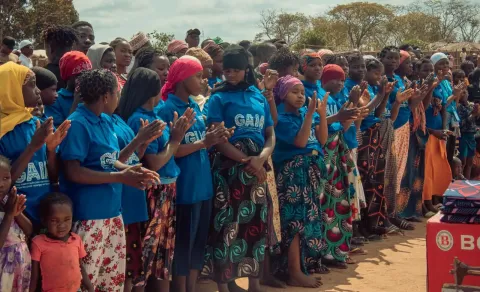
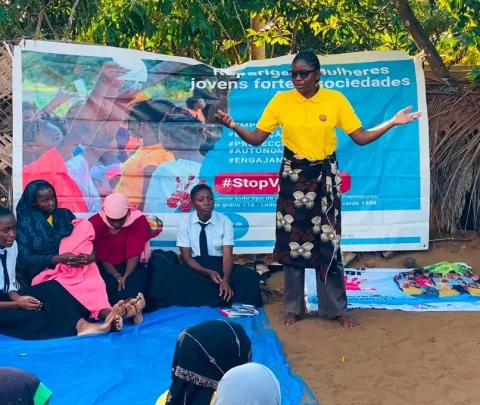
França is part of Girls Are In Action, known as GAIA, a programme that combines life skills education with psychosocial support, equipping girls with tools to make informed decisions, communicate effectively, and safeguard their health and rights. The girls, aged between 13 and 17, attend sessions three times a week for two hours in the morning, before they go to school in the afternoon. The sessions are led by trained community facilitators, who guide the girls through discussions on health, protection, life skills, and practical activities such as sewing and crochet.
“At GAIA, I have learned a lot and made many new friends,” she says. “They have taught us about personal hygiene, menstruation, child marriage and the laws of Mozambique. And I have learned to use the sewing machine.”
França’s childhood has been shaped by the armed conflict that has affected communities across Cabo Delgado in recent years. Her family, who live near the sea and depend on fishing, has had to flee attacks by non-state armed groups. About five years ago, armed men came to her village, forcing the family to seek safety at sea.
“We had to escape on a boat when the men with guns came to our village,” she says. “We were at sea for three days with no food or water.”
When they returned home, França learned that her school had been burned down. Her education was disrupted for several months.
Despite these challenges, França returned to school and continued her studies. Today, she is determined to finish Grade 12 and continue learning.
“I want to finish school and become a nurse,” she says.
The GAIA programme also helps girls discuss issues that affect their lives and futures, including child marriage. França says some girls in her community have married as young as 14, before completing their education or developing skills that could help them become more independent.
“Unfortunately, some of my friends in the community have got married very young,” she says.
Her message to girls who may be thinking of marrying early is direct.
“You need to study and finish school before getting married,” she says. “You need to get a profession first. You will still be young and can get married then.”
Through GAIA, girls like França are learning that they have choices. They are learning about their rights, their health and the importance of staying in school. They are also gaining practical skills that can help them earn income and build confidence.
Back at the sewing machine, França smiles as she holds up the dress she is making. It is still unfinished, but in her hands it already carries a sense of possibility: a skill learned, a dress to sell, and a future she is working toward - one stitch at a time.
UNICEF supports the GAIA Toolkit programme with the generous support of the Government of Canada.