How Early Motherhood Shapes Access to Life-Saving Vaccines for Children
About
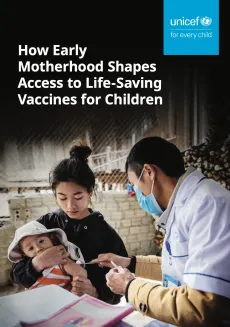
Drawing on data from 76 low- and middle-income countries, this report shows that maternal age is a significant, yet largely overlooked, factor in vaccine inequity. Children of adolescent mothers are more likely to be unvaccinated (‘zero-dose’) or under-vaccinated than mothers in their 20s and early 30s. Analysis indicates that this disparity is intensifying among more recent maternal cohorts.
Crucially, the disadvantage linked to early motherhood does not end in adolescence. All the children of women who begin childbearing in adolescence are found to have lower vaccination rates, regardless of their mother’s age in later years, education level, socioeconomic status or location. This pattern is particularly pronounced in countries with lower overall vaccination coverage, though significant gaps are also found in some higher-coverage settings.
The findings highlight the need to prioritize adolescent mothers in immunization programmes and zero-dose targeting strategies, and strengthen access to and quality of services across sectors for adolescent girls more broadly. Addressing age-related barriers in this way, and supporting girls to delay childbearing, is essential for advancing vaccine equity and improving health outcomes across generations.