Vitamin A Project in a New Era.
Father to Father, to support community members to become their own agents of change.

- Portuguese
- English
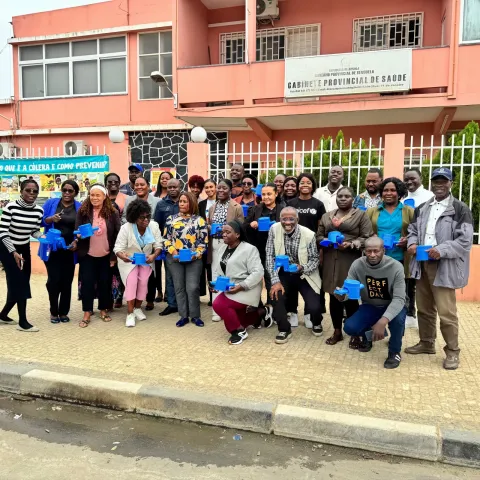
Support for mainstreaming women's empowerment and community sensitization on vitamin A has been strengthened through the expansion of the support group approach in the provinces of Huíla, Benguela, and Cunene.
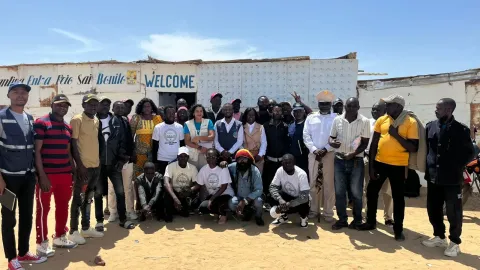
This year, 168 mother-to-mother and 151 father-to-father support groups were active in the provinces of Huíla, Cunene, and Benguela. These support groups bring together members of the same gender to discuss health and nutrition practices in the community, so members can improve their practices and behaviors at home, while supporting and influencing their broader community of friends and neighbors.
In Huíla province, father-to-father groups contributed to greater autonomy for women, as men gained a deeper understanding of shared household responsibilities. This has led to an improvement in eating habits, as mothers now have more autonomy in decision-making. These promising results underscore the importance of continuing and expanding the support group's approach to further improve community health and gender equality.
Elicrenio Luís Mumbove, a member of the Father-to-Father group in the municipality of Gambos, Huila, says, "Participating in this group motivates me. We learn the importance of Vitamin A, which is essential for the body and affects the health of the eyes and immune system of our children. We have also learned about breastfeeding and the correct ways to hold the child while breastfeeding."
"Before I had no knowledge of how to take care of children, but now that I belong to this group I have gained knowledge that has helped me a lot to take better care of my child. I learned that we should take the child to the hospital when he is not well, without having to wait for the Mother."

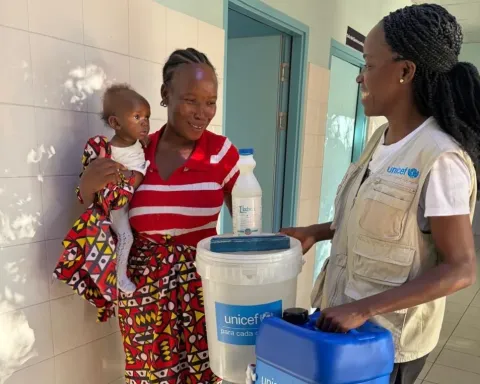
Increasing Vitamin A coverage through routine systems remains a challenge, requiring substantial changes in behaviors for caregivers to fully understand the value and importance of Vitamin A and begin taking their children for biannual supplementation at the health facility level.
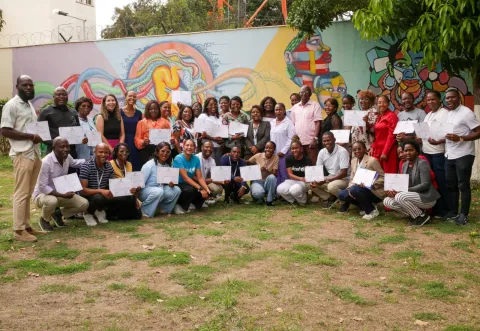
With the Vitamin A in a New Era Project, funded by Global Affairs Canada (GAC), UNICEF Angola continues to support the Ministry of Health in the training of health technicians, a total of 20 technicians were trained and participated in the data collection exercise, 10 in Huíla (6 women, 4 men) and 10 in the provinces of Bengo (6 women, 4 men). To ensure gender balance, deliberate efforts have been made to include both men and women. Achieving this balance was key to ensuring buy-in from all participants, incorporating diverse perspectives into the data collection process and providing capacity building opportunities equally for both genders.
Vitamin A supplementation is of significant importance in deepening the understanding of the interconnections, barriers, and opportunities essential to integrating effective gender analysis into the vitamin A supplementation strategy.
Communicating impactful behavior change requires communities to come together and share experiences, gain trust, and adopt new ideas and practices, together, to reduce harmful gender norms. For communities to become more gender-equitable places to live, play, and grow, efforts need to be dedicated specifically to empowering women in a more focused way.
Continuing to support women-to-women and father-to-father groups is essential to improve outcomes in areas that need reinforcement and to increase vitamin A supplementation coverage.