

Restoring everyday life three months after the earthquakes
After the June earthquakes in Venezuela, children and families are working to restore their daily lives. Their stories offer a glimpse of the past three months and the work of UNICEF, alongside partners, authorities and communities, to support them.
- Español
- English
“For a child, recovering from an emergency means being able to return to school, receive health care and nutrition services, have safe water and a place to play and feel protected. Three months after the earthquakes, many families are still coping with loss and uncertainty. UNICEF continues to work with authorities, communities and partners to sustain that care every day and give families the support they need to move forward.”
– Manuel Rodríguez Pumarol, UNICEF Representative in Venezuela
Stories from La Guaira
The first hours
On 24 June, José Ángel, 15, was on the balcony when his building began to shake. He thought of his two-month-old nephew and helped him get out. Then he did the same for other family members.
Once they were safe, the family had to find somewhere to sleep, water to drink and a way to care for the baby. For their first three days in the camp, they had no water.
In coordination with authorities and partners, UNICEF mobilized staff and supplies to meet the most urgent needs.
Just four days after the earthquakes, on 28 June, a shipment arrived from Panama. Two days later, 47 tonnes of aid arrived from Copenhagen: medical kits for emergency care, safe deliveries and newborn care; supplies to purify and store water; tents to create safe sphttps://www.unicef.org/venezuela/en/press-releases/unicef-aid-shipment-lands-venezuela-following-devastating-earthquakesaces; wheelchairs; and materials for play and early childhood development. Together, the two shipments were intended to support more than 100,000 children and families over three months.
When the water arrives
Derwimar, 9, and Ana Milena, 7, run to spread the news: the water truck has arrived. In Mare Abajo, families bring their containers over. José Ángel takes the hose and fills four containers to carry back to the tent where he lives.
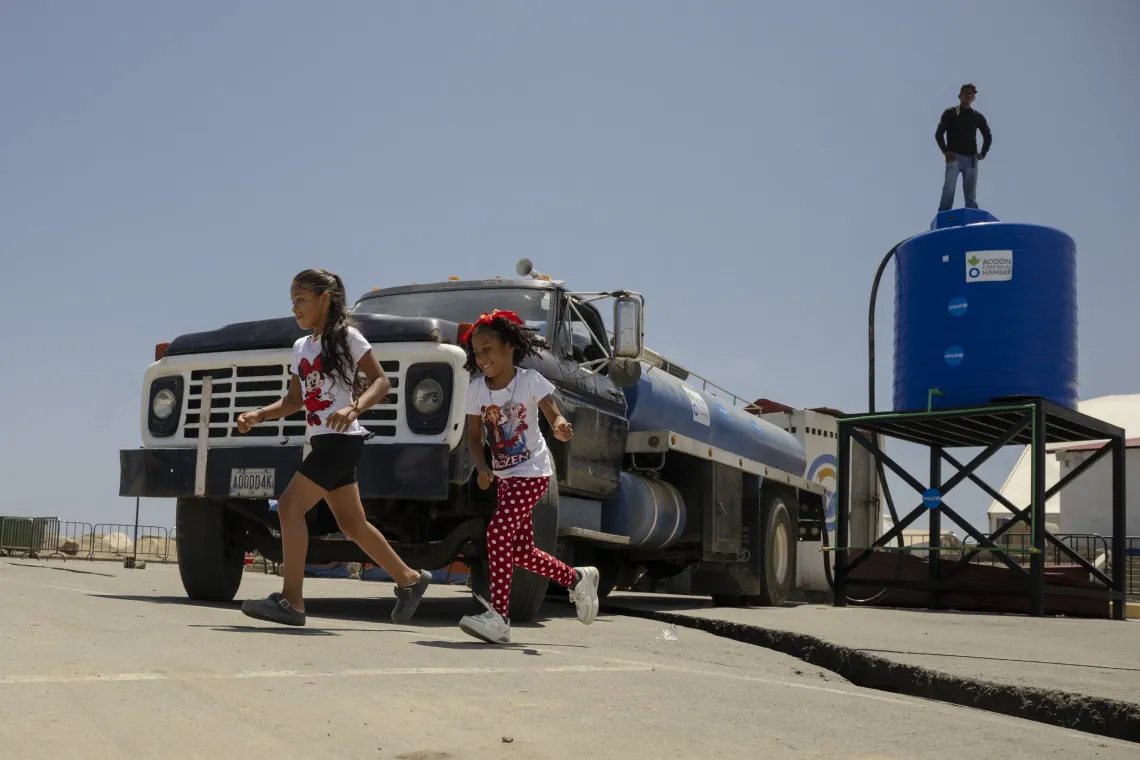
José Ángel remembers the first days, when they barely had enough water to wash. Now the supply is more regular, and showers and toilets have been installed with UNICEF support. Filling the containers means the family can prepare food, wash and clean the place where they sleep.
That routine depends on a water supply that cannot stop. Since the emergency began, UNICEF and partners have helped 17,391 people in camps and communities access safe water. Together with the authorities, they are also supporting the rehabilitation of water systems so families can rely less on water trucks.
Whenever he can, José Ángel returns to the sea with his board. He has surfed since he was little. Amid his responsibilities in the camp, the beach remains a place he wants to return to.
“Going to the beach makes me feel calm…”
Getting there and coming back
At 5 a.m., Yoselin Blanco gets up and prepares breakfast for her two children. On days when she visits communities, she needs to be at the health centre early. Preparations begin long before she gets into the vehicle: she needs to speak with families, agree where to see them and organize the team.
Yoselin is a nurse and coordinates the Expanded Programme on Immunization for Comprehensive Community Health Area 506, under the Ministry of People’s Power for Health. Today she is heading to Las Lapas, a rural community in Carayaca. She estimates the journey will take an hour and a quarter. There is no regular transport service, and the earthquakes have made already difficult roads harder to travel.
“We always go to the places that receive the least support,” Yoselin explains.
With logistical support from UNICEF, the team brings vaccination and nutrition services to the community. They check which doses are due, assess young children and answer caregivers’ questions. Conversations take time, too: some families need answers to their concerns; others want to talk about what they have been through.
Nutritional assessments help identify needs that require follow-up. UNICEF and partners have screened 11,248 children aged 6 months to under 5 years for acute malnutrition. Of these, 655 children with severe acute malnutrition have been admitted for treatment.
During the journey, one thing requires particular care: keeping the vaccines at the right temperature. “We must maintain the cold chain,” she stresses.
As the day’s work ends, Yoselin is already thinking about the next visit.
“When we leave a community, we already know which children we still need to reach and who we need to come back for to give them their booster,” she explains.
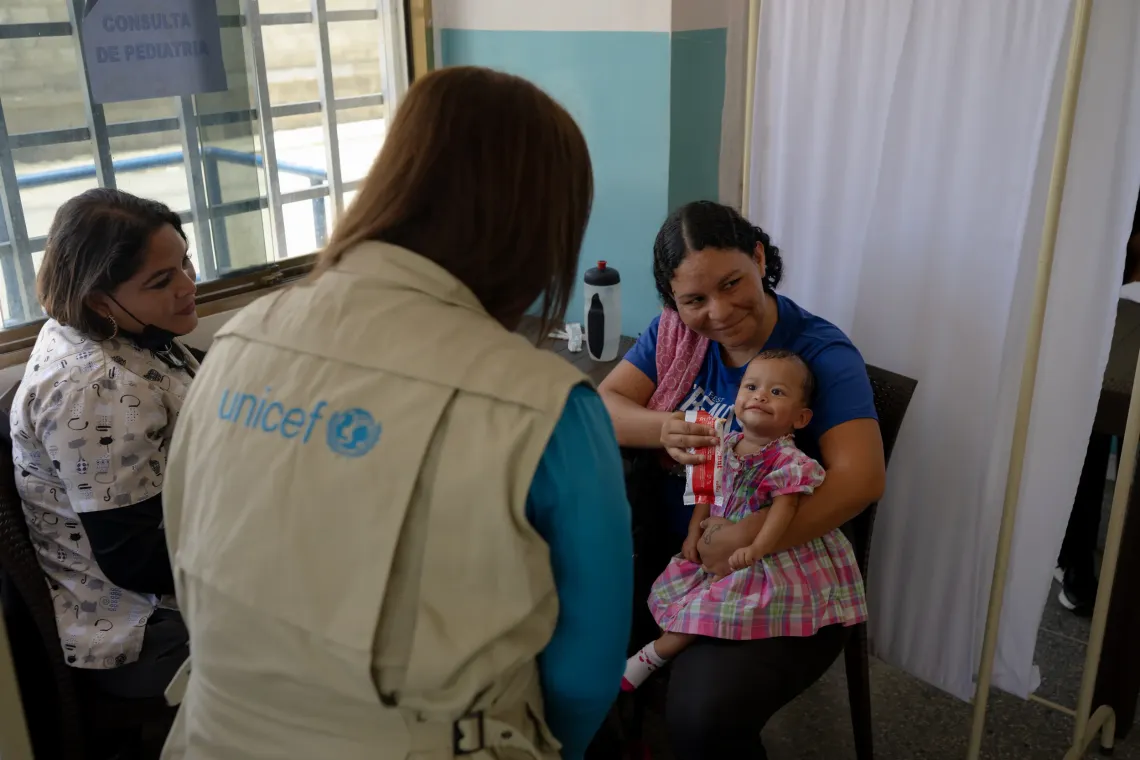
Returning means coordinating staff again, arranging transport and travelling the same roads. That continuity helps children complete their vaccinations and receive follow-up care. Since the earthquakes, 42,265 people have accessed primary health care with UNICEF support, both at health facilities and through mobile health teams.
A place to connect
Derwimar, 9, cares for Panchito, her parrot, in the Mare Abajo camp. She feeds him and keeps him safe. She wants to be a veterinarian. She also wants to return to school, give presentations to her classmates and solve maths problems. She misses her home and her room.
In Catia La Mar, Gabriela, 16, joins activities at a UNICEF-supported child-friendly space. There, she can talk about her feelings and help with activities for younger children. Playing and spending time with others offer a break from the worries of the emergency.
That support also reaches caregivers. Nazareth, a mother of three, receives emotional support while her daughters take part in activities at a child-friendly space. The fear of another earthquake and the exhaustion are still there.
Families need someone to listen as they find a way forward. In affected communities and camps, UNICEF and partners have reached 14,644 children, adolescents and caregivers with mental health and psychosocial support services.
A blue shirt for a new beginning
“I dream of having my blue shirt.”
Naibelis is 12. For her, that shirt means starting secondary school. The earthquakes damaged the school she had hoped to attend, and as she shares her story, she still does not know where she will start classes.
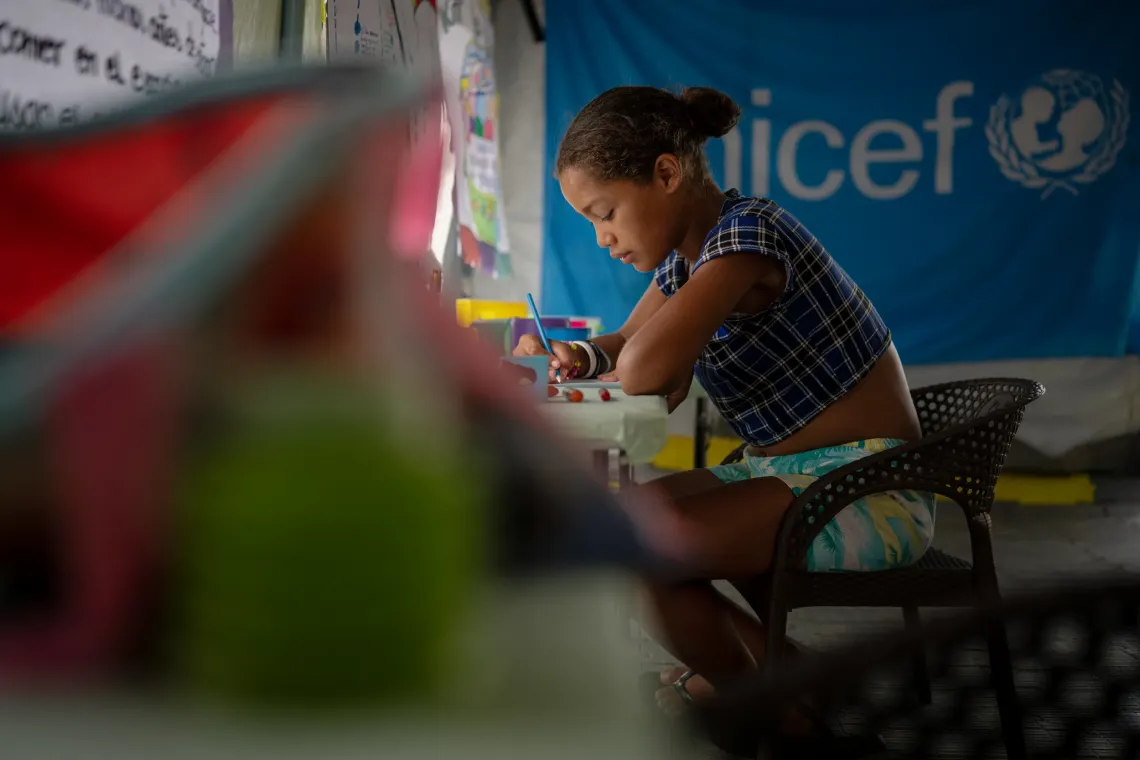
While she waits, she paints, plays volleyball and helps younger children at the child-friendly space in the César Nieves stadium camp. In a letter to her future self, she writes about what she wants to learn and the life she imagines.
In Mare Abajo, Karina Ramírez, Derwimar’s teacher, is working with other teachers to organize temporary classes. Bringing her students together again is a way to support them while preparations are made for their return to the classroom.
“That’s what it’s about: making sure every child gets to be a child,” says Karina.
To support that return, UNICEF and partners have provided learning materials to 5,148 children and adolescents and trained 649 teachers and facilitators in teaching methods and psychosocial support. Coordinated with the authorities, this work helps keep learning part of children’s daily lives, even while they wait to return to the classroom.
Learning to live together
Damián turns a container upside down and starts drumming. He is 13 and learns by watching a friend at the camp: he observes his movements, memorizes them and gives it a try. Some rhythms come easily now. Others still elude him.
“I felt a passion for drumming,” he says.
The sound brings back memories. His mother used to take him to the San Juan celebrations. On the beach where she worked, he would join the dancing circles.
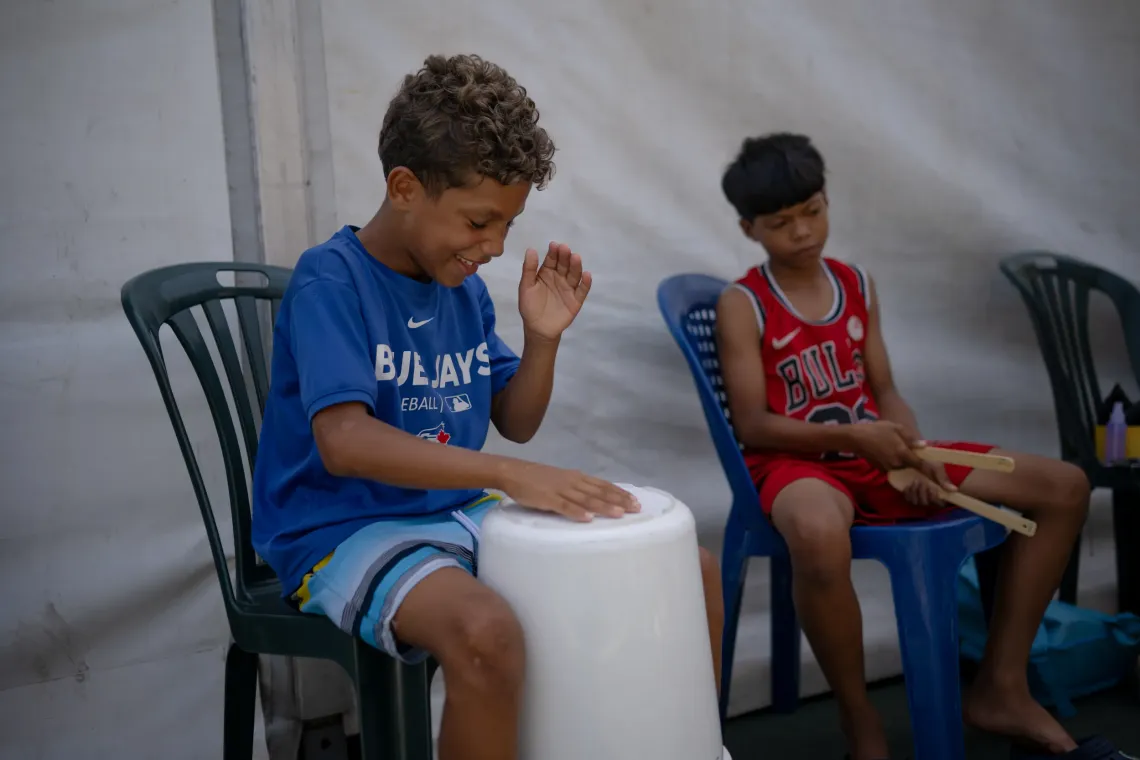
His mother died in the earthquakes. Since then, he has been living with his aunt Mercedes, his two cousins and another aunt, Franci, who has come to help, at the temporary camp in the José María Vargas sports complex. His sister María, 10, is temporarily staying with relatives in Puerto la Cruz.
Mercedes has known her nephew since he was born. She cared for him as a baby, took him to the beach and sometimes shielded him from a scolding. After losing her sister and her home, she took on the care of her nephew and niece.
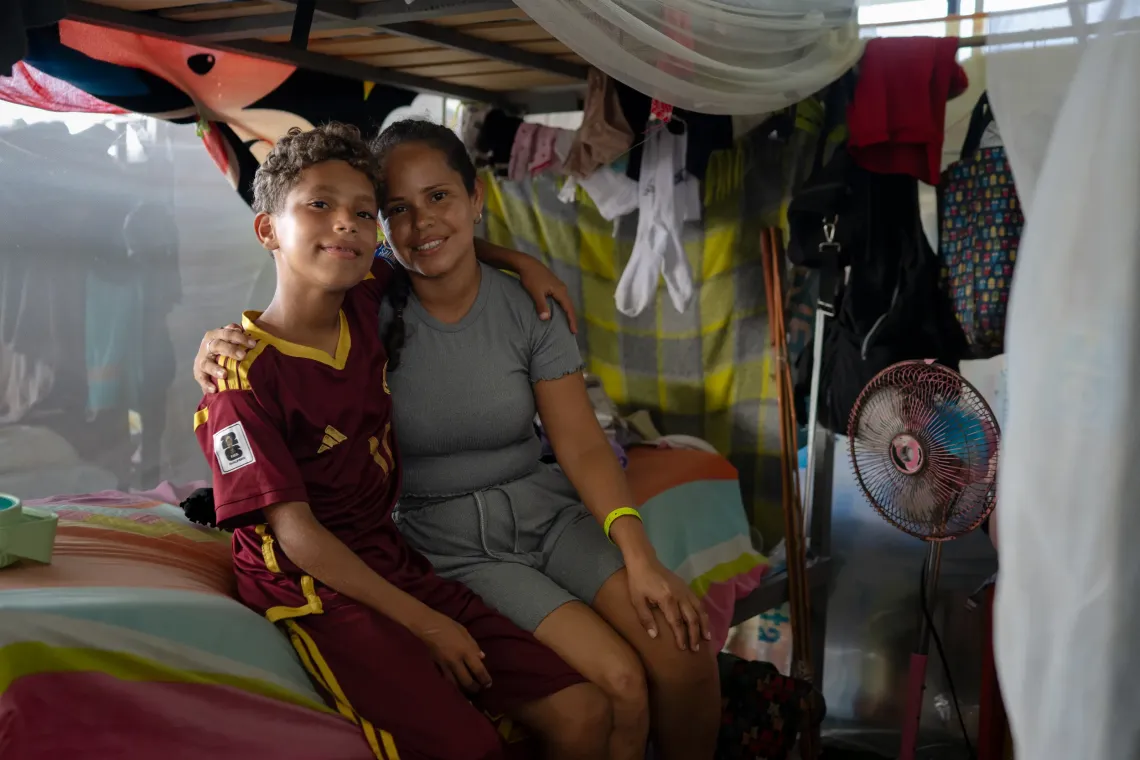
“I didn’t think twice, I didn’t hesitate. They’re my niece and nephew,” she says.
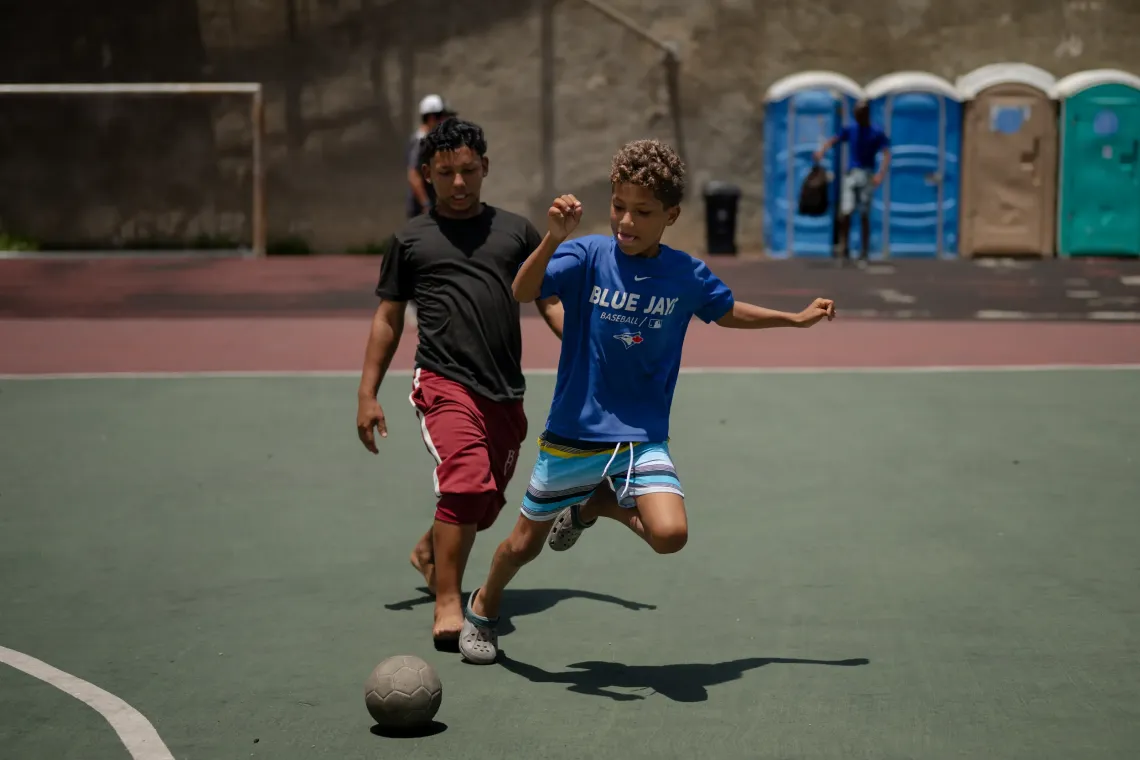
Living together brings new questions. When Mercedes says it is time to stop playing, Damián asks for another half hour. She needs to know where he is; he wants to stay on the court. There are also rules to work out so his cousins do not feel they are being treated differently.
Mercedes seeks psychological guidance to support them while navigating her own grief. At the camp, UNICEF partner Fundainil offers psychosocial support activities for children, adolescents and caregivers. When the team identifies a need for specialized care, it refers families to the appropriate services.
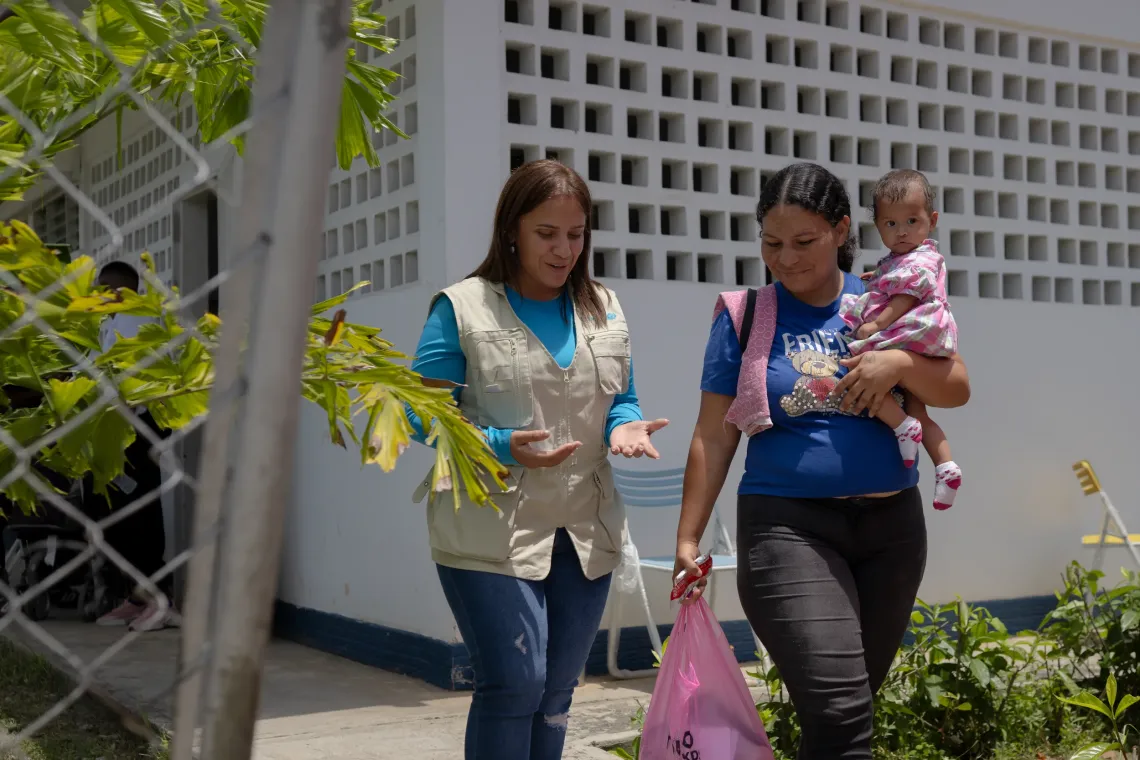
Wendy Torres, Child Protection Officer at UNICEF Venezuela, explains that supporting children through grief also means supporting those who care for them. Families need someone to listen and tools to cope with change; children need time, affection and safe spaces to express themselves and continue to grow.
Damián finds relief in football. Mercedes takes walks by the sea and practises breathing exercises when she feels overwhelmed. Each is discovering what helps them.
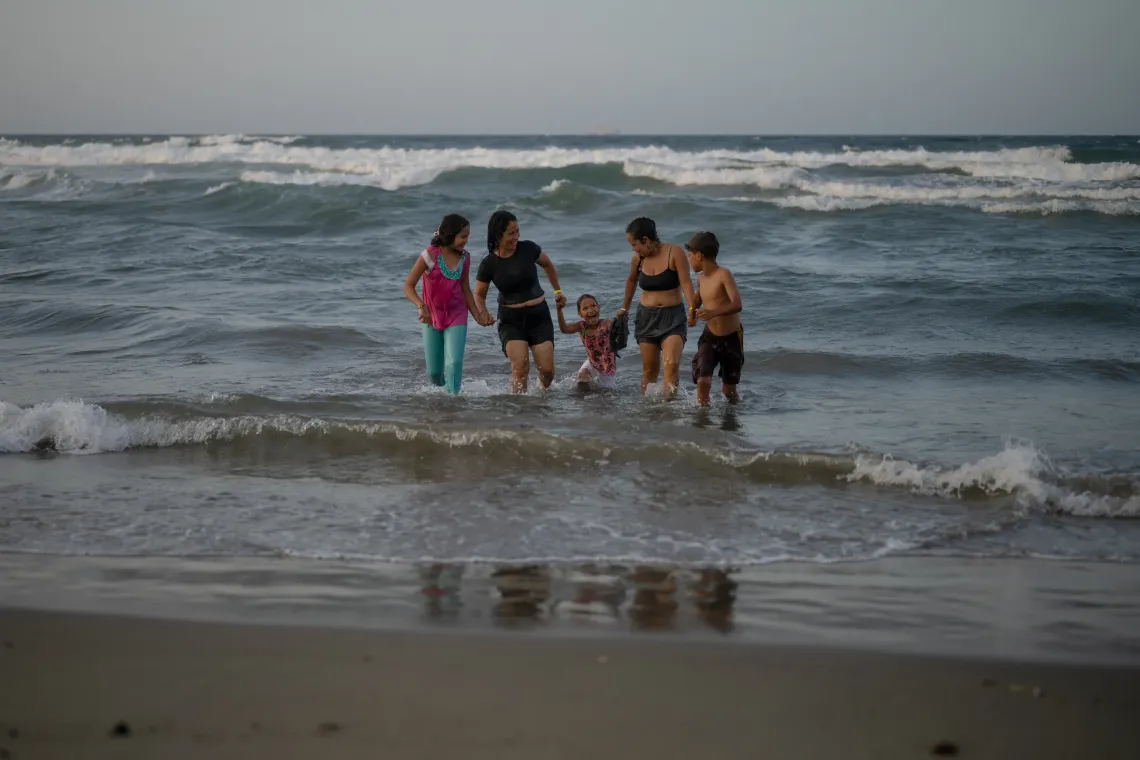
También hacen planes. Mercedes imagina una casa donde puedan vivir los cuatro niños. Damián quiere ver a su hermana: hablan por teléfono y él le guarda dulces para cuando vuelvan a encontrarse.
Sustaining support
UNICEF needs US$65.7 million to sustain this support and advance recovery. So far, US$29.5 million has been mobilized, leaving a gap of US$36.2 million, or 55 per cent of the funding required. Timely, flexible and sustained funding is essential to maintain water supplies and care, support the return to school and help families recover. Funding shortfalls are particularly acute in water, sanitation and hygiene, and education.
Three months on, each story reveals progress and a continuing need. Water must keep flowing, health care requires follow-up, and returning to school means ensuring schools are ready and teachers are supported. Safe spaces, psychosocial support and services to protect children from violence, abuse and neglect must also continue. Sustaining these services helps children and families regain their daily routines and the confidence to make plans beyond the emergency.