

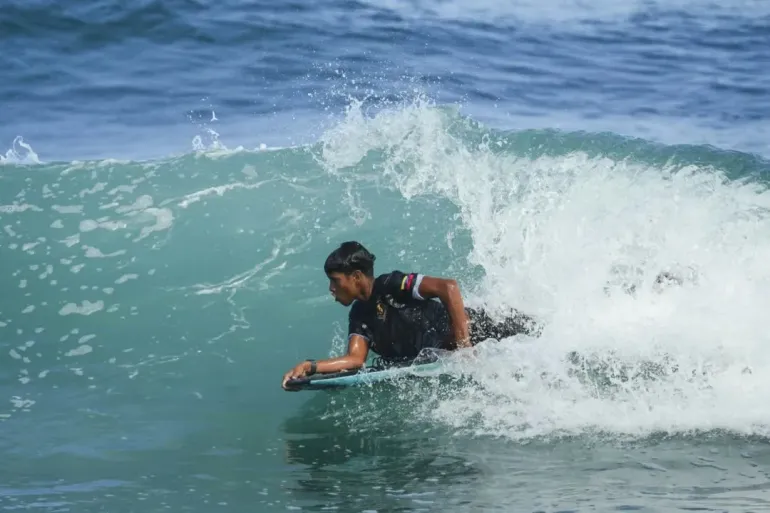
When I go into the sea with my six-year-old daughter, time changes pace. She rides with me on my board. The phone is left behind and responsibilities wait on shore. For a while, all that matters is reading the sea and watching for the next wave.
There is something deeply liberating about sharing that small space on the board. I paddle with her in front of me as she watches the movement of the water. We wait for a gentle wave and, when it comes, we ride it together. Even on days when we barely surf, we return changed.
I think of that feeling as I listen to 15-year-old José Ángel talk about the sea.
I interview him at the temporary camp in Mare Abajo, La Guaira. Tents now occupy part of the field where baseball was once played. Since the earthquakes on 24 June, the site has provided temporary shelter for families forced to leave their homes.
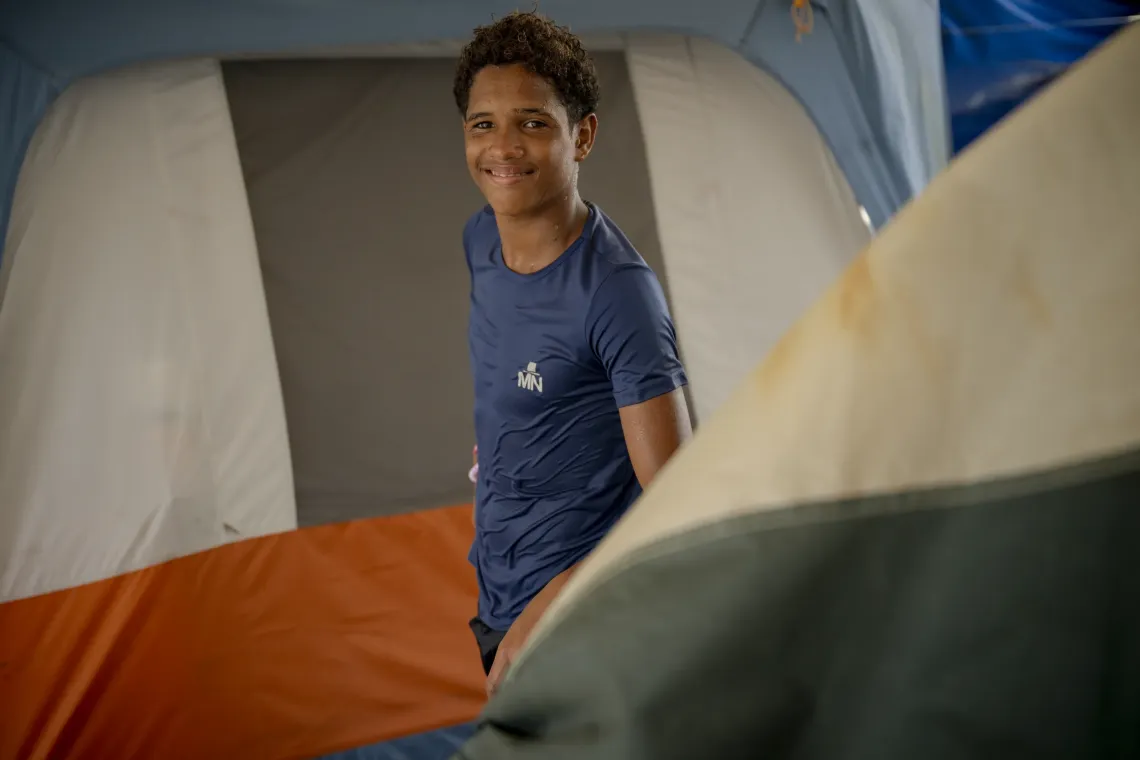
José Ángel lives there with his mother and other relatives. When the building began to shake, he was standing on the small balcony of his home. His first thought was for his two-month-old nephew. He helped him to safety and then did the same for the rest of his family.
It rained that first night. Many people slept on the ground because there were no mattresses yet. José Ángel had a tent that he used for his sport; he stepped out and let several young children sleep inside. Since then, his days have unfolded between the camp and the beach.
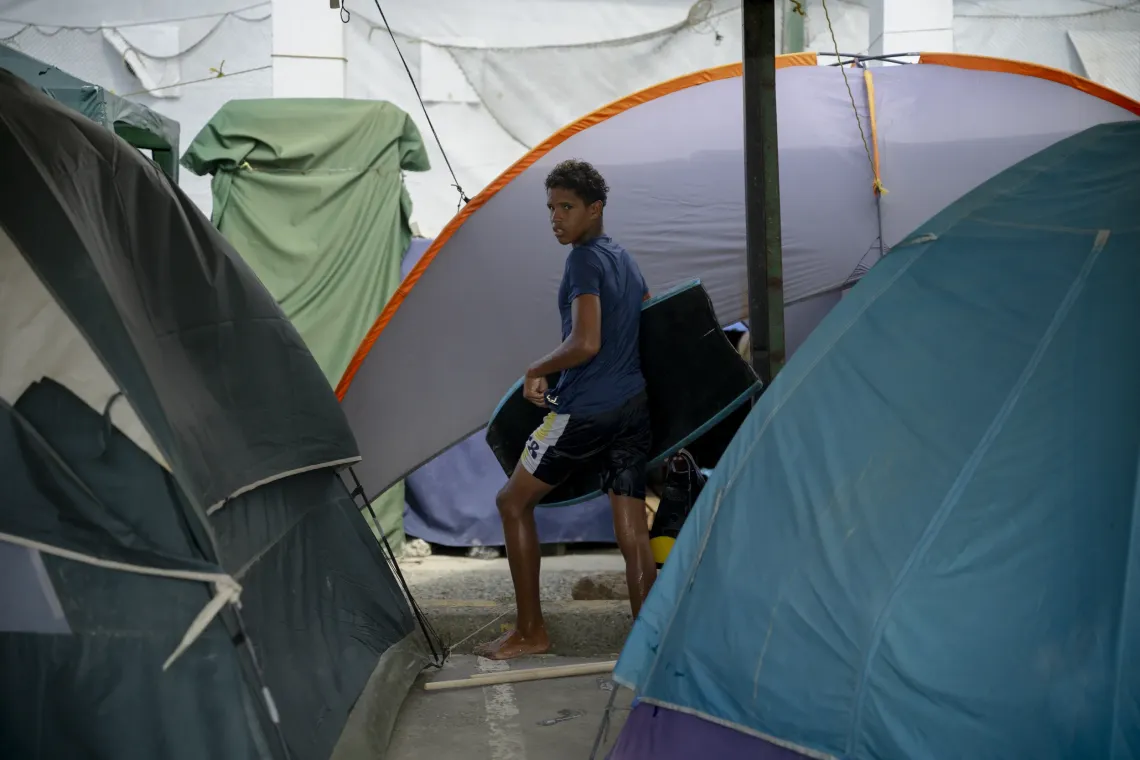
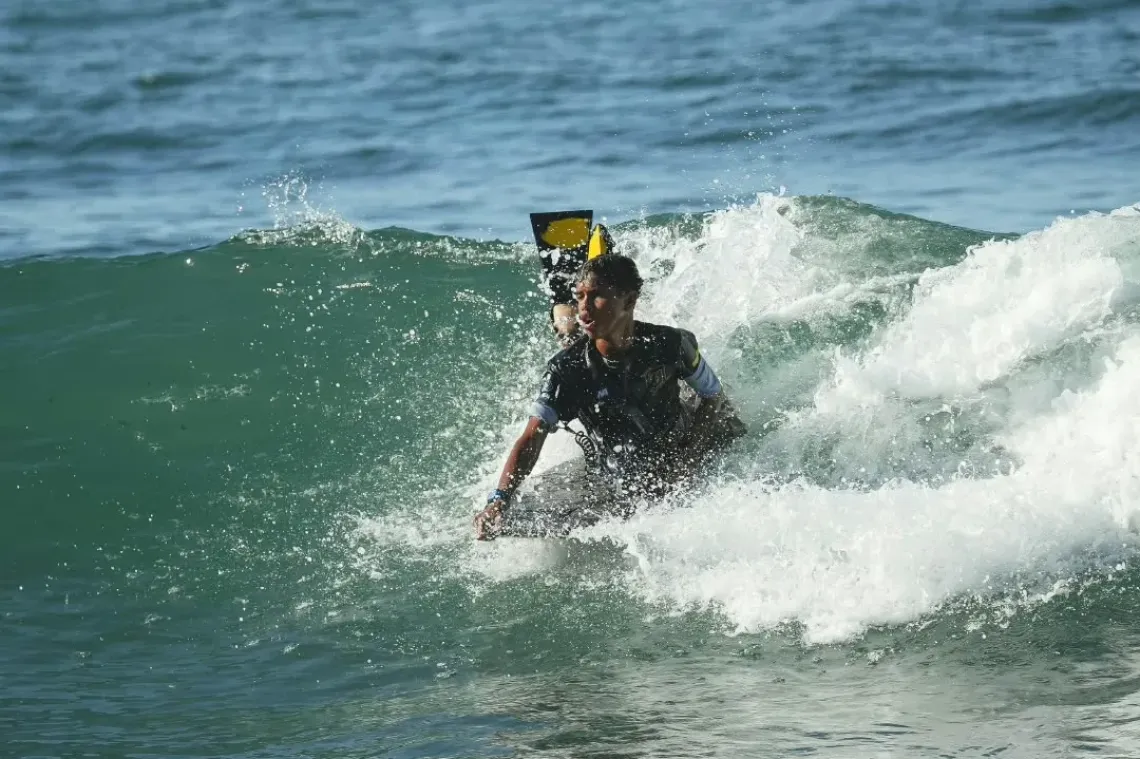
“Going to the beach calms me down. When I go into the sea, I wait for the best wave so I can catch it.”
He has been surfing since he was six and has already competed in championships. He dreams of becoming an elite athlete so that he can help his family. His expression changes when he talks about the waves. He describes the moment he enters a barrel and can see only the opening in front of him. He also likes launching himself out of the water on his board. “Flying through the air,” he calls it. Out there, he finds calm.
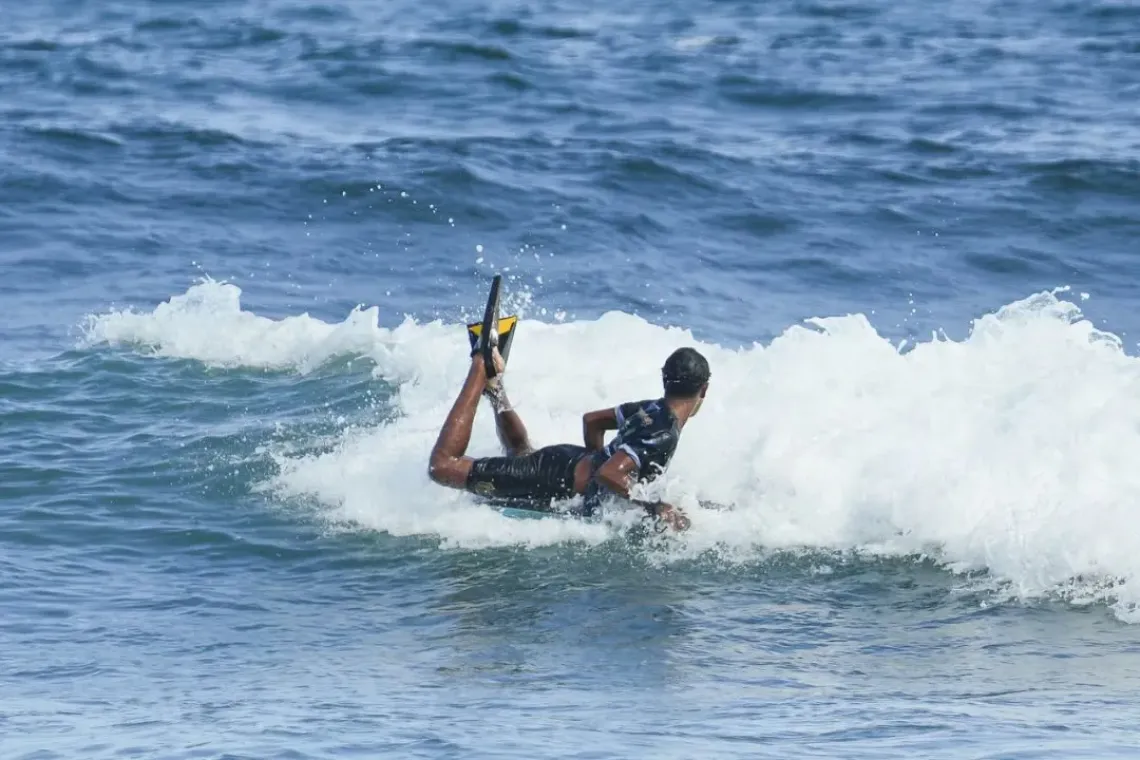
I understand that feeling well. My daughter is still young and goes into the sea with me on my board. I am the one who paddles and looks for a wave we can enjoy together. She feels the movement of the water as she gradually learns to trust the sea.
For José Ángel, the sea is still close by. Yet the earthquake has changed his daily relationship with another kind of water. After surfing, he needs fresh water to wash the salt from his body. His family also needs it to prepare food and keep their living space clean.
For about three days, there was no water at the camp. José Ángel remembers people trying to bathe with a small potful of water. Later, water containers arrived and water deliveries by truck began.
Now he keeps watch for the truck to arrive. When he sees it, he calls his mother and takes charge of the hose, filling four water drums kept outside beside the family’s tent.
“My mum tells me, ‘Keep an eye out for the water truck.’ And I’m the one who takes the hose and fills the drums”.
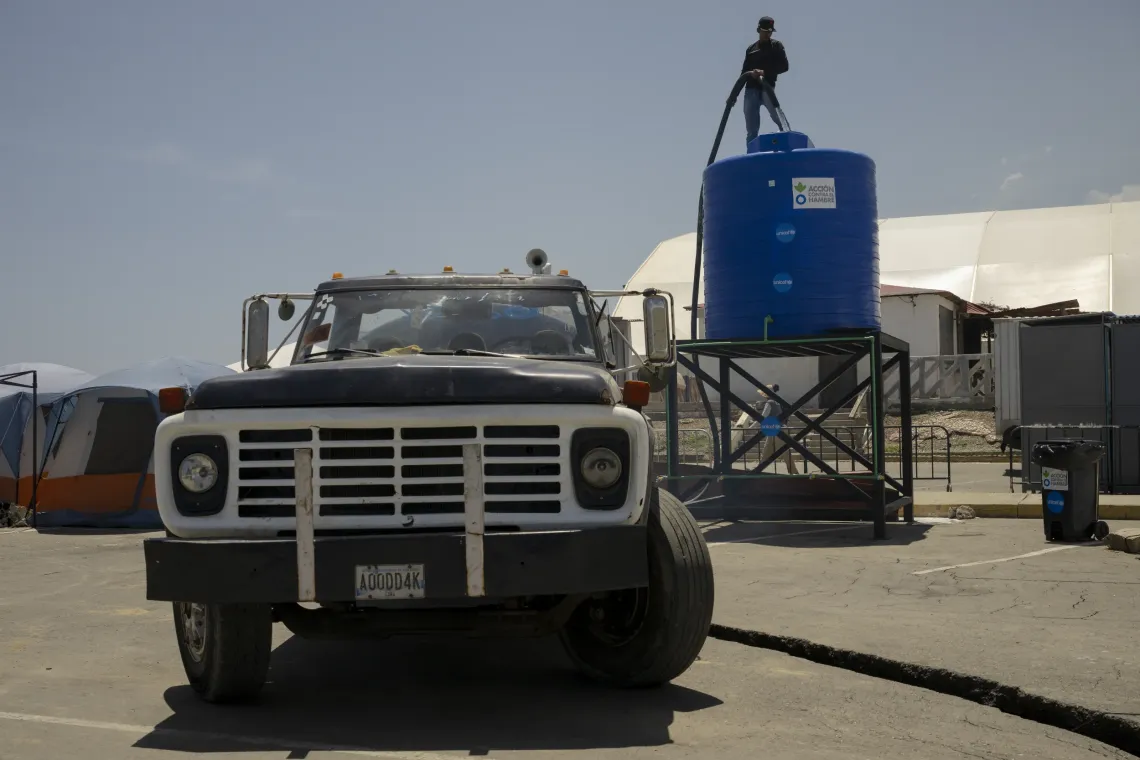
At the camp, showers and toilets set up with UNICEF support allow families to wash in adequate conditions. José Ángel uses the water he stores to bathe when he returns from the beach and to meet the family’s daily needs.
José Ángel knows well how different things are now from those first few days. “People used to bathe with just a small pot of water,” he explains. Water deliveries are now more regular, and families are better able to meet their needs.
UNICEF works alongside the authorities and its partners to provide safe water, sanitation services and hygiene supplies to families affected by the earthquakes. With financial support from the European Union, through the Directorate-General for European Civil Protection and Humanitarian Aid Operations (ECHO), and the United States Government, through the Department of State’s Bureau of Disaster and Humanitarian Response (DHR), these efforts help protect families’ health and dignity as recovery progresses.
There is another routine that José Ángel wants to regain, one that the baseball field still cannot give back to him.
He has moved up to the fourth year of secondary school and has two years left before graduating. His teacher lives in the same camp, just two tents away. Despite being so close, they had not yet begun any learning activities when we spoke.
“I hope they set the secondary school up again so I can go back to studying,” he says.
In an emergency, returning to school restores a familiar rhythm to daily life. It allows students to reconnect with their classmates and continue building a future. For José Ángel, it means keeping open the path that could one day take him beyond Venezuela to compete.
That return requires a safe place and teachers who can support their students. It also requires water for drinking and handwashing. Toilets must be available in adequate conditions. Restoring access to water and appropriate sanitation and hygiene conditions in schools is therefore part of education recovery.
As we talk, José Ángel’s attention repeatedly returns to the beach. When I ask what he will do after the interview, he answers without pausing to think:
“Go to the beach.”
Before he goes in, he has a small ritual: he touches the water and crosses himself. Then he enters the sea. He does this every day he can.
Perhaps because I am a father and a surfer, his story touches me in a special way. My daughter is now the same age José Ángel was when he started surfing. When I take her with me on my board, I feel the trust with which she gives herself over to the movement of the sea. He has already travelled that path. He goes in alone and knows how to read the waves. There, he finds a space of his own.
On land, the wait is longer. His family still needs a safe home. He wants to return to secondary school, while the camp still depends on temporary solutions for its water supply. Securing those rights will allow José Ángel’s future to move forward again.
José Ángel says the best waves arrive early, between six and ten in the morning, before the wind changes. For now, he will continue getting up to look for them. He enters the water and waits for the one worth catching.