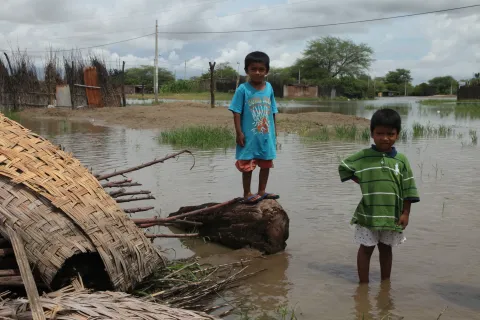
A day with Yoselin in La Guaira’s most remote communities
In Las Lapas, Venezuela, the earthquakes have made access to health care more difficult. With UNICEF support, Yoselin Blanco and her team bring vaccination and nutrition services to children under five.
- Español
- English
At five in the morning, Yoselin Blanco gets up to make breakfast for herself and her son. She lays his school uniform on the bed so he can dress himself after washing. Some mornings she takes him to school; on others, his father does. When she is out visiting communities, her husband or her mother usually collects him.
On days when she visits communities, Yoselin needs to be at the health centre by six or seven, depending on the route. The visits take several days to organize.
Yoselin is a qualified nurse and coordinator of the Expanded Programme on Immunization in Comprehensive Community Health Area (ASIC) 506. She organizes the visits, contacts community members and coordinates the staff who travel with her. The previous week, she visited Las Lapas to agree on where the team would work, whom they would meet and which families they would see.
“We always go to the communities that receive the least help,” Yoselin explains.
Now, in the vehicle, she estimates that the journey to this rural community in Carayaca, in the state of La Guaira, will take about an hour and a quarter. Families here work the land, and getting to a health appointment is a persistent challenge. There is no regular transport service.
“We always go to the communities that receive the least help,” Yoselin explains.
Distance shapes decisions as important as taking a child for a check-up or completing their vaccinations. Her team plans its journey with the families who struggle most to reach care in mind.
Now, in the vehicle, she estimates that the journey to this rural community in Carayaca, in the state of La Guaira, will take about an hour and a quarter.
The June earthquakes damaged roads that were already difficult to travel. Yoselin describes fractured routes, places the team cannot reach and frightening moments on the road.
“We’ve even had some scares on the roads,” she says.
In the communities, she also meets families busy repairing their homes and trying to feel safe again. Conversation is part of the visit. Yoselin knows they need time to talk about what has happened to them and regain a sense of security.
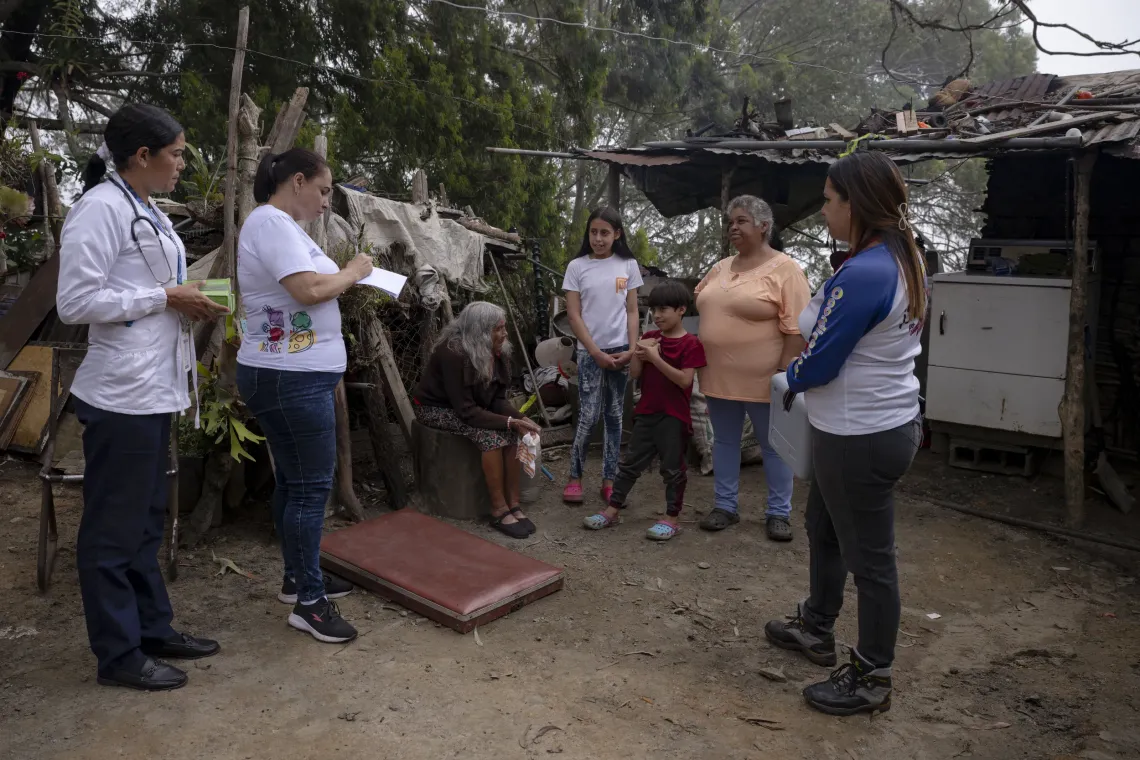
Difficult terrain is only part of the challenge; the team also needs transport. As Yoselin explains, the Expanded Programme on Immunization has one four-wheel-drive vehicle shared between the parishes. Visits have to be planned around its availability. One, two or even three months can pass before the team returns to the same community.
UNICEF’s logistical support helps transport staff and supplies to these areas. For Yoselin, that support makes something very concrete possible: being there. “Today we’re here, achieving that goal,” she says, speaking about the vehicles that make these journeys possible after the earthquakes.
UNICEF’s work with basic health teams is funded by the European Union through its humanitarian aid (ECHO), helping bring care to children and families in hard-to-reach communities.
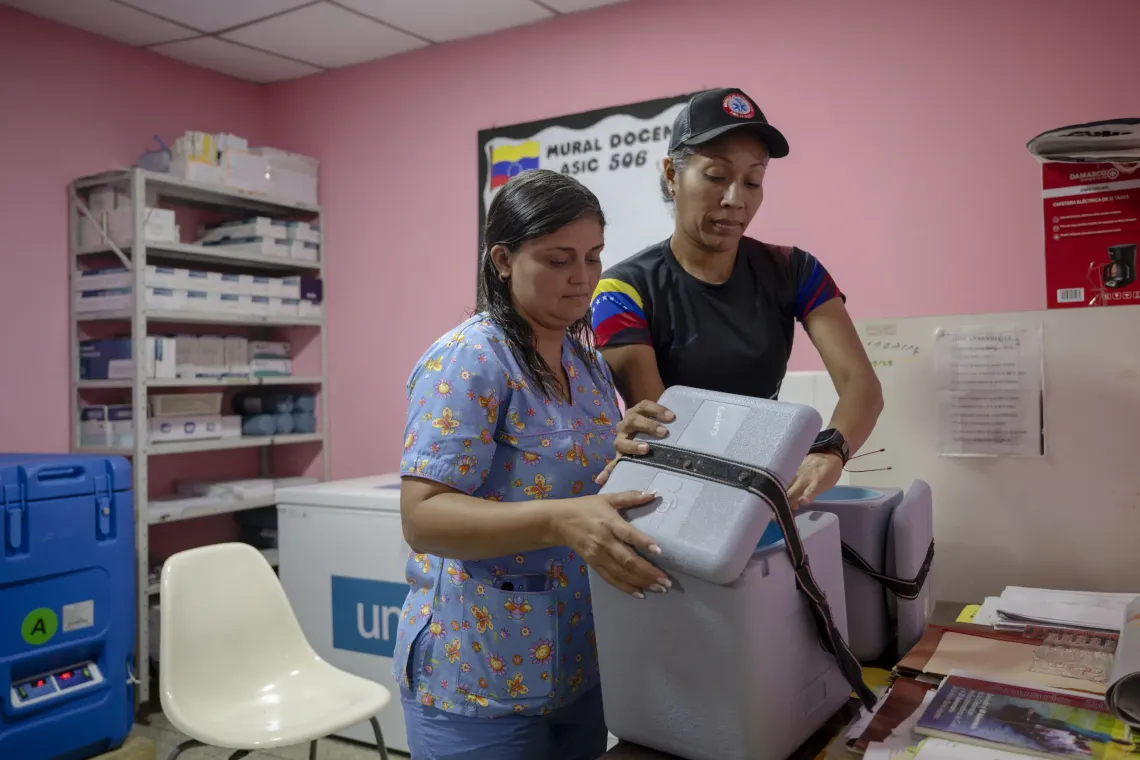
Throughout the journey, the vaccines need particular care to keep them safe and properly stored. “We have to maintain the cold chain,” she stresses. They must be protected all the way to the community so they arrive in the right condition.
Throughout the journey, the vaccines need particular care to keep them safe and properly stored. “We have to maintain the cold chain,” she stresses.
Yoselin travels with a primary health care team that provides vaccination and nutrition services. In a single visit, they check which vaccine doses are due, assess the nutritional status of children under five and advise families on the care their children need.
The vaccination work includes identifying outstanding doses and explaining to families why it is important to complete the schedule. Yoselin meets children who start receiving vaccinations later than recommended. She also encounters uncertainty and mistrust. The team takes time to share information, answer questions and explain, an essential part of helping families feel supported.
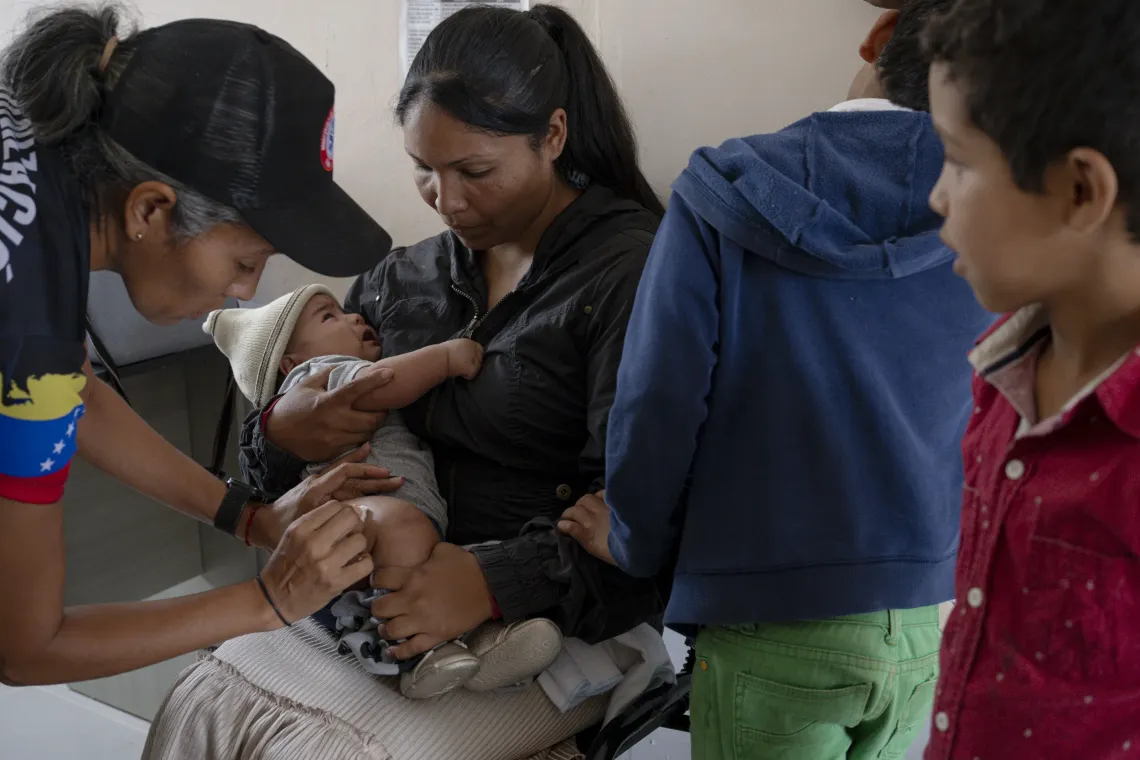
Nutrition care is part of the same effort. Yoselin explains that nutrition staff assess children, measure their arm circumference and provide micronutrients according to their nutritional status. These visits help identify needs that might otherwise go unmet when families cannot reach a health centre.
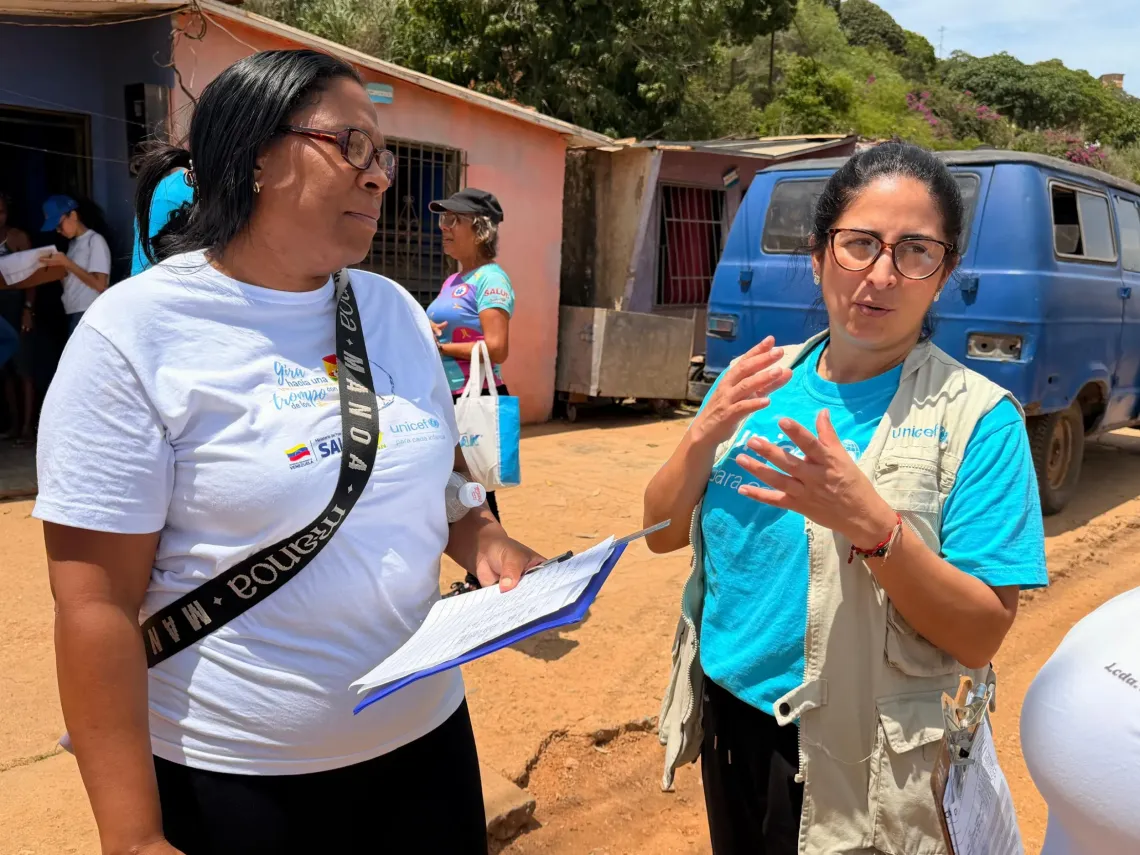
Corina Nelo, Health Associate at UNICEF Venezuela, supports this work. She explains that primary health care teams provide maternal and child health check-ups and nutrition services. Home visits help them identify each child’s needs early and provide appropriate care.
“After an emergency, existing vulnerabilities become more pronounced,” Corina says.
UNICEF therefore supports the Ministry of People’s Power for Health with technical assistance to strengthen staff capacity and help plan and mobilize these teams. Communities are prioritized together with local services, taking into account maternal and child health needs and barriers to access.
The Government of the United States supports UNICEF’s work with these health teams through funding from the U.S. Department of State’s DHR.
Communities are prioritized in coordination with local health services, taking into account maternal and child health needs and barriers to accessing care.
At the end of the day in Las Lapas, Yoselin estimates that the team has vaccinated around ten children under five. For her, the work continues with those who still need to complete their vaccination schedules.
“When we leave a community, we already know who still needs us, who we need to come back for so they can get their booster,” she explains. The team knows the families, keeps track of outstanding doses and prepares to return. Continuity means coordinating the staff again, securing transport and travelling those same roads once more.
“We will always come back for any child who still needs to complete their vaccinations.”
Corina identifies one of the challenges: sustaining the coordination and resources needed to keep the visits going. Support for each visit should also help build a lasting connection between families and health services, so that care includes follow-up.
Yoselin speaks about that commitment from her own experience. What draws her to this work, she says, is “a passion for helping”. At the end of the day, her satisfaction comes from having reached the people who needed the team, however difficult the journey.
Back home after work, she shares a snack with her son and asks about his school day. Together they check his notebooks and pack his bag for the next day’s lessons. When her daughter returns from afternoon classes, they talk about her day too, with Yoselin’s mother joining the conversation.
Yoselin shares her home with her parents, her husband and their two children. In the evening, conversation continues in the kitchen as dinner is prepared. They sit down to eat together.
If there are work reports to check or arrangements still to make, she also prepares for the next day’s visits. Her son’s schoolbag is ready; she makes sure her own plans are too. There are other children she needs to see again. “We will always come back for the child who still needs to complete their vaccinations,” she says.