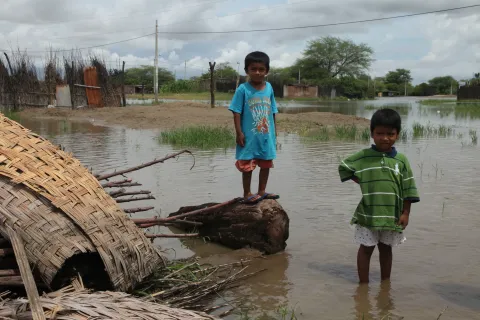
Bringing health care to children and pregnant women in Santa Lucía
With UNICEF support, public health teams bring medical check-ups, nutrition care, vaccination and follow-up services to children under 5 and pregnant and breastfeeding women in communities across Miranda State, Venezuela.

- Español
- English
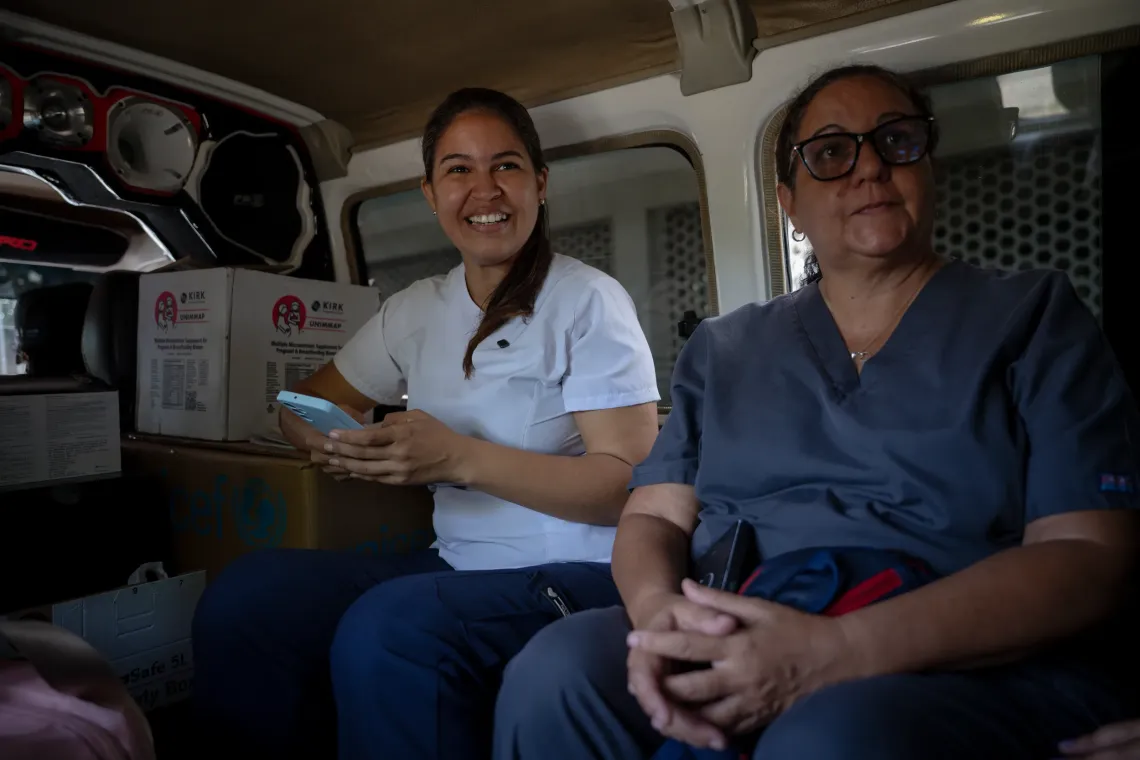
SANTA LUCÍA DEL TUY, Miranda State, Venezuela – Moisés Sanabria travels for around two hours by road to reach his workplace. Then another journey begins. At 8 a.m., the community health worker sets out with doctors and vaccinators to visit communities as part of the Mobile Basic Health Teams. He returns at two or three in the afternoon, after seeking out families who need care and helping them access available services.
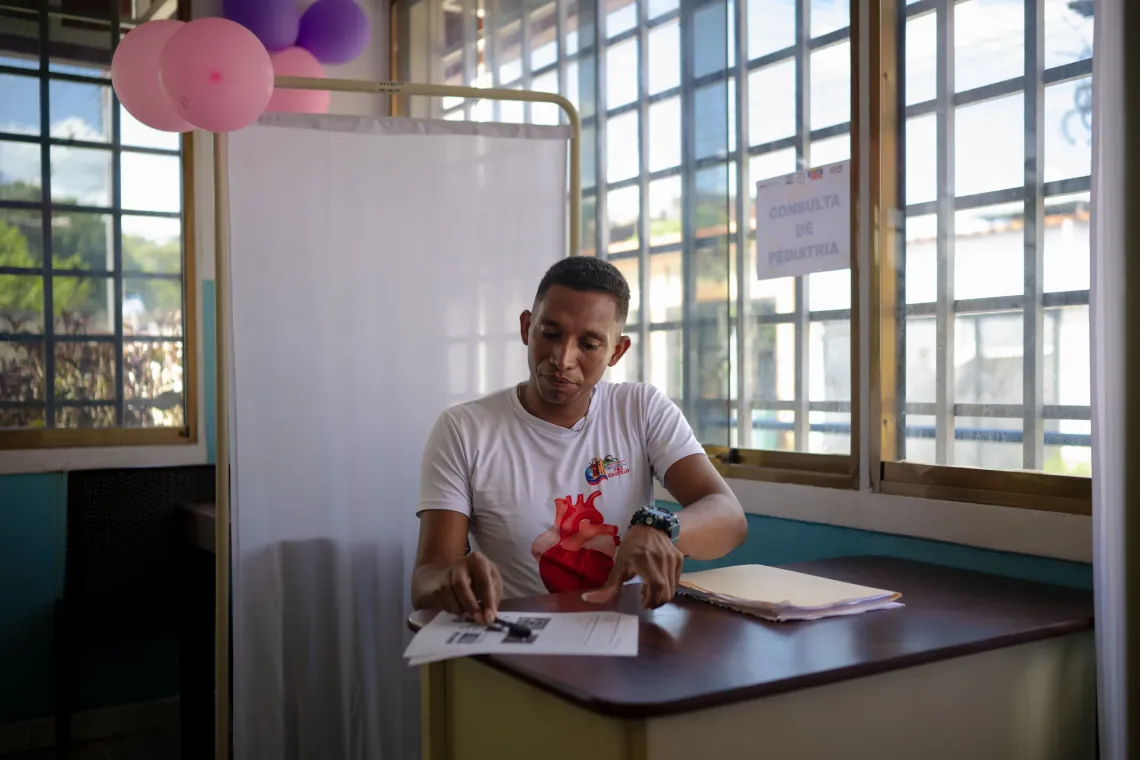
During his visits, Moisés meets children who are underweight, pregnant women who have yet to receive the antenatal check-ups they need and families who struggle to afford transport or obtain medicines. A shortage of health workers and equipment adds to these barriers, as does a lack of information about where to seek care.
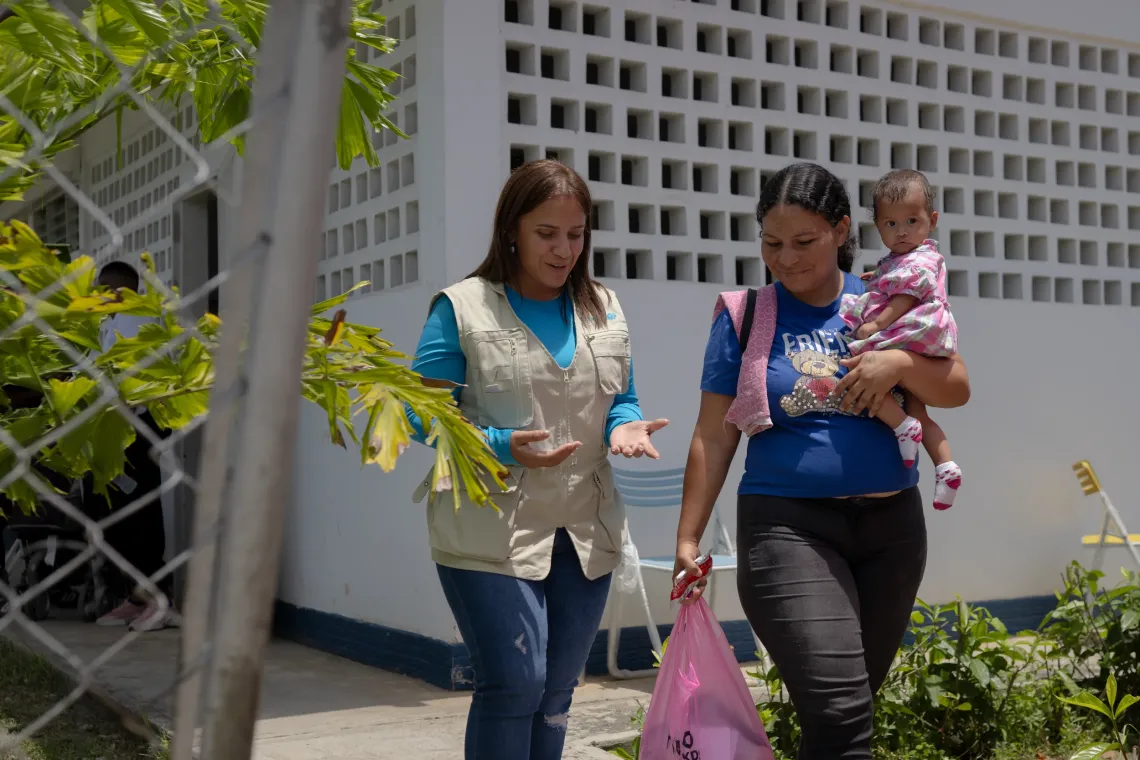
Moisés explains the importance of regular check-ups to parents and caregivers and tells them where they can go. Organizing an outreach session also means bringing together the staff and equipment needed: On the way to Santa Lucía, the vehicle stops to pick up the obstetrician and the ultrasound equipment she will use during consultations.
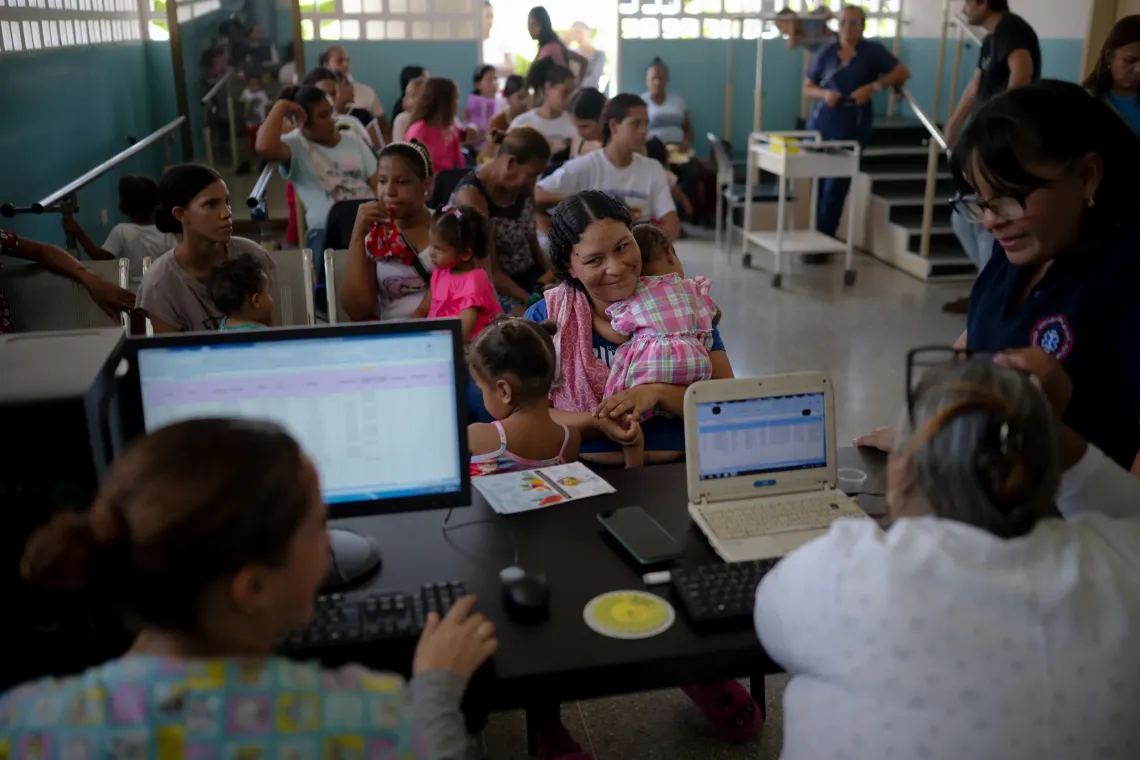
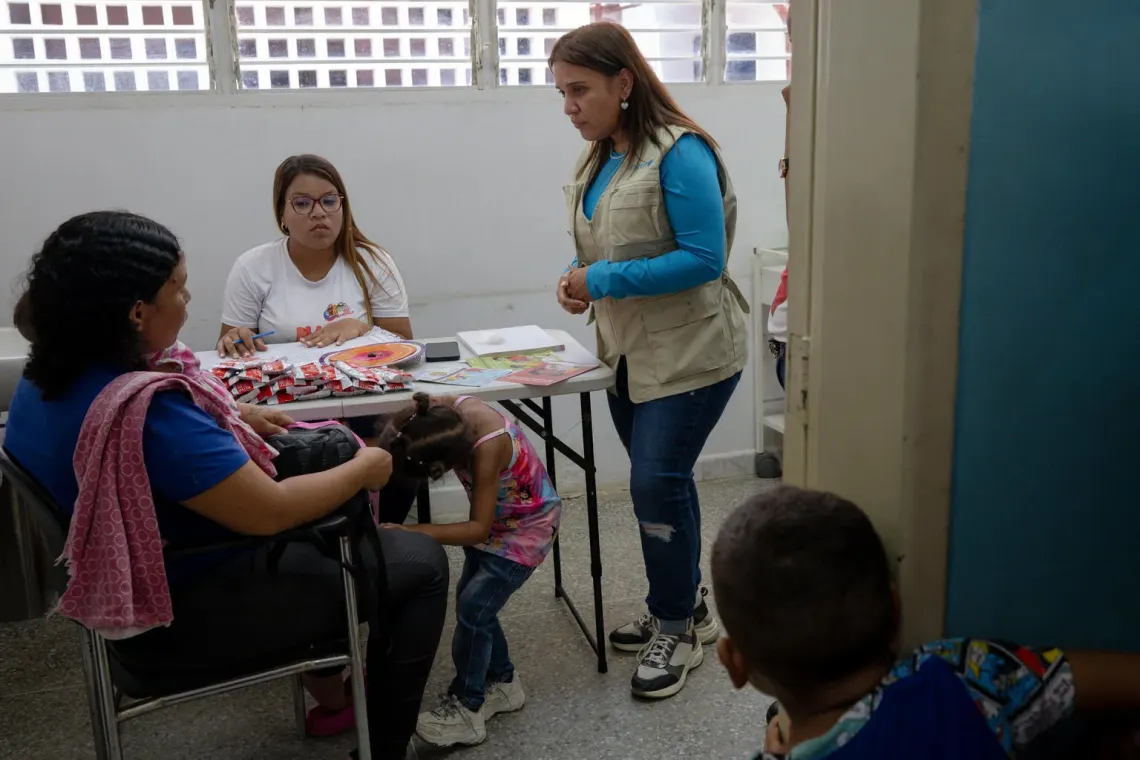
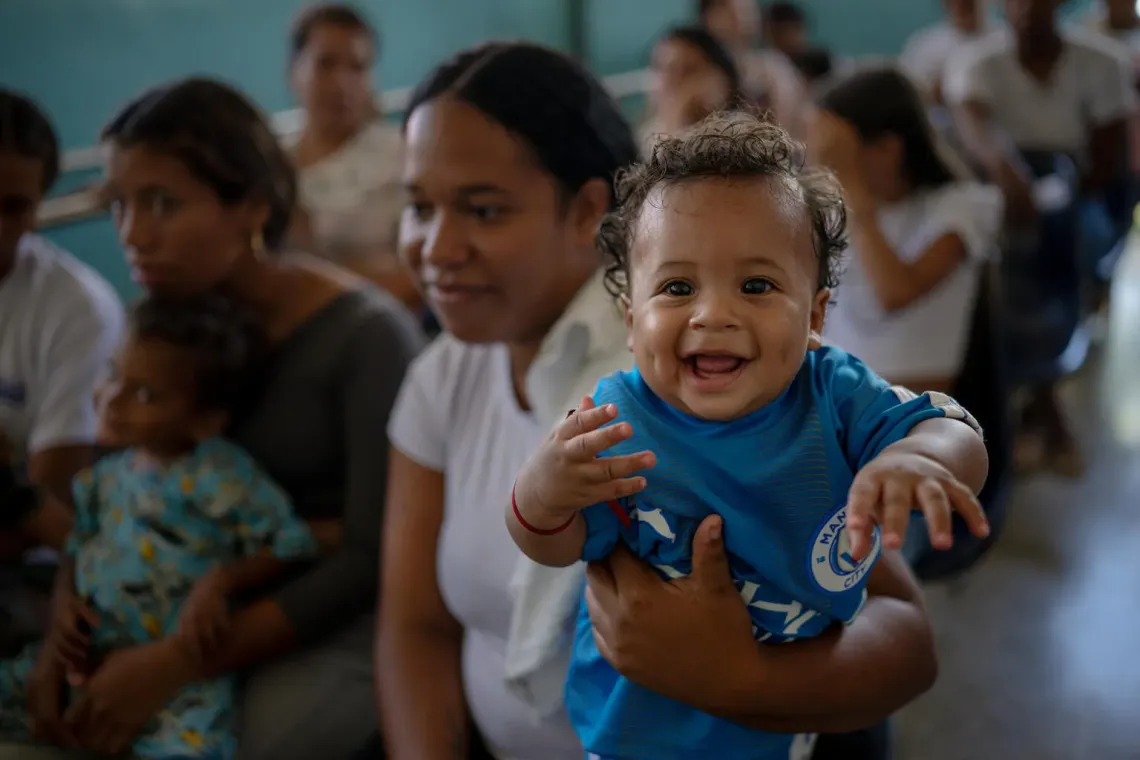
In Santa Lucía del Tuy, the outreach session brings care to a community that previously had no health services. With UNICEF support and advance coordination, 12 professionals from local organizations and nearby health centres travel to the community as part of a Basic Health Team. They include specialists in paediatrics, obstetrics and gynaecology, and nutrition.
They work from a health facility that had fallen out of use, allowing families to access a range of services in a single visit.
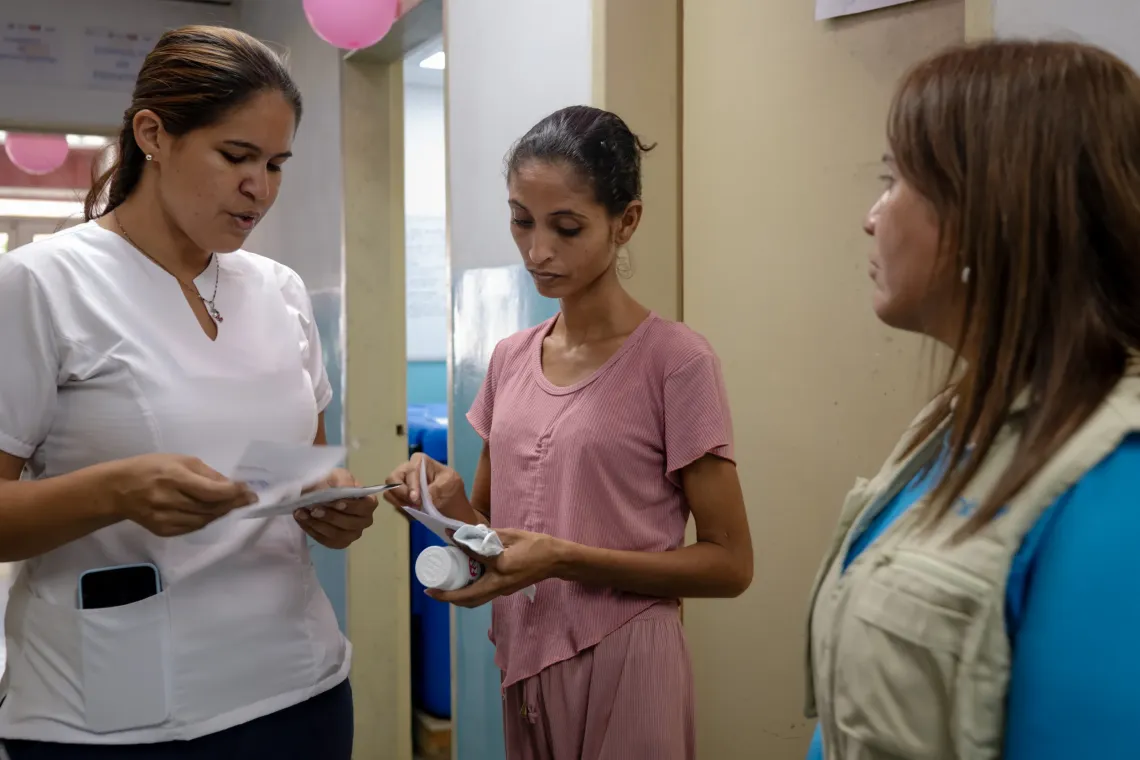
For Francisca Guilarte, the qualified nurse who organizes the outreach session, work begins at least 15 days before the first family arrives.
Planning starts with a meeting between authorities, community leaders and those responsible for the different health services. Priority goes to communities in the most vulnerable situations, particularly those facing barriers to essential health and nutrition services. Francisca brings the staff together, checks the availability of medicines, vaccines, nutrition supplies and basic equipment for maternal and child health care, and arranges transport. After the consultations, she follows up on cases and coordinates care for those who need to see other specialists.
Care without further delay
Elys Rodríguez arrives from Santa Rita, tired and short of breath after a journey by public transport and on foot. She is 31 years old and 10 weeks pregnant. A doctor told her about the outreach session and the opportunity to have an antenatal check-up. Elys decided to come.
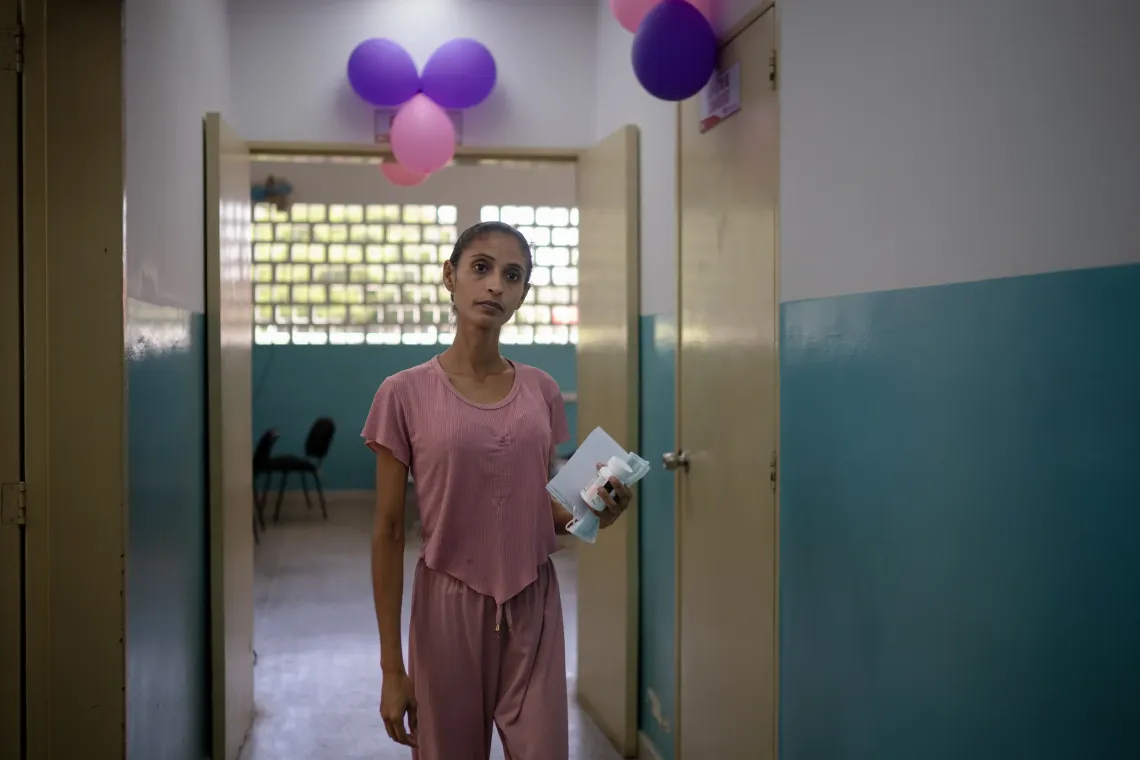
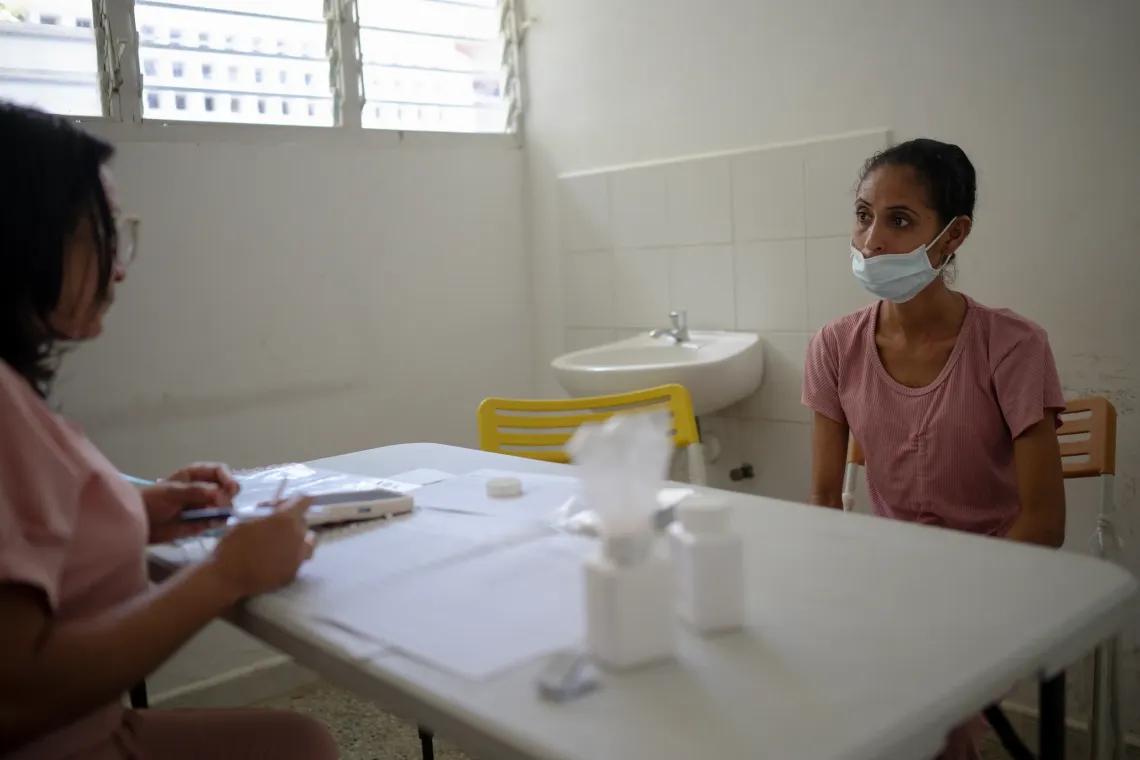
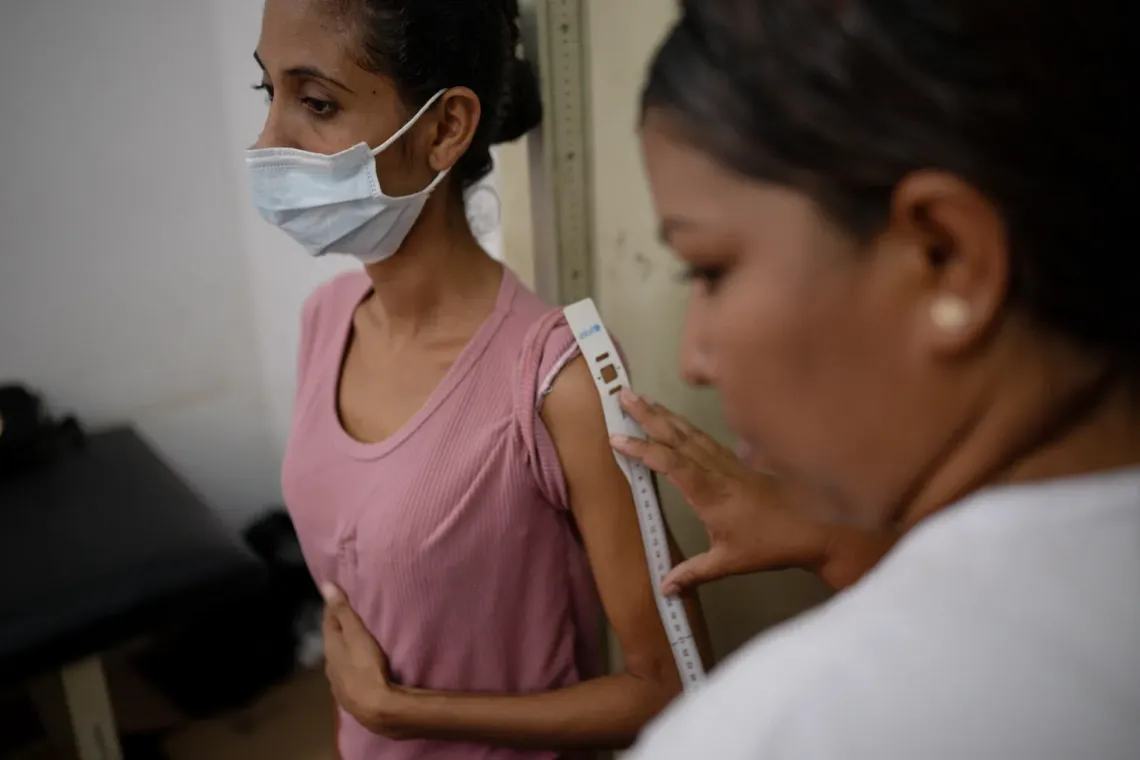
First, she receives care for her breathing difficulties. During her antenatal consultation, she has an ultrasound scan and is told that her baby is doing well. At her nutrition consultation, the team weighs her, measures her height and checks her mid-upper arm circumference. They find that she is underweight, provide micronutrient supplements, register her to receive a nutritional supplement and offer advice on her diet. The team also arranges an assessment by a respiratory specialist and further diagnostic tests.

Nausea makes it difficult for her to eat certain foods. At home, she cares for her two daughters, aged 11 years and 18 months, while her partner looks for work to support the family. With a pregnancy she had not expected, Elys is also working out how to cover the costs. Without this outreach session, she explains, she would have to wait until her partner had enough money to pay for the ultrasound scan and buy the supplements.
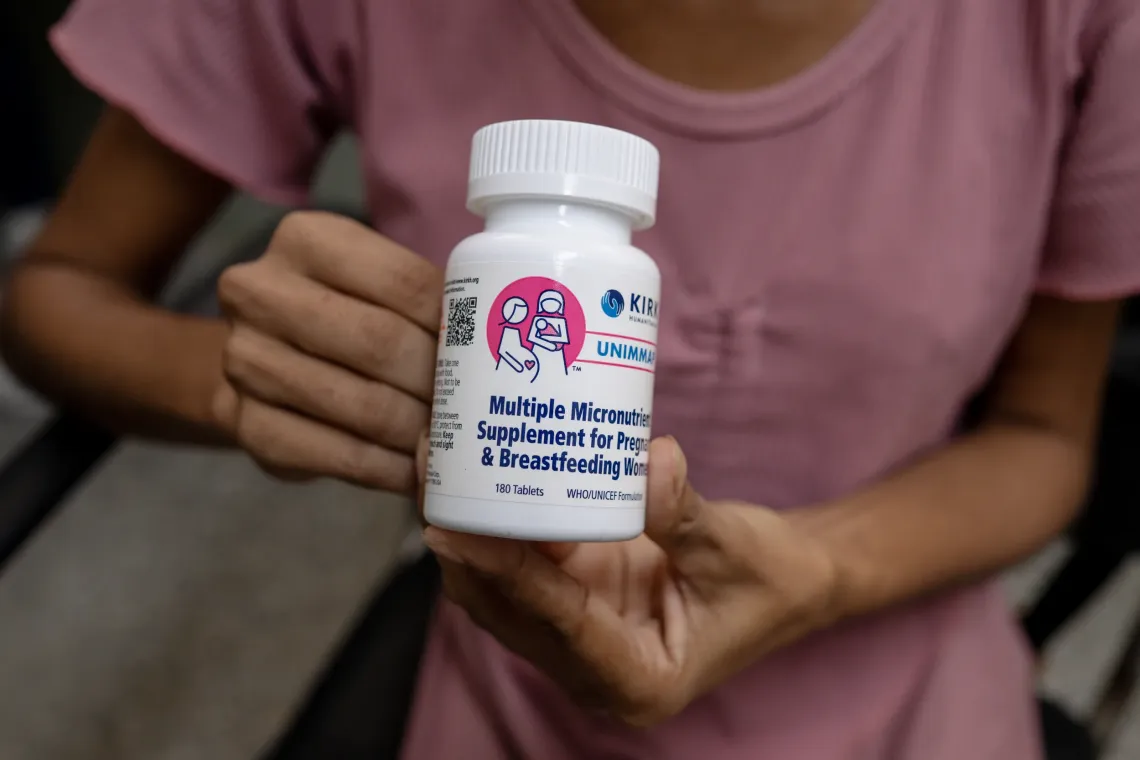
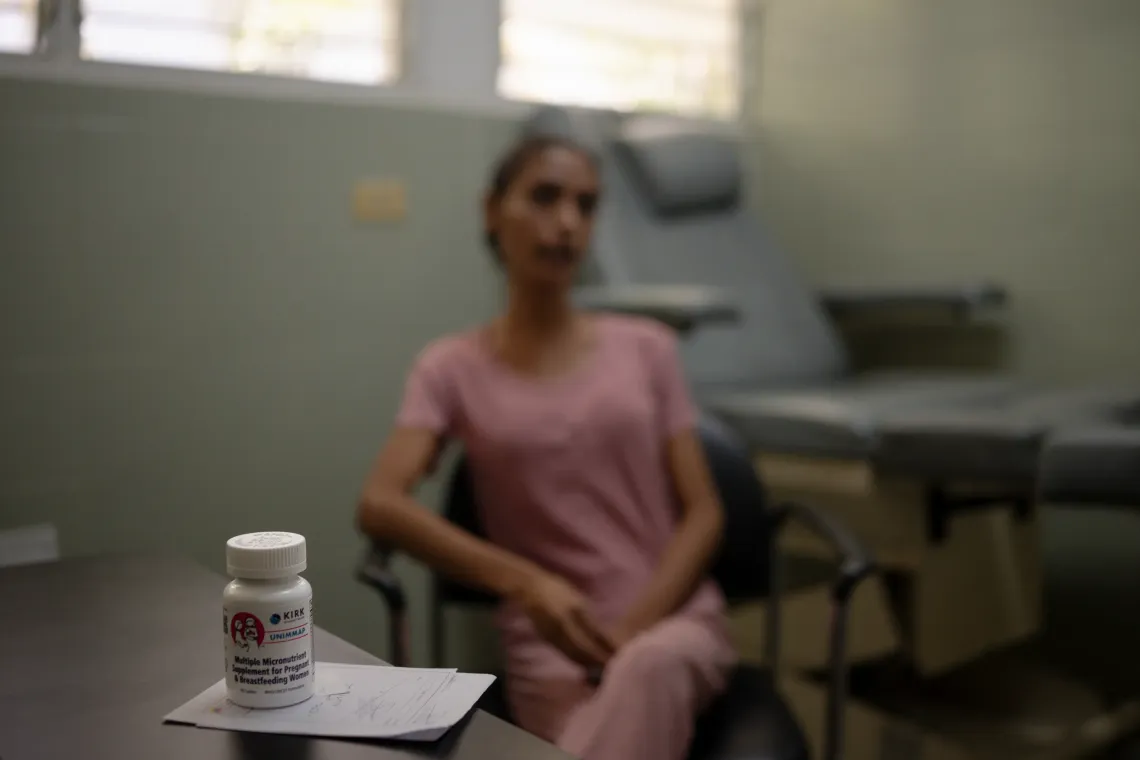
“I would have to wait until he got paid to be able to buy the medicines,” she says.
She appreciates having a health worker accompany her from one consultation to the next and ask how she is feeling. “If you don’t know where to go, where the nutrition service is, they take you there and ask how you feel.” As she talks about her pregnancy, she shares her greatest wish: “All I ask of God is for my baby to be born healthy.”
Understanding what happens between consultations
Anderbis Acosta, a mother of six, arrives with two of her daughters after Moisés, the community health worker, contacted her and explained how to attend the outreach session. Her youngest daughter is 9 months old. She was born prematurely, at seven months of pregnancy, weighing 1.6 kilograms. Ever since, her mother has sought help so that she can gain weight. She takes her to the paediatrician, gives her the prescribed treatment and watches closely for every change.
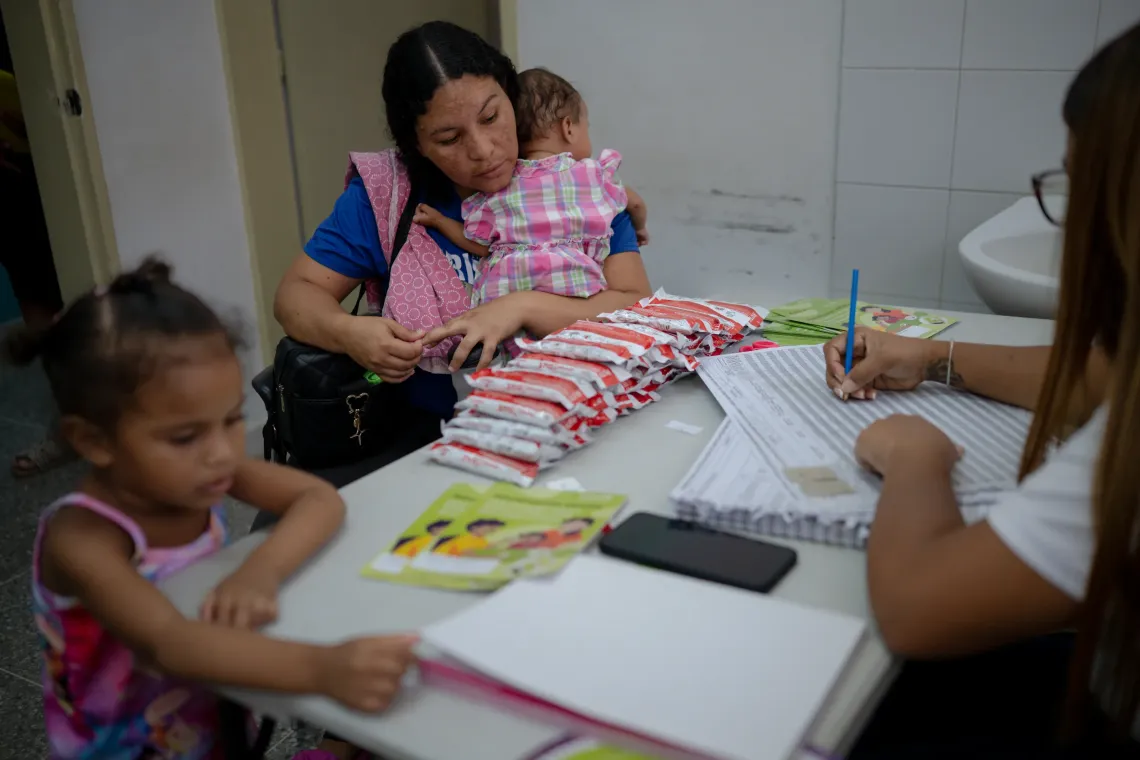
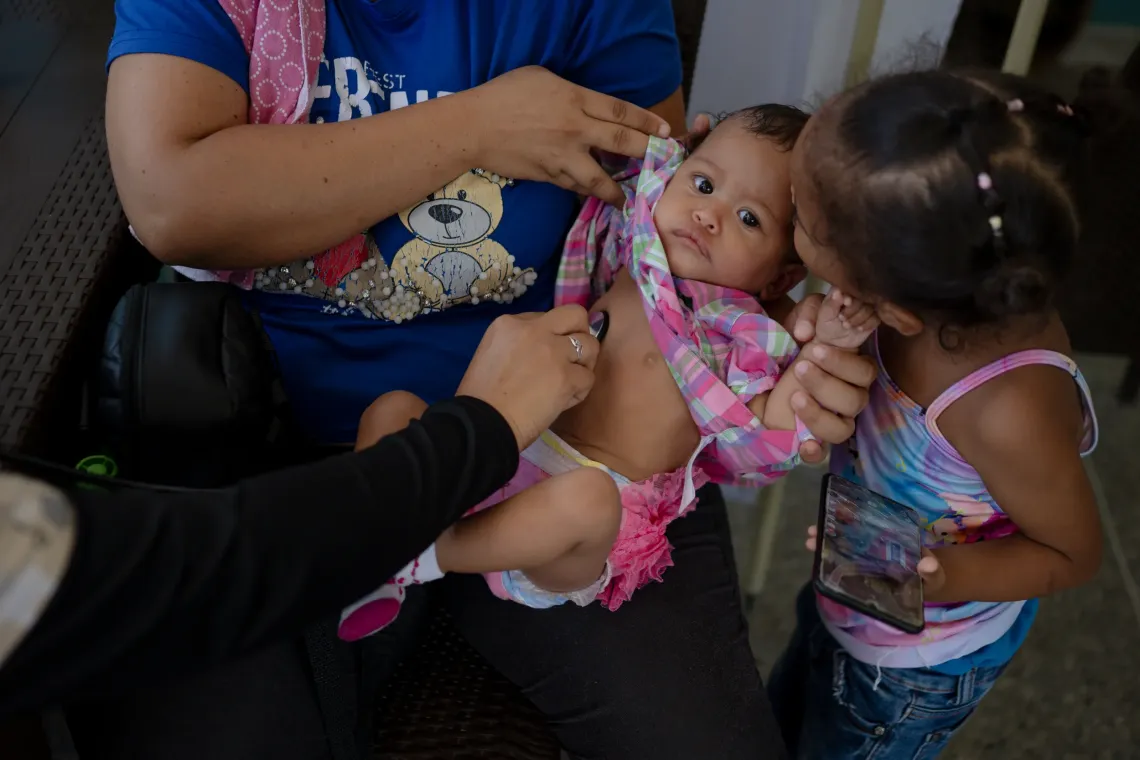
“I try to give her everything she needs,” she says. “I really don’t know why she isn’t gaining weight.”
According to the assessment Francisca describes, the baby has severe acute malnutrition. The team provides ready-to-use therapeutic food and recommends follow-up care at home. Her recovery still requires treatment and support.
At home, caring for her daughter is part of meeting the needs of the whole family. Anderbis’s partner leaves at 4 a.m. to work in Caracas. She cares for their children, cooks and looks after the house. She also knows how to bake cakes and used to sell them until the oven broke. She wants to start baking again to contribute to the household income.
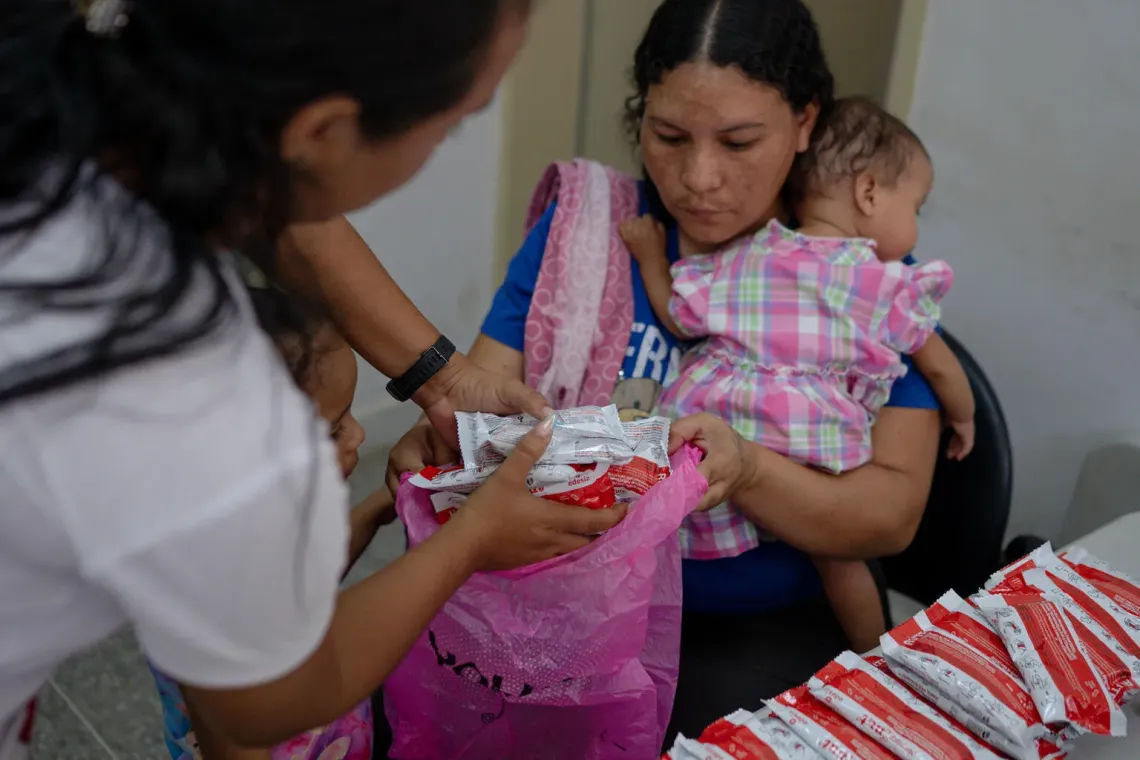
During the consultation, a specific difficulty with the treatment comes to light. Anderbis explains that she has been throwing away whatever her daughter does not finish from each sachet of therapeutic food, following instructions she received at an earlier consultation. The doctor now explains how to handle the product once it is opened and offer it to her daughter again.
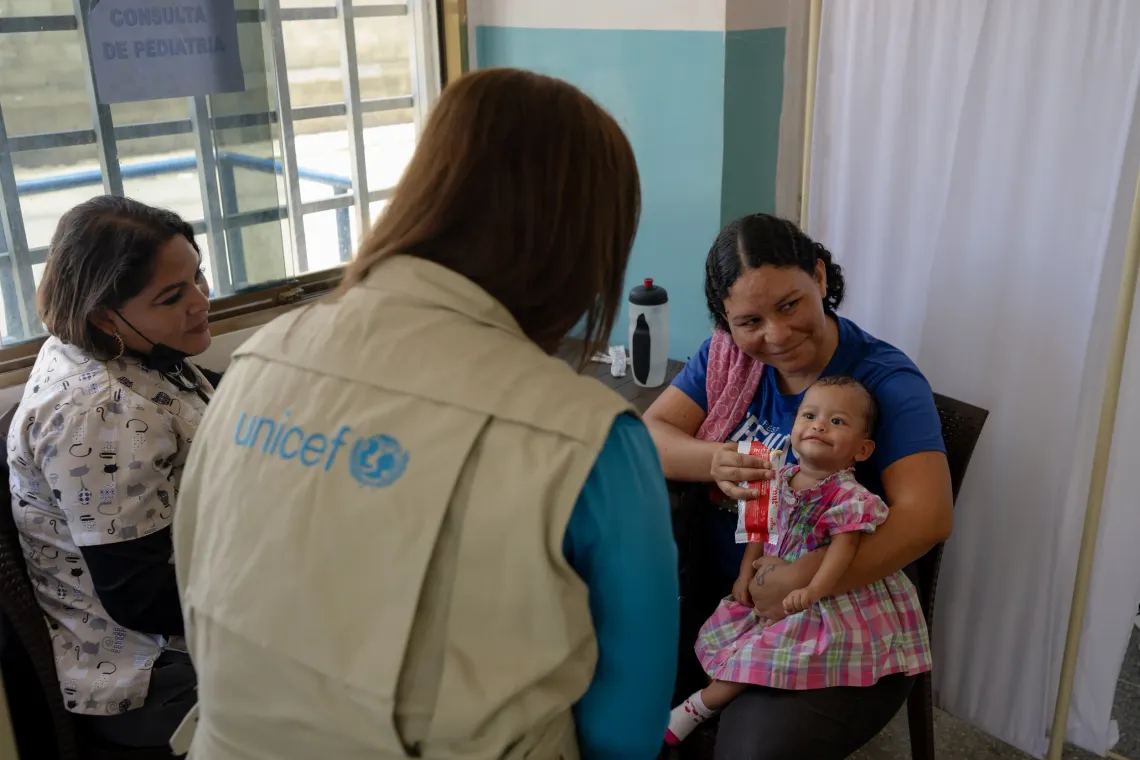
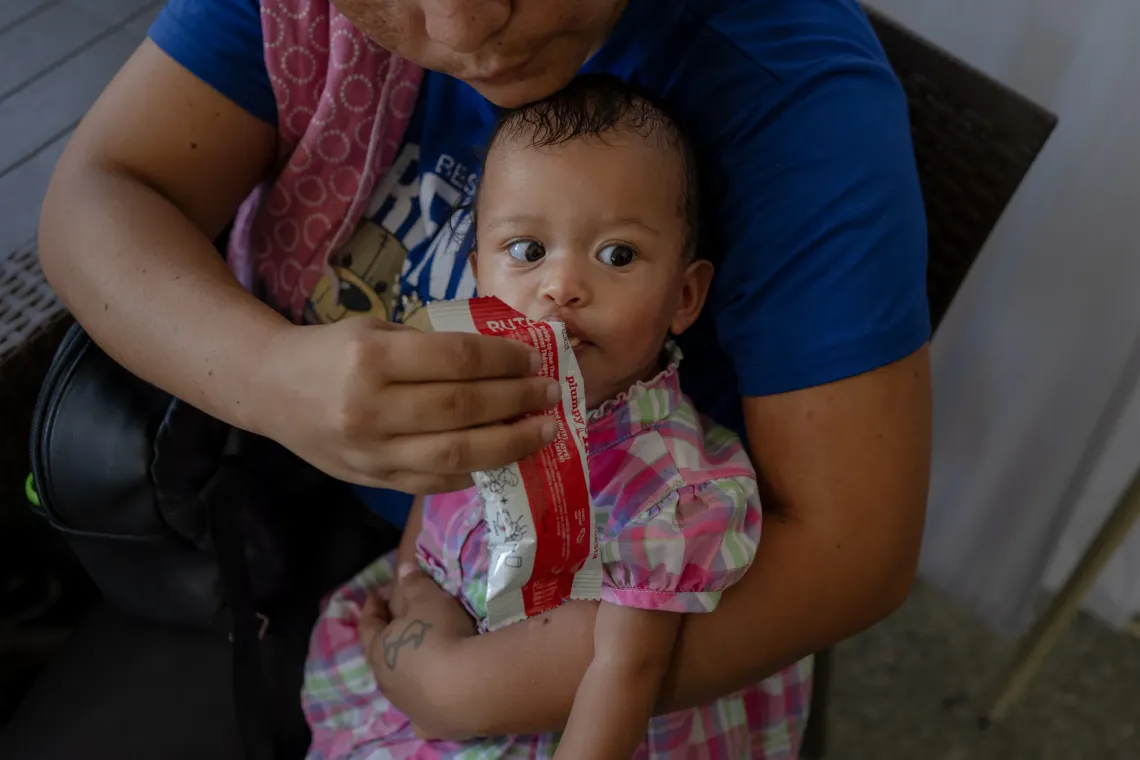
“They hadn’t explained that to me at the previous appointment,” Anderbis says.
Listening to her helps the team understand how she is using the treatment and answer her questions. Ensuring continuity of care means understanding what happens when the family returns home, how the baby is being fed and what difficulties her mother faces. The next assessment will provide an opportunity to review her progress. For now, Anderbis remains concerned about helping her daughter gain weight.
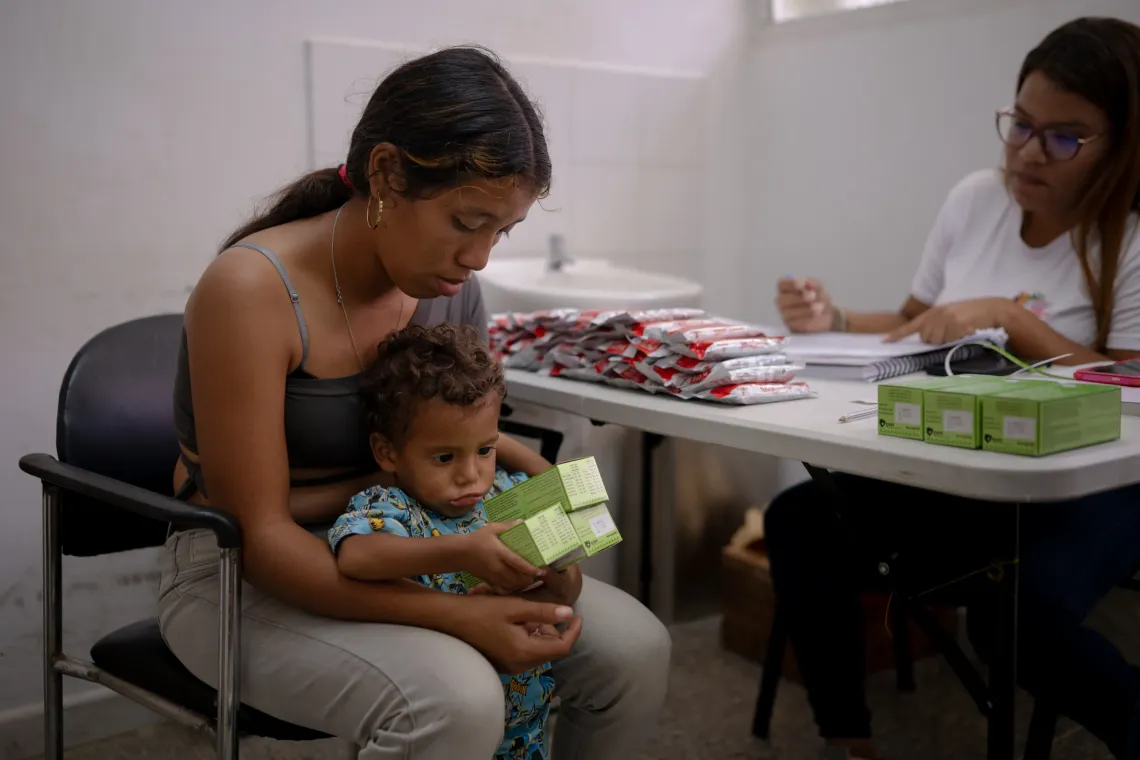
Francisca acknowledges that follow-up care also faces challenges beyond the consultation. Some families need specialist services that are not available during the outreach session, as well as social support to help them cope with financial difficulties. Coordinating that care is part of the work still to be done.
Reaching communities and sustaining care
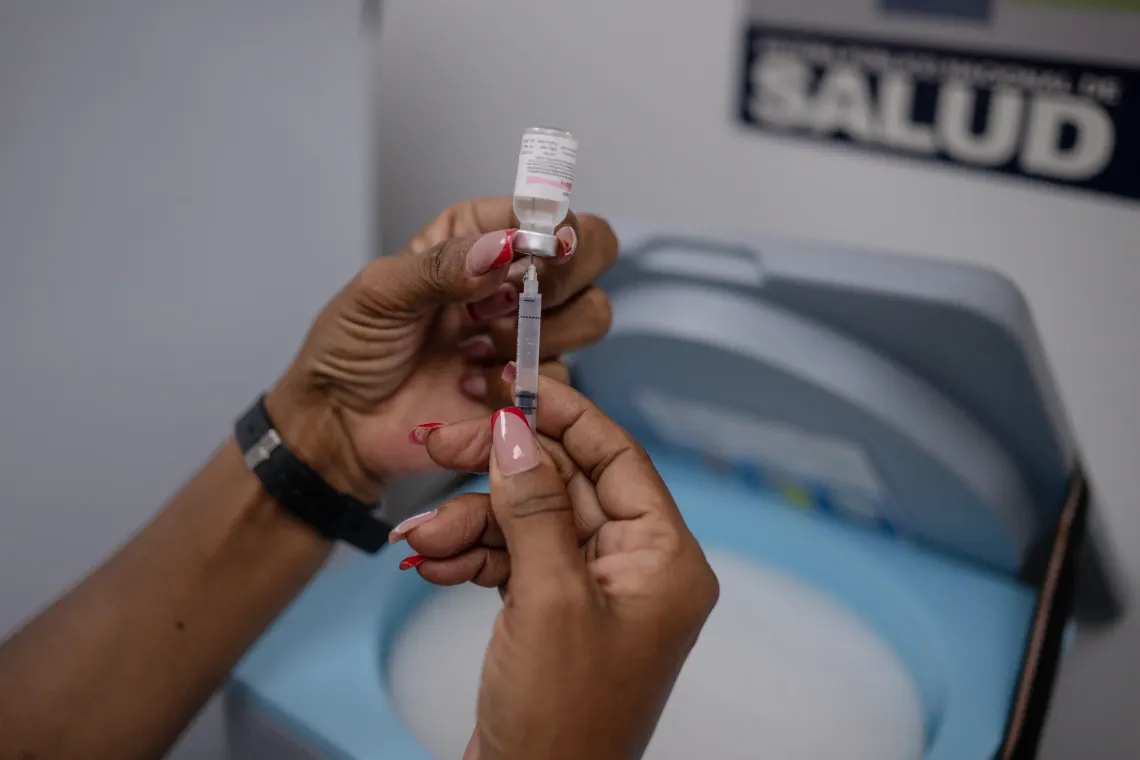
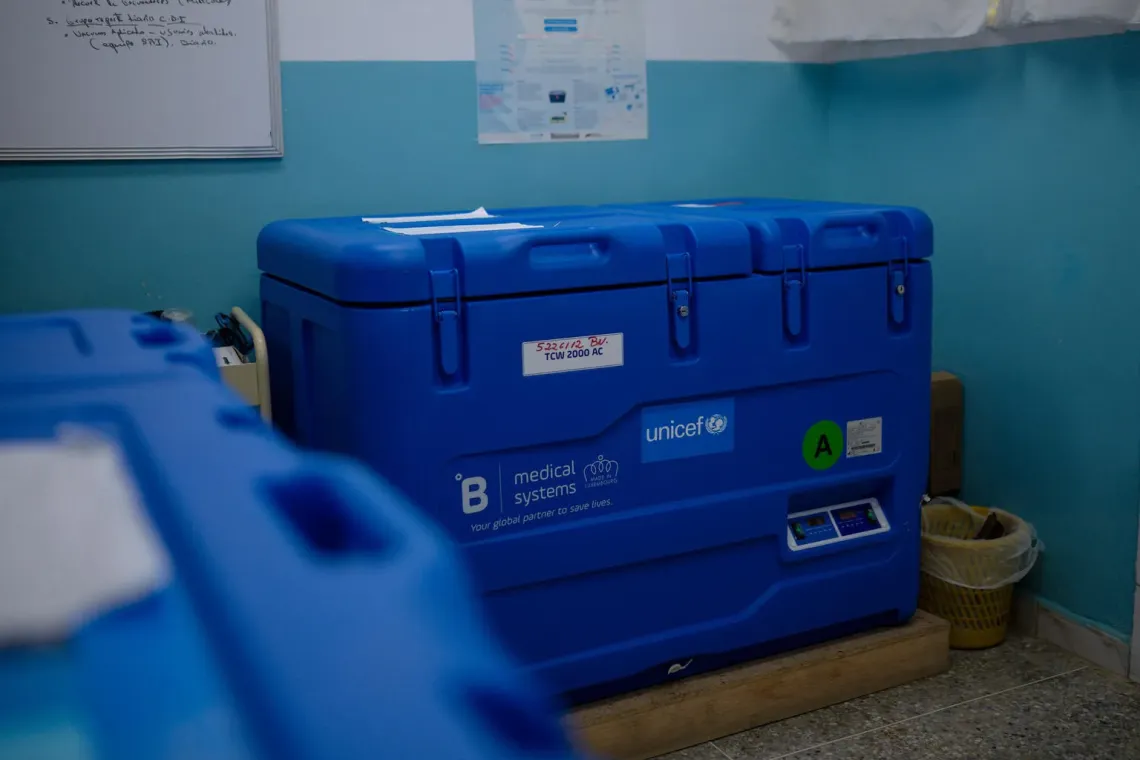
UNICEF supports the Ministry of People’s Power for Health by training staff, providing equipment and supplies, helping organize and manage information, and offering logistical and transport support to bring services closer to communities. Care includes preventing and identifying malnutrition, providing nutrition support during pregnancy and breastfeeding, and treating children who need it.
Zulay González, Nutrition Officer at UNICEF Venezuela, explains that this work aims to give families access to “services that are closer to home, that are good quality and available when they need them.” Trust also matters: It helps families feel comfortable returning for care and asking questions.
In the aftermath of the earthquakes, this support takes on added importance. According to Zulay, damage to infrastructure and the displacement of families in Miranda State make some services harder to access and increase demand in other communities. Moisés says families from La Guaira who lost their homes have arrived in the area and are staying with other families. Their needs add to those he already encounters on his visits.
Moisés knows first-hand what it means to need care and lack the means to access it. His mother raised him alone and died four years ago. Remembering her, he speaks of how powerless he felt seeing her ill and being unable to help as he would have liked.
In the families he visits, he recognizes hardships he has experienced himself. “My mother and I went through a lot of hardship,” he says.
It was also four years ago that a call from a friend encouraged him to train as a community health worker. He learned to identify cases of malnutrition and support those affected. He had to interrupt his nursing studies because he could not afford to continue; now he is beginning a medical degree. Between classes and community visits, he is working towards a goal of his own: “My dream is to graduate and qualify as a doctor.”
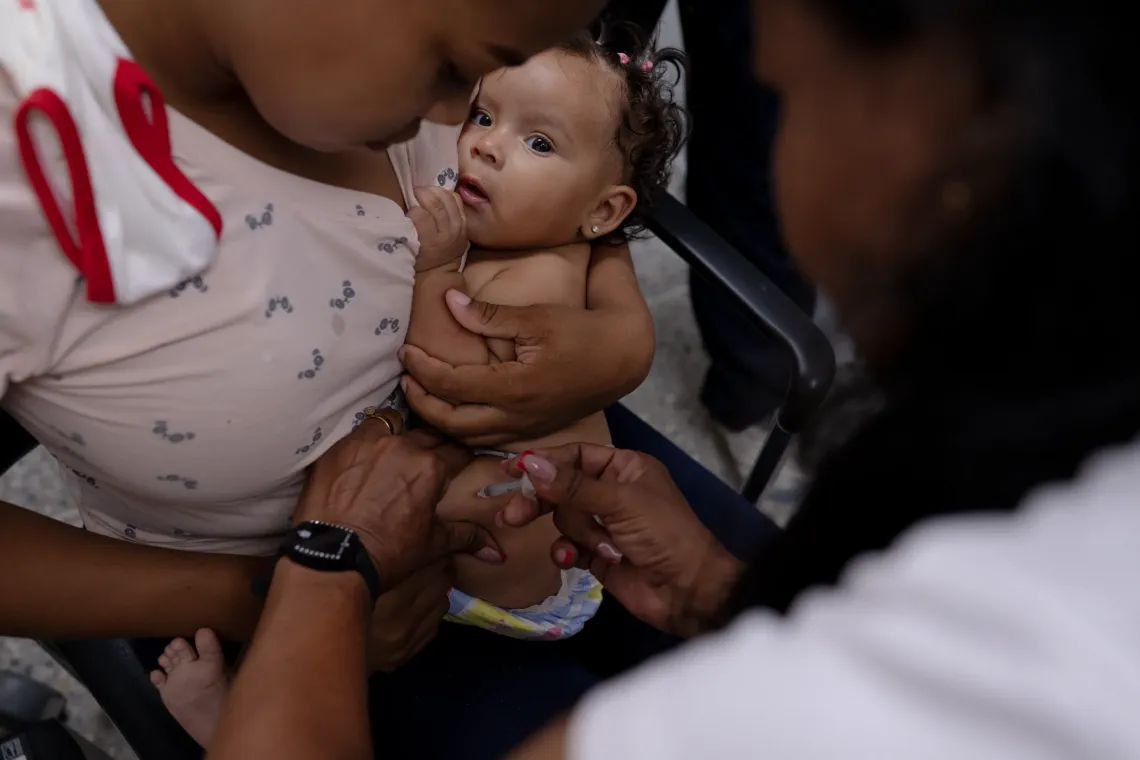
At the end of each outreach session, the Basic Health Teams return with the satisfaction of having provided care and support to those who need it most. For families, this can mean a timely consultation, a question answered, treatment started or the reassurance that they are not alone. In Santa Lucía del Tuy, every community visit and every encounter with a mother, a child or a pregnant woman is an opportunity to protect families’ health and well-being.
With UNICEF support and the commitment of the Basic Health Teams, more people can now access quality care close to home, when they need it. Helping every child and adolescent grow up healthy takes more than a medical consultation. It takes a network of people who listen, support families and act to ensure that no one is left behind.