“Teacher, this is my parrot!”: Derwimar and Panchito reunite after the earthquakes in Venezuela
Derwimar now lives with her family and Panchito in a temporary camp in La Guaira. Access to safe water sustains their daily lives as she holds on to one very specific wish: to return home and to school.
- Español
- English
Panchito spends the night inside the tent of one of Derwimar’s aunts. There are dogs and cats outside, and the nine-year-old girl makes sure nothing happens to him. In the morning, she goes to get him and carries him perched on her forearm through the Mare Abajo camp in La Guaira.
She knows her parrot’s signals. When Panchito is hungry, he starts knocking over anything within reach. She feeds him and then settles him on a wooden chair, his favourite place. She says he may bite people who try to pick him up. With her, he remains calm.
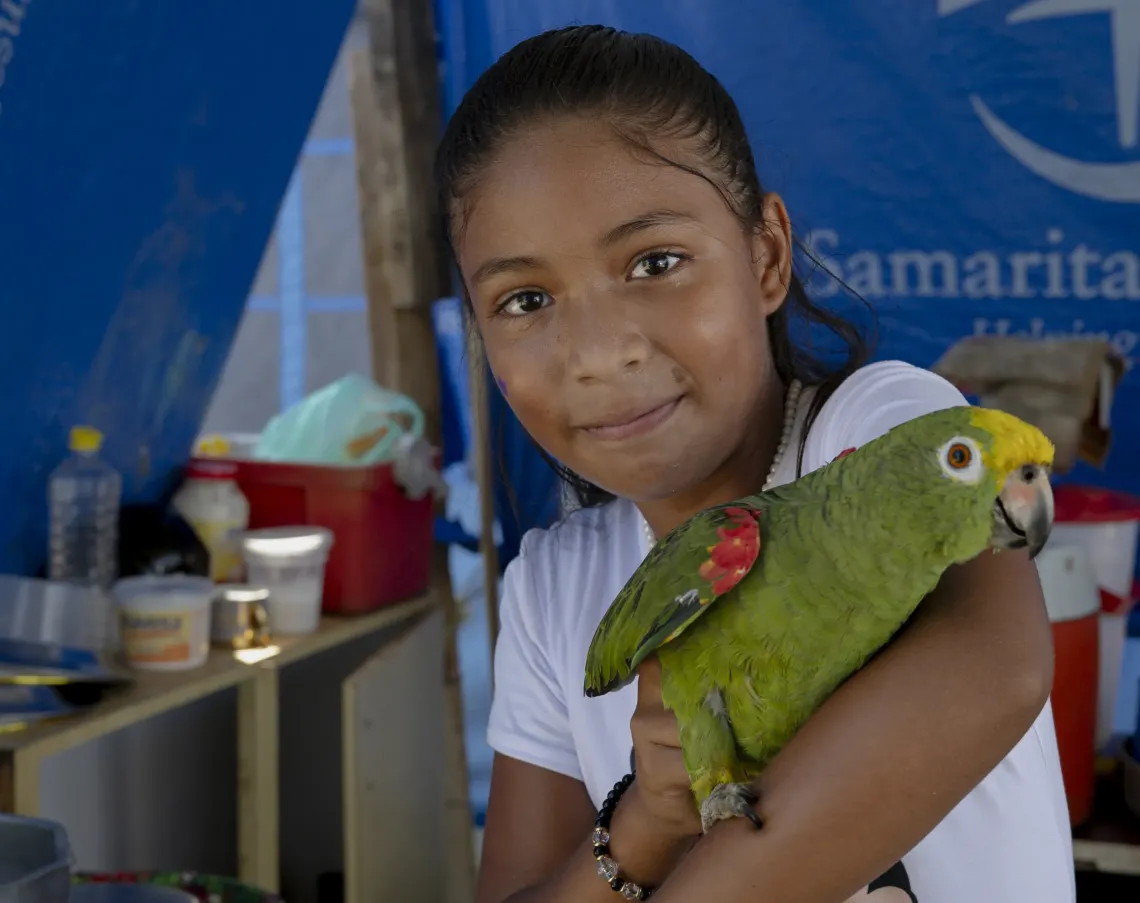
Panchito joined the family five years ago, when he was still small. Derwimar’s father found him in the street and brought him to the apartment where they lived. The parrot grew up there, amid family life and Derwimar’s school days.
On 24 June, that life changed in a matter of seconds.
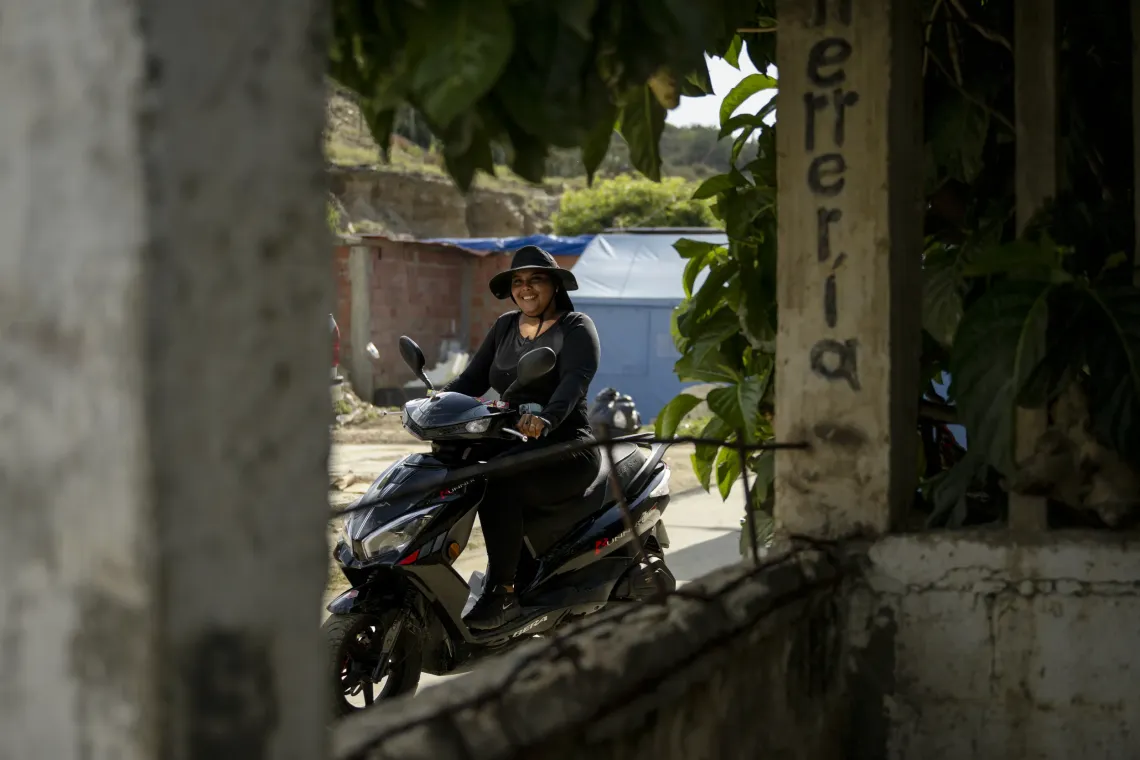
Derwimar was taking a bath when the earthquake began. She ran out wrapped in a towel. Her teacher, Karina Ramírez, had ridden her motorcycle to the area to look for relatives and found Derwimar near the damaged buildings.
“Teacher, I lost everything,” Karina recalls Derwimar telling her.
The teacher hugged her and tried to comfort her. At Derwimar’s grandmother’s request, she temporarily welcomed Derwimar and her two siblings into her home. They stayed there for eight days, alongside other families who also needed a safe place to stay.
In the midst of those first few days, Derwimar was reunited with Panchito. Karina’s son found him near the apartment buildings and brought him home. Derwimar recognised him as soon as she saw him.
“Teacher, this is my parrot!” she said.
The family also searched for a rabbit that was never found. Panchito, however, was able to return to Derwimar. Since then, he has slept safely inside her aunt’s tent and stayed with the girl during the day.
Derwimar lives with her grandparents, whom she calls Mum and Dad. She shares the camp with her siblings and her two aunts. Their former apartment is only a short distance away, but it is not safe for the family to return.
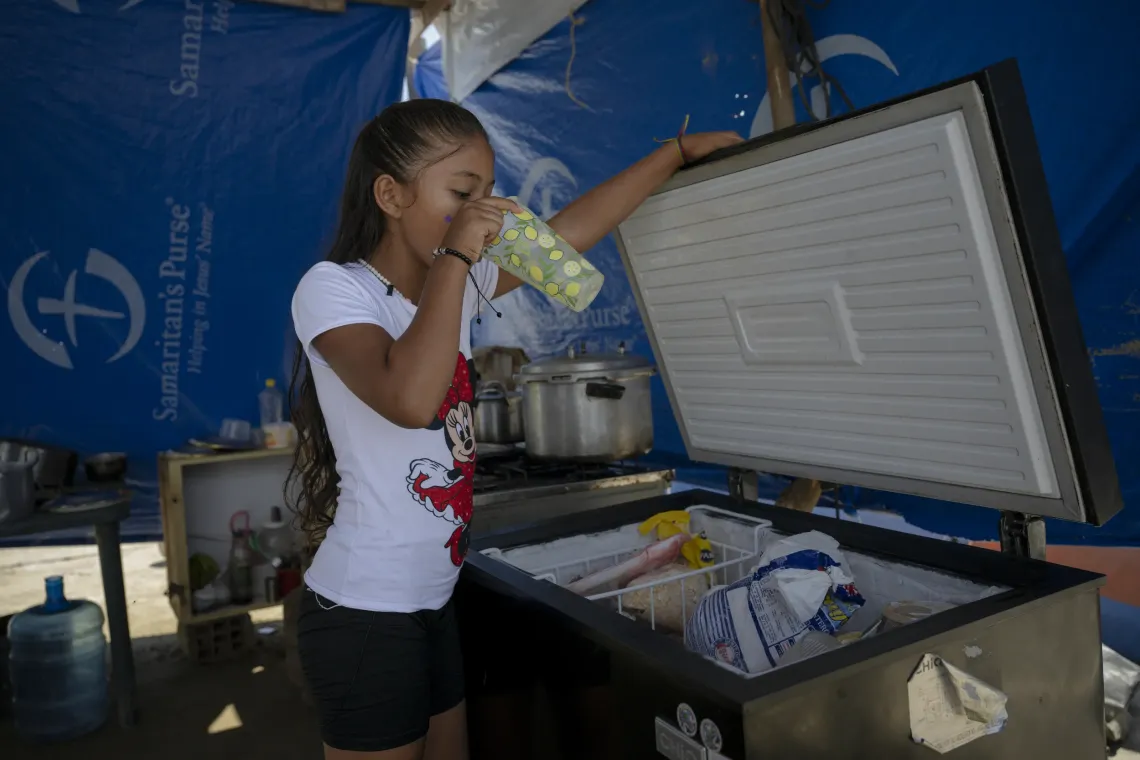
Inside the tent, the heat is trapped beneath the canvas. Dust clings to their clothes and finds its way into the space where they sleep. “I didn’t get as dirty before as I do now,” Derwimar says. Outside the tents, the family keeps a refrigerator they were able to salvage from their apartment. They store their drinking water there to keep it from getting too warm under the sun.
The water that sustains each day
During the family’s first few days at the camp, there was no water. To bathe, Derwimar and her siblings returned to Karina’s house.
“There was no water on the first day, and none on the second either,” she recalls.
The arrival of water trucks brought a new routine. When the water arrives, Derwimar’s grandfather and one of her brothers fill the storage tanks. They then fill the buckets and jugs the family uses throughout the day.
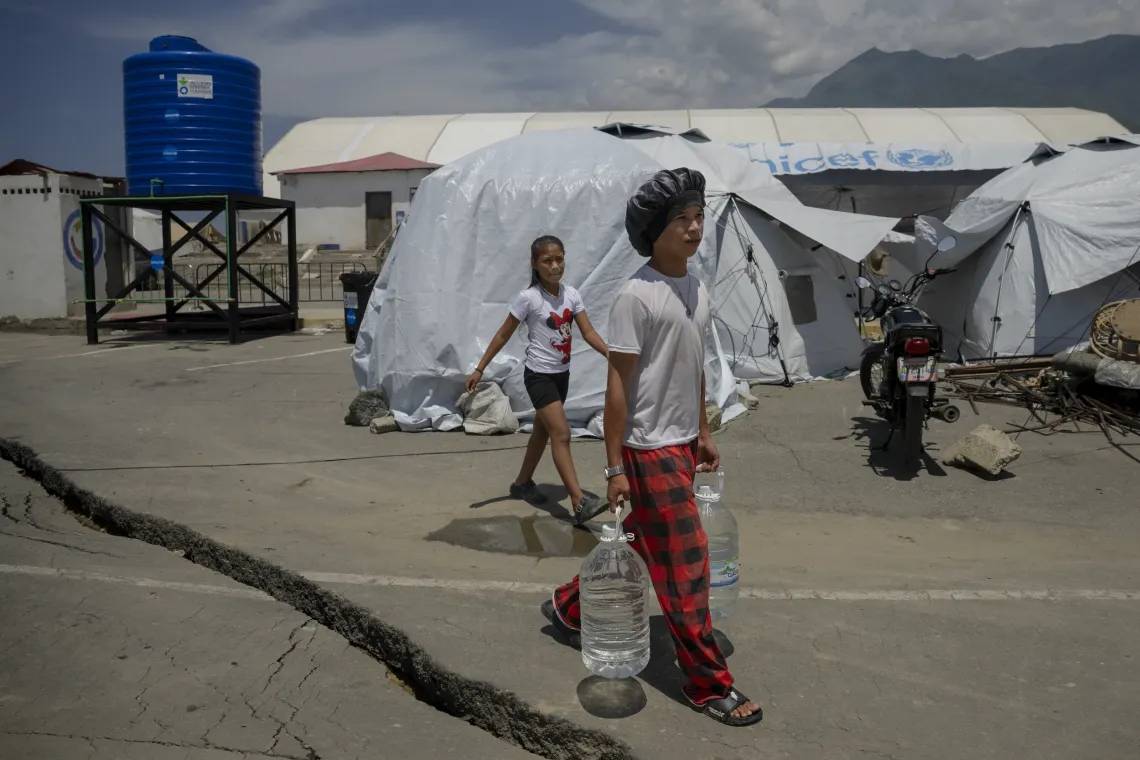
That reserve makes it possible to prepare food and keep their living area clean. It also allows Derwimar to bathe after playing in the sun and wash her hands before eating.
“Water is important for washing my hands, bathing, drinking and staying clean,” she explains.
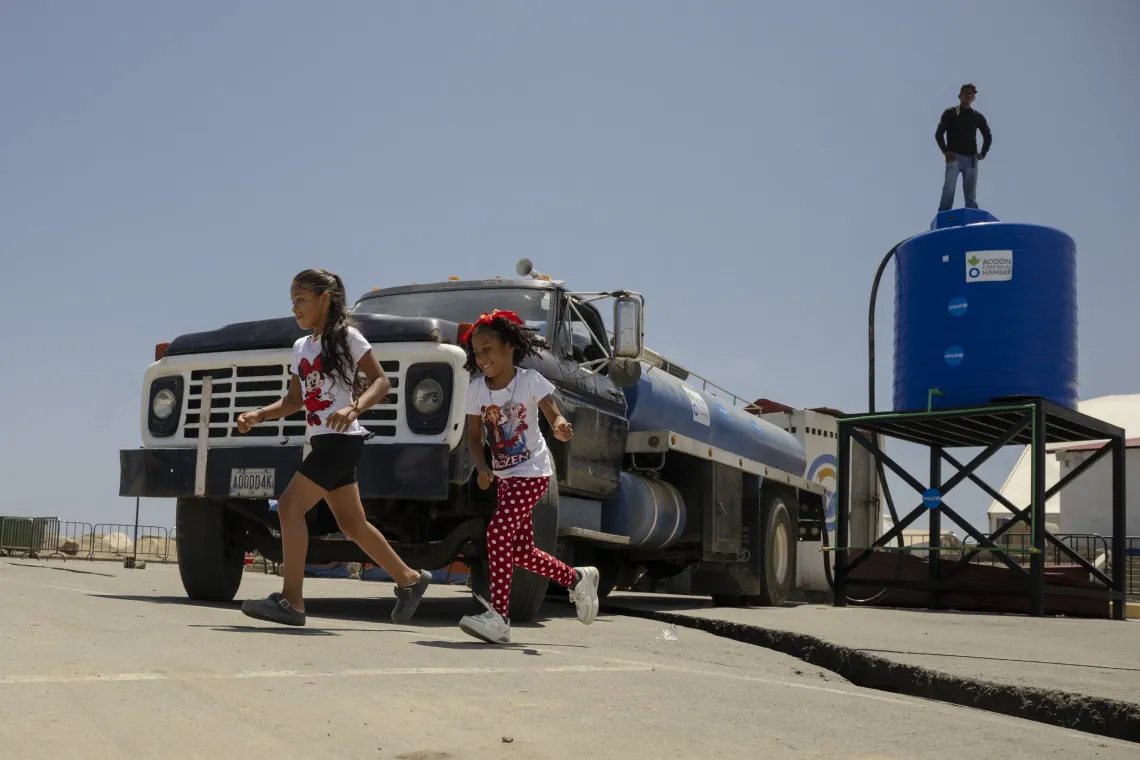
In the Gran Cacique Mare commune, UNICEF works with authorities and partners to promote access to safe water through water trucking and the installation and maintenance of water storage points. UNICEF also supports the installation of emergency showers and toilets. These efforts are complemented by the distribution of essential hygiene and cleaning supplies to families and the promotion of key hygiene practices and habits.
These efforts receive financial support from the European Union, through the Directorate-General for European Civil Protection and Humanitarian Aid Operations (ECHO), and the United States Government, through the Department of State’s Bureau of Disaster and Humanitarian Response (DHR).
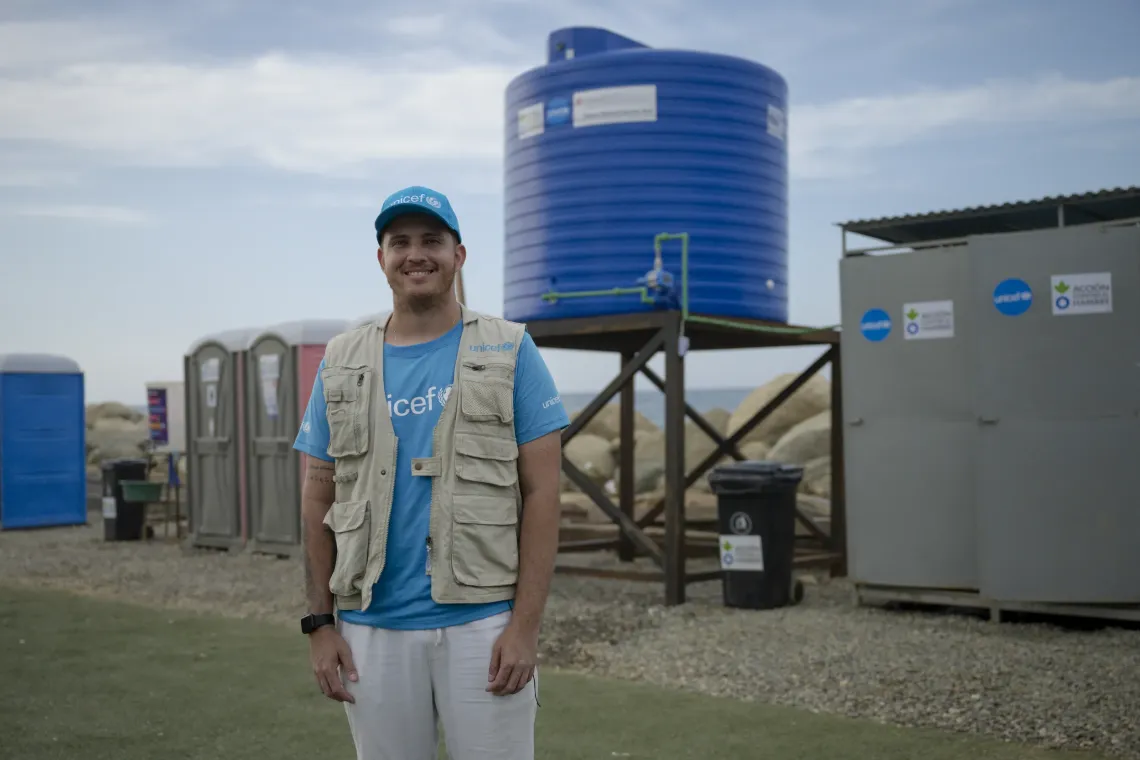
At the time of the visit, the support was reaching around 7,000 people in Mare Abajo and neighbouring communities.
“We distribute 80,000 litres of safe water every day in the Gran Cacique Mare commune,” explains José Briceño, a UNICEF Water, Sanitation and Hygiene Specialist. The water is distributed between the camp and the seven communities that make up the commune.
While the immediate water supply meets urgent drinking and household needs, Briceño adds that UNICEF continues to work with authorities and partners to expand the response. The aim is to move towards more sustainable services by rehabilitating and strengthening desalination plants and improving Water, Sanitation and Hygiene infrastructure in schools and health facilities, which are essential environments for the holistic development of children and adolescents.
A school while they wait for school to return
The earthquake also left her school unusable. Derwimar had completed fourth grade there and was preparing to start fifth grade. She recalls with particular pride giving presentations in front of the class.
“What I like most about school is when the teacher asks us to give presentations and I get 20 out of 20,” she says.
She also talks about division and long dictation exercises. She says she enjoys studying, although she sometimes feels there is too much homework. She wants to be a veterinarian when she grows up. Seeing how closely she looks after Panchito makes it easy to understand where that wish comes from.
Karina knew that her students needed to be together again. Along with other teachers, she organised a temporary learning space on her street for children affected by the earthquakes. Derwimar, however, has not yet returned to classes.
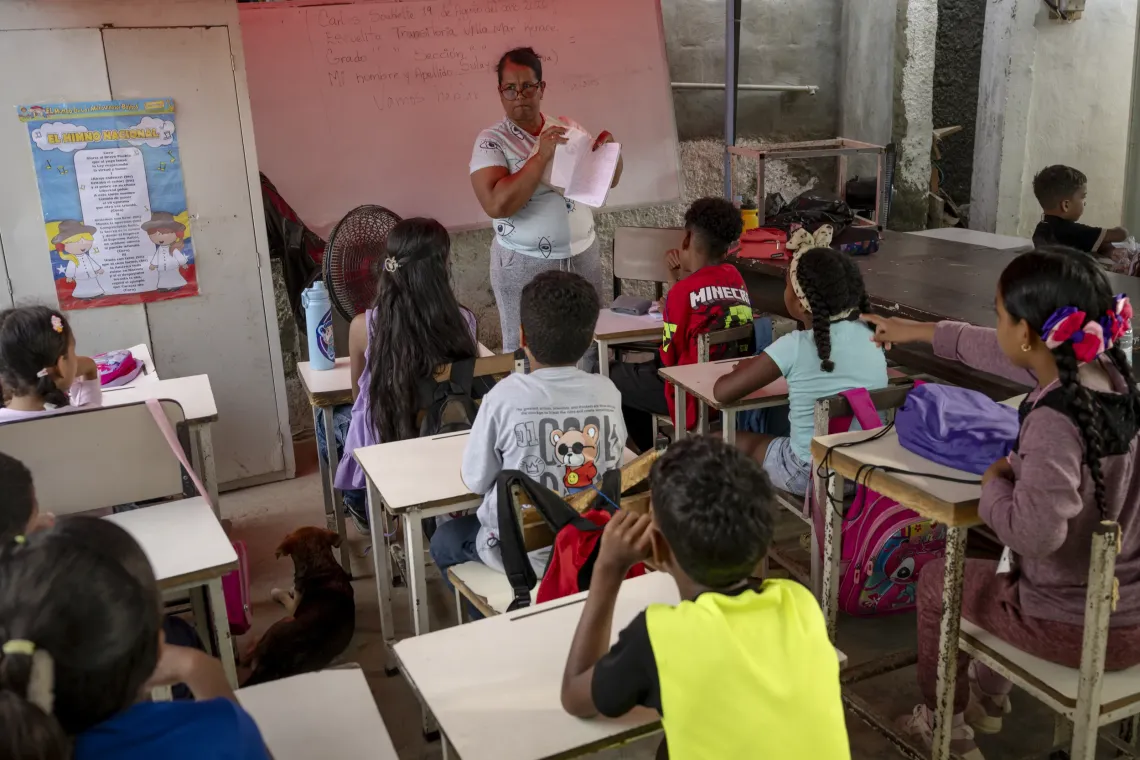
The lessons sometimes draw on everyday situations. To practise mathematics, Karina asks the children to divide biscuits among several classmates. In a context marked by uncertainty, solving an exercise again or listening to an explanation helps bring order to the day.
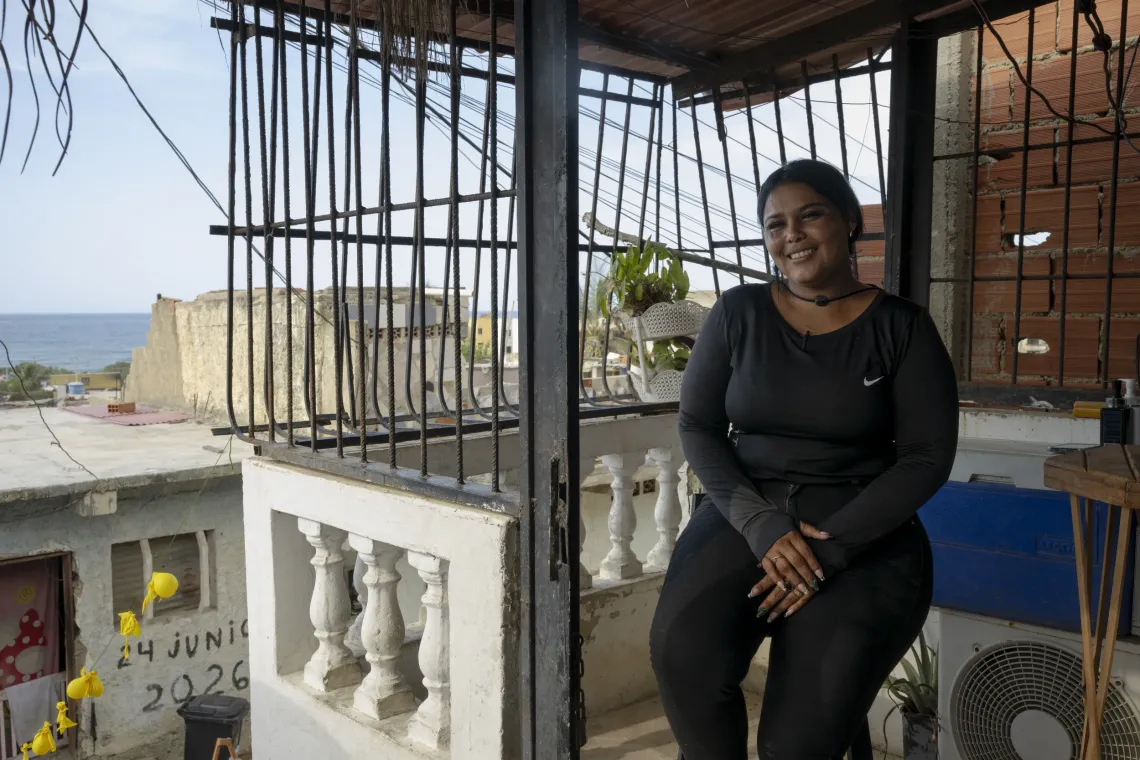
“That is what this is about: making sure every child can experience childhood,” the teacher says.
A sustained return to the classroom is still pending. Safe spaces and teachers who can support their students will be needed. Schools will also need a reliable water supply. Toilets and handwashing facilities will have to provide adequate conditions. Education recovery depends on schools once again becoming healthy environments.
For Derwimar, school remains a very tangible link to life before the earthquake. Her notebooks were there, along with the class presentations she enjoyed so much. For now, she remains out of the classroom, waiting to begin fifth grade.
At the end of the day, Derwimar turns her attention back to Panchito. Before it gets dark, she takes him to her aunt’s tent, where he will be protected through the night.
“I really want to go back home, to go back to school,” she says.
Her home remains uninhabitable, and a regular return to class has yet to be arranged. Panchito is back on her arm. Every night, Derwimar puts him somewhere safe. Every morning, she goes to get him again.