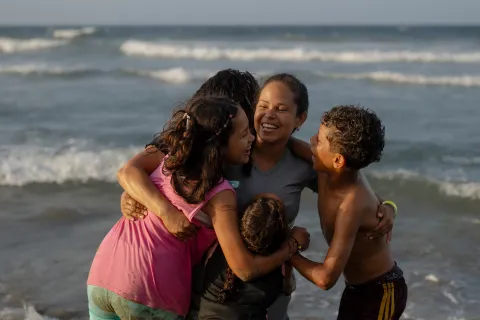
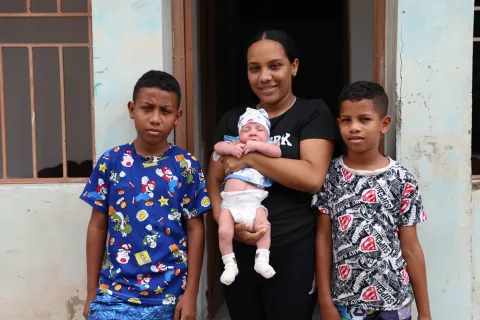
UNICEF provides psychosocial support to aid recovery of children and families following earthquakes in Venezuela
More than 20,600 children, adolescents and caregivers have accessed mental health and psychosocial support services.
- Español
- English
CARACAS, Venezuela, 5 October 2026 – A total of 20,639 children, adolescents and caregivers affected by the earthquakes in Venezuela have accessed community-based mental health and psychosocial support services through UNICEF and its partners. Three months after the emergency, UNICEF is highlighting the need to sustain this support for families coping with loss, displacement and disruption to their daily lives.
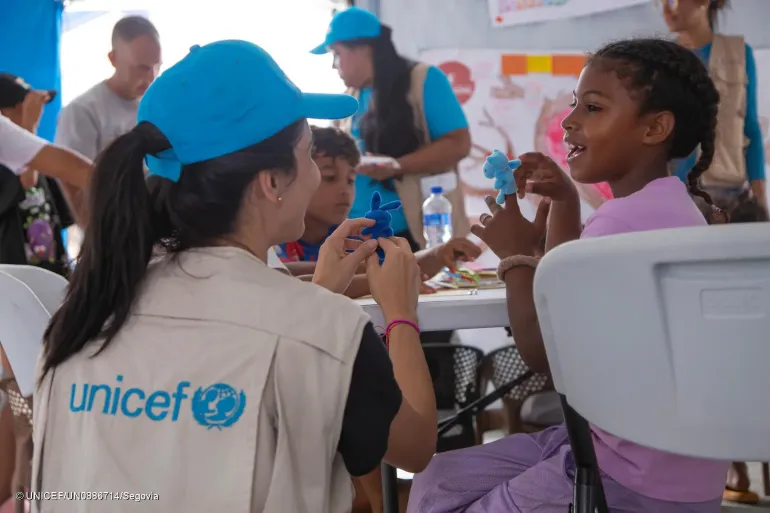
Support is delivered through child-friendly spaces, safe community spaces and mobile teams. Activities aim to support children’s emotional well-being and strengthen their bonds with caregivers. Teams also identify protection needs and facilitate access to specialized services when needed.
At this stage, as children and adolescents continue to need psychosocial support, child protection teams observe exhaustion among caregivers, prolonged stress and strained relationships. The loss of or separation from loved ones is compounded by uncertainty about housing and new caregiving responsibilities. These challenges require sustained support and measures to prevent violence, abuse and neglect.
“For a child who loses a loved one or has to leave home, feeling safe again takes time. Children need people who listen to them, care for them and stand by them. Supporting those who take on that care is also essential. This support must continue, which is why sustaining mental health and psychosocial support services beyond the camps is so important,” said Manuel Rodríguez Pumarol, UNICEF Representative in Venezuela.
Supporting caregivers is central to this work. Since the start of the emergency, 1,241 parents, caregivers and community leaders have taken part in activities that promote positive parenting, help them recognize risks and provide information on where to seek help. These efforts aim to strengthen the ability of families and communities to protect children throughout the recovery.
Continuity of services is particularly important as families leave the camps. When they move to other accommodation, they may lose contact with the teams supporting them and face greater difficulties accessing care. UNICEF and its partners are developing a community-based strategy to maintain follow-up, strengthen local protection networks and improve their coordination with institutions.
Since July, at least 520 officials and institutional representatives, including staff from the national child rights body IDENNA, child protection councils and child and adolescent rights offices, have received training and technical support in psychological first aid and child protection in emergencies. This support strengthens the early identification of risks, the prevention of and response to all forms of violence, and coordination between local services and affected communities.
Psychosocial support is linked to other protection services. A total of 941 children and adolescents have received individual support and legal assistance to assess their needs, identify risks and help the relevant authorities put protection measures in place in situations involving violence. This work also includes coordination with the services they need.
In addition, 64 children and adolescents separated from their primary caregivers, who are currently in the care of relatives or other people, are receiving support for family reunification or placement in family-based care, depending on their circumstances. This work is carried out in coordination with child protection authorities and includes psychosocial support and follow-up to help ensure children remain safe.
UNICEF and its partners have also helped 773 children, adolescents and women access gender-based violence prevention, risk mitigation and response services.
Sustaining these services requires funding for specialized personnel, mobile teams, safe community spaces and individual follow-up. A funding gap of US$3.78 million remains, equivalent to 53 per cent of the funding required for child protection and gender-based violence interventions in emergencies.
UNICEF is calling for timely and sustained funding so that children and families can continue to receive emotional support and protection in the communities where they live. Maintaining this support is essential to strengthening family care and supporting recovery.
# # # # #
Notes for editors:
Multimedia materials available here: https://weshare.unicef.org/Package/2AMZIFWGMOQS
Media contacts
About UNICEF
The United Nations Children's Fund (UNICEF) works in 190 countries and territories together with partners from governments, the private sector, and organized society to promote the fulfillment of the rights of all children and adolescents around the world.
UNICEF has been working in Venezuela since 1967, when a Basic Cooperation Agreement was signed. In 1991, the first Country Programme was approved with the National Government, transforming the commitment into actions that contribute to the protection and strengthening of the rights of children and adolescents.
For more information about UNICEF and its work, please visit: http://www.unicef.org/venezuela
Follow UNICEF Venezuela on X (Twitter), Facebook, Instagram, and YouTube