The football academy that provides opportunities beyond sports
Children and adolescents from Carúpano and Guiria, in the state of Sucre have found in Misericordia F.C. a place where they are guaranteed a safe space for their development, with psychosocial support for both themselves and their families.
- Español
- English
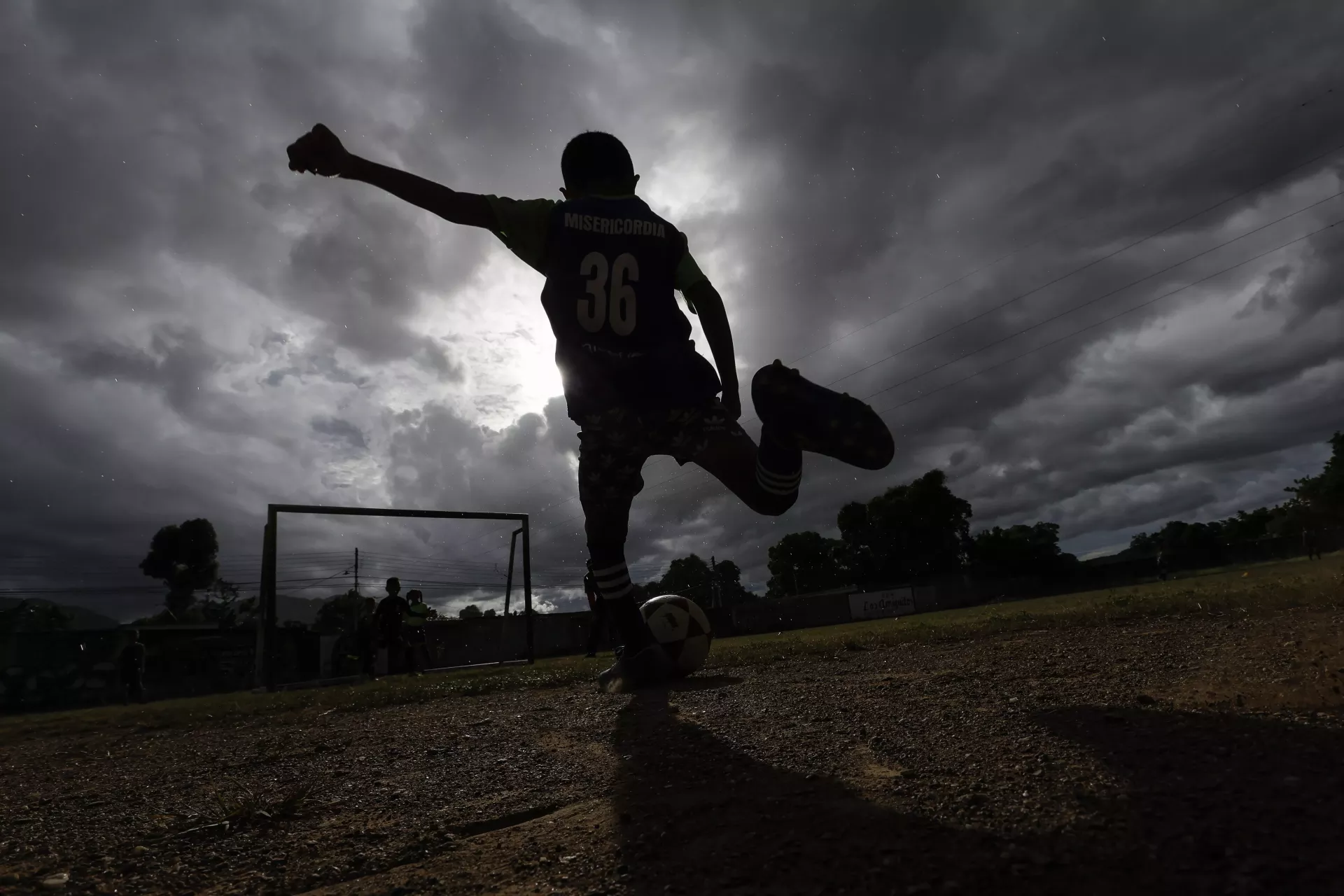
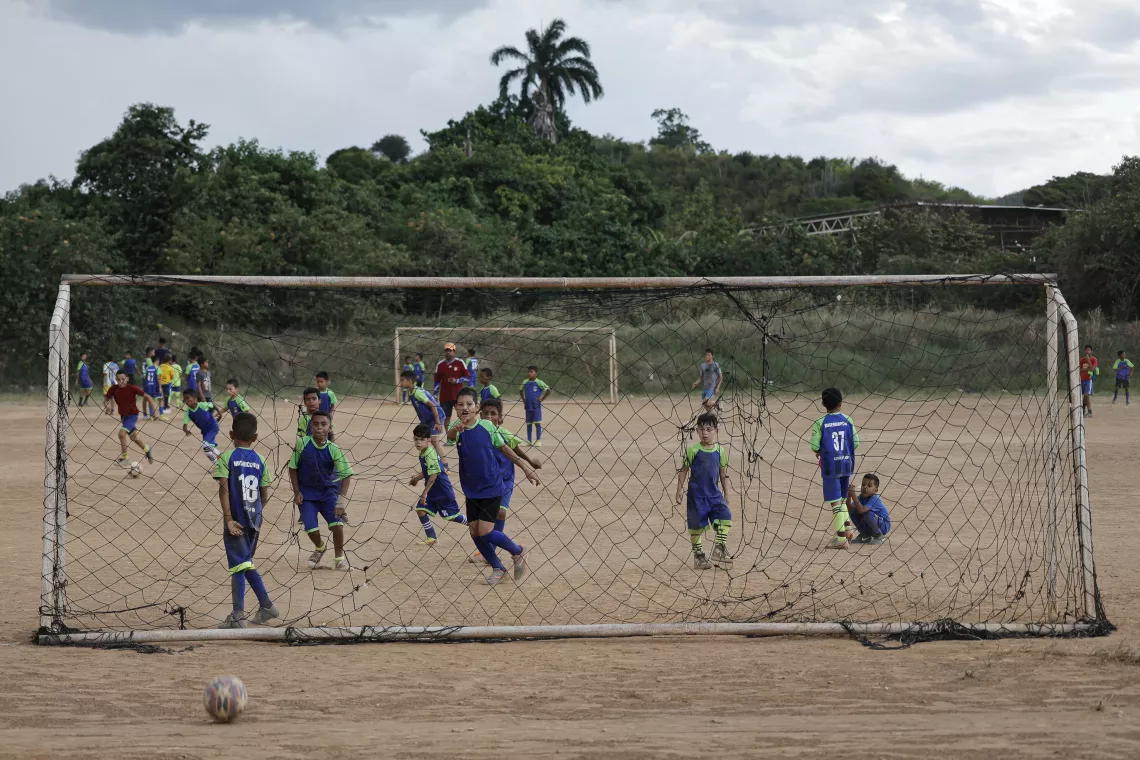
Boys and girls of different ages form a circle on the Canchunchú Nuevo sports field in Carúpano, in the state of Sucre, located on the northeastern coast of Venezuela. There is no grass, just dirt, a couple of houses with blaring music and the strong midday sun beating down on their heads. They listen to instructions from their coaches on what they will do at practice that day.
This is Misericordia F.C., an academy that three years ago was merely a dream. When Jesús Villarroel, priest and director of Caritas Carúpano in the Paria Peninsula arrived at the Divina Misericordia parish to direct and renovate it, he started organizing activities that would attract the youth to the church. He wanted to keep them away from the violence that affects this region in the country.
First, they played football in the Caritas Carúpano parking lot. The children who went to Sunday school began participating in the activity that the altar boys had started, and when they looked around, the number of children that were participating had multiplied.
The COVID-19 pandemic arrived in 2020 and they had to be resilient and persevere. Although it was a health crisis and there was a lot of fear, it was also an opportunity. In December 2020, the bishop of Carúpano, Jaime Villarroel and the priest Jesús Villarroel came up with the idea to create the academy to dispel the fear of the pandemic that the children had, and to give them a space that allowed them out of confinement. "While everything was closing, the church and Caritas kept its doors open. The pandemic drove us to pull together and give strength to the few structures we had," says Jesús Villarroel.
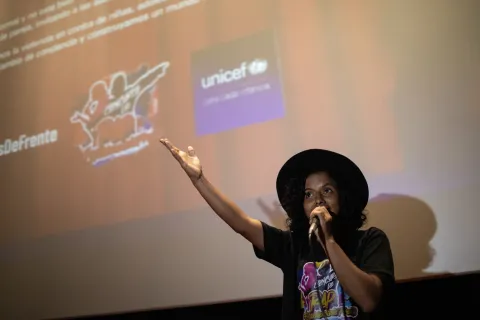
UNICEF supports this initiative through the Apamate project developed jointly with Caritas Carúpano. Courses and cultural, recreational, and formative activities were organized for young people. "That was when the academy, thanks to UNICEF, moved to Guiria as well," recounted Father Villarroel.
A playing field that provides security
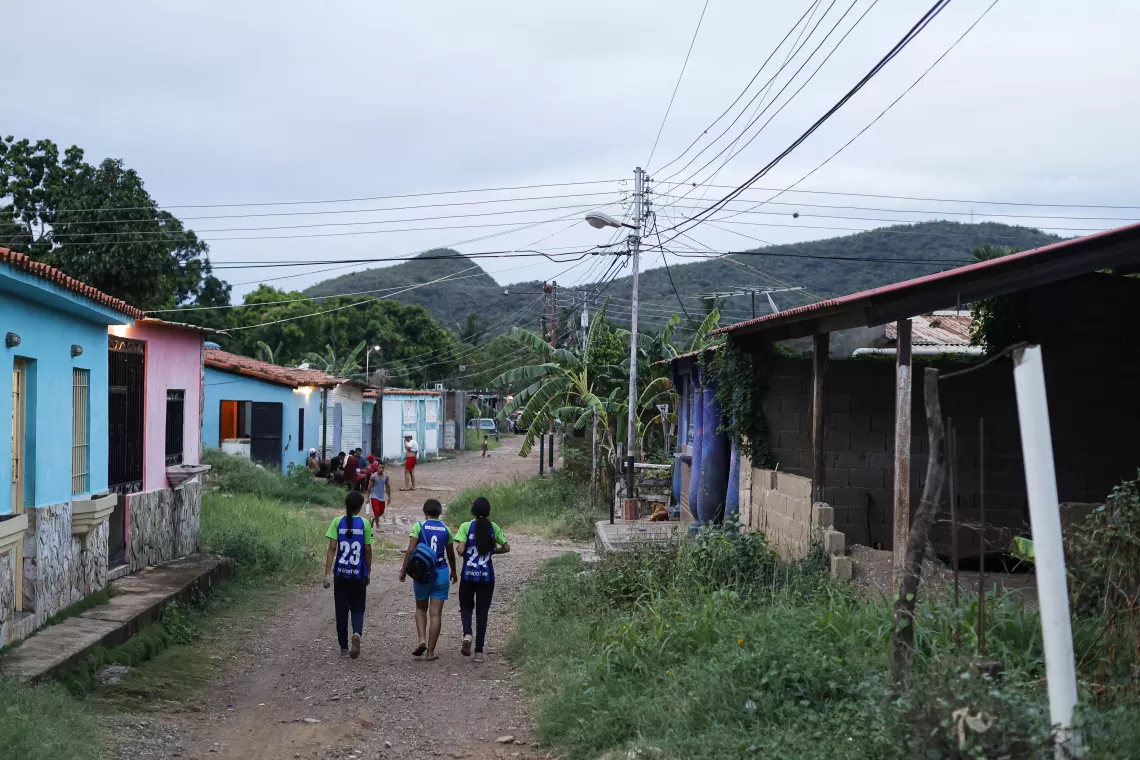
Over 130 kilometers east of Carúpano and more than 650 kilometers from Caracas, the capital of Venezuela, is Guiria, also part of the state of Sucre. Here lives 13-year-old Yannelitza Vera. She walks slowly with a pink bag and matching shorts. To get home she crosses the municipal cemetery, among tombs, graves, and weeds. "I imagine being in the women's Vinotinto," said Yannelitza, who dreams of being like Venezuelan football player Deyna Castellanos. "Some people tell me that football is not for girls, and I tell them that yes, it is for both girls and boys," she adds.
A few kilometers away, someone else shares her dream: Sthefania Villafañe, 12 years old, striker and sub-captain of Misericordia F.C. of Guiria. She always liked to play football with her neighbors and enrolled in the academy in mid-July 2022 along with her cousin.
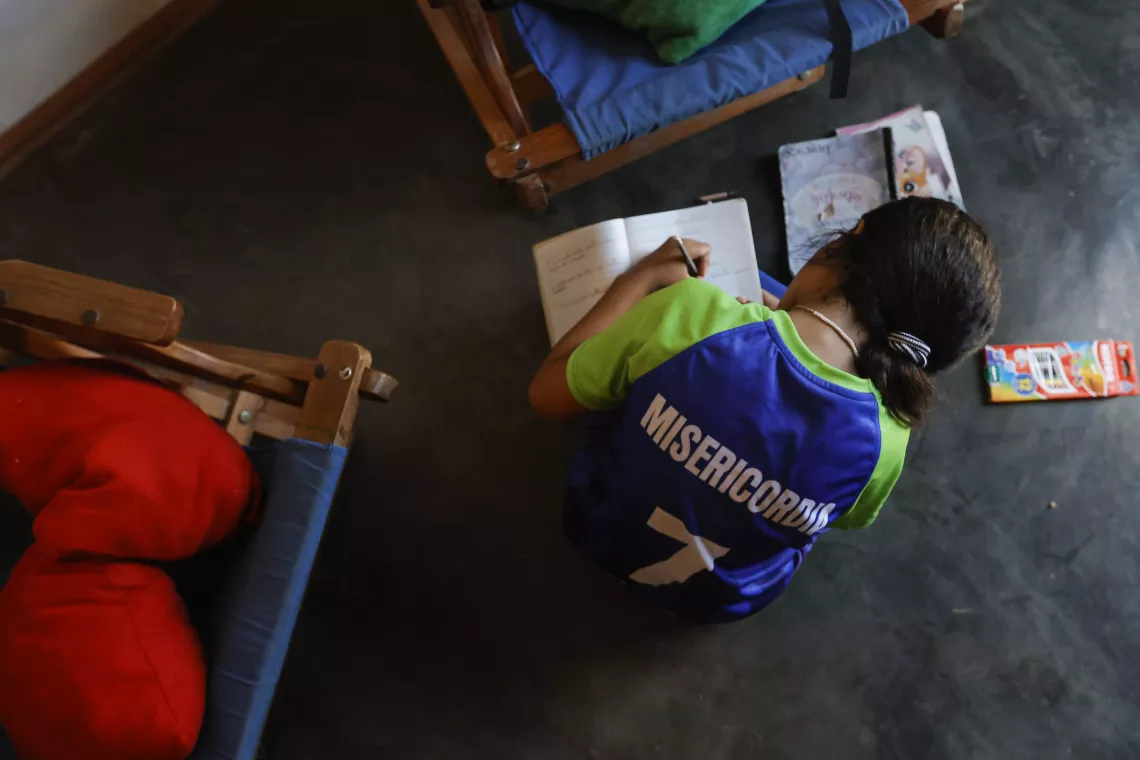
At Misericordia F.C. she has learned discipline, responsibility, tolerance. "Many virtues, both on and off the field," says Sthefania. For her it is like a second home and a place where she feels free and, at the same time, safe.
In Guiria there are risks associated with violence and human trafficking. Because it has a maritime border with Trinidad and Tobago, this port town is one of the points through which hundreds of Venezuelans make their way out of the country.
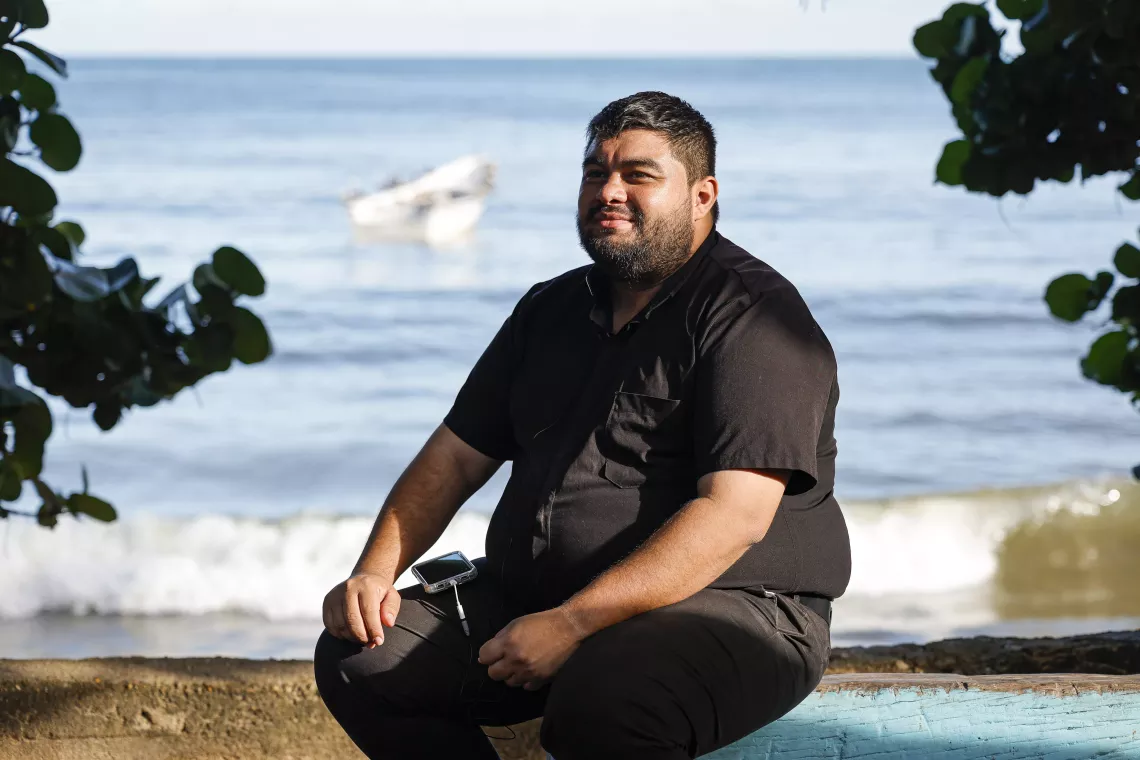
The shipwrecks that occurred in Guiria at the end of 2020 left a painful imprint on its inhabitants. Boys, girls, adolescents, women, and men who had left in precarious boats for the island died.
And the question once again surfaced: "What to do with the young people?" What could be offered to them so that they would stay in Guiria and not launch themselves into such a dangerous sea?
The tragedy also brought Caritas the challenge of responding to migratory flows. With a multidisciplinary team, and in alliance with other organizations and institutions, they have established themselves to assist migrants, both on their way out and on their way into the country.
"That is our horizon, our goal: to welcome migrants through lodging, food, making them feel safe. We make their arrival at the San Antonio transit house a truly fraternal welcome where they feel protected, loved and then we foster their dignity and integration through livelihood courses," explains the priest.
More than just football
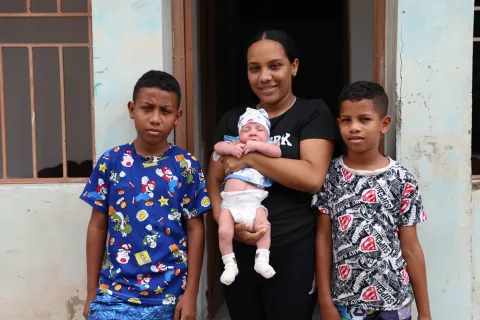
Before dawn in Carúpano, Emma Carolina Millán's house smells of freshly brewed coffee and fried empanadas for breakfast. The clock strikes six in the morning and the rest of her family members are waking up one by one. They say good morning to each other, brush their teeth and get dressed to start their day. Blood ties aside, they all have something in common: they are part of the Misericordia F.C. football academy.
Her 8-year-old son Christopher was the first to join the team. But the family's enthusiasm did not stop there: Emma helped - and continues to help - as a volunteer registering those who would like to join the team.
Emmarys, Christopher's older sister, had never been interested in football until she saw Christopher on his first day of practice. "After two months, they told me they opened categories for girls," says the 14-year-old.
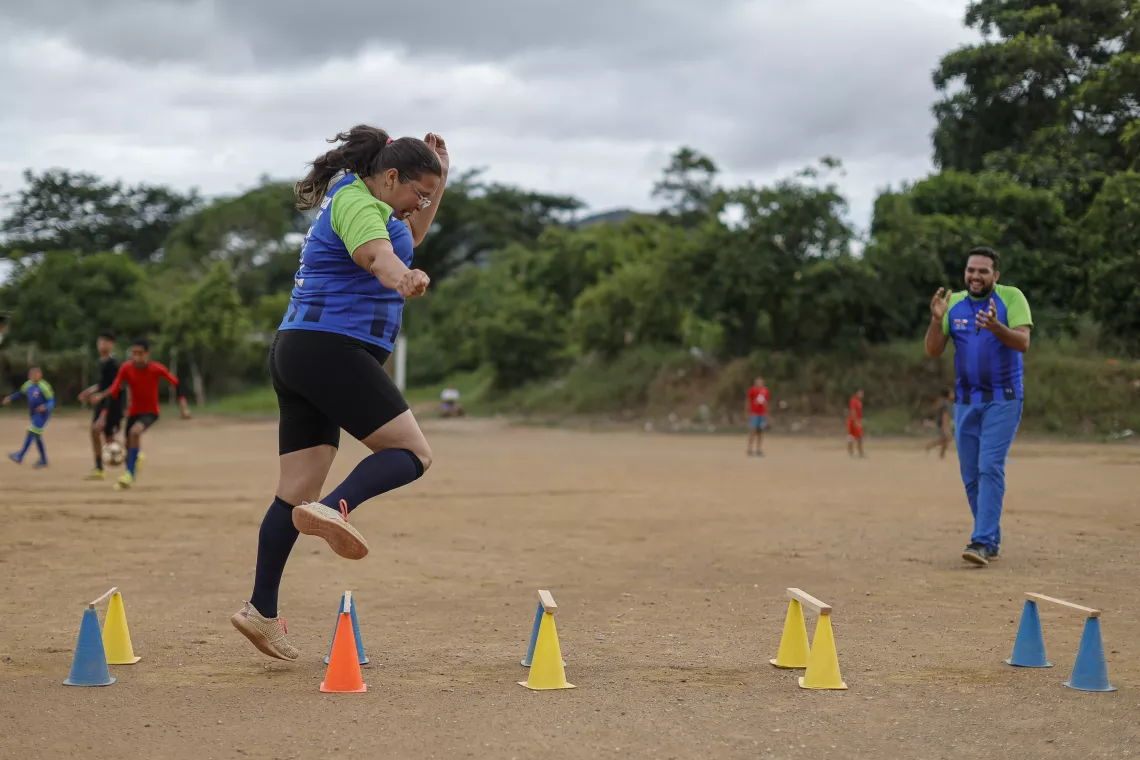
Inspired by her children and upon the announcement that the Misericordia F.C. teams for mothers and fathers would restart, Emma and her husband Robmar Jimenez joined. "I wanted to be an example for them as well. Let them see us as what they want to be," says Emma, 42. Her niece Camila, 10, has just joined the youngest team. Only Krismary, 3 years old, is still to join, but Emma has no doubt that as soon as she can, she will also join Misericordia F.C.
For families, the academy is much more than football. "It not only provides the children and adolescents with a space for sports. They have psychosocial support, provided by a psychologist, so that they have a better quality of life and can develop in their studies, society, family and culture," says Katiusca Cabrera, community coordinator and volunteer with Caritas and the Apamate programme.
The project also enables children and adolescents to learn how to identify situations of abuse, so that they know how to defend their rights if these are violated. Mothers, fathers, and caregivers receive workshops on positive parenting and training activities on hygiene and safe water.
"We have seen a change in their behavior, a change in the way they relate, not just with their family but with others," says Villarroel.
No limits on age or gender
Although Emma Carolina Millán always liked football when she watched it at home with her father and uncles, she never imagined she would be part of a team. It's all been positive changes: Misericordia F.C. has been a place where she has made friends and met people she can call family.
As a mother of three, Misericordia F.C. has also meant a space just for her. "My favorite times are when we are playing. I feel like I am getting away from everything: everything is outside, I have no worries about the house or the kids or anything. In that moment I feel like I am myself. Every woman needs a moment to herself.
Emmarys, her daughter, has also been underestimated for being a girl and a football player. "They used to put me as part of the defense or goalkeeper and told me it was so that 'the girl wouldn't get dirty'. We are living in the 21st century, what girl is still going to be playing with dolls?".
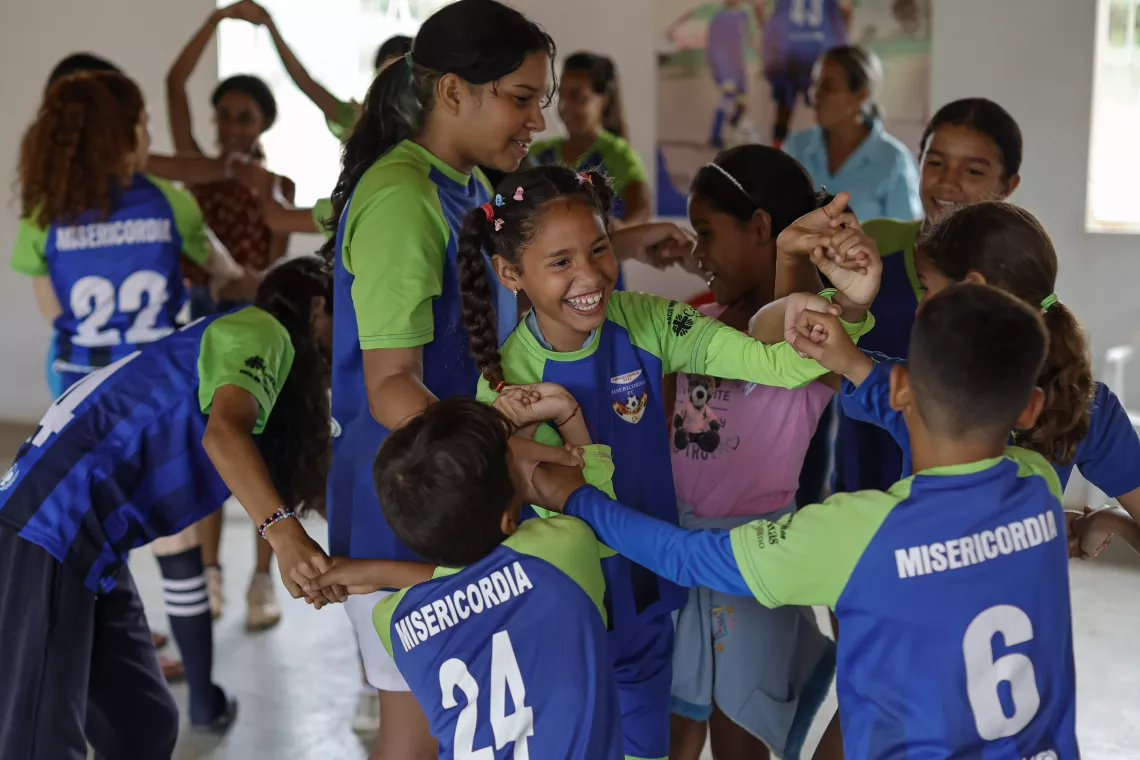
Sthefania Villafañe says that she too has been told that women's football has no future. "But over time we have proven them wrong," she says.
Misericordia F.C.'s motto is "a unique academy," because it seeks to cultivate personal growth as well. "Once we did an activity with the children and asked them what the academy meant to them. And they said, 'a refuge', 'a home', 'a place where I can rest'. It is the peace of feeling appreciated, of feeling like family, loved, respected," says Villarroel.
The joint work of UNICEF and its implementing partner has been key to the success and growth of this football academy, which in addition to teaching sports also provides psychosocial support to 316 children and adolescents from Cumaná, Carúpano and Guiria.
The impact of this effort goes far beyond the football fields. In 2023, Caritas Carúpano, through the joint programme with UNICEF, Apamate, has provided psychosocial support to more than 4,300 children, adolescents, and caregivers; specialized protection services to 190 children and adolescents, and has trained and educated over 3,800 people in the communities on the prevention and response to violence, abuse, exploitation and neglect against children and adolescents in the communities of the Bermúdez and Valdez municipalities in the state of Sucre.