Breathing in the dark
As Chiang Mai chokes under the world's worst air pollution, the children paying the highest price are those with nowhere to hide.

- English
- ไทย
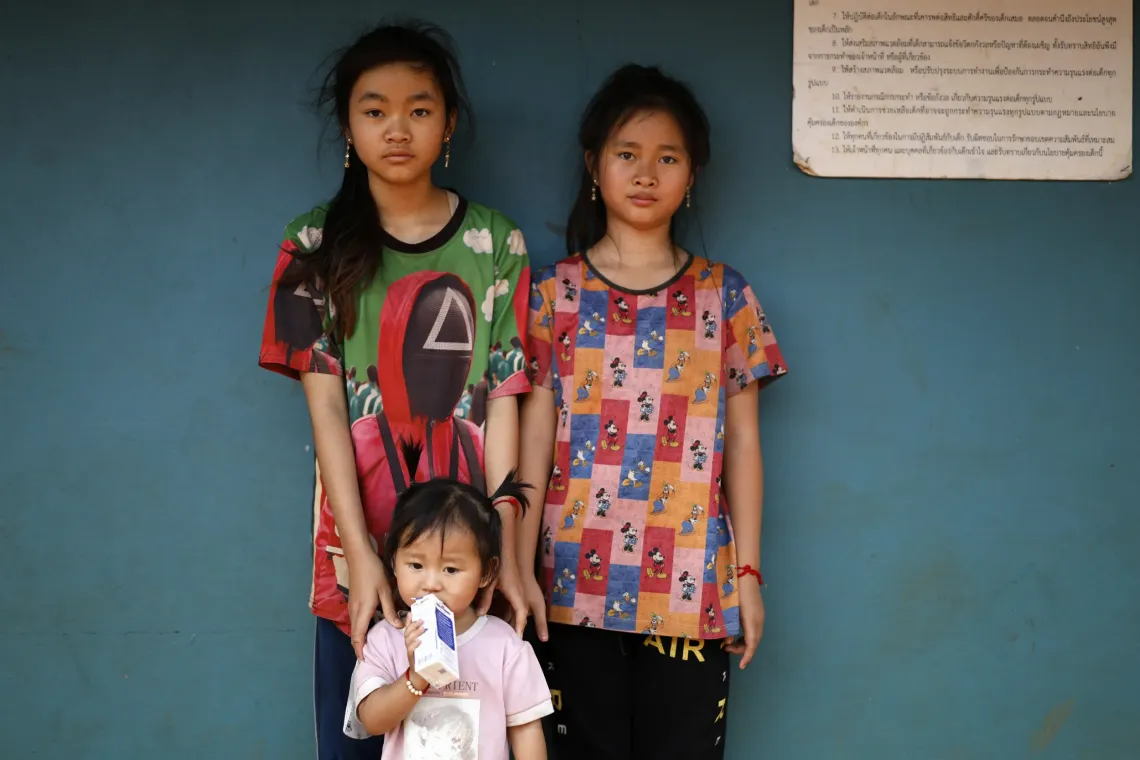
FANG, Chiang Mai, Thailand, 10 April 2026 - Sangyond Loongta, 12, has never heard of PM2.5. Neither has her 14-year-old sister Kamong, nor their two-year-old sister Mauypong. The three girls arrived in Thailand about a year ago with their parents, who pick oranges in the orchards of Fang district in northern Chiang Mai. For much of that year, the children lived deep inside the orchard, helping raise their youngest sibling but not going to school.
Last week, they finally started attending Baan Jongrak, a small education feeder centre located inside an orange orchard. Sangyond loves it - learning Thai, making friends and playing outside. She does not know that this air, the air she is breathing with such joy, is slowly damaging her lungs.
For weeks now, Chiang Mai has recorded the worst air quality on the planet. The daily average of Air Quality Index (AQI) has exceeded “very unhealthy” levels of 200. In some districts, levels have spiked to “hazardous” levels between 300-800. Night after night, Chiang Mai sits at the worst global air quality rankings.
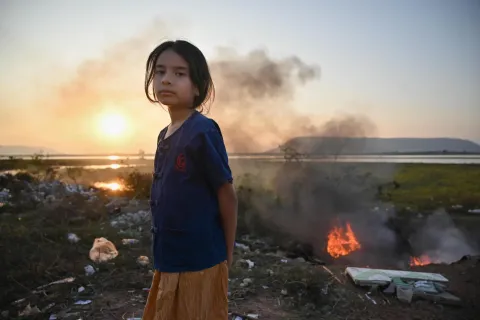
The crisis, driven by agricultural and forest burning as well as smoke drifting across borders, has transformed daily life across the north. But the people bearing the heaviest burden are those with the least power to protect themselves, and the youngest face the most lasting harm.
Baan Jongrak education feeder centre is a small, single-roomed building where around 23 children —aged from one to 14 years old — learn, eat, play, and sleep. The teacher also cooks lunch inside on a small stove. There are two electric fans. No air conditioning. No air purifier. No devices to measure air quality.
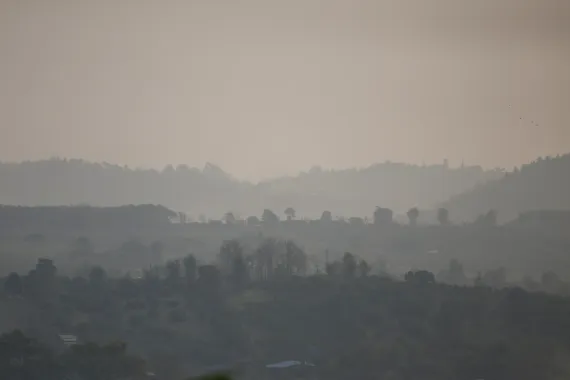
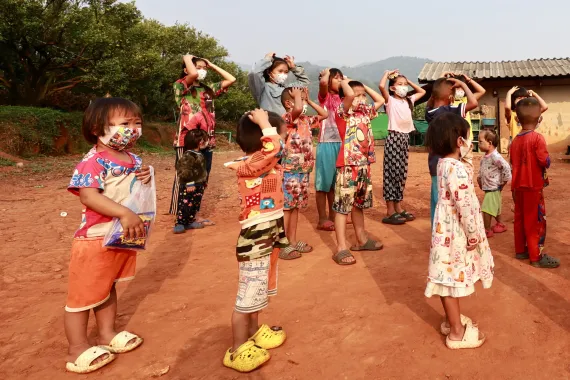
"The children ask why everything looks gloomy and foggy outside," said Sangdao Wongpa, the teacher. "They don't know it's PM2.5. They think dust has to be the kind you can see on the floor. They cannot understand that something invisible is making them sick."
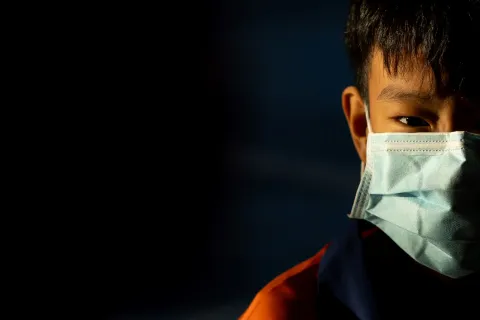
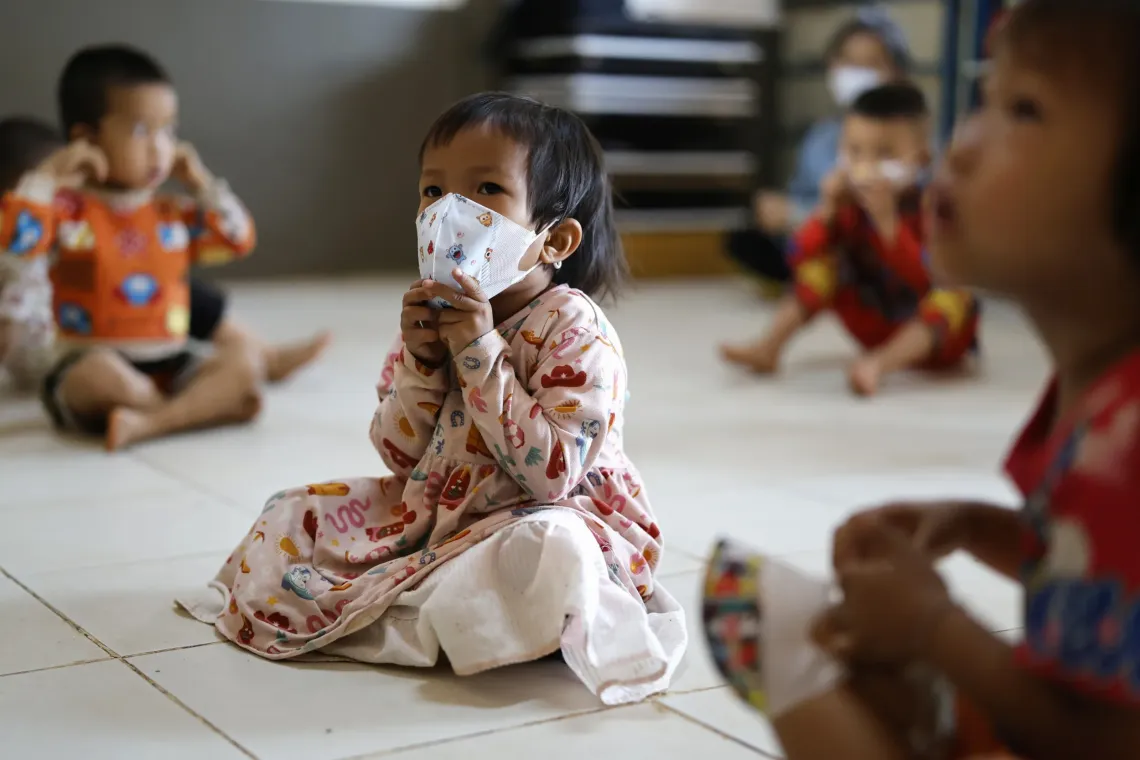
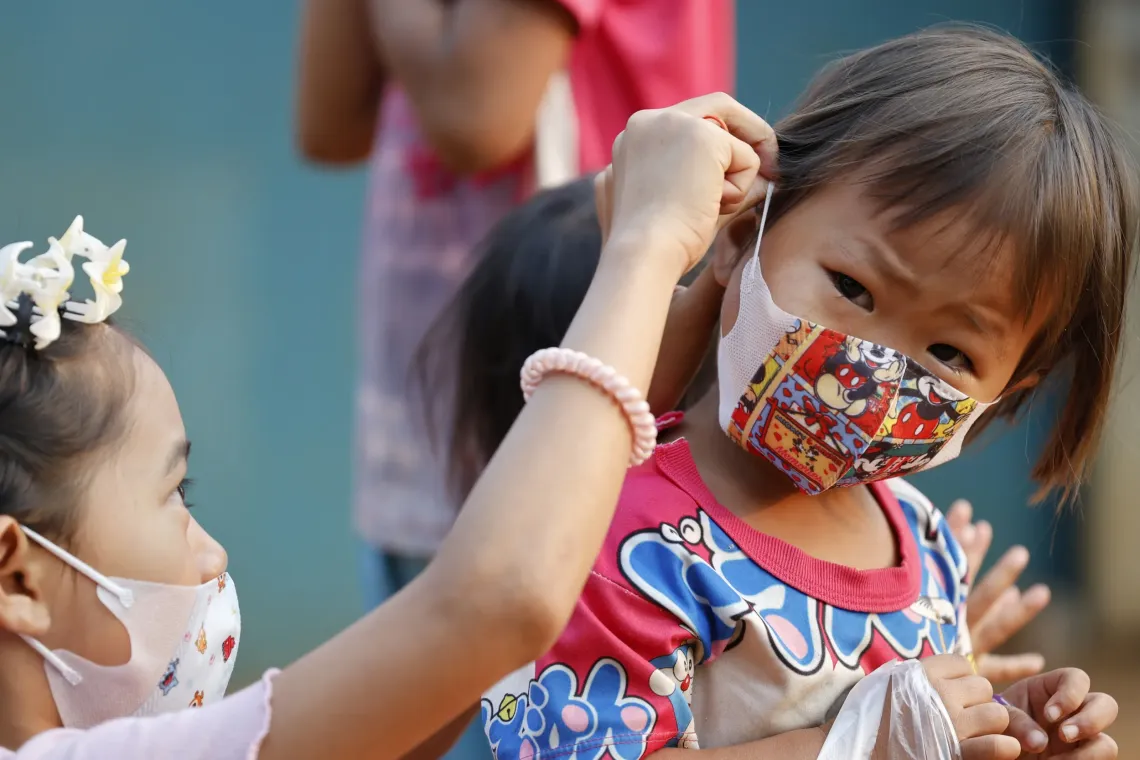
Recently, Sangdao distributed masks to the children. For many, it was the first mask they had ever worn.
Yet most children resist wearing them as it makes it even more uncomfortable to breathe, especially in current summer heat, when temperatures hover around 38-42 Celsius. Mauypong, just two years old, recently walked up to her teacher pointing at her throat, coughing. She thought something was stuck there. Her parents bought cough medicine - back in the orchard, there is nothing else to protect them.
None of the parents know about PM2.5, Sangdao said. When their children come home coughing and rubbing their eyes, they assume it is the cold. Some children have even been coming home with their noses bleeding.
"We need to educate the parents and the children about how dangerous this really is," Sangdao said.
About 160 kilometres south of Fang, in the district of Sarapee, Ta Kwang Early Childhood Development Centre has a few air conditioning units and five air purifiers. On high-pollution days, the school cancels all outdoor activities. The football field sits empty while children play with Lego and clay inside. The municipality has been distributing masks to communities. Still, on bad air days this week, more than 20 of the centre's 60 children did not come to school. Many were reportedly sick.
Sarapee is the lowest-lying district in Chiang Mai. The neighborhood sits in a natural basin that traps pollution, and at the bottom of that basin, the air is among the worst in the province. Most of the parents are low-income workers. Only about one in ten has a purifier at home.
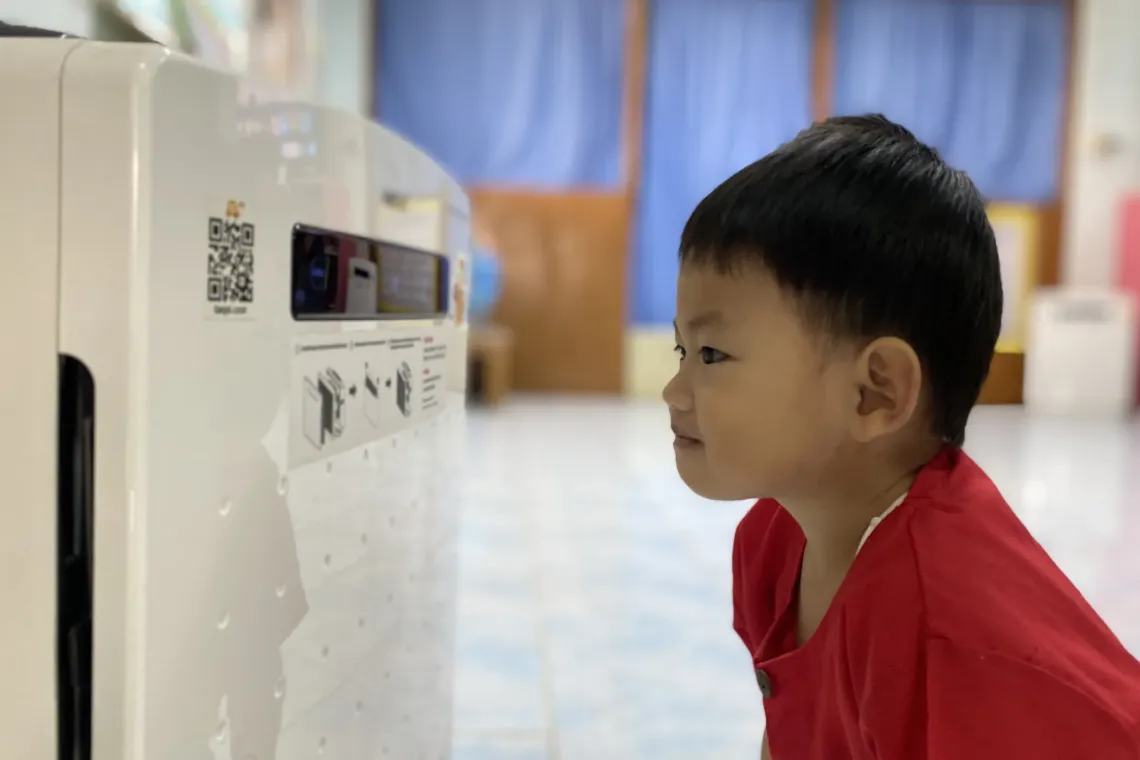
"We have to explain it the way we did during Covid-19: if you don't wear this mask, you will get sick." says school director Jiraporn Kaewyote. She adds that school and local authorities are doing what they can, but ultimately, everyone is waiting for the rain to clear the air.
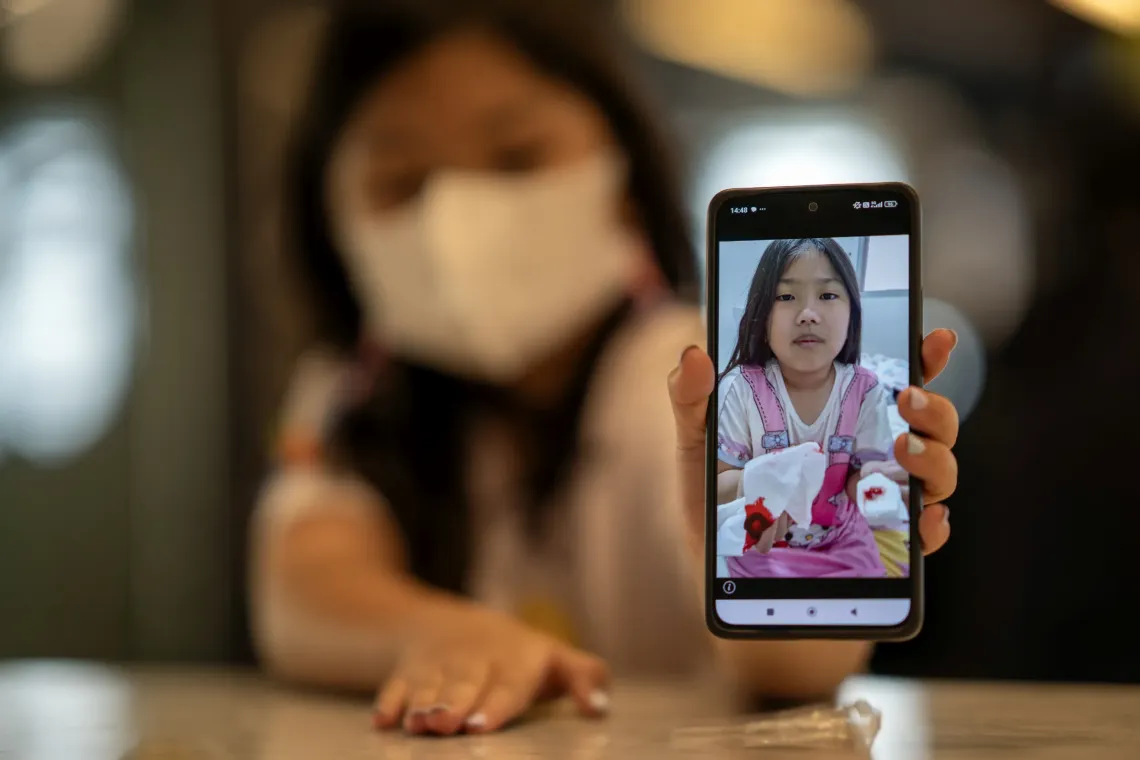
In Chiang Mai city, eight-year-old Chayaphat "Manao" Limpanarom has had nosebleeds every year since she was three. Her family's home has eight air purifiers. Her father has taped air filter sheets over the bathroom windows and any gaps he could find. They keep the windows shut and the air conditioning running. Yet, Manao still wakes up in the morning with a sore throat and itchy eyes.
"This year the blood clots come faster than before," Manao said. "Every time it happens, I use so many tissues I can't even count."
Manao’s story is not unique. Air pollution has become one of the greatest threats to children's health worldwide. According to the State of Global Air report published in 2024 by the Health Effects Institute and UNICEF, PM2.5 alone killed 700,000 children under five globally in 2021. That’s nearly 2,000 per day, making it the second leading cause of child mortality after malnutrition.
In Thailand, UNICEF estimates 13.6 million children are highly exposed to PM2.5, more than those affected by floods, heatwaves, and droughts combined.
PM2.5 particles are small enough to penetrate deep into the lungs and enter the bloodstream. For young children, whose lungs and brains are still developing, the harm can be irreversible — beginning before birth and linked to premature delivery, low birth weight, and neurodevelopmental disorders. The harm even follows them into adulthood with higher risks of asthma, heart disease, and lung cancer.
“The most vulnerable children - whether from low-income families, young children, children with disabilities, those living in high-risk areas, or migrant children - are the ones most affected,” said Waraporn Raksaphram, Programme Officer for Environment and Climate Action at UNICEF Thailand. “They don’t have air purifiers, they don’t have sealed indoor spaces, and are forced to live with pollution that they simply cannot avoid.”
A 2016–2018 cancer incidence report covering 14 northern provinces found the north has the country's highest lung cancer rates. Yet despite years of worsening seasons, awareness of PM2.5 and its dangers remains low, particularly among the parents and communities who need it most.
Jirawan Olarnratmanee, 22, a resident in Chaing Mai, first began to understand what PM2.5 was doing to her family when she was in high school. Two years ago, she lost her mother to lung cancer associated with prolonged exposure of PM2.5.
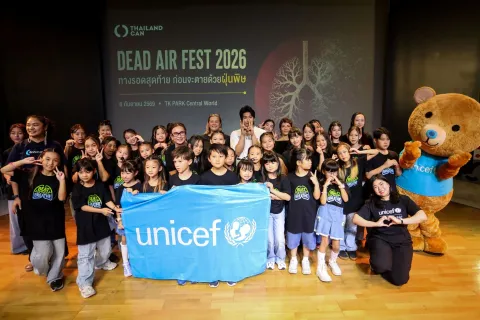
“After losing my mother to PM2.5, the situation hasn’t improved at all. If anything, it has only gotten worse,” said Jirawan, who has joined UNICEF’s #CountMeIn climate and environmental campaign to raise awareness of the impact of PM2.5 on children and young people.
Civil society groups and environmental advocates are meanwhile urging lawmakers to move a Clean Air Bill forward to better protect public health and address air pollution in a systematic way. First initiated in 2019, the draft legislation sets out a comprehensive framework for managing air quality. It includes a “polluter pays” principle, requiring those responsible for pollution to compensate affected communities, and introduces measures to help ensure cleaner, pollution-free supply chains.
"How much longer do we have to endure it? How many more governments do we need to go through?” Jirawan added. “I hope that one day -- though I don't know if that day will ever come – we will be able to breathe deeply again."