Thailand floods disrupt education, highlighting urgent need for climate-ready schools
New UNICEF data shows 167,106 students had their schooling disrupted by climate hazards in 2025, with flooding the main cause.
- English
- ไทย
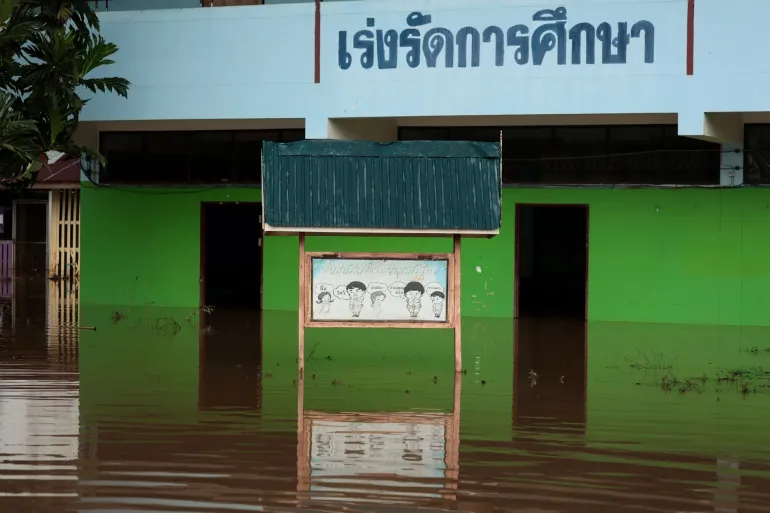
BANGKOK, 5 October 2026 – Flooding across Thailand is disrupting children’s education, with schools forced to close in affected areas and some classrooms being used as temporary shelters. The situation highlights the need to prepare schools for increasingly frequent and severe climate hazards.
According to the Department of Disaster Prevention and Mitigation, the current floods have affected 47 provinces, impacting more than 1.4 million households and four million people. The Ministry of Education reported that 988 schools across 29 provinces have been affected. In Bangkok alone, 188 schools were affected, with some used as temporary shelters. Last week, the Bangkok Metropolitan Administration announced the temporary closure of schools in 15 severely-affected districts.
For children, these disruptions mean more than missed lessons. Flooded classrooms, damaged facilities and schools can interrupt learning, disrupt daily routines and cut children off from familiar environment and support they need to rely on at school.
“Every flood that closes a school takes away more than learning time,” said Ken Legins, UNICEF Representative for Thailand. “Children lose routine, time with friends and teachers, and a safe, familiar place. When that disruption continues, it can affect both their learning and their mental health. As extreme weather becomes more frequent, keeping schools open and children learning has to be part of how we prepare for climate risks, not just how we respond once they arrive."
The disruption in Thailand does reflect a wider global pattern, however. UNICEF's recently released analysis, Learning Interrupted: Global Snapshot of Climate-Related School Disruptions, released last month, draws on data from 106 countries and territories. It finds that more than 171 million students had their schooling disrupted by storms, floods, heatwaves, droughts and wildfires last year.
Thailand is among the countries affected. The report estimates that 167,106 students in Thailand experienced climate-related school disruptions in 2025, with flooding identified as the major hazard, the report added. The real figure is likely higher, as the analysis does not capture indirect effects such as air pollution and vector-borne diseases.
The need to strengthen preparedness is reinforced by a Survey on Assessing Climate Change Impacts and Support Needed in Schools conducted by the National Institute of Development Administration (NIDA), with support from UNICEF, which examined the readiness of schools to cope with extreme weather.
Conducted in July and August 2025 across 329 public schools in the 14 provinces most affected by extreme weather, the survey found that every school had experienced at least one extreme weather event in the past three years. Heavy rain, storms and flooding were the most severe.
The effects reached well beyond the classroom. Three in four schools reported disruptions to essentials such as safe drinking water, toilets, clean food and transport to school. More than half (55 per cent) reported health problems among students, including heat-related illness, dengue fever, diarrhea, respiratory diseases, malnutrition and mental health concerns. Nearly half (46 per cent) reported damage to school buildings and facilities.
While almost all schools have added climate change to their lessons, more than 80 per cent of teachers have never received formal training on climate education or on preparing for extreme weather, and rely mainly on self-learning. Students' understanding of climate change remains low to moderate.
In Thailand, UNICEF is supporting the Government to strengthen disaster preparedness plans and early warning systems to better protect schools, early childhood centres and children, with the recommendations to inform the next National Disaster Prevention and Mitigation Plan (2028–2032). UNICEF is also calling for measures to help children return to learning quickly through temporary learning arrangements while schools are closed, provide mental health and psychosocial support for affected children and teachers and invest in safer school infrastructure and teacher training.
Meanwhile, through its #CountMeIn campaign, UNICEF is calling for stronger laws and policies that protect children’s health, development, and future from the impacts of climate change, and for young people to have a meaningful voice in shaping climate decisions and action.
Media contacts
About UNICEF
UNICEF promotes the rights and wellbeing of every child, in everything we do. Together with our partners, we work in 190 countries and territories to translate that commitment into practical action, focusing special effort on reaching the most vulnerable and excluded children, to the benefit of all children, everywhere.
For more information about UNICEF and its work for children, visit www.unicef.org/thailand.
For general inquiries, please contact: [email protected].
Follow UNICEF on and Facebook, Instagram, TikTok, and X (Formerly Twitter)