From rap to real action: UNICEF launches BEAT TO BREATHE for children’s rights to clean air
- English
- ไทย
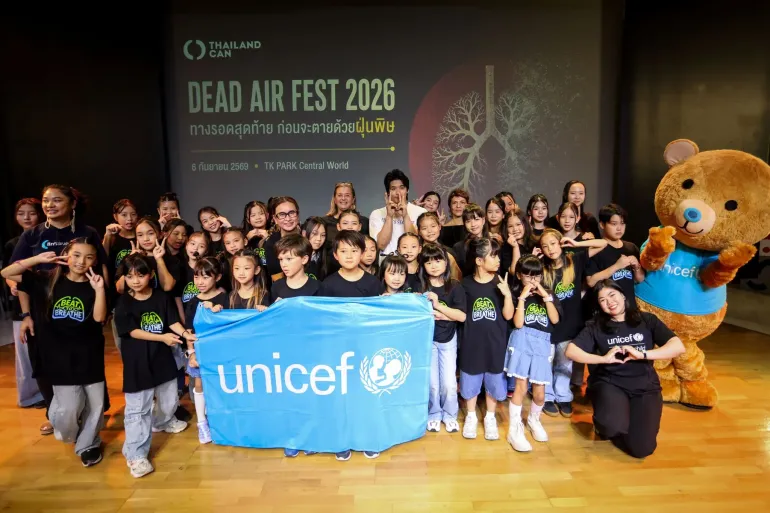
BANGKOK, 7 September 2026 – UNICEF Thailand and the Thailand Clean Air Network (Thailand CAN) today launched BEAT TO BREATHE, a campaign that turns rap music into a call for children's right to breathe clean air. Launched to mark the International Day of Clean Air for Blue Skies 2026, the campaign builds on UNICEF’s longstanding advocacy for climate action and cleaner air in Thailand, now strengthened through its partnership with Thailand CAN.
The flagship of the new campaign is a song, “ปอดเทส” (Lung Test), written and composed by Thai rapper TangBadVoice, or Tawanwad Wanavit. Drawing on the breath control at the heart of rap, the song uses every breath and line to highlight a simple fact: If we don’t fix it now, it will be too late. We all share the same air, and we all need to breathe.
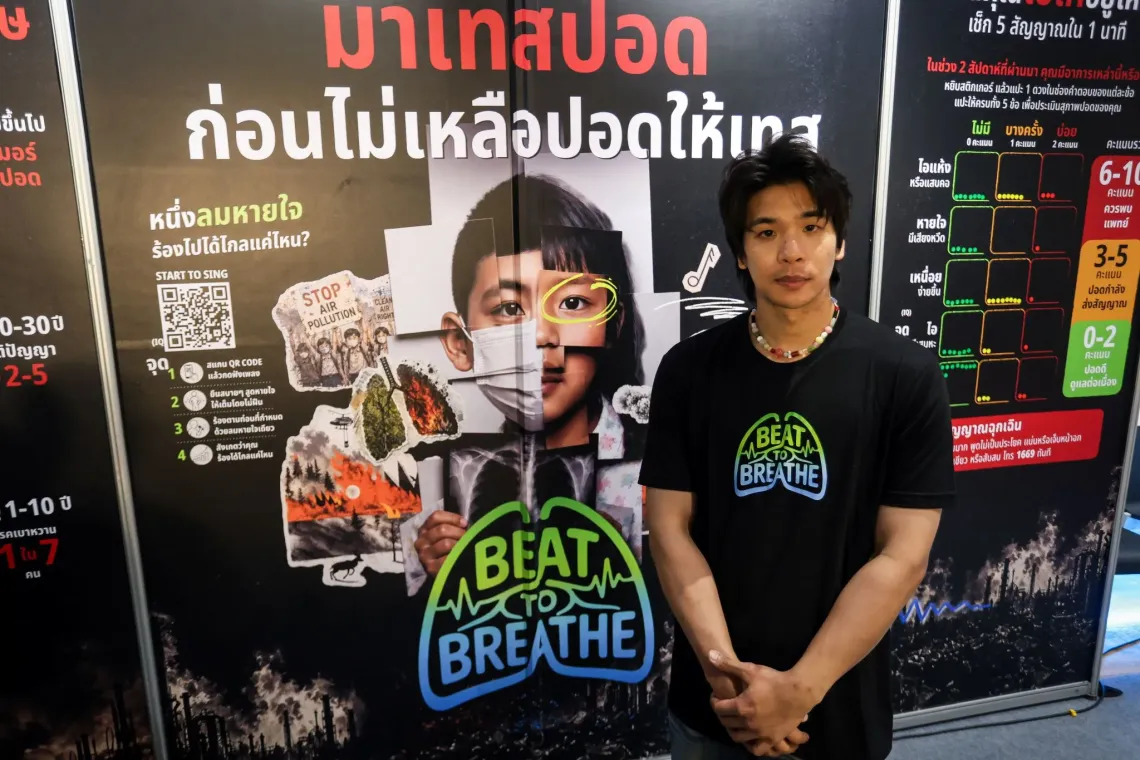
The issue is personal for TangBadVoice. His family lives in Chiang Mai, one of the world's most polluted cities. In March and April this year, Chiang Mai recorded the world's worst air quality for several weeks, with AQI levels spiking into “hazardous” range of 300-800 in some districts, whilst levels deemed safe for human health by the WHO is within the range of 0-50.
“Growing up, we just learned to adapt to the problem—staying indoors, using air purifiers, avoiding going outside, or wearing masks,” Tawanwad said. “But while making this song, I had the chance to talk with experts, and that’s when I realized that clean air is actually something we can choose and create. We just never knew there were other options. Eventually, living with polluted air became something we accepted as normal, without even realizing it.”
The campaign invites children, families, teachers, artists and the public to take part in the Beat Test Challenge, a simple activity inspired by Maximum Phonation Time - the longest period a person can sustain a vowel sound on a single breath. It is designed as a fun and engaging tool for learning and self-observation, UNICEF stresses, not an official medical lung-function test.
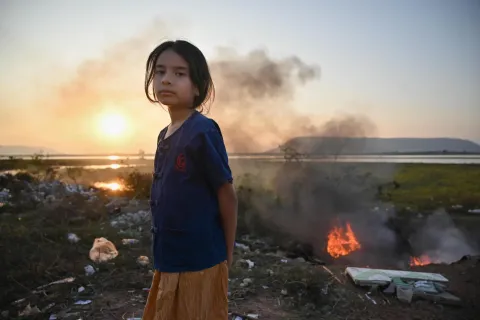
The numbers behind the song are stark. Around 11 million children in Thailand are highly exposed to PM2.5, according to UNICEF data. Children under five are especially vulnerable, since their lungs, brains and other organs are still developing — and exposure can begin as early as pregnancy, with lifelong effects.
Globally, air pollution was linked to 8.1 million deaths in 2021, according to the fifth edition of the State of Global Air report, released in 2024. More than 700,000 of those deaths were children under five, with PM2.5 alone accounting for 90 per cent of all air-pollution-related deaths.
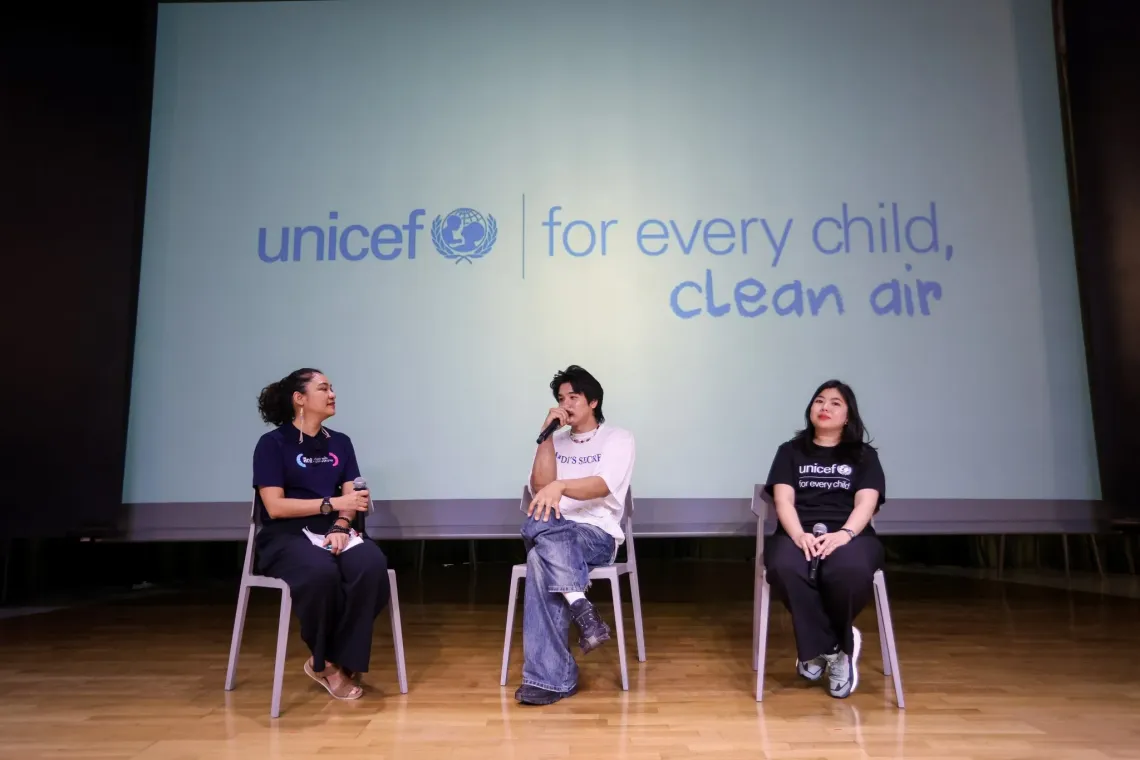
"Air pollution is often invisible, but its impact on children is not," said Severine Leonardi, UNICEF Deputy Representative for Thailand. "Every breath a child takes in polluted air adds up - to a cough today, breathing problems tomorrow, and – for many - a childhood spent indoors. Children should not have to get sick before we act to protect them.”
“As Thailand works towards OECD membership, strengthening environmental protection and tackling air pollution are increasingly important policy priorities. Through BEAT TO BREATHE, we want children and the public to understand what is at stake, raise their voices and push for the stronger policies and action needed to make clean air a reality for every child in Thailand.” Leonardi added.
The OECD Economic Surveys: Thailand 2025 highlights air pollution and points to tighter emissions standards and the Clean Air Act as important developments. It also recommends stronger environmental regulation, reduced transport emissions and other measures to improve air quality.
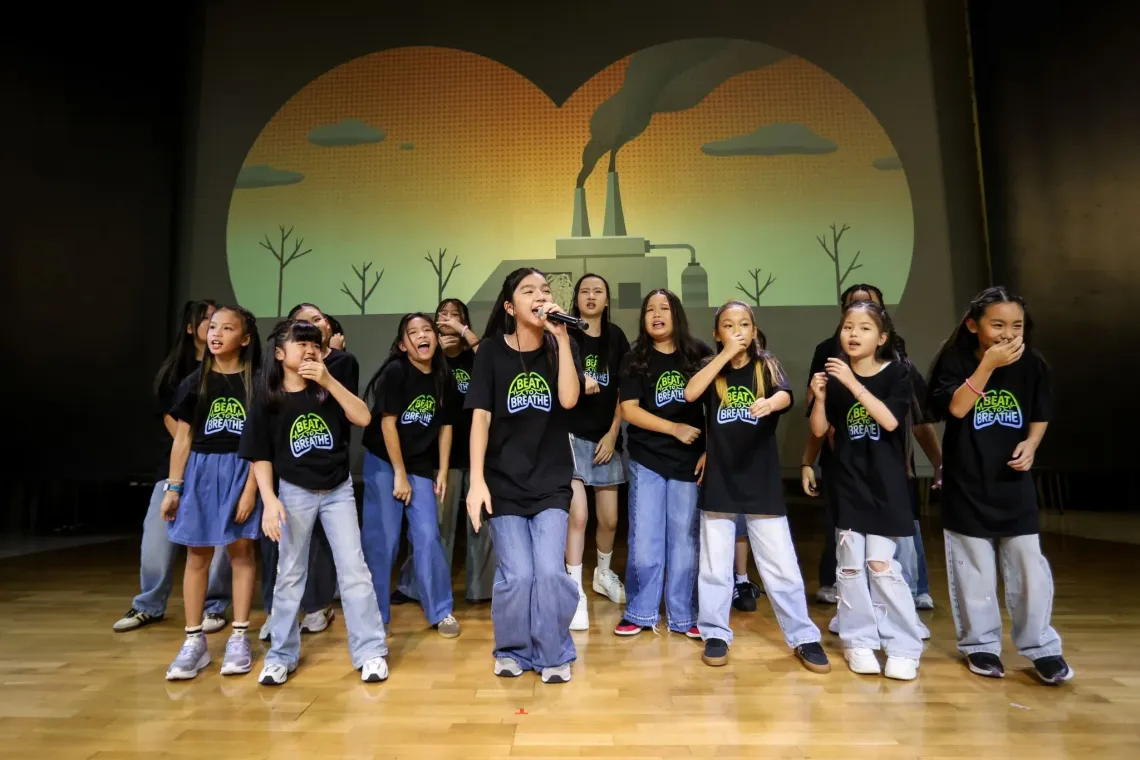
The BEAT TO BREATHE campaign is part of the #CountMeIn initiative, UNICEF's wider effort to raise awareness of climate change and its impact on children, while promoting young people’s voices and meaningful participation.
In November, UNICEF and Thailand CAN will visit six piloted schools in Bangkok, where, for the first time, medical doctors will train teachers and students to conduct lung health screenings. This will help schools identify potential concern early, with children who may be at risk referred to appropriate care. The results will provide a concrete, on-the-ground picture of children’s lung health and help inform broader discussions on policies and legislation to tackle air pollution.
The Draft Clean Air Act has been under development since 2022, when Thailand CAN initiated the first citizen-led Clean Air Bill. Six other drafts were subsequently proposed by political parties and the Cabinet and consolidated them into a single bill, which was unanimously endorsed by the House of Representatives after nearly two years of review. The bill was later amended by the Senate but was overwhelmingly rejected by the MPs last week. A joint committee of MPs and senators is now being established to review the bill again.
“As clean air is ultimately a basic and fundamental human right, it is hoped that sensibility will prevail above all political and business interests to deliver an effective clean air legislation for Thailand,” said Kandhana Apirapakon Head of Communication, Thailand CAN. “This will protect quality and longevity of the life of all 70 million citizens and residents of Thailand including over 11 million children.”
Media contacts
About UNICEF
UNICEF promotes the rights and wellbeing of every child, in everything we do. Together with our partners, we work in 190 countries and territories to translate that commitment into practical action, focusing special effort on reaching the most vulnerable and excluded children, to the benefit of all children, everywhere.
For more information about UNICEF and its work for children, visit www.unicef.org/thailand.
For general inquiries, please contact: [email protected].
Follow UNICEF on and Facebook, Instagram, TikTok, and X (Formerly Twitter)