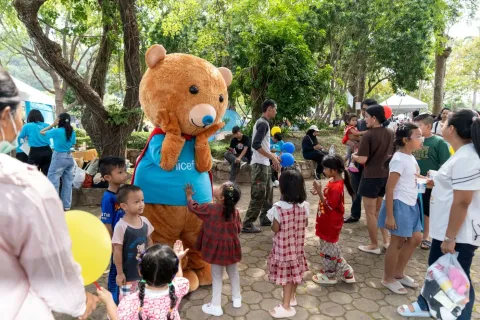
Thailand 2025 Impact Report
Progress that lasts a lifetime

- English
- ไทย
What We Achieved For Children Together – Impact Report 2025
2025 was the year Thailand proved progress can be made for children, even in testing times. Despite global instability, persistent national challenges including education and malnutrition, and unexpected emergencies, UNICEF proudly played a part in major strides towards a better future for children. Our Impact Report for 2025 tells this story.
It’s a story of a new generation of children and young people stepping forward to contribute their ideas and energy to challenges including climate change, education reform, and nutrition. It’s a story of landmark achievements, such as the law banning all violent punishment of children and opening a doorway to a legal identity for 150,000 stateless children. Most of all it is a story of partnership – between UNICEF and the Royal Thai Government, as well as civil society, the private sector, communities, the Thai public, and children and young people themselves. We stood together during the floods and conflict that threatened children’s lives, but more importantly we stood together as we charted a path towards further progress for the nation and its children.
Read the incredible stories right here.
12 Wins For Children In Thailand
2025 saw real, tangible progress for children. From remote villages to global climate conferences, children and young people thrived and made an impact - and UNICEF and its supporters and partners played a key role. Achievements ranged from legal milestones protecting the vulnerable to bold new initiatives supporting children, parents and communities. Feel the impact: scroll through the wins below.


UNICEF Thailand/2025/Ingkhayutwittaya

Driving Change Today & Tomorrow
Young people were at the core of UNICEF’s work throughout 2025 - they helped shape programmes, advocacy strategies, national policy-making, and campaigns for change. Whether through UNICEF’s Young People Advisory Board or the Children and Youth Council of Thailand, young people shared their experiences, insight and ingenuity, driving powerful new initiatives and plans for the future. UNICEF supported their achievements by creating new professional standards and training for youth workers, leading to better support for disadvantaged young people or those facing challenges in life.

Facing The Future With Hope
Suchanun “Tonhom” Tangjitsatiankul - an 18-year-old youth advocate - authored the foreword to our report. She reflects on a year of progress, despite the challenges Thailand faced. Drawing from her own experience of overcoming a difficult childhood with the right support, Tonhom speaks powerfully about protection, equality and youth participation. Through her two roles on UNICEF Thailand’s Young People Advisory Board and the Children and Youth Council of Thailand, she’s witnessed how young people can help solve problems when adults listen. Her message is clear: young people are capable, resilient and ready to help build a better Thailand for all.
Putting Youth At The Heart Of Climate Change
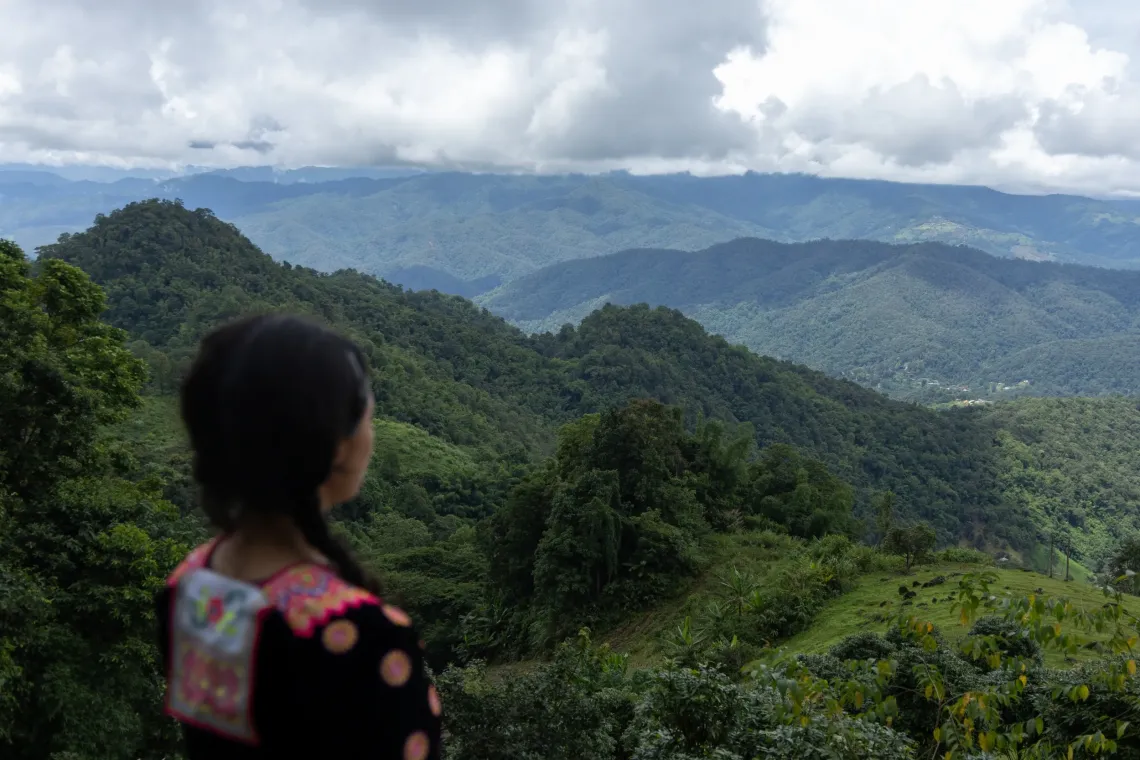
Climate change isn’t a future threat – it's already affecting children’s health, learning and futures across Thailand. A staggering 94 per cent of children have been exposed to more than three climate and environmental hazards. UNICEF works with the Government, schools and young people to ensure climate action is urgent, practical and child-focused. In 2025, UNICEF supported climate-smart education, provided evidence to inform national planning, and helped youth networks take community-based action. Through public campaigns, local initiatives and participation in global climate discussions, young people proved why they must have a role in shaping climate decisions that will define their future.

UNICEF Thailand/2016/Preechapanich

Protecting Children In A Changing Online World
The internet can help children learn, connect, and explore, but it can also expose them to serious risks. In Thailand, online sexual abuse and exploitation is a major threat experienced by 1 in 10 children. AI is giving offenders new ways to deceive and harm children. UNICEF is actively working with the Government, teachers, police, the private sector, civil society and young people to make digital spaces safer. In 2025, UNICEF supported training, stronger reporting systems, improved investigations, and greater digital literacy. Through #CautionFirst and a new Online Safety Manual, UNICEF helps children and communities recognise risks and prevent harm.

A Safer Childhood For All
For too many children in Thailand, violence happens in the places where they should feel safest, including homes and schools. Around half of all Thai children report being violently disciplined. Physical and emotional punishment, bullying and abuse can damage children’s learning, mental health, and future opportunities. In 2025, UNICEF worked with government agencies, schools, communities, families, civil society and young people to challenge harmful norms and strengthen protections. The year began with Thailand achieving a historic milestone by prohibiting violent punishment of children in all settings. UNICEF continues to support prevention, stronger services, and safer environments where every child thrives.
Putting Children First When Crisis Hits
When emergencies strike, children’s lives are turned upside down. In 2025, Thailand faced severe floods, border conflict and other crises that disrupted homes, schools and communities and affected more than a million children. UNICEF supported the Government and partners by focusing on children’s urgent needs, from hygiene supplies and learning materials to safe spaces and psychosocial support. In evacuation areas, Child Friendly Spaces helped children play, recover and regain a sense of normalcy, while frontline staff were trained to support children experiencing stress and trauma. UNICEF also helped families and schools prepare for future emergencies.


Thailand-Cambodia Border Conflict
- Over 630,000 people, including 123,000 children, evacuated in six border provinces.
- 32,159 children were reached with psychological support and stress relief activities.
- UNICEF helped establish 149 Child Friendly Spaces accessed by 19,721 children.
- More than 7,000 people received emergency hygiene and baby kits from UNICEF.
- 702 staff and volunteers received training in mental health support by UNICEF.
Flood Emergencies
- 519,000 children were affected by floods, many requiring humanitarian support.
- UNICEF distributed vital hygiene and baby kits to 5,700 people, including children.
- UNICEF assisted over 18,000 children and families throughout the floods and recovery.
- 12,500 children continued to play and learn through Magic Boxes supplied by UNICEF.
- 148,000 children's education was disrupted, with at least 1,090 schools flood damaged.


UNICEF Thailand/2025/Kongmuang
When Every Moment Counts
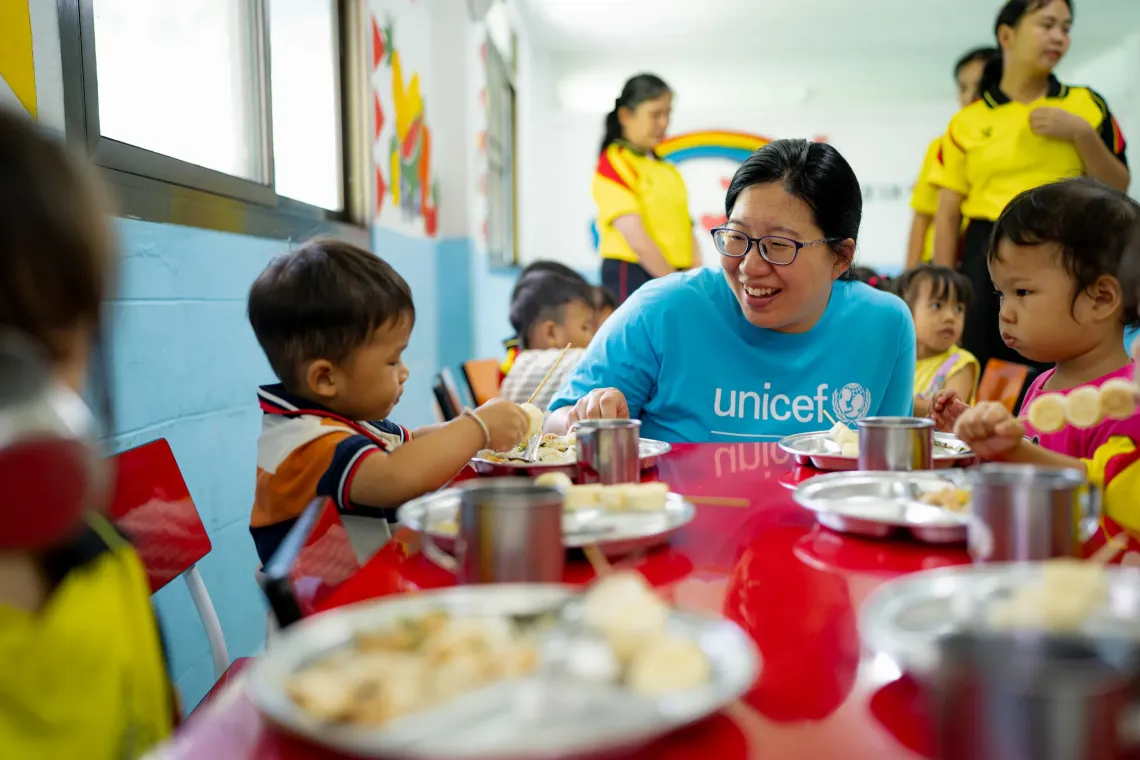
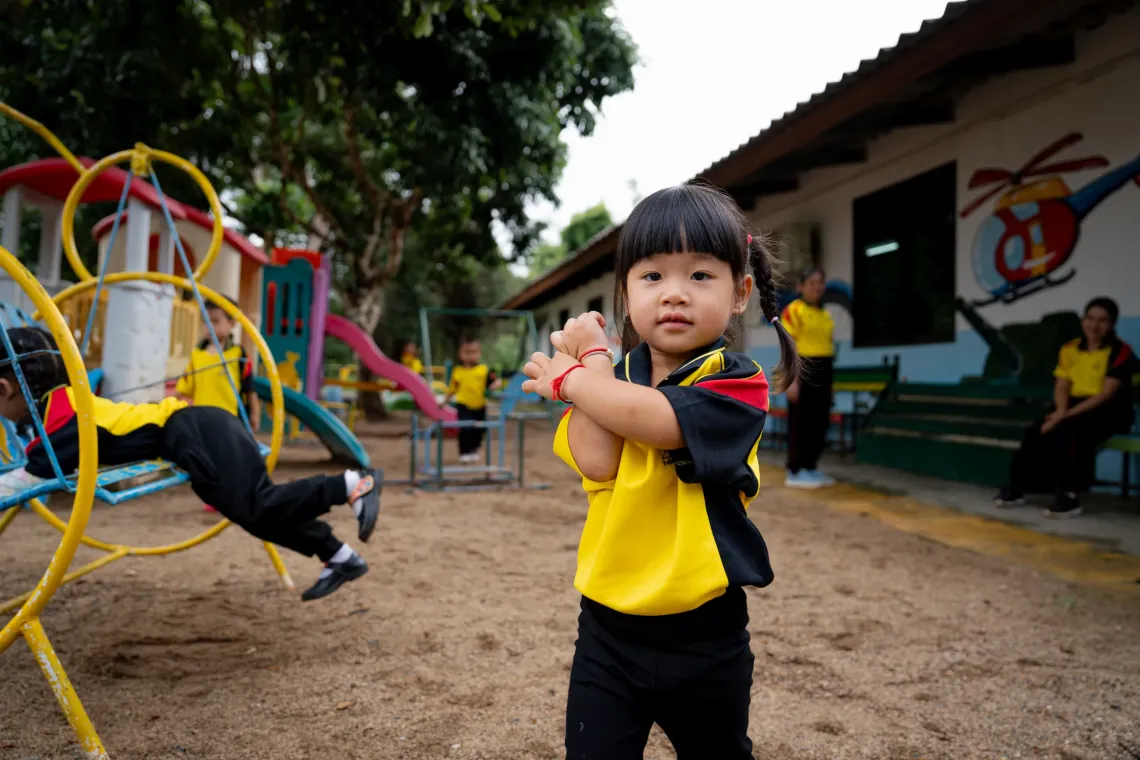
A child’s earliest years shape their entire future. In Thailand, too many young children still miss out on the nutrition, learning, care and protection they need to reach their full potential. UNICEF takes a holistic approach to early childhood development, working to expand social protection, improve childcare, strengthen early learning centres, and support parents and caregivers. In 2025, UNICEF helped provide parenting guidance, dietary information and practical support for families and teachers. From parenting schools in cities to early childhood centres in remote areas, UNICEF is working towards a future where every child gets a fair start in life.



A Double Threat For Thailand’s Children
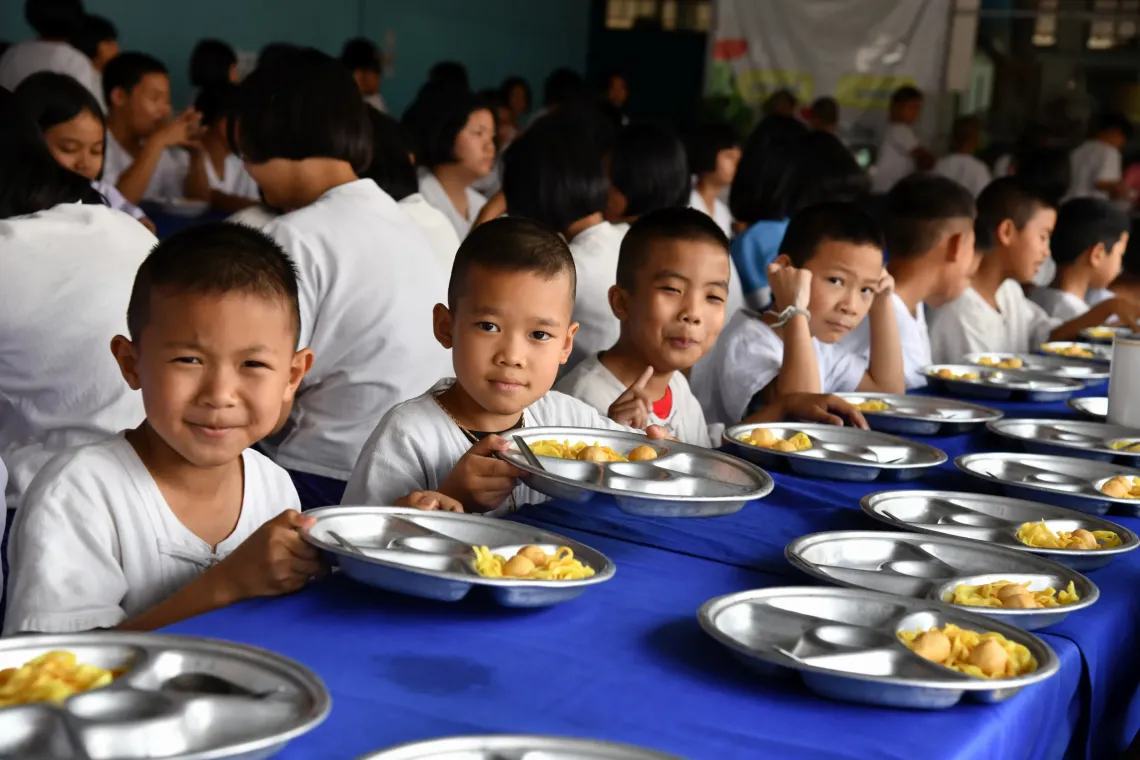
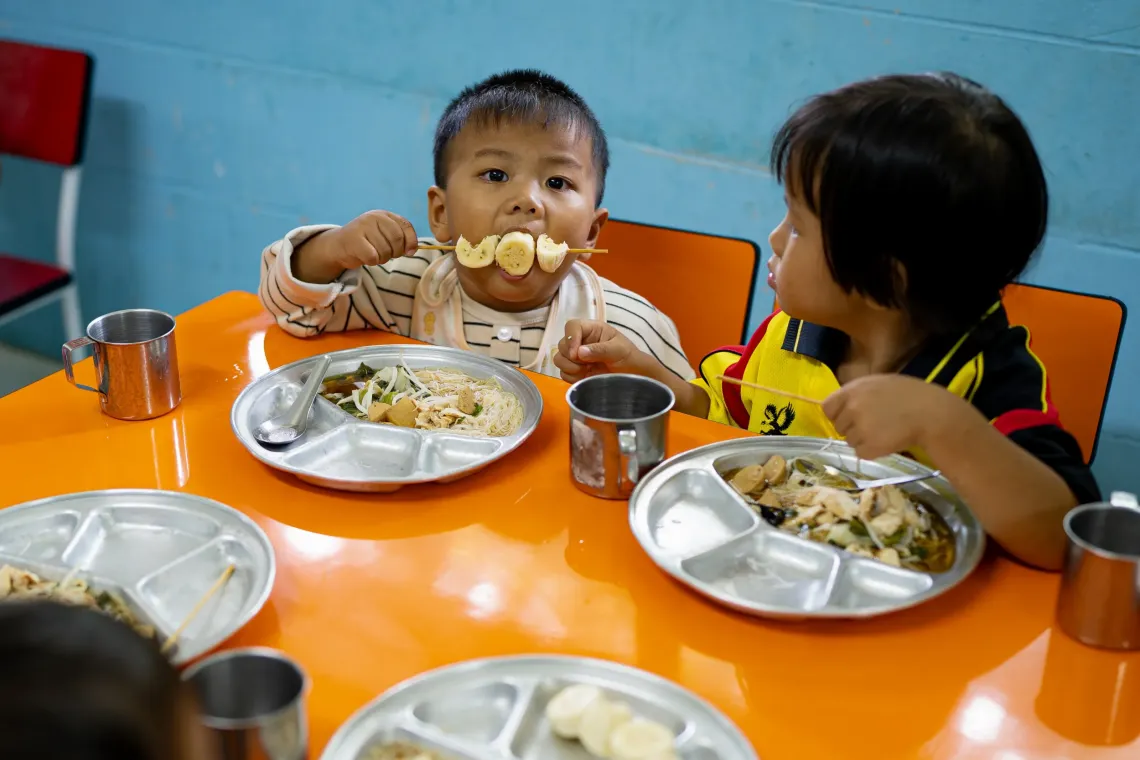
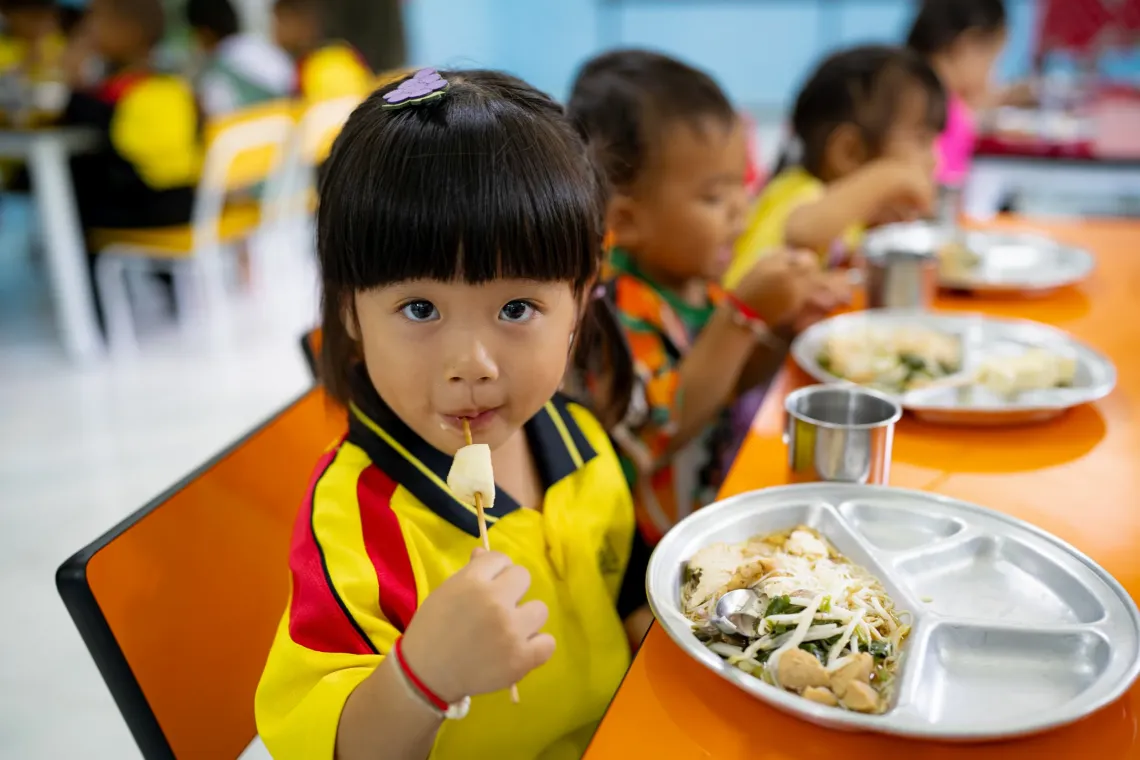
Good nutrition helps children grow, learn and thrive, but many children in Thailand face a double burden of malnutrition: stunting from poor nutrition and overweight from unhealthy diets. Both can affect children’s health, learning and future opportunities, leading to long-term costs for the country. UNICEF works with government, schools, health systems, communities and the private sector to improve nutrition from pregnancy through adolescence. In 2025, UNICEF supported dietary guidance for mothers, better school meals, healthier food environments and youth-led campaigns encouraging better choices.



Getting Learning Back On Track
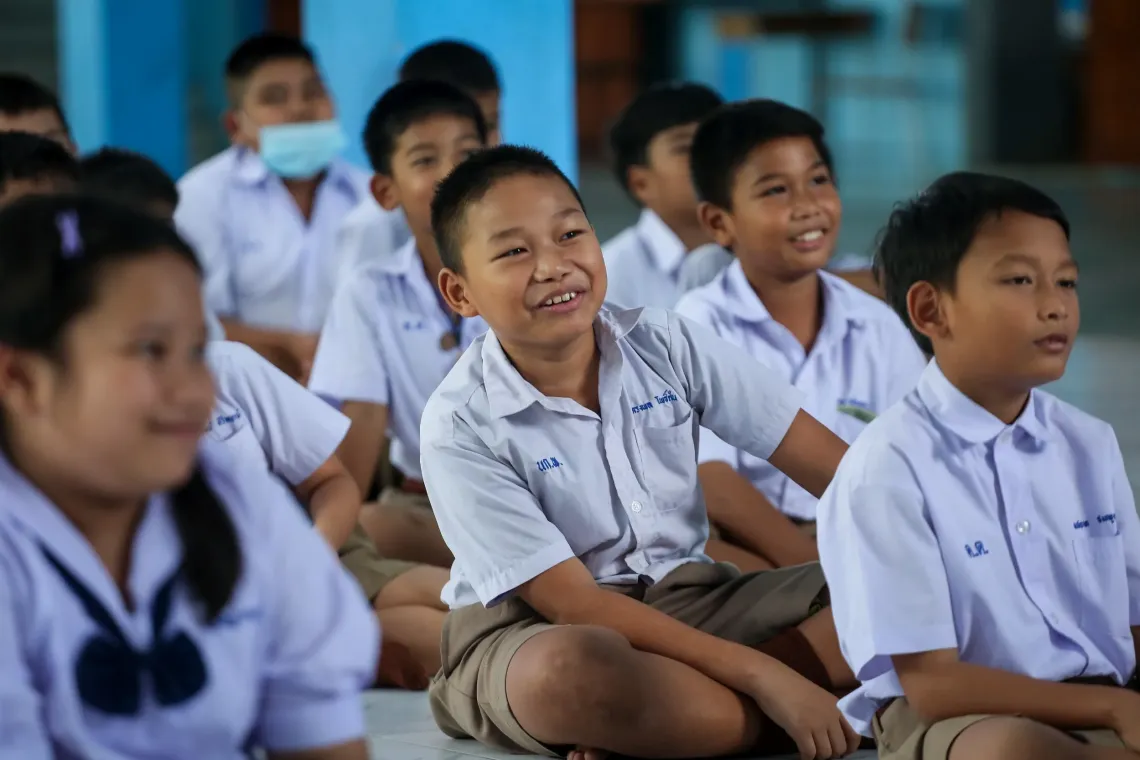
Education should open doors for every child, but too many students in Thailand are falling behind, leaving school early or graduating without the skills they need for the future. UNICEF works with the Ministry of Education and partners to support reforms that improve teaching, strengthen early reading and make learning more relevant for the 21st century. In 2025, UNICEF supported improved teacher training through One Teacher Thailand, delivered mobile libraries to remote communities and campaigned and advocated for reform. Every child has the right to a good education, no matter their background or where they live.

UNICEF Thailand/2017/Thuentap
The Urgent Need To Invest In Children
Too many children in Thailand are still held back by poverty, inequality and limited access to essential services. UNICEF works with the Government and partners to provide evidence that proves why investing in children is vital for Thailand’s future. In 2025, UNICEF launched a Human Capital Development report, providing evidence and recommendations on poverty, education, and other key pressure points. UNICEF also advocated for better-targeted public investment, including expansion of the Child Support Grant and more help for vulnerable households. Through youth employment programmes, UNICEF helped young people who had left education or work regain skills, confidence and opportunities.


Unlocking The Future For Stateless Children
Without a legal identity, children can be left invisible to the systems meant to protect them. Statelessness limits access to rights, services, education, mobility, and future opportunities. UNICEF works with the Government and partners to prevent statelessness, improve birth registration and help children and families navigate complex legal processes towards legal identities. Following a landmark 2024 cabinet resolution, UNICEF supported a record number of undocumented and stateless children to apply for legal identity, permanent residency and citizenship in 2025. This opens new doors to education, protection, and participation in society.


UNICEF Thailand/2024/Roisri
For almost 80 years, UNICEF has worked to improve children’s lives in Thailand through partnership. Our mission has always depended on those who share the same belief: that every child deserves a fair chance.
In 2025, the Royal Thai Government remained UNICEF’s principal partner, helping drive progress at national and local levels. Together, we supported children affected by emergencies, including floods and the border conflict with Cambodia, with valuable support from the Government of Japan. We also worked with government partners to turn evidence into action, including through the Human Capital Development report with the Office of the National Economic and Social Development Council and the Thailand Development Research Institute, and through work with the Ministry of Labour and the National Economic and Social Development Council to support young people who are out of education, employment or training.
Children and young people were also essential partners. Through platforms such as the Young People Advisory Board (YPAB), the I AM UNICEF volunteer network, and the Children and Youth Council of Thailand — the country's most extensive youth network — they helped shape our priorities and sharpen our interventions.


Our private sector partners helped create real change for children and families. In 2025, UNICEF worked with the BJC Big C Foundation to improve early childhood development and promote healthier food environments in Big C stores. Other partners, including Pandora and BMW Group, supported STEM initiatives, helping young people build skills for the future. Partners such as Central Group, Central Pattana (CPN), Tops, Charoen Pokphand Foundation, and Siam Piwat, also contributed generously to UNICEF's work and helped amplify our campaigns.
We are also deeply grateful to our Ambassadors — Khun Anand Panyarachun, UNICEF Goodwill Ambassador for Thailand, and Khun Nualphan Lamsam, UNICEF Thailand National Ambassador — who advocate for children and help drive change. They also connect us to the Thai public, who support our work in so many ways.
Above all, UNICEF thanks the Thai public and all partners who stood with us in 2025. Together, we are building a Thailand where every child has a fair start in life.
10 Wins For Children Around The World

Investing In Children Is The Key To Thailand's Future
This report opened something powerful. A young person's optimism. I want to close in that same spirit.
Thailand’s children faced serious challenges, but also showed remarkable resilience, courage and potential.

Across the year, UNICEF and partners helped turn that potential into progress. A long-awaited law banning corporal punishment sent a clear message that violence against children is never acceptable. Millions of people joined calls for better nutrition, stronger protection and healthier choices for children. When emergencies struck, UNICEF stood with children and families, not only in the moment, but through recovery.
Since joining UNICEF Thailand, I have seen the determination of children and young people across the country. Their talent and hope are powerful, but they must be matched by greater investment. Every child deserves quality education, good nutrition, mental health support, protection from violence and a fair start in life.
The potential of Thailand’s children and youth is the thing to do.
This is a shared responsibility for the Government, UNICEF and other development and civil society partners, the private sector, the Thai people, and children and young people themselves. Thailand’s future depends on ensuring no child is left behind, because a country with a declining birth rate cannot afford to waste a single child's potential.
Tonhom closed her foreward with hope. Now we must turn hope into action.
Explore The Full Report
Highlights
The UNICEF Thailand 2025 Impact Report documents a year of significant progress for children across the country in the face of enormous challenges. From a landmark law banning corporal punishment to a policy change that led to UNICEF supporting 33,000 stateless children in seeking legal identities, the report shows how sustained advocacy and partnership translate into real, lasting change. It also captures the growing role of young people in shaping Thailand's future, with more than 21,000 children and youth contributing to a national 10-year strategy for their generation. The report also charts key achievements in education, nutrition, child protection, and climate action throughout 2025 while also revealing that we still have much to do.
At its heart, this is a report about children: their resilience, their voices, and the difference that investment in their futures can make for Thailand as a whole. Whether responding to emergencies or building long-term systems for change, UNICEF and its partners kept children at the centre of everything they did in 2025. Read the full report to explore their stories.