

Kin Rai Dee: Are You Being Chosen?
Discover what shapes children’s food choices and how we can make food environments healthier

- English
- ไทย
Do children really choose what they eat?
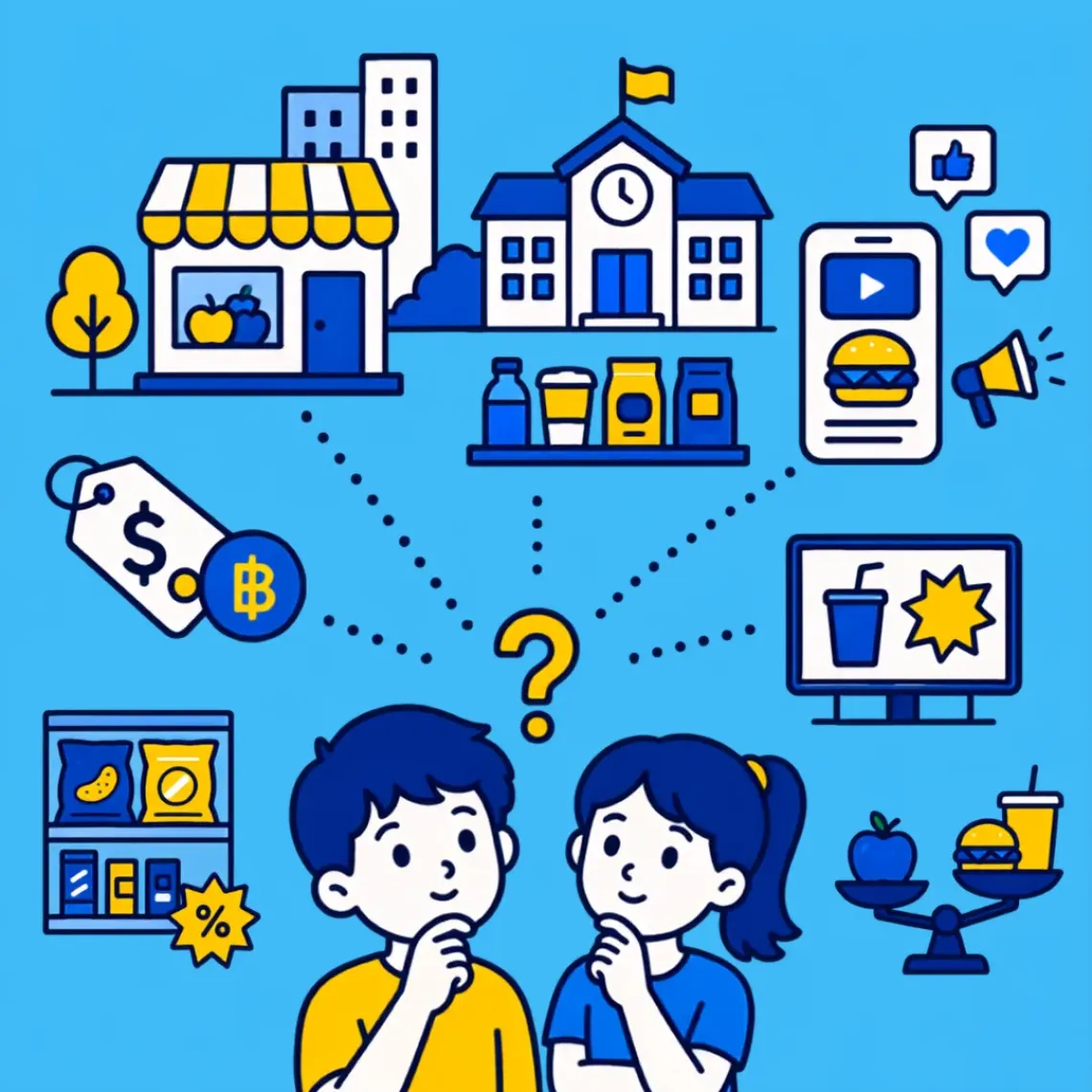
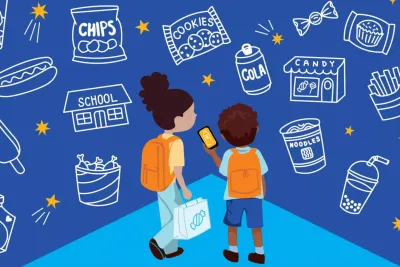
Children make countless decisions about what to eat every day. But those choices are influenced by much more than personal preference.
The foods they see first, the promotions that catch their attention, the snacks placed at checkout counters, and the recommendations that appear in their social media shape what they notice, want and choose, often without them even realising it.
Kin Rai Dee: “Are You Being Chosen?” invites us to pause and look at food choices from a different perspective. Because sometimes, the most important question isn’t what children choose to eat. It’s what shaped that choice in the first place.
It all begins with something we rarely notice: the food environment.
What is a food environment and why does it matter?
A food environment is everything around us that influences what we see, choose, buy and eat. It includes the foods available in shops, schools and online, how products are priced, displayed, labelled and marketed, and what appears in our social media feeds and advertising. It also includes the policy, economic and physical factors that shape affordability and access to healthier foods.
When foods high in fat, sugar and sodium are more visible, more heavily promoted, and easier to access than healthier options, it becomes harder for children to choose healthier foods.
Creating healthier food environments isn’t about taking choices away. It is about making the healthy choice the easy choice so that every child has a fair chance to grow up healthy.
But what do these everyday influences actually look like? Let’s see how they appear in children’s daily lives.
How can we create healthier food environments for every child?
Children don’t choose the food environments they grow up in but together, we can shape them.
Creating healthier food environments takes collective action. Families, schools, communities, businesses and governments all play a role in making healthy choices easier, more accessible and better supported.
Together, we can create environments where every child has a better opportunity to grow up healthy.
How is UNICEF helping children make healthier choices?
Creating healthier food environments takes evidence, collaboration and long-term commitment. UNICEF works with partners across sectors as well as young people to help build environments that better support children’ and young people’s nutrition.
Supporting stronger protection for children
We work with government and partners to generate evidence, support policy development and advocate for legislation that helps protect children from the marketing of unhealthy foods and beverages.
Building public understanding
Through the Kin Rai Dee campaign and other nutrition initiatives, UNICEF raises awareness, shares knowledge and encourages conversations that empower children, families and communities to better understand food environments and nutrition.
Supporting healthier retail food environments
Businesses are an important part of the solution. UNICEF works with the retail food and beverage businesses to develop and advance good practices that can help create healthier retail environments for children and families.
Growing a community for change
UNICEF brings together young people, parents, teachers, communities and civil society and communities to share knowledge, inspire action and build a growing network that champions healthier food environments.
Together, we can build a future where healthier choices are easier for every child.
Every child deserves to grow up in an environment that supports their health.
Creating that environment starts with all of us.
Explore more from Kin Rai Dee
Every chapter tells a different story, but they share the same goal. Explore previous chapters of Kin Rai Dee and discover more stories, ideas and people working towards a healthier future for every child.
Kin Rai Dee | What's Good to Eat?
Kin Rai Dee | #HungryForHope
Want to learn more?
Explore UNICEF research and resources on food environments, children’s nutrition and the changes needed to better support children’s health.
Feeding Profit
How food environments are failing children.
Turning the Tide on Childhood Overweight in East Asia and the Pacific
Building Better Food Environments for Children.