Generations unite in Nigeria’s HPV vaccine campaign

A community health mobilizer in Nigeria is combating vaccine misinformation and building trust, one family member at a time.

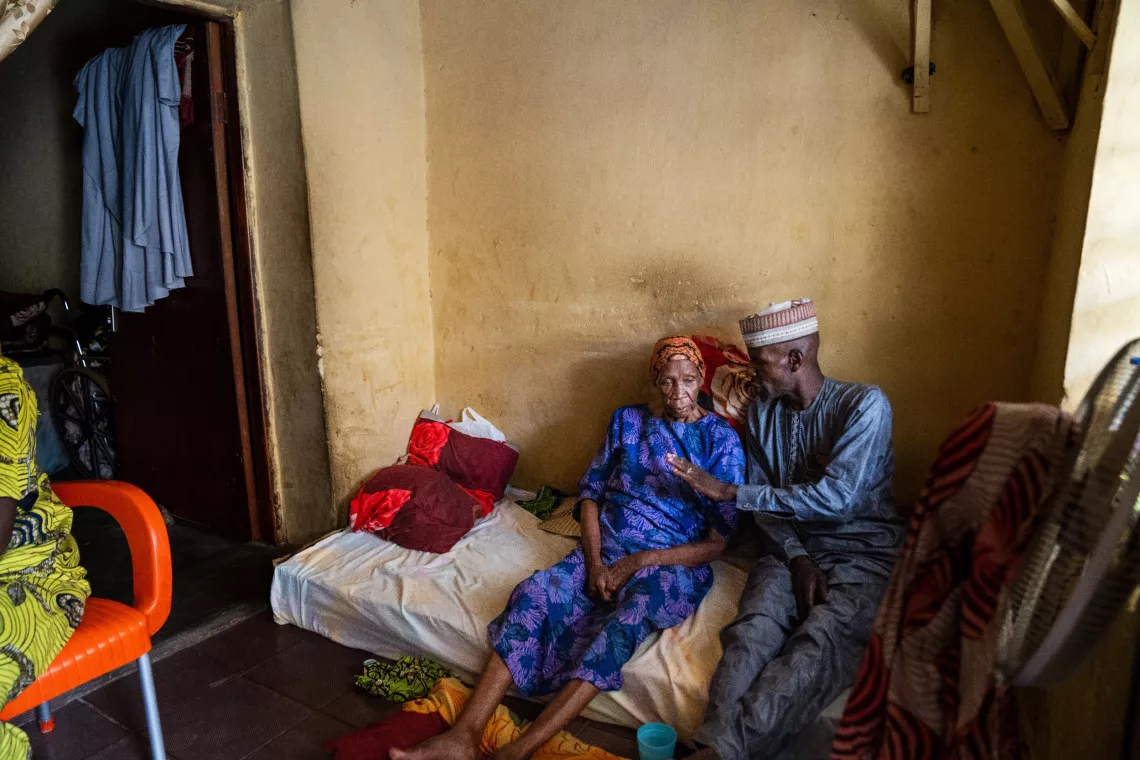
Fatima Habibu, 99, sits with her grand and great-grand daughters, Volunteer Community Mobilizer (VCM), Shamsiyya Abdullahi Jariri, 30, left and Mariyatu, Gidado, 9, at her home in Katsina, Nigeria on 30 May, 2024.
UNICEF/U.S. CDC/UNI618593/Amanda Voisard
19 September 2024
Reading time: 4 minutes

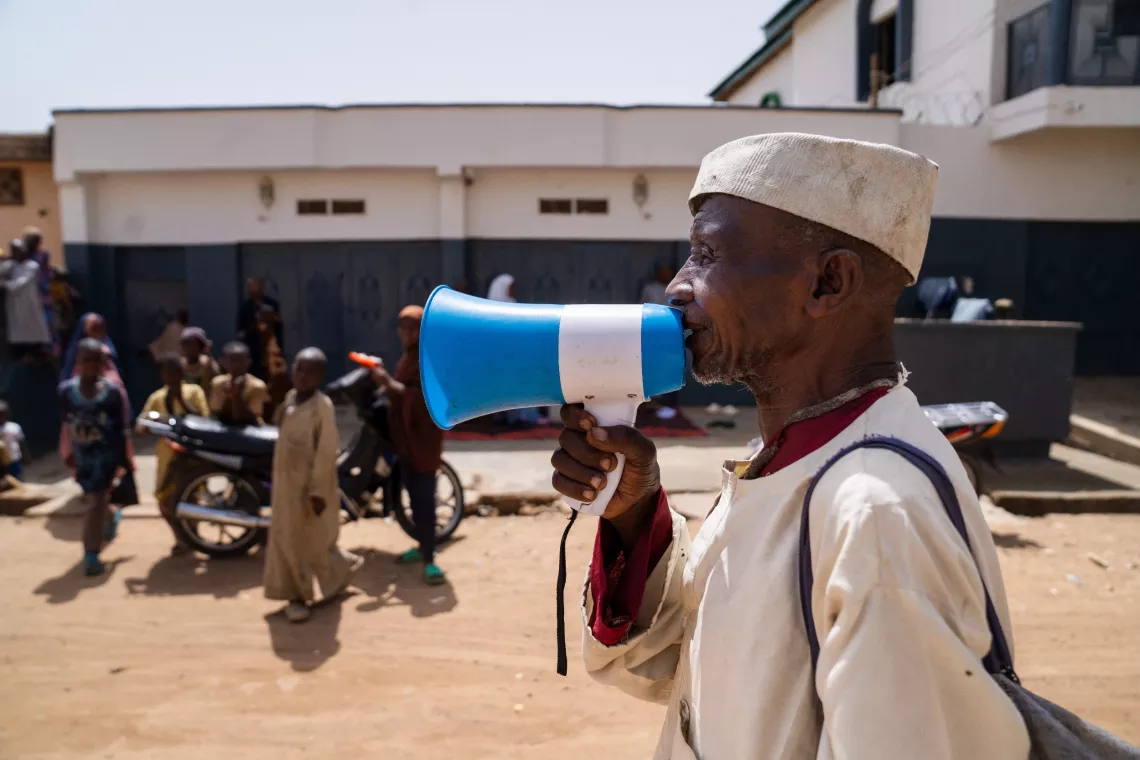
It’s midday in Katsina, Nigeria. The streets are alive with energy as the city’s daily routine hums along — the sounds of passing papalos (three-wheeled vehicles) and keke napep (tricycles) blend with nearby music and the voices of the crowds. Moving through the bustle, a group of immunization campaigners add to the mix, calling out through a hand-held megaphone. Their work is part of a national immunization campaign bringing public figures, actors and social influencers to the street alongside community mobilizers to help raise awareness about routine immunization, HPV vaccines and cervical cancer. 


Musicians and local advocates engage the community at a human papillomavirus (HPV) mobile clinic in Katsina, Nigeria on 31 May 2024. Musicians and local advocates engage the community at a human papillomavirus (HPV) mobile clinic in Katsina, Nigeria on 31 May 2024.
UNICEF/U.S. CDC/UNI619249/Amanda Voisard Musicians and local advocates engage the community at a human papillomavirus (HPV) mobile clinic in Katsina, Nigeria on 31 May 2024.
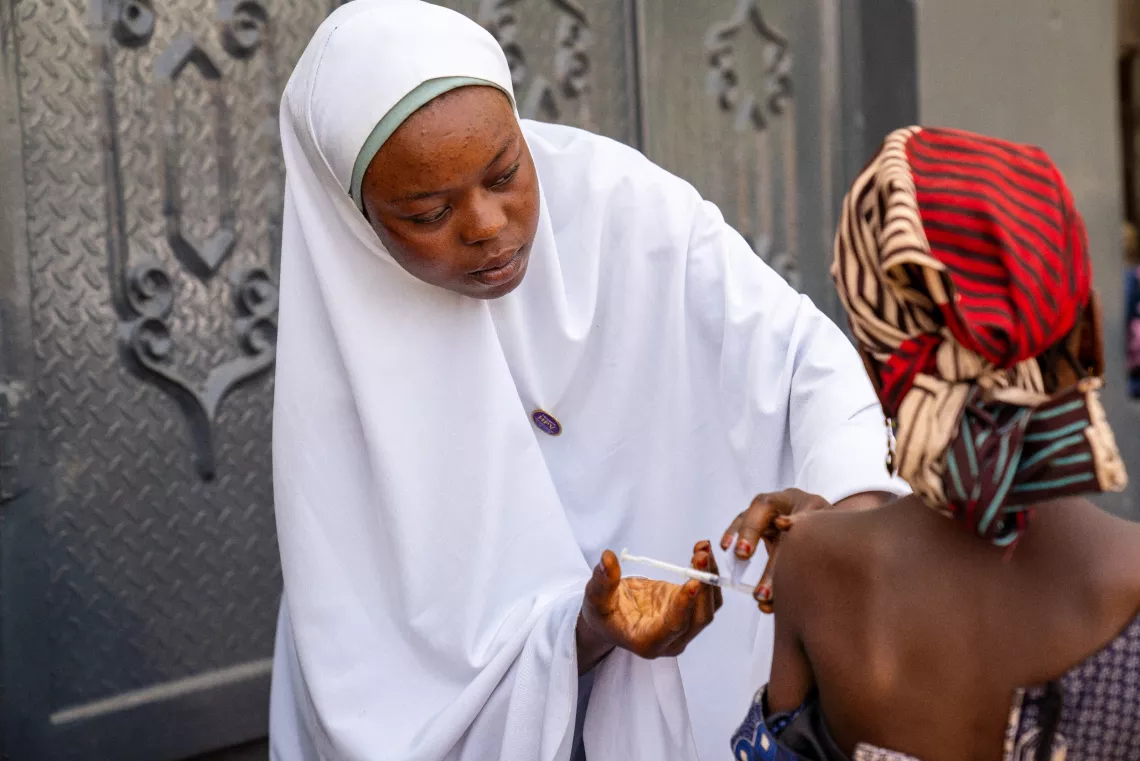
Rukayya Armaya'u administers a human papillomavirus (HPV) vaccine at a mobile clinic in Katsina, Nigeria on 31 May 2024. Rukayya Armaya'u administers a human papillomavirus (HPV) vaccine at a mobile clinic in Katsina, Nigeria on 31 May 2024.
UNICEF/U.S. CDC/UNI619250/Amanda Voisard Rukayya Armaya'u administers a human papillomavirus (HPV) vaccine at a mobile clinic in Katsina, Nigeria on 31 May 2024.
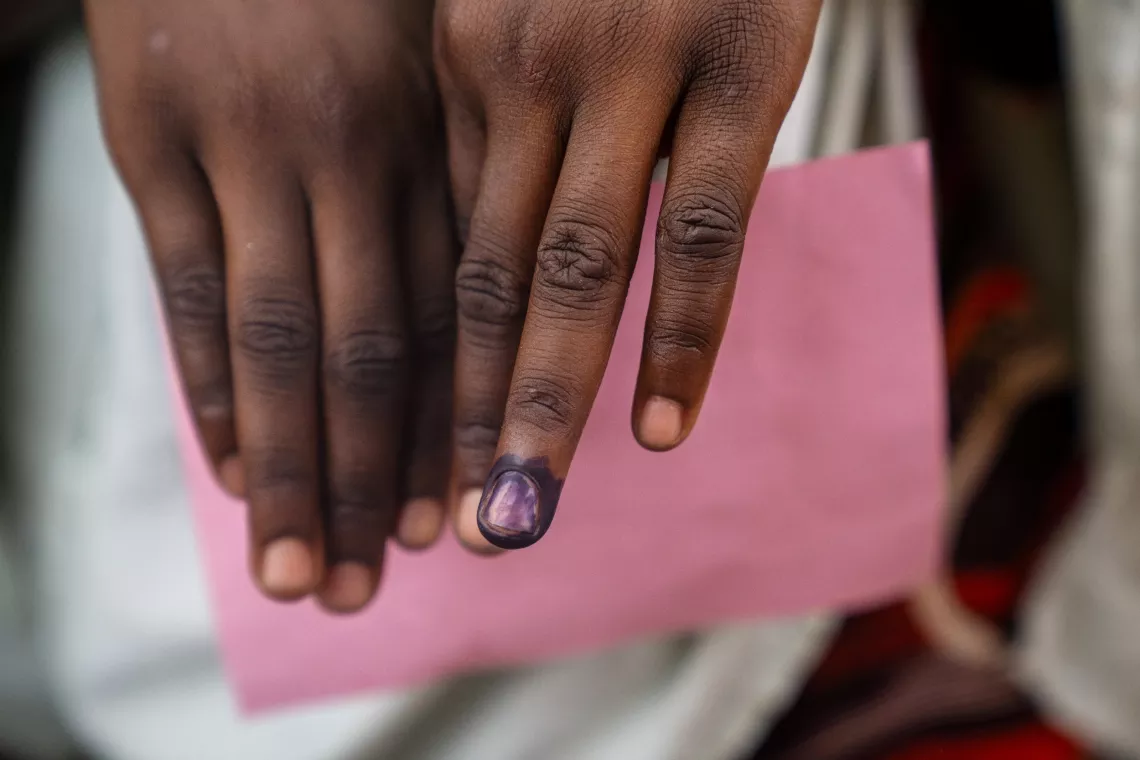
A girls finger is marked after receiving the human papillomavirus (HPV) vaccine at a mobile clinic in Katsina, Nigeria on 29 May 2024. A girls finger is marked after receiving the human papillomavirus (HPV) vaccine at a mobile clinic in Katsina, Nigeria on 29 May 2024.
UNICEF/U.S. CDC/UNI618554/Amanda Voisard A girls finger is marked after receiving the human papillomavirus (HPV) vaccine at a mobile clinic in Katsina, Nigeria on 29 May 2024.

Since the campaign began in October 2023, Nigeria has vaccinated over 12 million girls against HPV, reducing their chances of developing cervical cancer by up-to 90 per cent. It’s a remarkable accomplishment, driven in large part through community-level campaigning.  

At the heart of this work, dedicated volunteers play a critical role in engaging and mobilizing communities, reaching families with essential health information while helping to combat vaccine hesitancy.  

Spreading the word
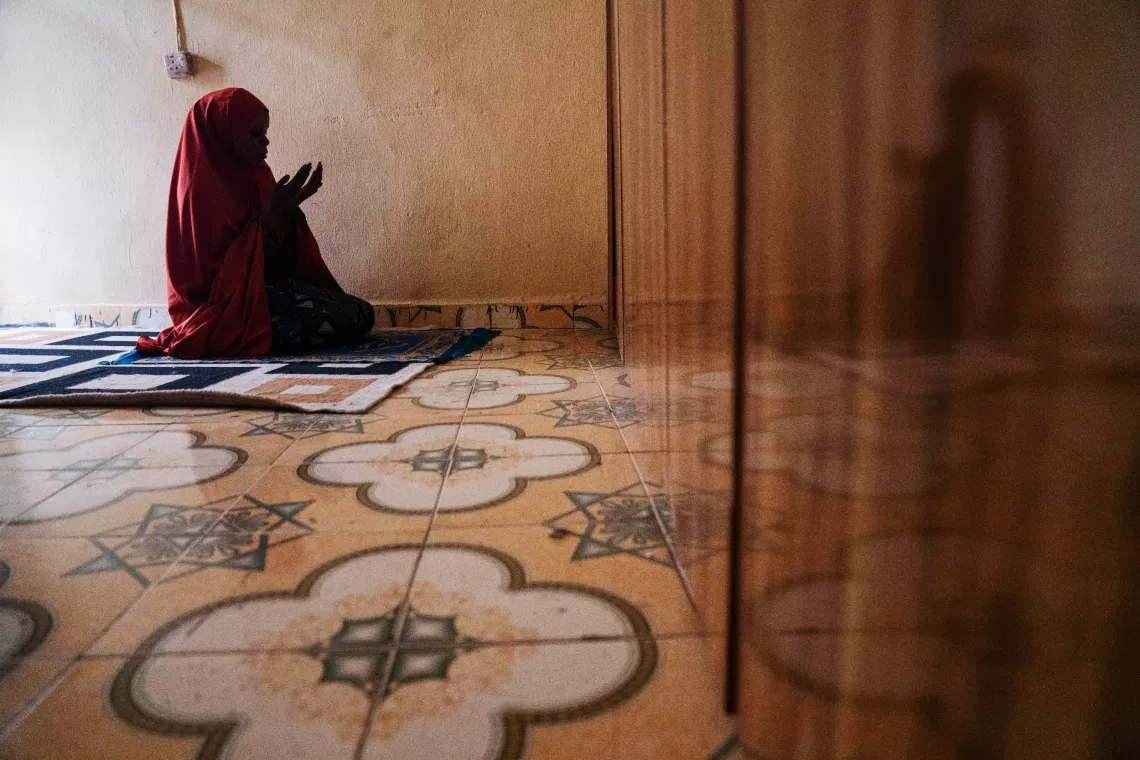
Volunteer Community Mobilizer (VCM), Shamsiyya Abdullahi Jariri, 30, takes part in afternoon prayers in Katsina, Nigeria on 30 May 2024.
UNICEF/U.S. CDC/UNI618632/Amanda Voisard Shamsiyya Abdullahi Jariri, 30, takes part in afternoon prayers in Katsina, Nigeria.

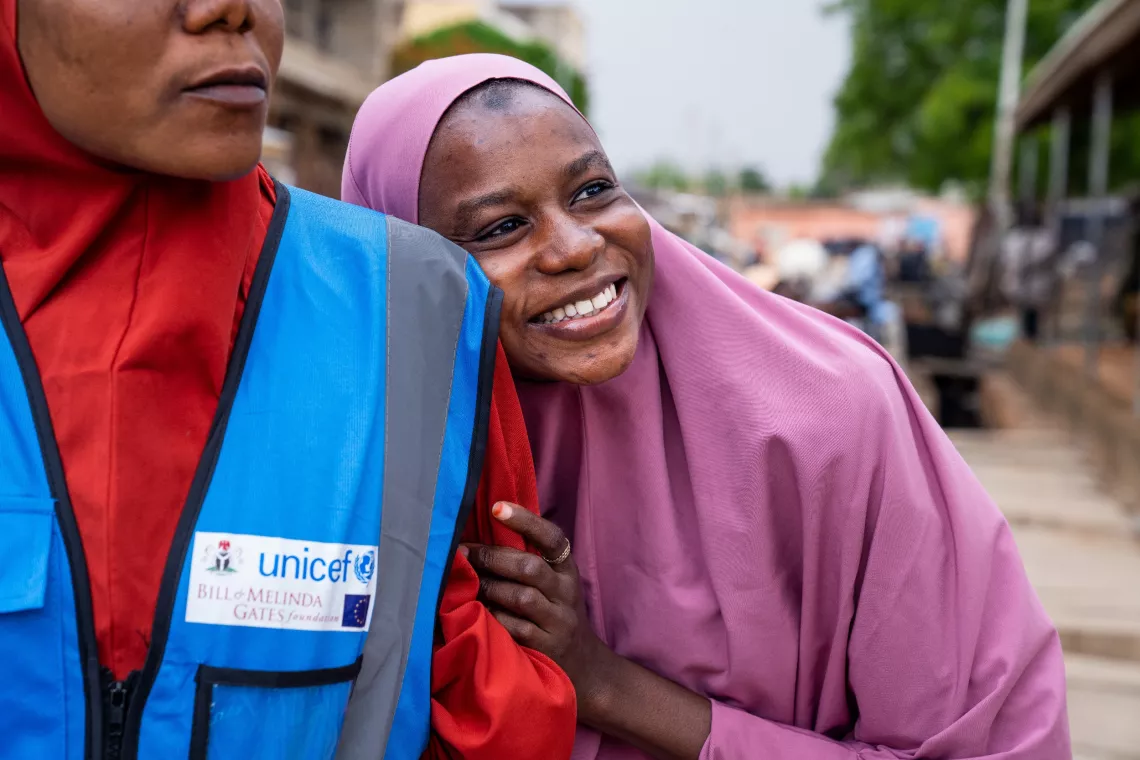
Far from the hustle and bustle, light streams through the window of Shamsiyya Abdullahi Jariri’s home. She is deep in prayer, taking a moment of reflection during a long day of work. Shamsiyya is a volunteer community mobilizer, working to protect the girls in her community by promoting immunization and health services.  

Her isn’t easy, involving a long-term commitment to building trust, house-by-house, one family member at a time.

Today, Shamsiyya has help. Her younger sisters, Hadiza, 25, and Safiyya, 19, tag along as she goes door to door, encouraging girls to visit the vaccine centre. 

Three women walk along a street in Katsina, Nigeria.
UNICEF/U.S. CDC/UNI618564/Amanda Voisard Shamsiyya, middle, and her sisters 19-year old Safiyya, left, and 25-year-old Hadiza, right, venture out to educate local families about the human papillomavirus (HPV) vaccine rollout.

Shamsiyya's work helps to spread awareness of immunization and of the HPV vaccine, which is now part of Nigeria’s routine immunization programme, targeting girls 9 to 14 years of age. It’s crucial work that has the potential to save lives.

Cervical cancer is the second-most common cancer among Nigerian women. In 2022, more than 13,500 women were diagnosed, with over 7,000 dying from the disease.

Most cases of cervical cancer are caused by HPV, a virus transmitted through sexual contact. Being vaccinated is the most effective way to avoid HPV infection and it can protect against the HPV strains that cause up to 90 per cent of cervical cancer cases.

“I wish it applied to my age. I wish I could get the vaccination,” Shamsiyya says, reflecting on her own missed opportunity. Her work brings her deep personal satisfaction, knowing she’s giving young women a chance she never had. “At first, it was difficult, but I soon realized the importance of what I do in helping others, especially children. Now, it’s more of a passion than a job.”  

A family effort
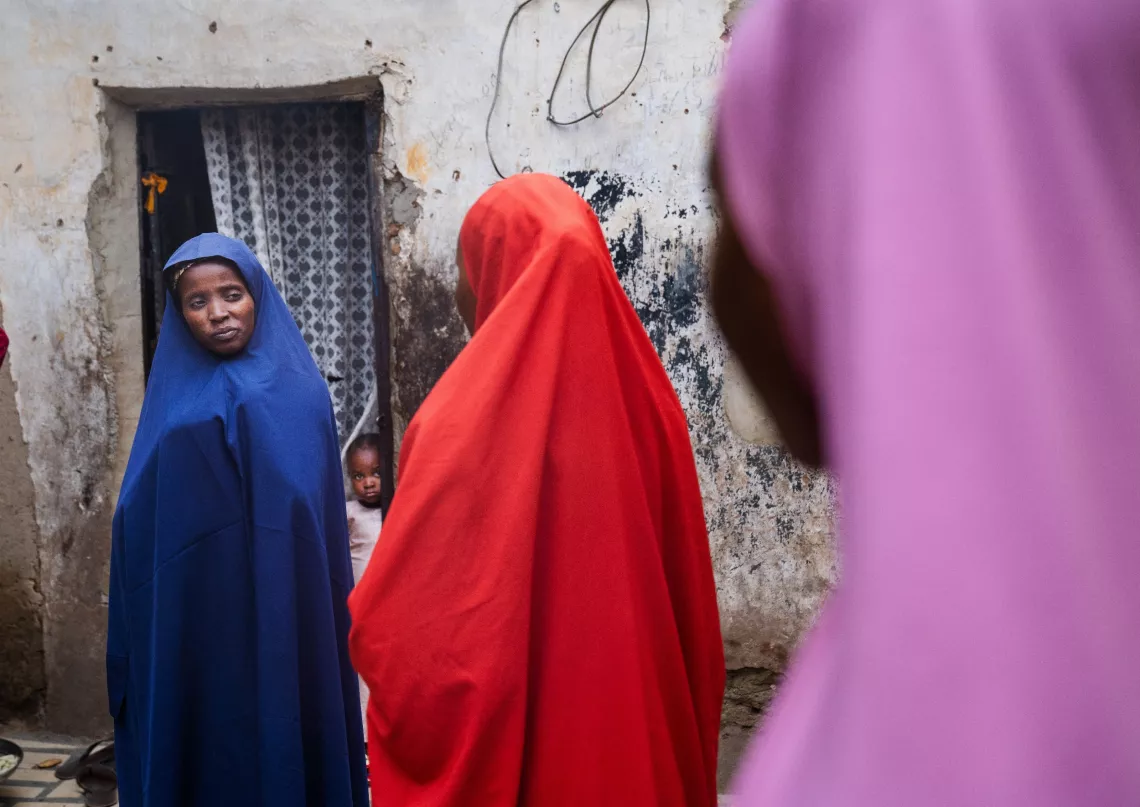
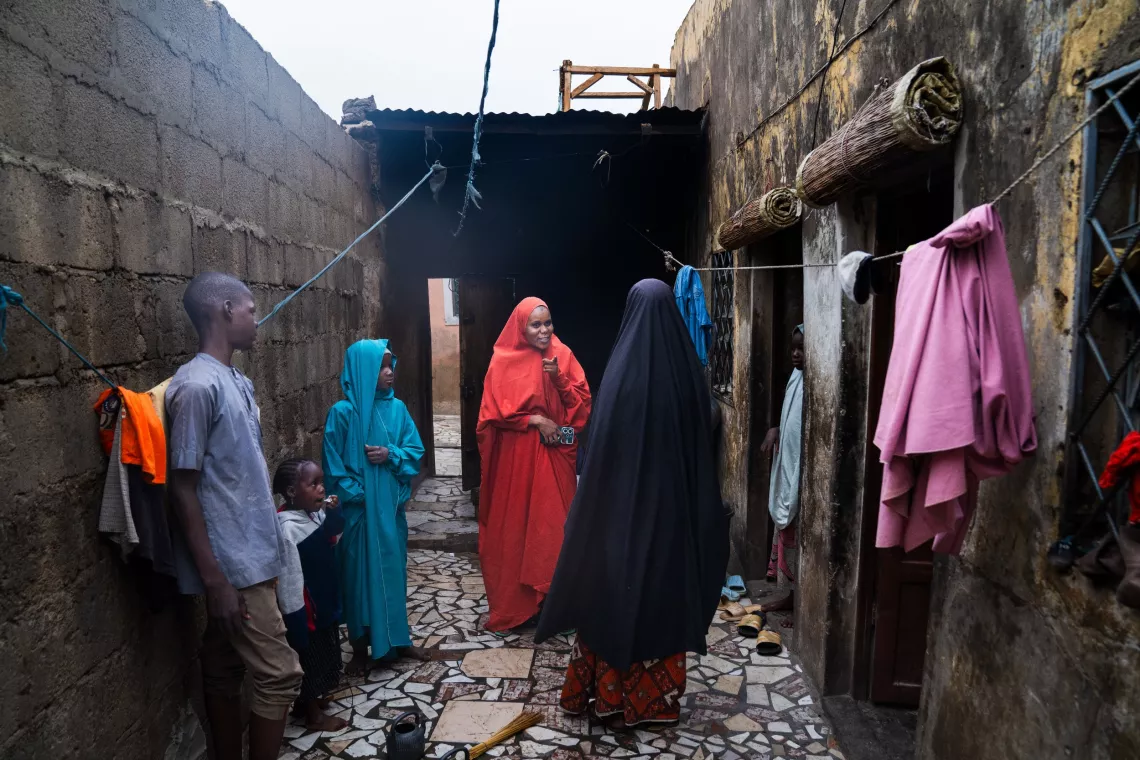
Nafisa Ibrahim, 5, rear, peaks out as her mother, Hadize Ibrahim, 35, left, speaks with Volunteer Community Mobilizer (VCM), Shamsiyya Abdullahi Jariri, 30, middle, accompanied by her sister, Hadiza Abdullahi Jariri, 25, right, about the week-long second phase of the single-dose human papillomavirus (HPV) vaccine rollout, targeting girls aged 9-14 years, in Katsina, Nigeria, on 30 May 2024.
UNICEF/U.S. CDC/UNI618561/Amanda Voisard Five-year-old Nafisa peaks out from a doorway as her mother speaks with Shamsiyya about the HPV vaccine rollout in Katsina.

As the day progresses, Shamsiyya faces her toughest challenge yet: convincing her grandmother, 99-year-old Fatima, to bless the vaccination of one of her great-granddaughters, nine-year-old Mariya. 

The work starts with the girl’s parents, Shamsiyya’s uncle and his wife. The trust she holds as a family member helps the information she shares to feel reliable, helping to reduce their hesitancy and to improve trust in vaccination. 


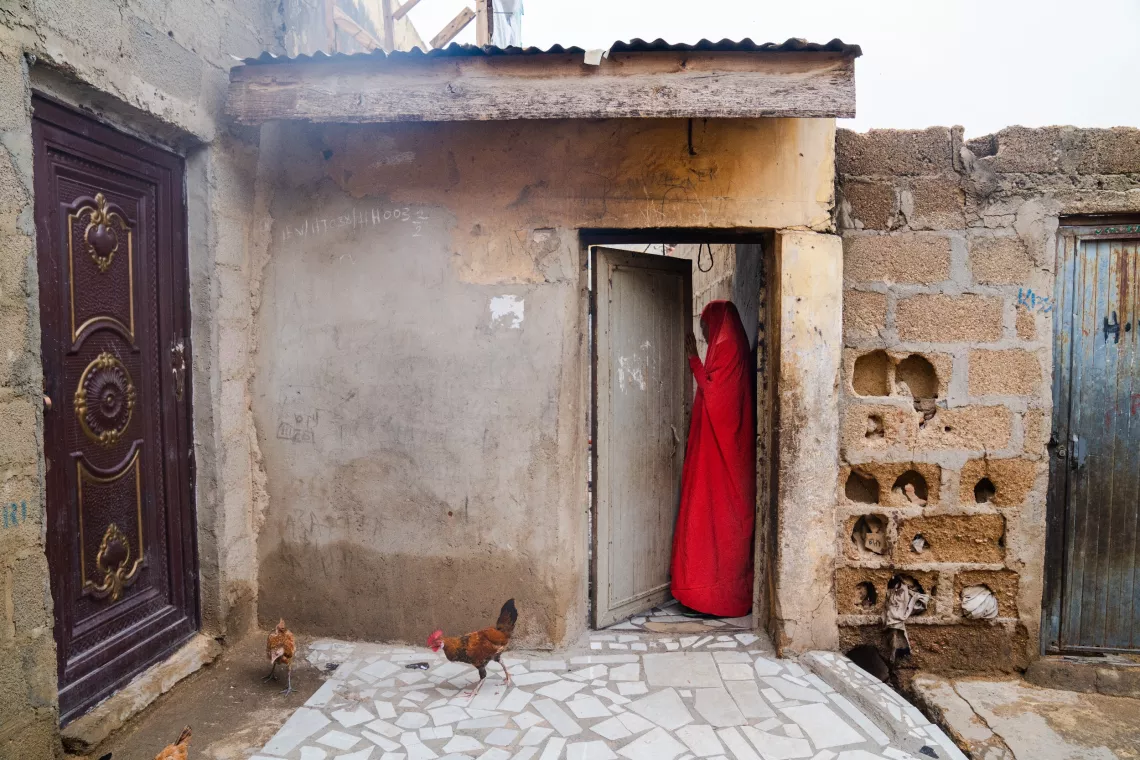
Shamsiyya, dressed in red, enters a doorway in  Katsina, Nigeria. Shamsiyya, dressed in red, enters a doorway in  Katsina, Nigeria.
UNICEF/U.S. CDC/UNI618559/Amanda Voisard Shamsiyya has been working as a Volunteer Community Mobilizer (VCM) since 2012, informing and educating community members about the importance of Routine Immunization (RI).
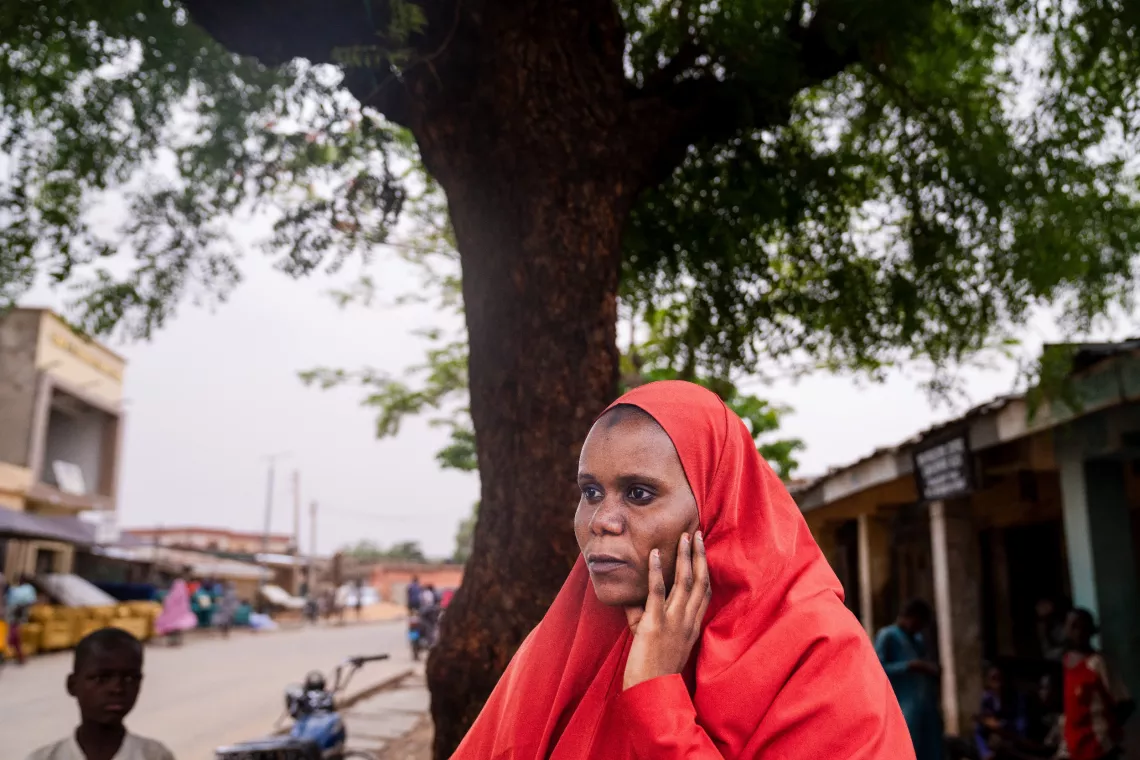
Shamsiyya stands under the shade of a tree, holding her hand to her cheek as she looks out. Shamsiyya stands under the shade of a tree, holding her hand to her cheek as she looks out.
UNICEF/U.S. CDC/UNI618567/Amanda Voisard Shamsiyya pauses in the street, standing under the shade of a tree in Katsina, Nigeria.
Volunteer Community Mobilizer (VCM), Shamsiyya Abdullah Jariri, 30, middle, visits the home of her brother’s family to encourage them to allow their daughter to receive the human papillomavirus (HPV) vaccination in Katsina, Nigeria, on 30 May 2024. Volunteer Community Mobilizer (VCM), Shamsiyya Abdullah Jariri, 30, middle, visits the home of her brother’s family to encourage them to allow their daughter to receive the human papillomavirus (HPV) vaccination in Katsina, Nigeria, on 30 May 2024.
UNICEF/U.S. CDC/UNI618600/Amanda Voisard Shamsiyya visits the home of her brother’s family to encourage them to allow their daughter to receive the human papillomavirus (HPV) vaccination.

It is a sensitive task, but Shamsiyya knows her work and family well. Just days earlier, she used her persuasion skills to help nine-year-old Maryatu, another of Fatima’s great granddaughters, to be immunized.

Fatima Habibu, 99, grandmother of Volunteer Community Mobilizer (VCM), Shamsiyya Abdullahi Jariri, 30, looks on at her home in Katsina, Nigeria on 30 May, 2024.
UNICEF/U.S. CDC/UNI618645/Amanda Voisard 99-year-old Fatima Habibu, grandmother of Shamsiyya, looks on at her home in Katsina, Nigeria.

Fatima is a respected mentor within the family, deeply rooted in her principles. Her influence goes beyond leadership — she is the family’s moral compass.  

Winning her trust requires persistent effort and delicate conversation.  

Honoring Shamsiyya's father’s memory is another factor that fuels her determination. She lost her father when she was only 16. It was a devastating blow, but his early guidance and support in securing her first job helped lead her to her work in community mobilization. 

From hesitance to trust

Volunteer Community Mobilizer (VCM), Shamsiyya Abdullah Jariri, 30, left, speaks with the family of Safiyya Badamasi, 10, middle, to encourage them to allow the young woman to receive a human papillomavirus (HPV) vaccination in Katsina, Nigeria, on 30 May 2024.
UNICEF/U.S. CDC/UNI618563/Amanda Voisard Shamsiyya speaks with the family of ten-year-old Safiyya, middle, to encourage them to allow the girl to receive a human papillomavirus (HPV) vaccination.

In some parts of Nigeria, distrust of vaccines is common.

Misinformation, such as fears that the vaccine may hinder fertility or doubts about its effectiveness, makes families hesitant to have their daughters vaccinated.

Community mobilizers like Shamsiyya play a vital role in combating these misconceptions and educating communities on the vaccine’s benefits.

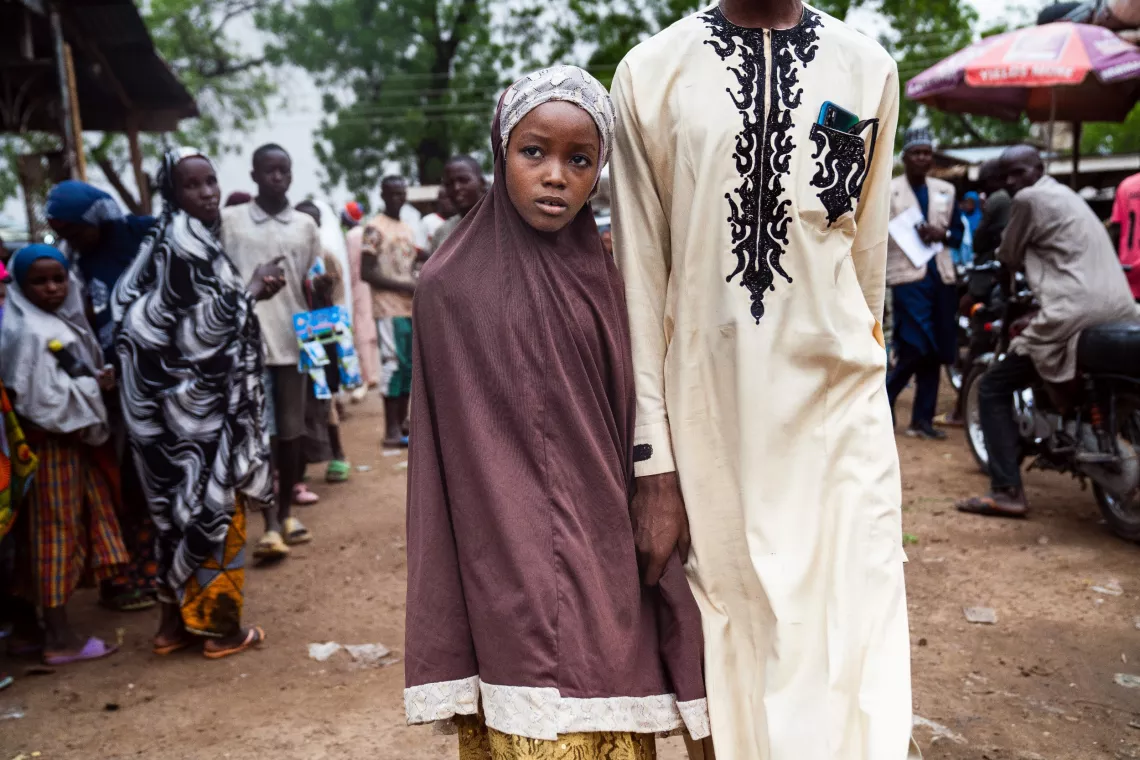
 

Safiyya, 10, walks with her brother, Abdulrahman, on route to receive a human papillomavirus (HPV) vaccination in Katsina, Nigeria, on 30 May 2024. Safiyya, 10, walks with her brother, Abdulrahman, on route to receive a human papillomavirus (HPV) vaccination in Katsina, Nigeria, on 30 May 2024.
UNICEF/U.S. CDC/UNI618613/Amanda Voisard Safiyya, 10, walks with her brother, Abdulrahman, on route to receive a human papillomavirus (HPV) vaccination in Katsina, Nigeria, on 30 May 2024.
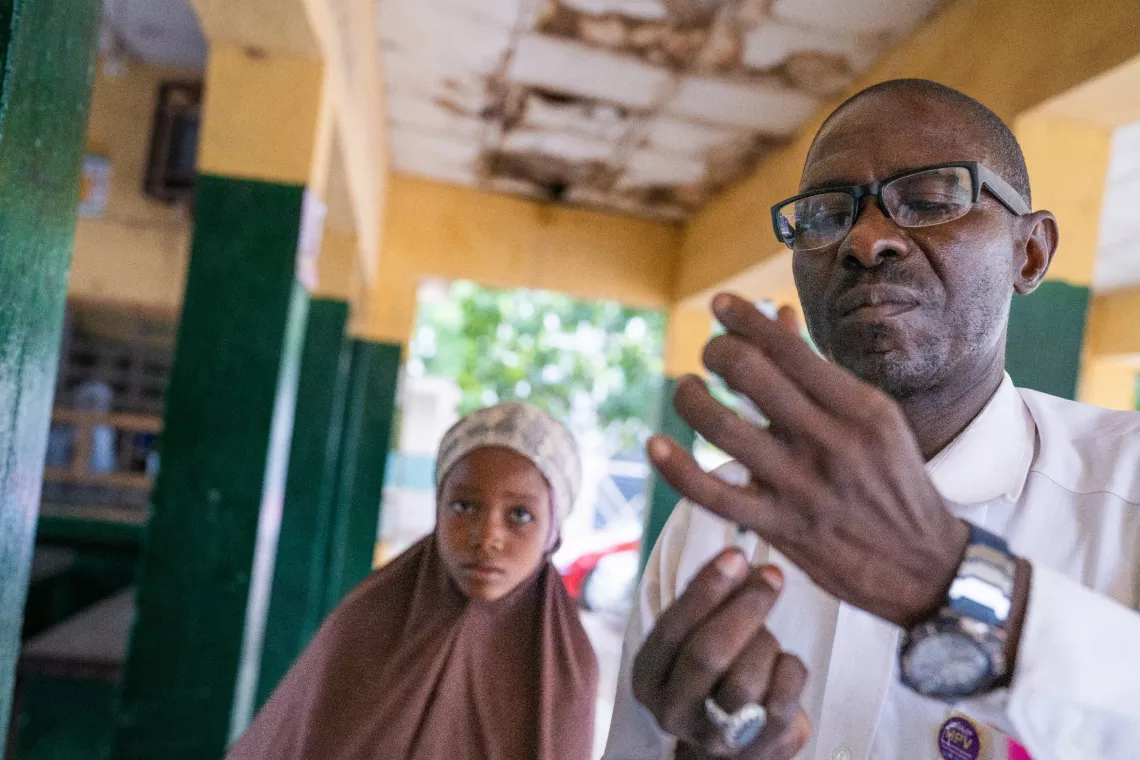
Safiyya, 10, at rear, watches as Alimudeen Mohammed, right, ward in charge at the Katsina Kofar Marusa Maternal and Child Health Clinic, prepares a human papillomavirus (HPV) vaccine. Safiyya, 10, at rear, watches as Alimudeen Mohammed, right, ward in charge at the Katsina Kofar Marusa Maternal and Child Health Clinic, prepares a human papillomavirus (HPV) vaccine.
UNICEF/U.S. CDC/UNI618575/Amanda Voisard Safiyya watches as Alimudeen Mohammed, ward in charge at the Katsina Kofar Marusa Maternal and Child Health Clinic, prepares a human papillomavirus (HPV) vaccine.
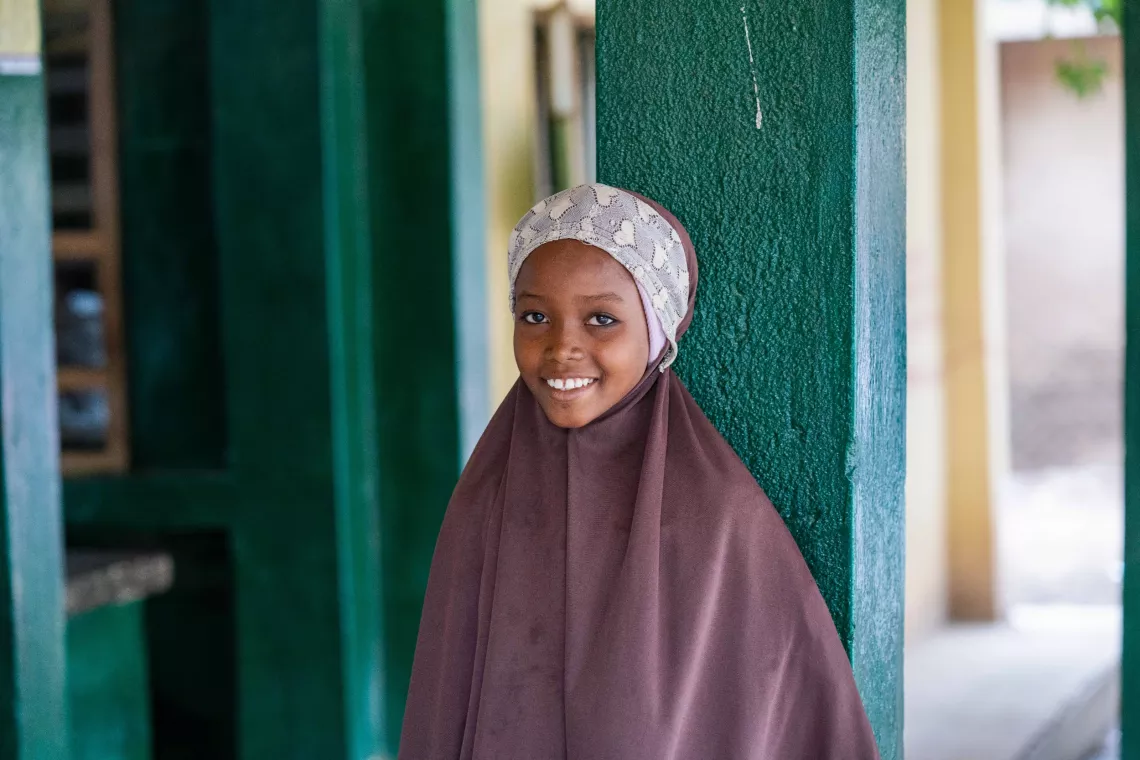
Safiyya, 10, smiles as she waits to receive a human papillomavirus (HPV) vaccination in Katsina, Nigeria. Safiyya, 10, smiles as she waits to receive a human papillomavirus (HPV) vaccination in Katsina, Nigeria.
UNICEF/U.S. CDC/UNI618574/Amanda Voisard Safiyya, 10, waits to receive a human papillomavirus (HPV) vaccination in Katsina, Nigeria, on 30 May 2024.

“It’s a privilege to support this campaign, knowing it will save countless girls’ lives and keep many children healthy.”

Shamsiyya

Back at Fatima’s house, Shamsiyya’s respectful yet steadfast approach begins to bear fruit through the conversations led by her mother and uncle. Their words reflect the care and persistence of Shamsiyya’s work as a community mobilizer, helping Fatima gradually overcome her fears and give her blessing.  

Nigeria is working to integrate the HPV vaccine with HIV prevention and response services for adolescents. Known as HPV+, the project intends to give girls access to the services they need for a healthy and happy life.

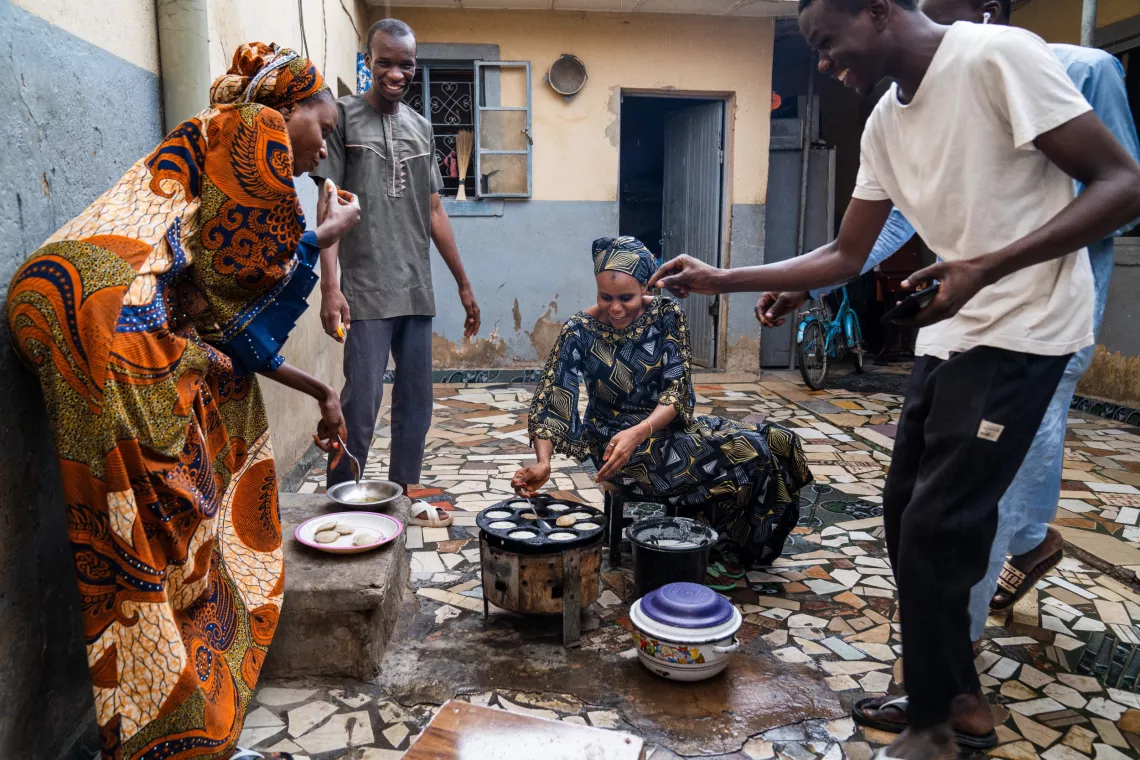
 

Volunteer Community Mobilizer (VCM), Shamsiyya Abdullahi Jariri, 30, prepares food for her family at her home in Katsina, Nigeria on 30 May 2024. Volunteer Community Mobilizer (VCM), Shamsiyya Abdullahi Jariri, 30, prepares food for her family at her home in Katsina, Nigeria on 30 May 2024.
UNICEF/U.S. CDC/UNI618634/Amanda Voisard Volunteer Community Mobilizer (VCM), Shamsiyya Abdullahi Jariri, 30, prepares food for her family at her home in Katsina, Nigeria on 30 May 2024.
Hassan Habibu speaks with his mother, Fatima, about the benefits of the human papillomavirus (HPV) vaccine at her home in Katsina, Nigeria. Hassan Habibu speaks with his mother, Fatima, about the benefits of the human papillomavirus (HPV) vaccine at her home in Katsina, Nigeria.
UNICEF/U.S. CDC/UNI618636/Amanda Voisard Hassan Habibu speaks with his mother, Fatima, about the benefits of the human papillomavirus (HPV) vaccine at her home in Katsina, Nigeria.
Hadiza leans on her sister's arm as she accompanies her to educate local families about the human papillomavirus (HPV) vaccine rollout in Katsina, Nigeria. Hadiza leans on her sister's arm as she accompanies her to educate local families about the human papillomavirus (HPV) vaccine rollout in Katsina, Nigeria.
UNICEF/U.S. CDC/UNI618583/Amanda Voisard Hadiza leans on her sister Shamsiyya's arm as she accompanies her to educate local families about the human papillomavirus (HPV) vaccine rollout in Katsina, Nigeria.

The country’s remarkable achievement of vaccinating over 12 million girls against HPV is also a testament to the efforts of volunteers like Shamsiyya. Trained and well-supported networks of community health workers, volunteers and mobilizers play an essential role in ensuring that all children have a chance to survive and thrive.
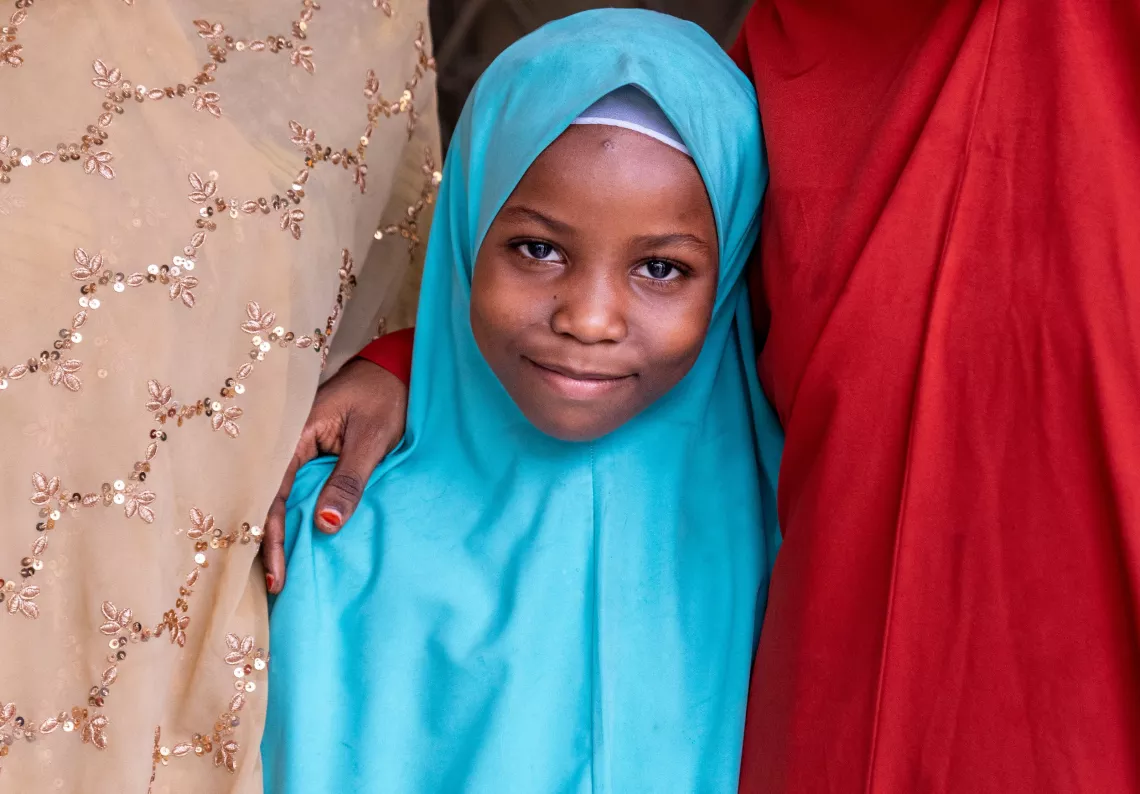
Nine-year-old Mariyatu is seen at the home of her grandmother in Katsina, Nigeria.
UNICEF/U.S. CDC/UNI628044/Amanda Voisard Nine-year-old Mariyatu is seen at the home of her grandmother in Katsina, Nigeria.

Nigeria’s national HPV immunization campaign was led by the Government of Nigeria, Ministry of Health with the support from UNICEF, WHO, Gavi, the Vaccine Alliance, the Gates Foundation and other partners.