


Community heroes unite for immunization in the Philippines
When a country comes together, every child can get a chance at a healthy life.
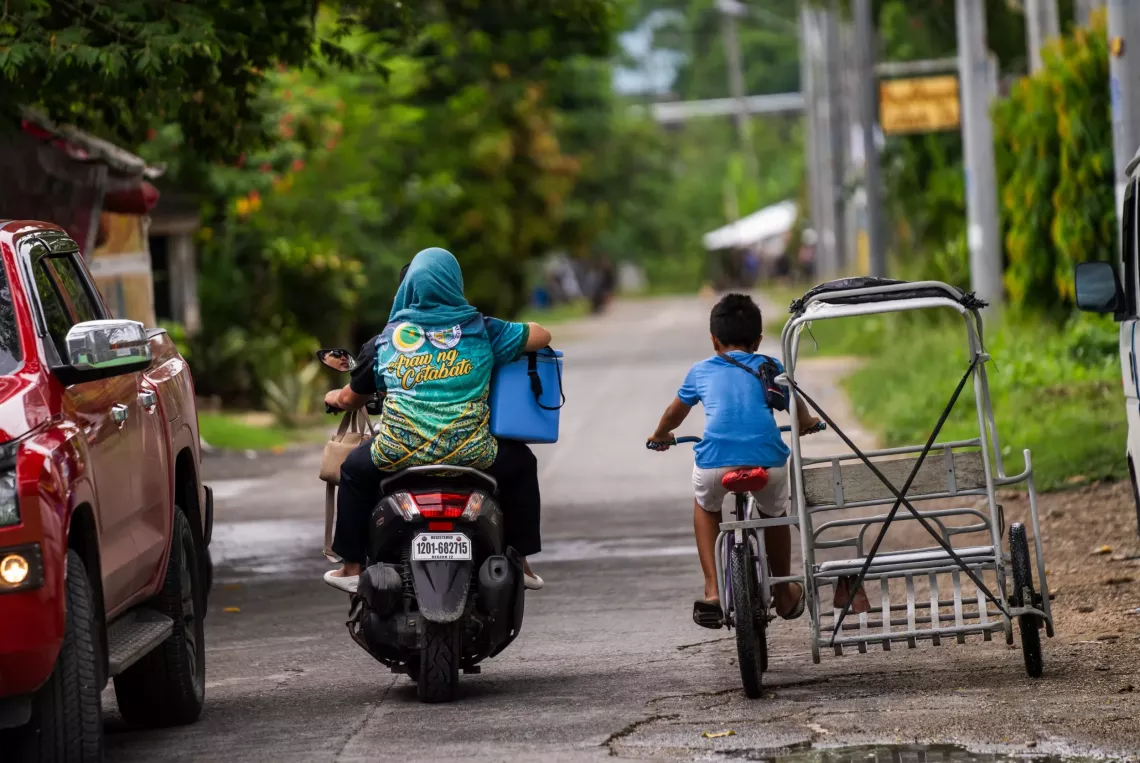
It’s 8:30 am at a birthing clinic in Cotabato City. Midwife Tarhata Pangilan has just received word of a child arriving at a nearby health station for a measles shot. She packs her vaccine carrier box, ensuring the vials are secure, and jumps on a motorbike to make the ride to Purok Abas, a neighbourhood a few kilometres away.

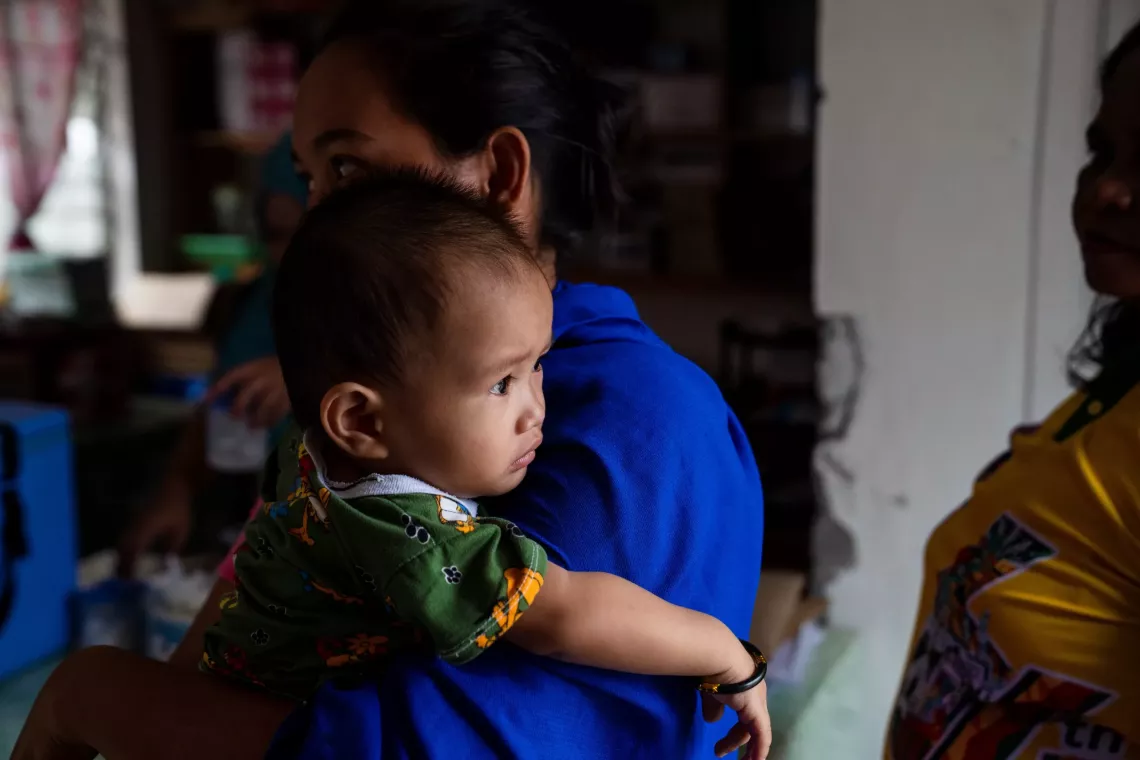

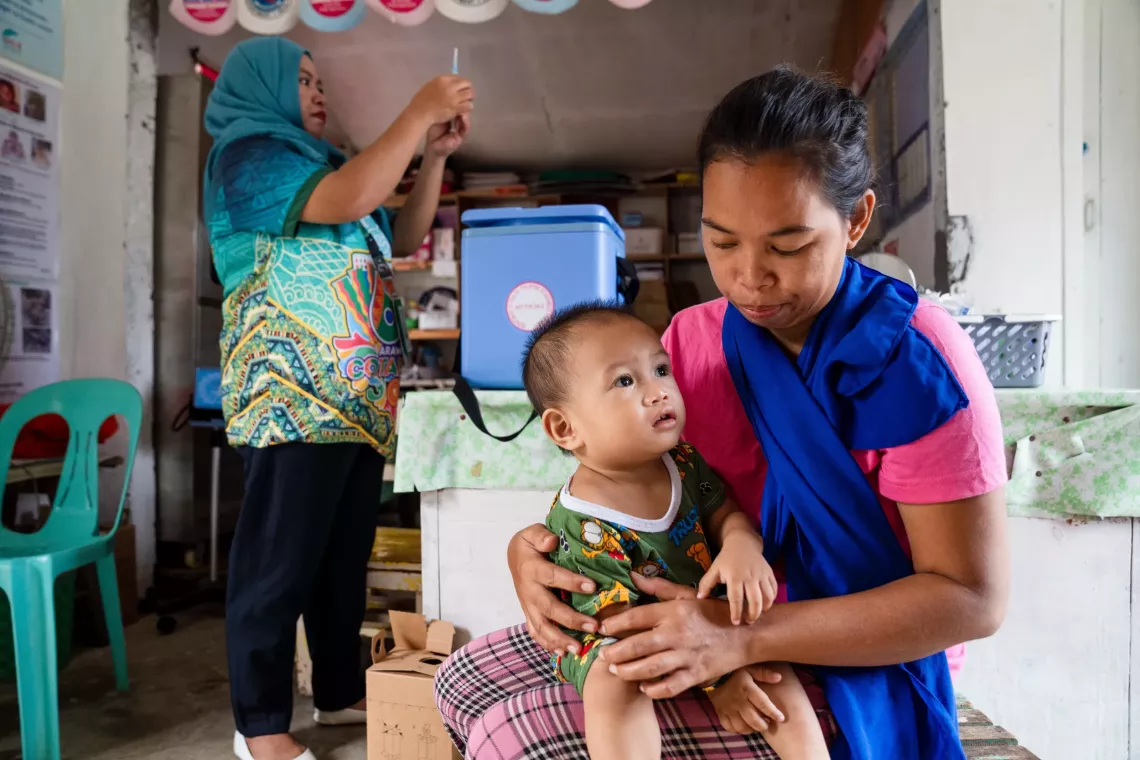
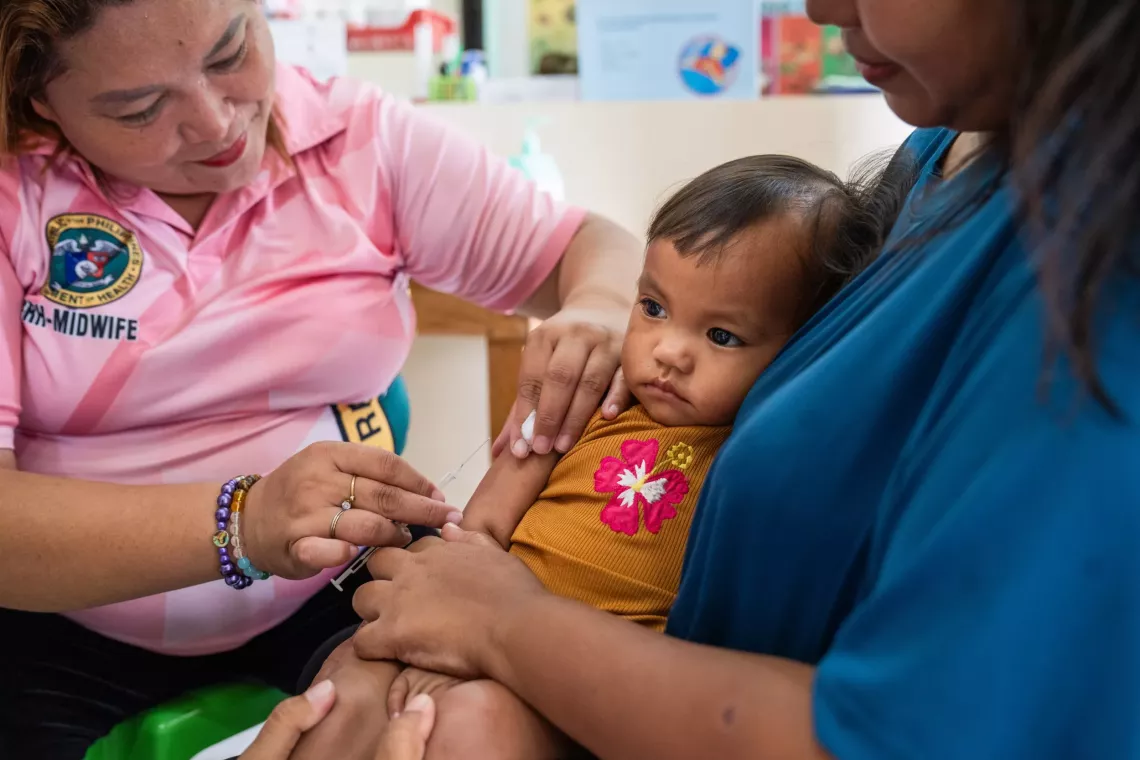
Sarah and her baby Alfaner wait while the midwife prepares the shot, making cooing sounds to keep Alfaner distracted. Tarhata places a needle on Alfaner’s thigh and gently plunges. The baby lets out a small cry as he receives a dose of MMR, a vaccine that has saved millions of children from life-threatening diseases like measles, mumps and rubella.
With some cajoling, Alfaner’s tears quickly turn to smiles as they ready to go home.
For Tarhata this will be the first of many vaccine shots she delivers today.
Supplying communities with vaccines goes beyond procuring and transporting doses. It takes a chain of people – health workers, parents, government officials, community and youth leaders – dedicated to reaching every child.
Vaccines: Still saving lives
Every year, millions of children die from illnesses that are preventable by vaccines. In many parts of the world diseases that were once eliminated – like polio and measles – are sadly reemerging.
In 2024, the Philippines experienced a measles outbreak, with cases reported across the country and a significant portion occurring in the Bangsamoro, an autonomous region in the south, home to 2.5 million children. This remote region is also the poorest and has the lowest vaccine rate in the country. To counter the outbreak, the Philippines Department of Health implemented an immunization drive – the Measles Outbreak Response Initiative (MORI).
Health workers and community members, supported by UNICEF and partners, came together to reach every child with critical vaccines. From affluent neighbourhoods near Manila to remote villages in Mindanao, these heroes are on the front lines of immunization helping to protect children and save lives.
Theresa, the midwife
“I love this work.”
- Theresa Ebrado
Theresa Ebrado is a registered midwife who manages Tomantaka Main Health Centre in Cotabato City. She is assisted by a team of health workers.
During the measles outbreak, Theresa was responsible for sending vaccination teams to 12 neighbourhoods in their barangay (village). Theresa recalls, “We began with loudspeaker announcements: We are conducting a measles vaccination drive for children between 6 to 59 months!”
Each team consisted of a vaccinator, a mobilizer, and a recorder. They extended their services to anyone in need, regardless of location.

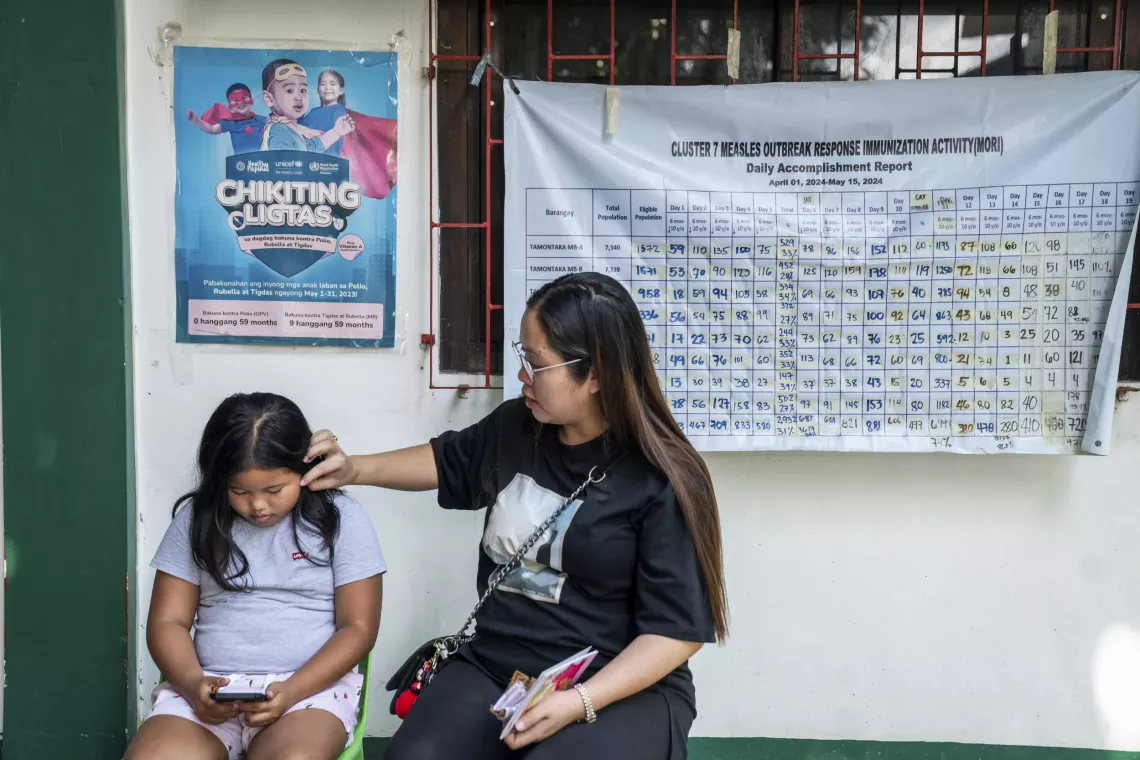


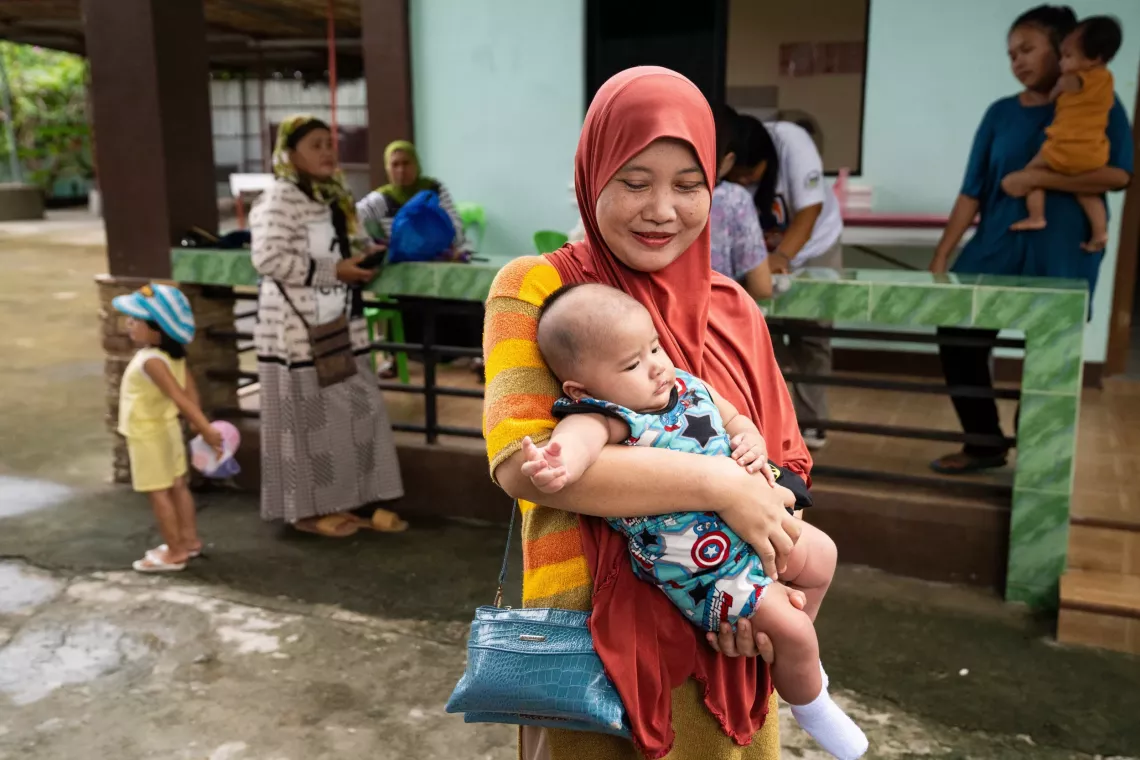
Today at Tomantaka Main Barangay Health Centre in Cotabato City, the health workers prepare for parents and children who arrive early for vaccinations.
Primary health services in Bangsamoro are managed by midwives like Theresa who often take on tasks traditionally done by nurses and doctors. They provide health services and promote immunization and early childhood care across communities. “Midwives are also doctors. Because there are no doctors here. We consult and we refer,” says Theresa.
Teresa's dedication to community health is inspired by her mother, also a midwife. All six girls in her family became midwives. “The community trusts me deeply, even seeking my help in the middle of the night. I love this work,” she says with tears in her eyes.
Jessilin, a mother of three
“I was afraid of losing my children.”
- Jessilin Baraguir
Jessilin Baraguir, a 22-year-old mother of three, lives in a remote part of Bangsamoro with her husband and extended family. The area is difficult to access, and even health workers rarely visit.
When her eldest son got sick with measles, she and her husband took him to the regional hospital, where he stayed for seven days. Upon returning home, their other two children also showed measles symptoms and were diagnosed.
Thankfully the children recovered, but the experience helped to spark an important change for the family. After conversation with the health centre staff, Jessilin and her husband decided to get all three children caught up on their routine childhood immunizations.

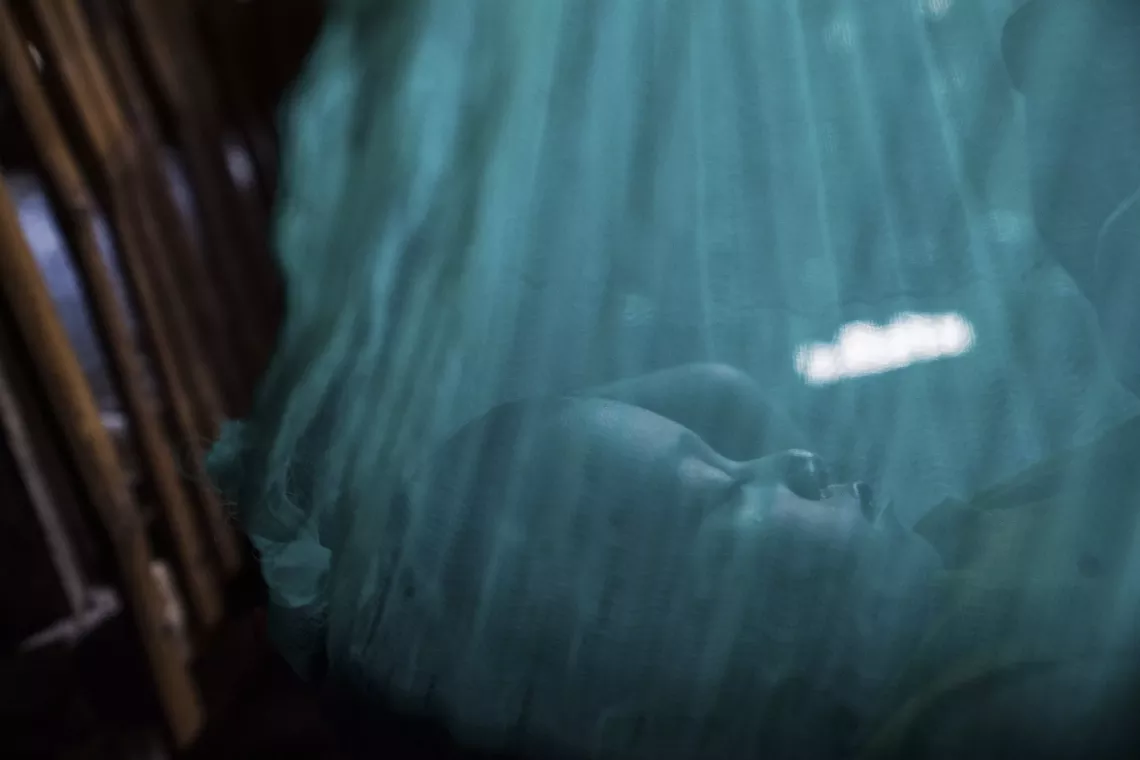

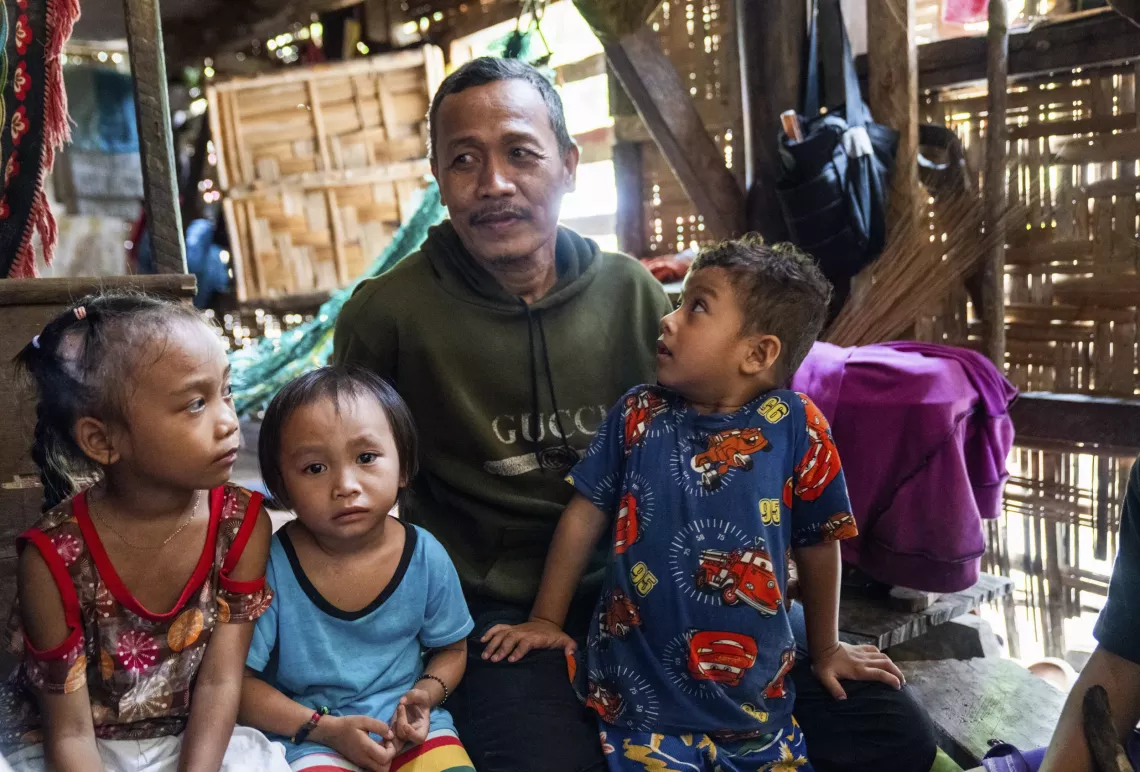

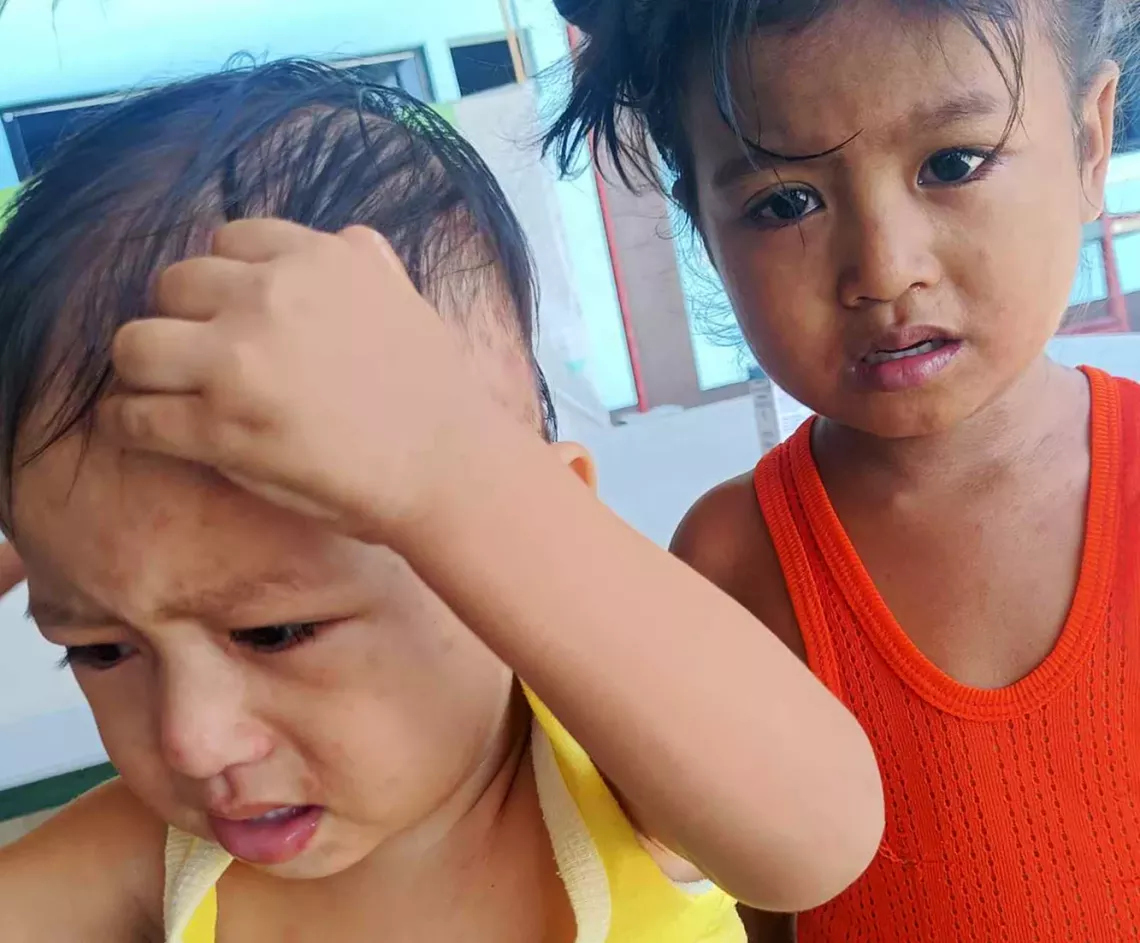
Jessilin now understands the importance of vaccination and feels more secure knowing her children are protected. “I was afraid of losing my children,” she shares.
Vaccines are safe and effective. They are the best way to prevent children from getting sick with measles and spreading it to others.
The truth about misinformation
Despite the safety of vaccines, religious beliefs and concerns about side effects are common reasons for vaccine resistance. Parents may be scared to give their children vaccines because they falsely believe it can cause disease. Others simply resign to measles as ‘the will of god’, putting young children at risk of severe health complications from measles infection.


Social media adds to the misinformation, spreading unwarranted fears and conspiracies about vaccines. Misinformation adds a huge amount of complexity to the efforts of healthcare workers to protect children.
Measles vaccines have saved nearly 94 million lives over the last 50 years globally – more than any other vaccine in the Expanded Programme on Immunization.
A community of heroes
City health offices across Bangsamoro support the efforts of local health workers by providing transportation for mothers who cannot afford the fares and by promoting information campaigns.
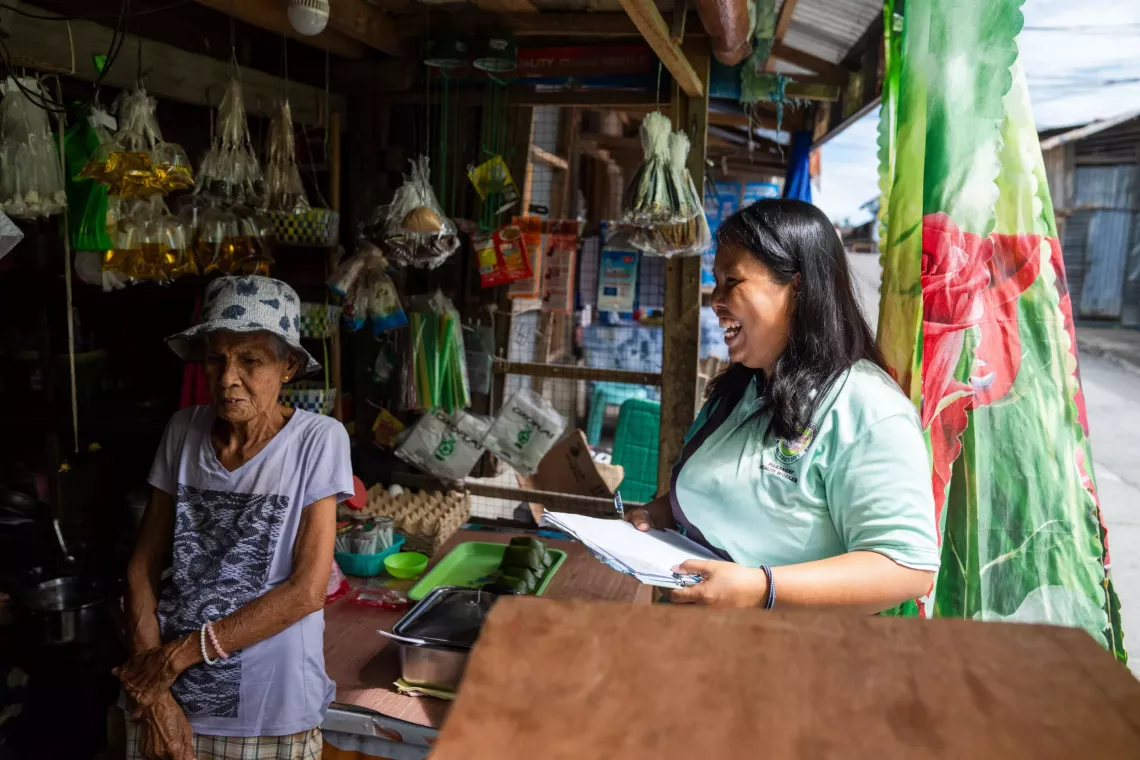
For the measles outbreak, the target in Cotabato City was to vaccinate 3,100 children aged 6 months to 10 years. Through the combined effort of many, around 3,700 children got the shot. “It is important for the barangay to have 100% vaccination coverage to prevent future problems,” says Datu Wawi Sema, the regional health officer.
Sema expresses gratitude for the health workers and their efforts in a successful vaccination drive, “They are the real heroes of this campaign.”

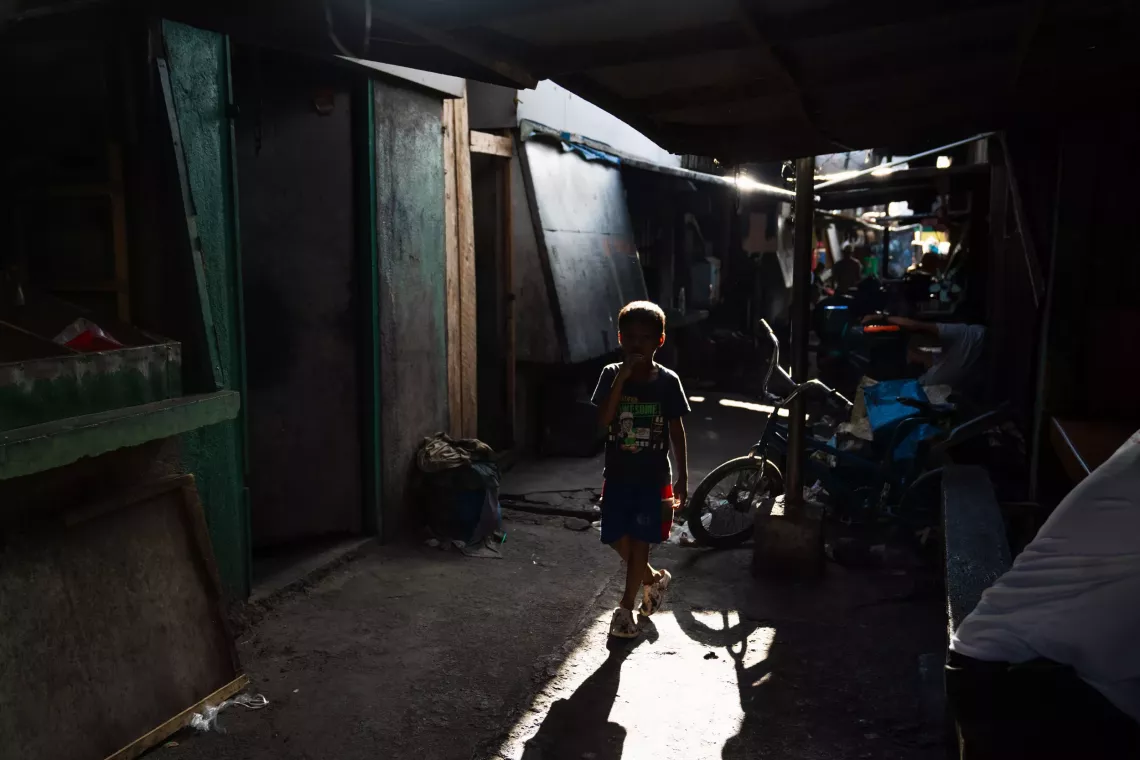

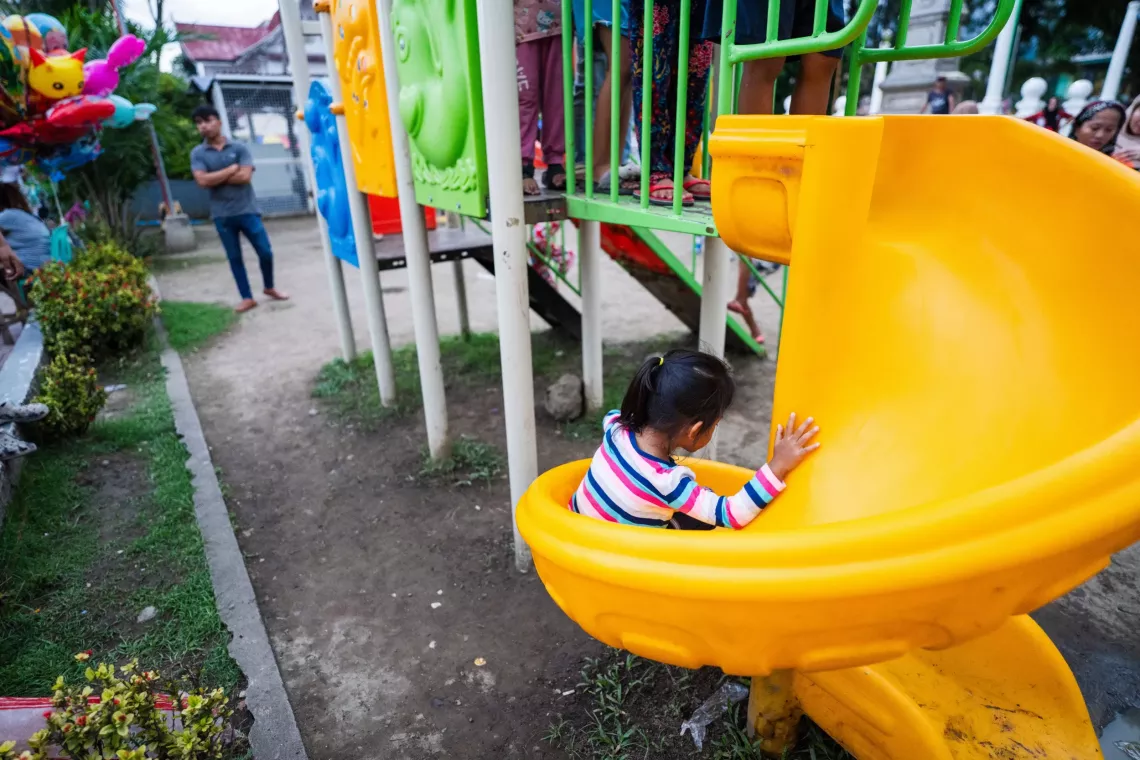
Aside from cultural and religious issues, the COVID-19 pandemic caused fear among families that is still contributing to vaccine hesitancy.
“To address these issues we used loudspeaker advocacy, known as recorida: where a car with a loudspeaker goes around the barangay announcing health information,” says Haris Ali, a chief medical officer for one of the districts.
They also work with dozens of religious leaders to help tackle vaccine hesitancy in the community.
Mangi, the imam
Among the influential community members are religious leaders like Mangi Salik, imam of a local mosque, whose daily routine involves preparing loudspeaker announcements and visiting many barangays to promote vaccination.

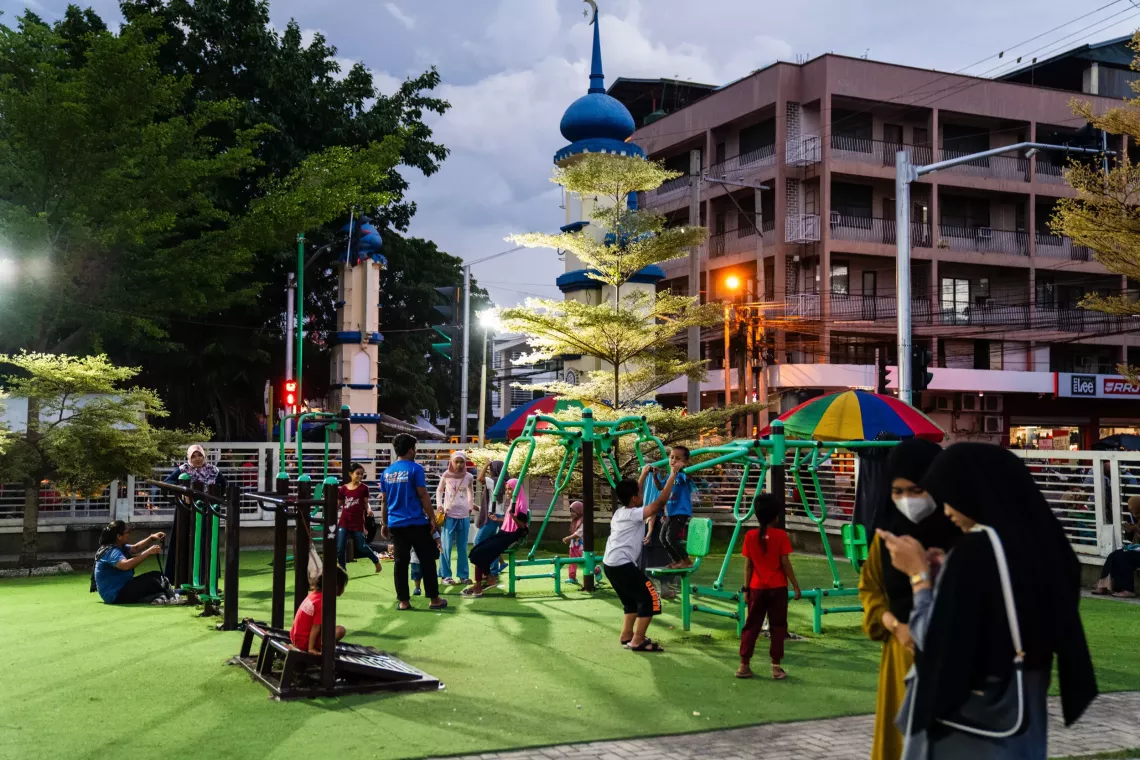

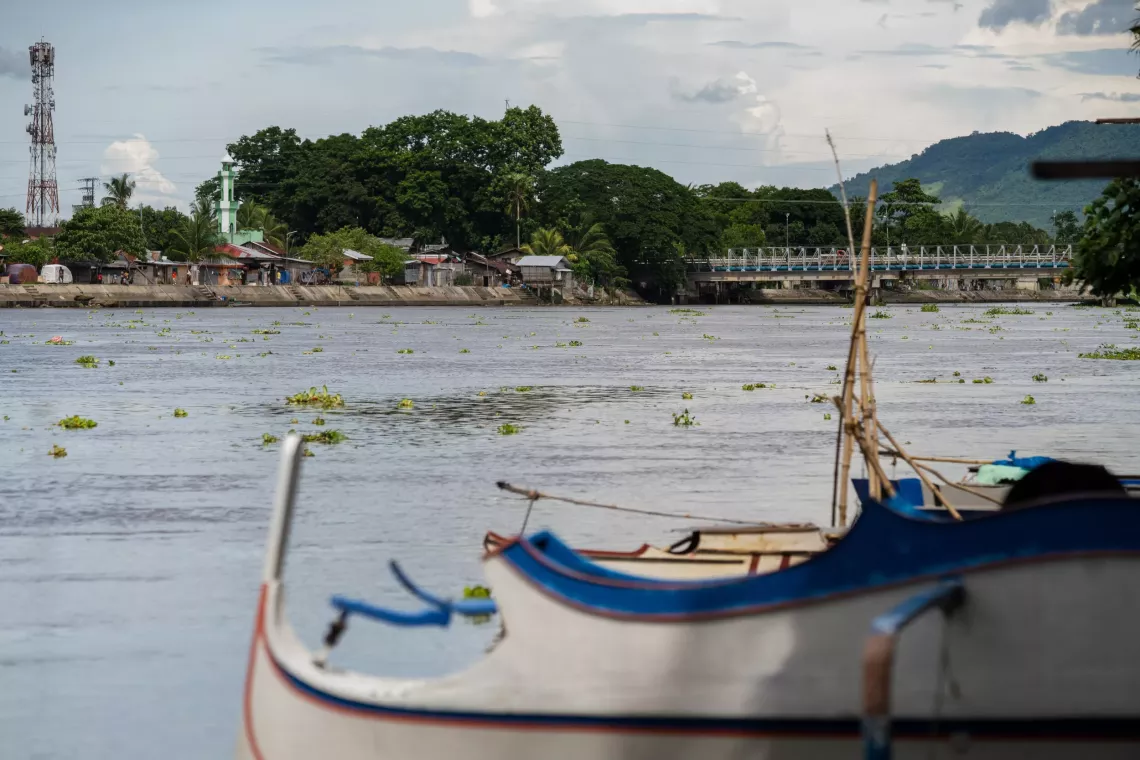
Imam Salik delivers customized sermons, highlighting the importance of vaccination and health. He encourages parents to vaccinate their children against measles and vouches for their safety citing the World Health Organization.
"The [measles] vaccine is safe for everyone."
“The Quran does not prohibit vaccination, and it is not considered haram (forbidden) in Islam. Even during Ramadan, it is important to vaccinate children against measles,” he states as he prepares for his next sermon at the local mosque. “My children are all vaccinated,” he says, adding “otherwise, how can I tell others to?”
Gen Z on the frontlines
Youth volunteers, activists and young influencers play a critical role in times of emergency and crisis. The measles outbreak was no exception.
Jannah Datuali is a law student who also works as a public information officer with the Bangsamoro Information Office. During the pandemic, Jannah used her social media platform to help bring attention to affected areas. One of her videos received over 100k views. Jannah ensures she provides accurate information on social media, verifying facts and correcting any mistakes immediately.

Jannah hosts a live TV news programme from a studio located in the Information Office. Apart from covering the local news, she uses the platform to spread information about public health and make critical public announcements during emergencies like the measles outbreak. “It’s hard to encourage people to vaccinate because there's still a lot of myths with regard to immunization,” she says. But “Gen Z …” she adds, “they are very active and have strong knowledge in these matters.”
"I take it very seriously ensuring I give the right information because social media can quote you in a very malicious manner."
Kristin Sandoval and Luster Añabieza are founding members of the youth collective Galing LNC, a non-profit that advocates for immunization and youth activism in Cavite City, just outside Manila.

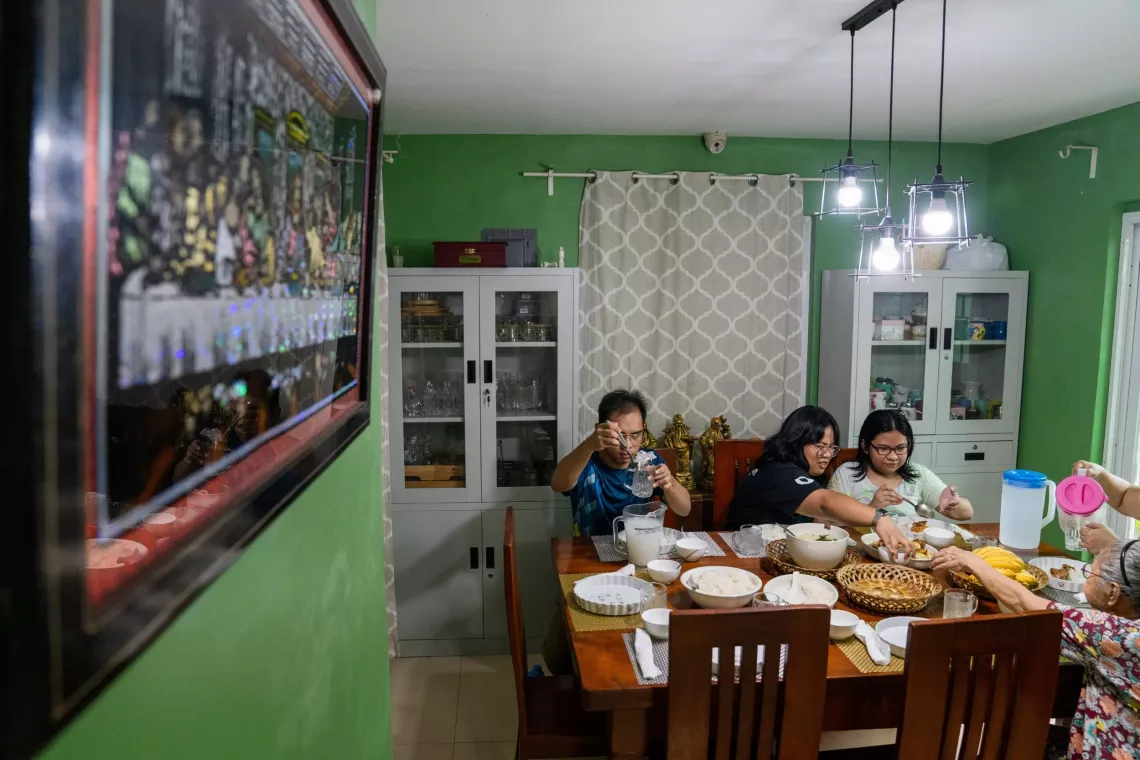

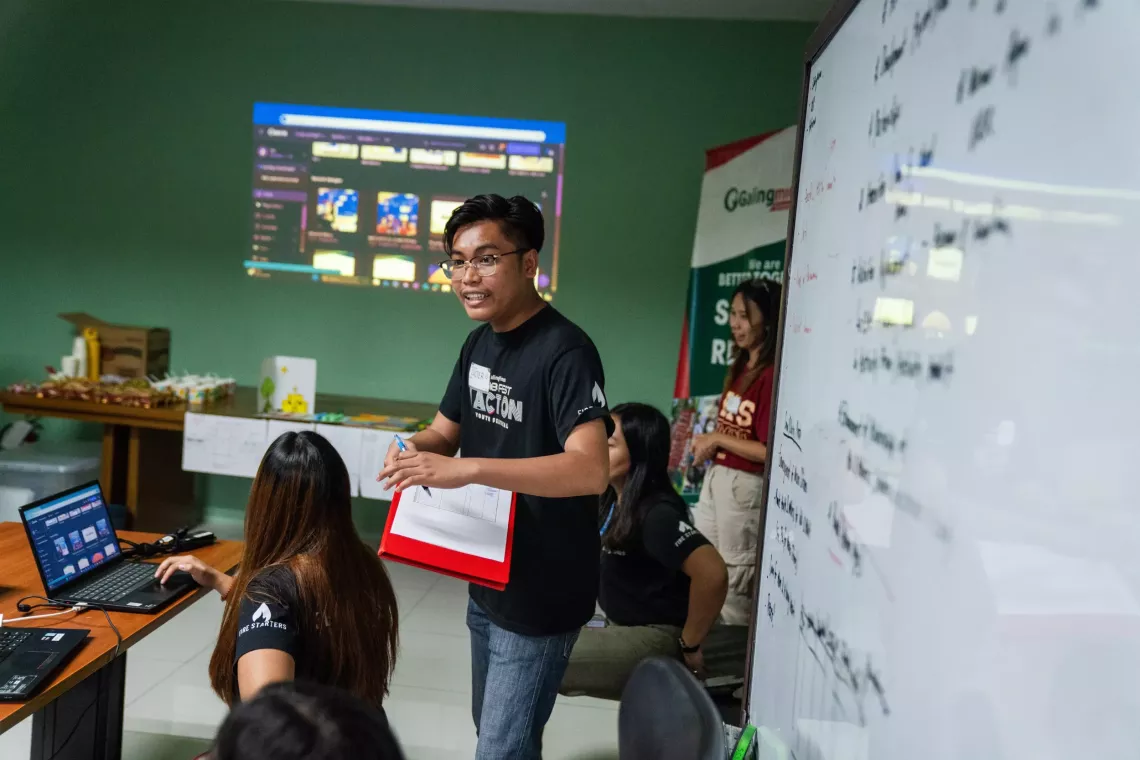
Kristin is a diplomacy and international affairs graduate who balances academic pursuits with extensive community work. At Galing LNC, she focuses on content development, training and mobilizing youth. “It's part of my identity, a part of who I am. With all the heavy responsibilities that I have, I cannot just let go of the community – this is my passion,” she says of her work.
"It's a part of who I am."
Luster is a biology graduate involved in organizing and submitting proposals for health grants, including routine immunizations. “The biggest issue for the youth in the Philippines is the lack of immunization and [the spread of] misinformation,” he says.
Luster began volunteering with UNICEF after the Bohol earthquake in 2013. As the measles outbreak spread in Manila, he was quick to contribute his time. “Volunteering has been my life’s goal and passion,” he says.
Every shot counts
On an early morning in Lancaster City, just outside Manila, Kristin and Luster are supporting healthcare workers from the local barangay. The team is pitching a tent to welcome residents for routine immunizations.
Today they are offering polio, pentavalent (for diphtheria, pertussis, hepatitis B, tetanus, and HiB disease), measles and HPV vaccines.


Emma Ubaldo lost her sister to cancer two years ago. Today she has brought her granddaughters to the vaccine camp, for the HPV vaccine that can protect against up to 90 per cent of cervical cancer cases. “I had to get them vaccinated to keep them healthy and safe,” says Emma.
“I had to get them vaccinated to keep them healthy and safe.”
The mid-summer sun beats down as they serve a trickle of children and their families. After a few hours with about 15 kids vaccinated, two health workers Josephine Macapanas and Gloria Mandawe set off into the neighbourhood, joined by youth mobilizer Luster, going door-to-door with the oral polio vaccine. He and Gloria pour over their record sheets indicating the homes with infants.
Door-to-door visits are demanding for health workers. They require tenacity and patience. It can take multiple visits, sharing information and building trust, before a single shot is administered.

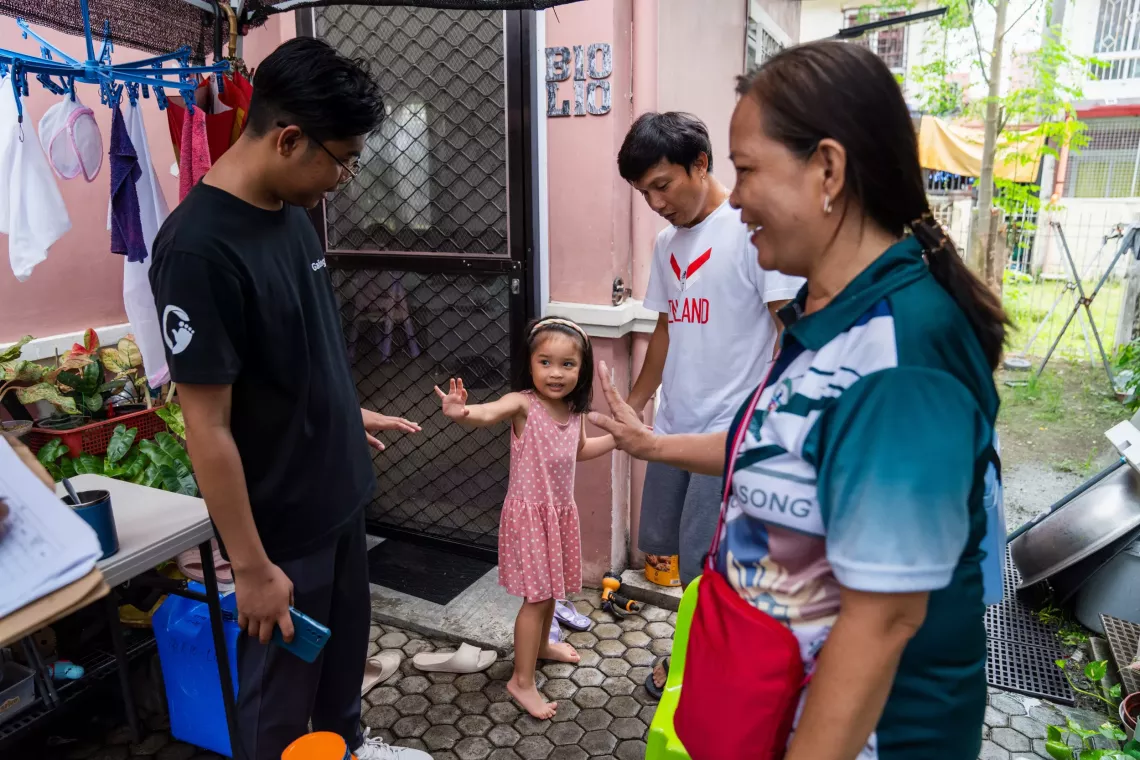

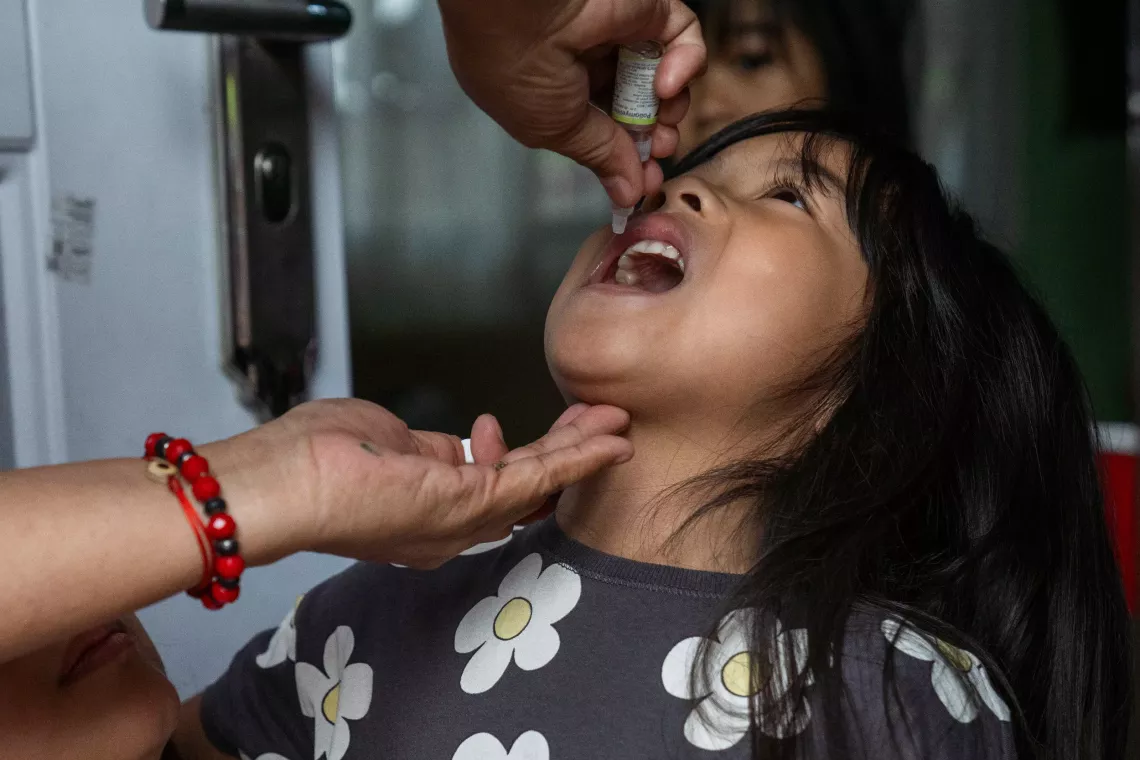
Today, they are visiting baby Liah’s house for the third time. Her mother has finally decided to vaccinate her following their pediatrician’s advice. This will be Liah's first shot of the oral polio vaccine.
After administering the vaccine, Gloria celebrates this long-awaited success with a loud cheer.
The success of the measles outbreak response in the Philippines is the culmination of many hands coming together across provinces and districts for one shared purpose. To reach every child, no matter where they live, with life-saving vaccines.
Immunization for all
Vaccines are one of humanity’s greatest achievements. Over the last 50 years, vaccines have saved 154 million lives, about six people every minute. They have helped us go from a world where the death of at least one child in every family was expected, to one where every child has a chance to survive, grow and thrive.
UNICEF supports the Philippines’ efforts to integrate immunization into its broader health strategy so that every child benefits from the power of vaccines. According to national estimates, the country has made incredible progress, reducing zero-dose cases – children who have yet to receive a single vaccine – from 1 million in 2021 to 163,000 in 2023.
With continued investment, a future where every child is protected by life-saving vaccines is humanly possible.
Photographer: Amanda Voisard; Editor: Supreet Mahanti. In collaboration with UNICEF Philippines.
Thanks to Lely Djuhari, Chief Advocacy and Communications; and Marge Francia, Advocacy and Communication Specialist.
Produced with the support of the United States Centers for Disease Control and Prevention.


