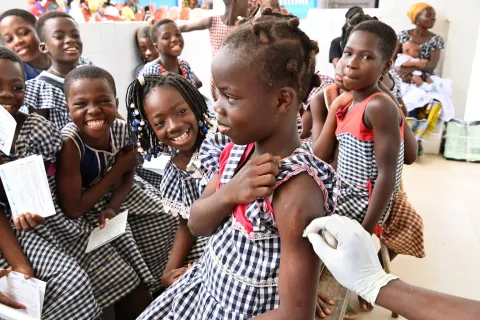
Immunization for all

A future where every child is protected by life-saving vaccines is humanly possible.

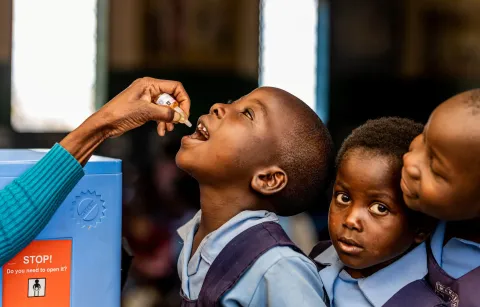
A boy in Madagascar tilts his head back to receive polio vaccine drops from a health worker.
UNICEF/UNI677242/Andriantsoarana
Reading time: 4 minutes

Every year, millions of children die from illnesses that are preventable and treatable.

New and reemerging diseases – like mpox, polio and measles – are threatening the lives of children around the world. And, the most vulnerable children, those living in conflict or in the world’s poorest places, are suffering the most.

No matter where they are, all children have a right to health.

A dose of good news: Vaccines save lives.

Childhood immunizations play a critical role in helping children to survive and thrive.

In the last 50 years alone, vaccines have saved 154 million lives – that’s six people every minute, for five decades.

Together, we have made incredible progress. Simply by being immunized, you help to protect others from the spread of disease, just as they help to protect you. 

We can realize a future free from diseases like polio, cervical cancer and measles. A future where no child dies from illnesses that we know how to prevent.

Join us! Let’s show the world what’s #HumanlyPossible.

What needs to happen

UNICEF is calling on governments and partners to act.
  1. Ensure that all children have access to vaccines. To help boost vaccine coverage and ensure that all children have the protection they need to survive and thrive:
     
  2. Strengthen immunization systems to ensure all children receive essential, lifesaving vaccines.​ That means training and supporting community health workers, building trust in health institutions, creating stronger supply chains and building more vaccination sites. 
     
  3. Prioritize investments in immunization. Continued flexible funding from governments, businesses and individuals is critical to realizing improved health outcomes for all children, now and in the future.

Impact and stories

Gaza's Silent Threat

The mission of a lifetime: Protecting children from polio during war

Watch now

Why vaccines matter for children

10 facts about vaccines, child survival and global progress.

Read now

The lengths to which health workers go to reach every child

Vaccines can prevent disease outbreaks now and in the future

See now

Generations unite in Nigeria’s HPV vaccine campaign

A community health mobilizer in Nigeria is combating vaccine misinformation and building trust, one family member at a time.

See now

HPV protection in a single dose

Human Papillomavirus (HPV) vaccines can protect against up to 90 per cent of cervical cancer cases, and when combined with screening and treatment, play a central role on the path to eliminating this deadly disease.

More than 140 countries have already introduced HPV vaccines into their national immunization schedules, either in a series of two shots or through a single dose. But more coverage is needed.

Millions of women and girls, often those living in the world’s poorest countries, still lack access to the vaccines, screening and treatment that could save their lives.

Single-dose HPV vaccines can help boost vaccine coverage.

Single-dose HPV vaccines reduce the burden on families by requiring only one visit to a health centre, rather than two. They also help to increase vaccine coverage. In the majority of countries that have already implemented single-dose HPV vaccines, coverage has grown 8 per cent on average.

Decisive action is needed to reach all girls. UNICEF is calling on governments to introduce or scale-up single-dose HPV vaccines.


A girl holds up her immunization card after receiving her HPV vaccine in Katsina, Nigeria. A
UNICEF/U.S. CDC/UNI618553/Amanda Voisard A girl holds up her immunization card after receiving her HPV vaccine in Katsina, Nigeria.
A young boy receives vaccines during a measles and rubella immunization campaign in Aden, Yemen. A
UNICEF/UNI444821/ALfilastini A young boy receives vaccines during a measles and rubella immunization campaign in Aden, Yemen.
Held by their mother, a baby receives a routine vaccine. Held
UNICEF/UNI670961/Dejongh A baby receives routine vaccinations and a first dose of malaria vaccine at the Anonkoua Kouté Health Centre in Côte d’Ivoire.

Protecting more children from measles

Measles vaccines are the best way to prevent children from contracting measles and spreading the disease to others. Measles and measles-rubella vaccines are often purchased in ten-dose vials. Once opened, clinics only have a few hours to administer the vaccines to ten children. Any unused doses will expire and must be thrown away.

But what happens if only one or two children visit the clinic for a measles vaccine?

Healthcare workers are often hesitant to open a new vial for fear of wasting the extra doses. Too often, these children simply miss out. They are left unprotected and at risk of contracting and spreading measles.

A switch from ten-dose to five-dose vials can help increase measles vaccination coverage and reduce wastage.

Healthcare workers are more likely to open five-dose vials, even to vaccinate one child, knowing that there will be less wastage.

What about the costs? At current prices, the cost per dose for a five-dose measles vial would be the same as a ten-dose vial, if the switch reduces wastage to 25 per cent. Countries like India and Zambia, along with dozens of others, are proof that this straightforward switch can help to protect more children.

UNICEF is calling on governments to make the switch to five-dose measles vials and reach every child.


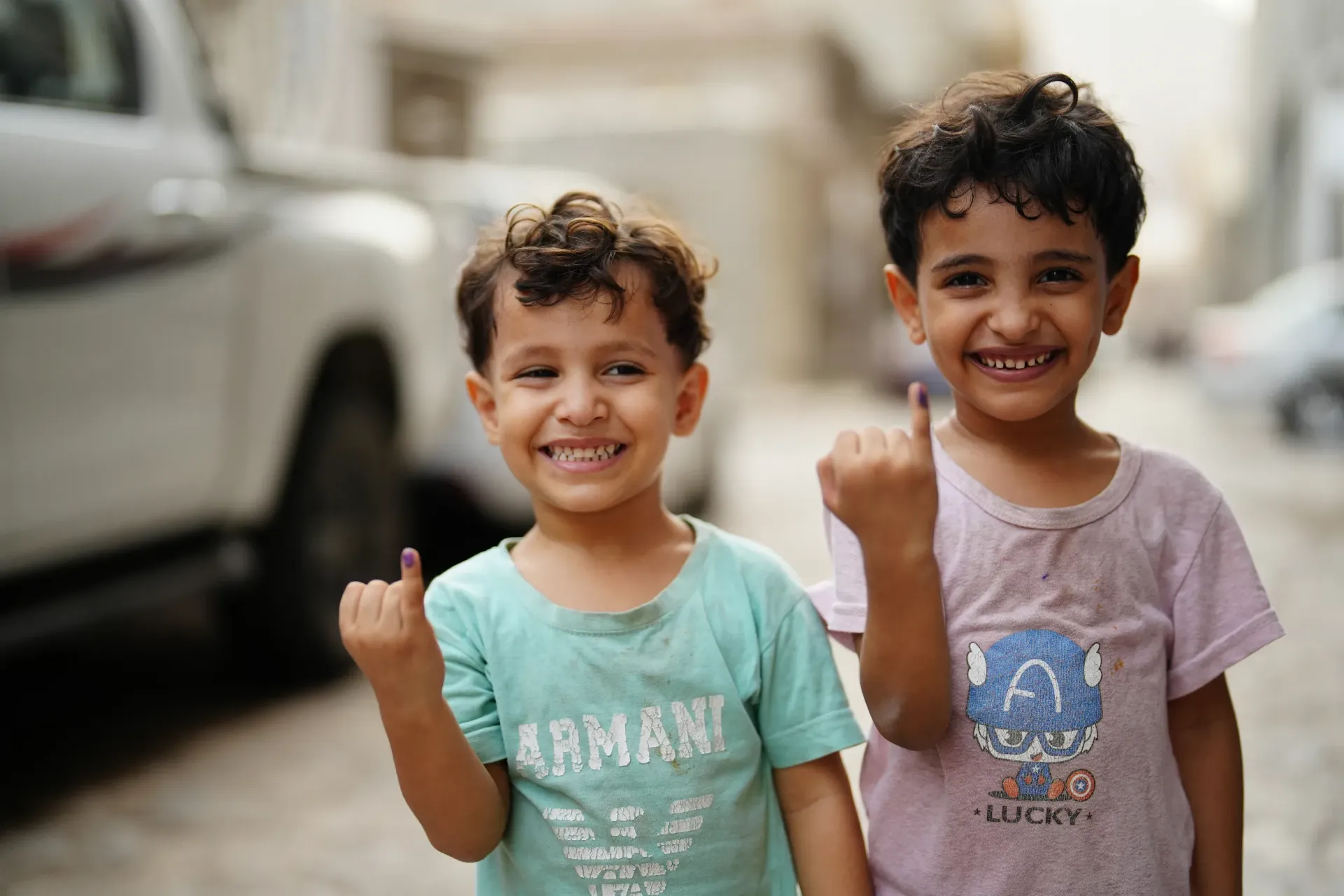
A boy in Madagascar enthusiastically shows off the mark on his left little finger confirming he has received his polio vaccine. A
UNICEF/UNI592345/Andriantsoarana A boy in Madagascar enthusiastically shows off the mark on his left little finger confirming he has received his polio vaccine.
A child receives an oral polio vaccine in Nepal. A
UNICEF/UNI629065/Malla A health worker administers an oral polio vaccine to a child in Kadaghari, Bhaktapur district, Nepal.
Two five-year-old children in DRC hold up red cards to indicate their polio vaccination. Two
UNICEF/UNI551212/Mukama In the Kwango Province of the Democratic Republic of the Congo (DRC), five-year olds Makiese (left) and Madinu (right), brandish red cards after receiving polio vaccination.

Stop polio outbreaks

Polio is a highly infectious disease that can cause irreversible paralysis and can have potentially deadly consequences for young children. It is also entirely preventable. 

Thankfully, 3 billion people have been immunized against polio since 1988, bringing the disease to the brink of eradication. But the fight isn’t over.

Low vaccination rates are creating opportunities for polio outbreaks, including in countries that have been polio free for decades. Polio knows no boundaries and spreads fast – an outbreak in any country puts children in every country at risk.

We can stop outbreaks and eradicate polio.

Ending polio and improving children’s survival starts with making sure all children have access to vaccines, even those living in remote, fragile and conflict-affected areas. Investments in polio campaigns and routine immunization are more critical than ever to ensure every child's right to health, and to build stronger health systems for the future.

UNICEF is calling on governments to take urgent action to stop polio outbreaks wherever they are, to reach all children with life-saving vaccines, and to prioritize investments in immunization.

 A UNICEF-supported vaccinator administers a polio vaccine to a baby in DR Congo.