2023 in Review
A message from UNICEF’s Executive Director on a new year and new hope for children
Available in: English Français Español العربية 中文 русский
From conflicts to climate change, this year provided more proof that children increasingly live in a world hostile to their rights. Yet UNICEF continued to deliver for children and young people, with a staff of over 17,000 working across more than 190 countries and territories.
In advance of our Annual Report to be released in May, we are sharing a message from our Executive Director, reflections from youth advocates around the world, along with photos and a collection of stories that highlight our impact and reach for every child. As we move into 2024, we reaffirm our commitment for the fulfillment and protection of child rights.
A new year and new hope for children
With the new year fast approaching, I find myself thinking a lot about the concept of hope – both the power of having it and the despair that can consume us when it is gone. Hope can drive us forward in the face of seemingly insurmountable challenges. It can be all that stops us from giving in to doubt and insecurity. And on a base level, hope can be the one thing that helps us as human beings to survive against even the longest of odds.
Hope is the foundation on which the organization I lead, UNICEF, has been built. It is the hope that we can create a world in which the rights and well-being of this and future generations of children are protected and upheld. And hope is what fuels our optimism that this mission can be achieved.
But while hope is tremendously powerful, it can also be fragile, especially when it crashes up against the harshest realities our world has to offer. And this year has been especially brutal for children across the globe.
We estimate, for example, that nearly a quarter of the world’s children are living in or fleeing from conflict zones. This includes protracted conflicts like those in Burkina Faso, the Democratic Republic of the Congo, Ukraine and Yemen, which have unleashed waves of child rights violations and years of suffering.
But 2023 also saw the rise of new conflicts. Violence between armed forces and groups in Sudan has driven at least 6 million people from their homes, more than half of whom are children, making it the largest child displacement crisis globally. Meanwhile, Gaza has become the most dangerous place in the world for children, with nearly 6,000 killed in less than three months of war.
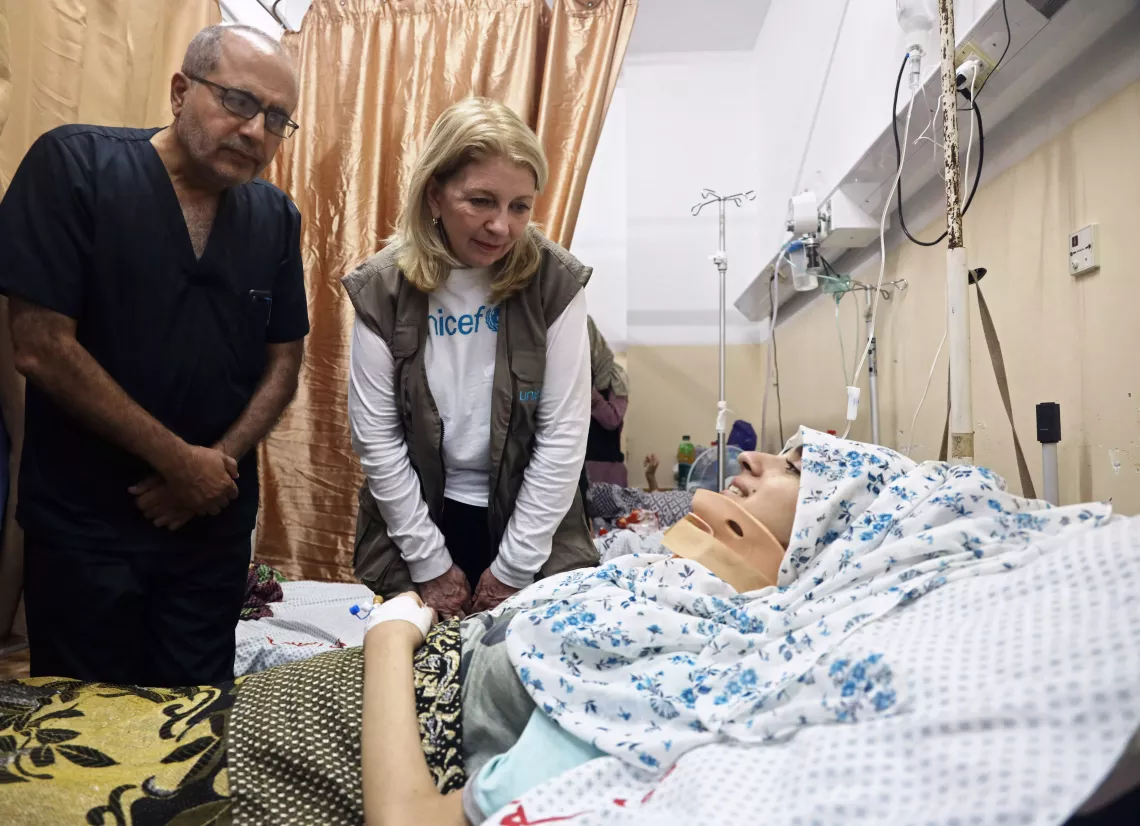
Behind each of these numbers is a story of unimaginable child suffering, of rights violated and rights denied. I have met some of these children during my travels with UNICEF. Children like Fatima – a 16-year-old girl who I visited with recently in a hospital ward in Gaza. She was badly injured when her neighborhood was bombed in October, and the doctors have told her she will never walk again.
The suffering of these children is an indictment of a world that has failed to protect them from the dangers of war.
Making matters worse, in 2023, these new and protracted conflicts have coincided with other devastating crises. These include disasters like the catastrophic flooding in Libya or the earthquakes in Afghanistan and Morocco, disease outbreaks like the cholera epidemic in Haiti and food insecurity such as that experienced in the Horn of Africa. Climate change also continued to wreak havoc on young lives this year by causing severe droughts, heatwaves and more intense storms.
Of course, such crises do not occur in a vacuum. Each has the potential to amplify the impacts of the others, exacting ever greater tolls on children and the systems they rely on.
The consequences of this are plain to see:
- The number of children living in multidimensional poverty has increased by 15 per cent to 1.2 billion globally in just the last three years
- Nearly 600 million children are not meeting minimum reading standards
- 35 million children are suffering from wasting
- Each day, nearly 14,000 children under the age of five are dying from largely preventable causes like diarrhoeal diseases and malaria
These are dark times, especially for children, which have left hope in short supply for many of us. But as Dr. Martin Luther King said, “I know, somehow, that only when it is dark enough can you see the stars.” I believe this to be true. I believe that if we look hard enough, we can see the stars. We can see the signs of hope for children, showing us that we can make the world a better place for them.

In the last 20 years, for example, we have seen a dramatic reduction in child malnutrition globally – this includes a decrease in the number of stunted children by 55 million, or over one-third. Child immunization rates, which fell dramatically during the COVID-19 pandemic, have rebounded with global immunization services reaching 4 million more children last year than in 2021. Meanwhile, we have reached the near universalization of children’s access to primary schooling.
And just two weeks ago at COP28 in Dubai, representatives from nearly 200 countries reached a landmark agreement to transition away from fossil fuel consumption. For the first time ever, the COP recognized the unique and disproportionate impacts of climate change on children's health and well-being, proposing an ‘expert dialogue’ on this issue.
UNICEF’s achievements for children in 2023 also give me hope.
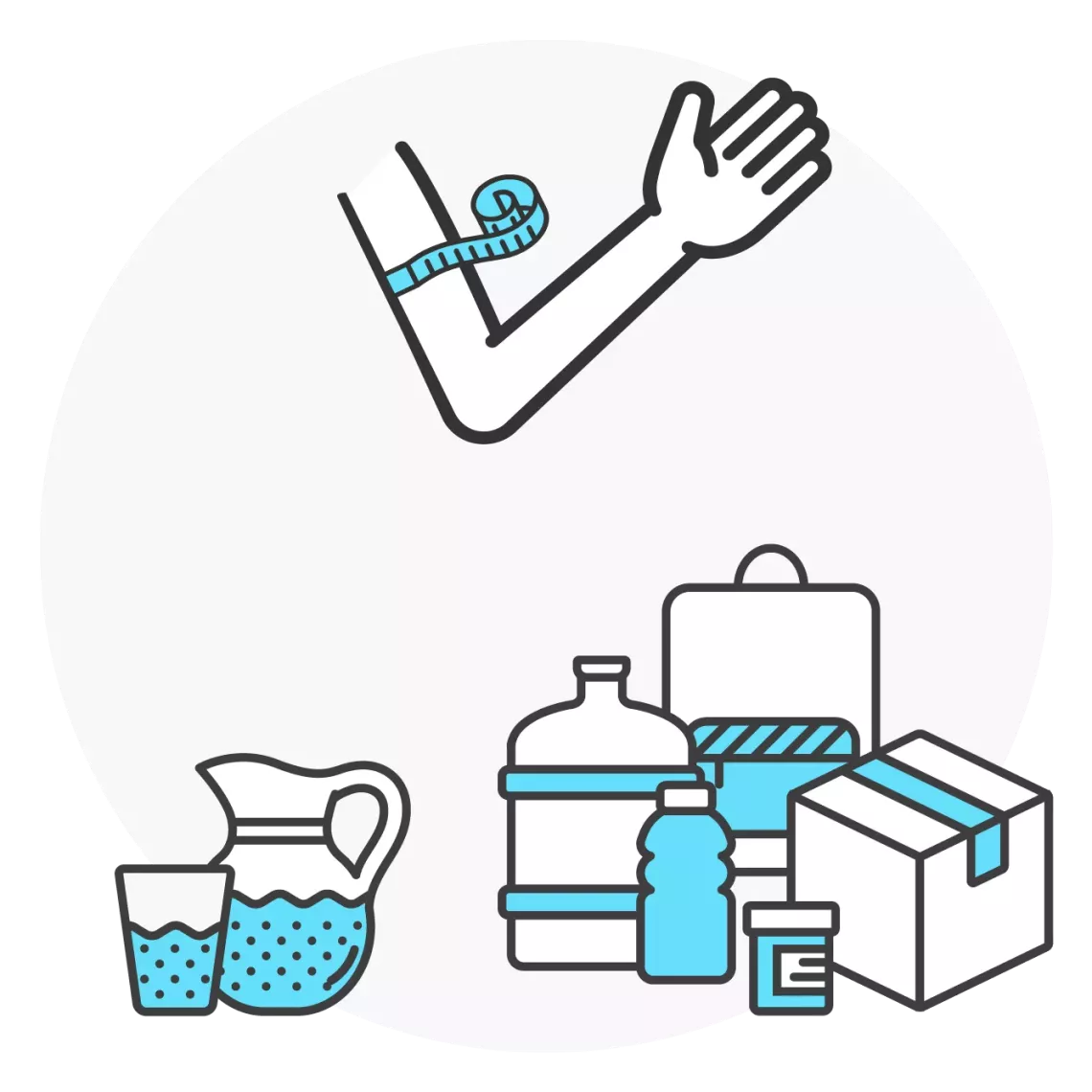
In humanitarian settings, this included reaching more than 23 million people with safe drinking water and vaccinating 27 million children against measles. UNICEF and our partners also provided more than 150 million children with services for the early detection and treatment of child wasting in high-risk settings.
These results tell me that when we prioritize the rights and well-being of children, there is hope. And they show me that when we focus on reaching the most vulnerable and disadvantaged children – children living in poverty, children affected by conflicts, children with disabilities, and girls – we can create better conditions for all children.
If this year was any guide, 2024 will not be easy and there will be more challenges ahead. But we can choose to be courageous. We can choose to make bold commitments and to take decisive actions to keep children safe. And we can invest more in the systems and services that children need for their healthy growth and development.
I believe that children are the stars shining through in the night sky, and that they are our best hope for creating a better and more peaceful world. Let us be better and do more for them in 2024 and beyond.
Reflections from youth advocates on 2023
Explore the reflections from youth advocates on 2023
The year 2023 brought numerous conflicts and crises that resulted in the disruption of education for many children, particularly girls, and it is crucial for world leaders to recognize the impact of these events on the future of these children. As we move into 2024, it is essential for leaders to work towards preventing conflicts and providing support for children who have been affected, ensuring that they can access education and rebuild their lives.
What I ask of those in authority and leaders is to make peace. Enough wars and enough tampering with children’s lives. Leaders should seriously work to make the world safer, which children do not have to leave in fear and see their dreams burning in wars...Leaders must be open and willing to learn and adapt to emerging challenges in a rapidly changing world.
We’ve seen a number of young people engaged this year. But we can still do more in 2024. We need to engage more young people – including children – in our areas of work. International institutions and local governments need to engage more young people and develop platforms for young people to come and share their perspectives...Peace is something that every child desires.
[In 2023] I am very happy that I could convey the voices of children and young people of Sudan during such difficult times at global events like the UN General Assembly...No matter how hard it gets we should not lose faith in ourselves and a peaceful future...World leaders should not forget that we are all humans and therefore we all have equal rights. Every child deserves to be protected and educated regardless of race, color, gender and religion.
UNICEF works to ensure that every child, including adolescents:

Survives and thrives

Learns and acquires skills for the future

Is protected from violence, exploitation, abuse, neglect and harmful practices

Has access to safe and equitable WASH services and supplies, and lives in a safe and sustainable climate and environment

Has access to inclusive social protection and lives free from poverty
These stories and photos highlight some of UNICEF’s work, impact and humanitarian action in 2023:

UNICEF/UN0827403/Mulugeta Ayene
Arish Mahat, a mother of 10 children receives cash support to buy food and other essentials for her family. After the worst drought in decades hit the Somali region of Ethiopia, Arish lost her cattle and she is struggling to feed her family.
“I lost my herd of camels and cattle. I didn’t have any reason to stay, then I left to seek help.”
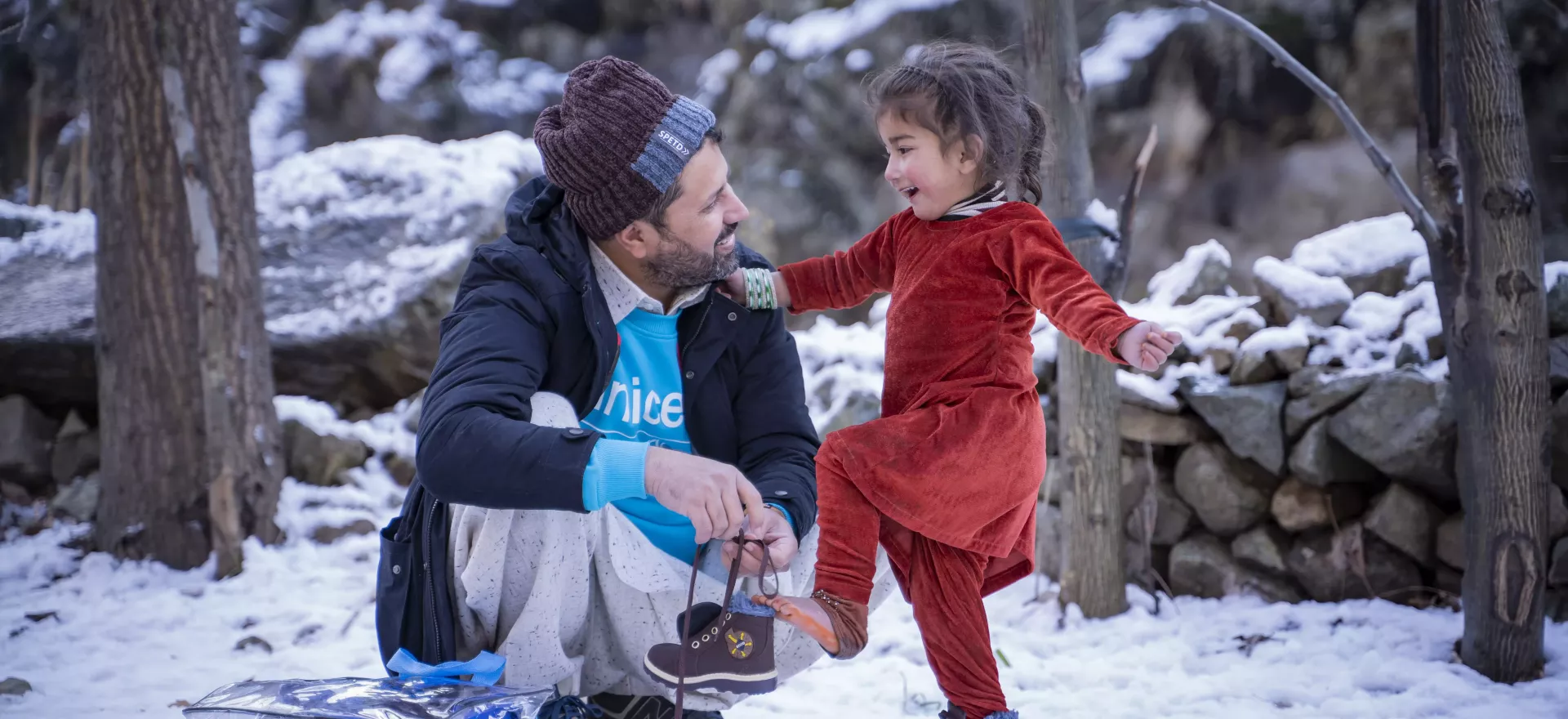
UNICEF/UN0779309/Asim Khan
A UNICEF Pakistan staff member helps 3-year-old Muskan put on new shoes received as part of the UNICEF-provided winter kit distribution in Sulool Daramdala village, Khyber Pakhtunkhwa Province. Floods destroyed over 2 million homes right before winter arrived. As families were left exposed, UNICEF distributed thermal blankets and winter clothes to displaced children and families.

UNICEF/UNI437345/Hazori
A group of children interact during an activity at a shelter in Hama Governorate. UNICEF and partners have been providing psychosocial support to families forced to flee their homes following a powerful earthquake in February.

UNICEF/UNI409689/Ho Hoang Thien Trang
A UNICEF Viet Nam’s staff member talks with a 13-year-old boy living at Social Patronage Center in My Tho Commune, Cao Lanh District, Dong Thap Province. He is among thousands of children without primary caregivers who live in institutional care in Viet Nam, putting them at risk of physical, emotional and social harm.
UNICEF Viet Nam works with partners to prevent unnecessary family-child separation and provide alternative care arrangements that are supportive, protective and caring.

UNICEF/UN0793560/pich urdaneta
A UNICEF staff member speaks with a woman at the self-care space in the Lajas Blancas Migratory Reception Station. UNICEF Panama established the self-care space to provide assistance and resources for migrants, many of whom have travelled here alone and have been exposed to risks including trafficking, sexual exploitation and abuse, as well as other forms of gender-based violence.

UNICEF/UNI430079/Ahmed Elfatih Mohamdeen
A UNICEF staff member speaks with a mother to mobilize participation in the Accelerated Child Survival campaign conducted by UNICEF and partners in White Nile state. Measles and malnutrition are on the rise in White Nile.
In response, over 1,000 frontline health workers and volunteers have delivered an integrated life-saving package of services, including measles immunization, vitamin A supplementation, deworming, treatment of malnutrition and nutrition screening to 40,000 children under 5.

UNICEF/UNI446429/Aleksey Filippov
Seven-year-old Adelina feeds a treat to a dog named Julie during a canine-assisted therapy class at a UNICEF Spilno Child Spot.
“Today, there was a class with dogs, I liked it very very much,” says Adelina, “They were very fun and playful.”
Amid the ongoing war, emotional support classes featuring dogs are helping children to overcome stress. Spilno Child Spots serve as bomb shelters as well as places for games and learning, and sometimes as temporary homes.

UNICEF/UNI456462/Josué Mulala
Seven-year-old Nkembo is held by a UNICEF staff member in Kinshasa after receiving a UNICEF school kit. More than 1,000 school kits were distributed to students of Matondo and Nkwamina Primary Schools as part of UNICEF DR Congo's Back to School campaign.
To prepare for this start of the school year, UNICEF collaborated with the government and partners to mobilize parents and communities to send all children – girls and boys – back to school and to ensure their retention throughout the school year.

UNICEF/UNI462567/Mansour
Shipments of essential supplies being loaded on UNICEF charter flights at the Copenhagen International Airport to El Arish, Egypt, close to the Gaza Strip. Children in the State of Palestine face a devastating crisis.
UNICEF is shipping life-saving supplies such as thermal blankets, water purification tablets, medicines and medical equipment, nutrition, water, hygiene and sanitation and education supplies in response to the unfolding humanitarian emergency.

UNICEF/UNI473117/Eyad El Baba
Babies rescued from Al-Shifa hospital in northern Gaza being relocated to the Al-Helal Al-Emarati Hospital in Rafah, in the south of the Strip on 19 November 2023.
UNICEF, together with WHO, UNRWA, OCHA, UNMAS, the Palestinian Red Crescent Society, medical authorities and hospital staff conducted the operation during extremely dangerous conditions. The newborns’ condition was rapidly deteriorating following the total collapse of all medical services at Al-Shifa.