UNICEF Executive Catherine Russell remarks: Debt, development and the next generation
As delivered
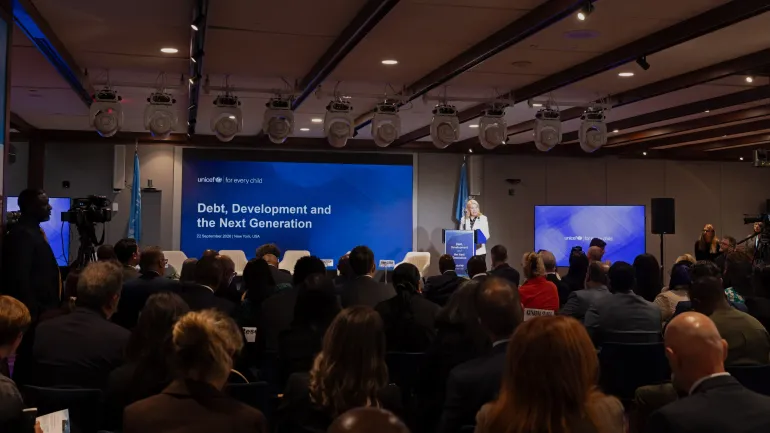
NEW YORK, 22 September 2026 - “Excellencies … President Ruto … Prime Minister Mottley … Ministers … distinguished partners and colleagues …
“Huge welcome to UNICEF House and thank you for joining us for this incredibly important discussion on debt, development, and the next generation.
“We have brought together today in this room governments, international financial institutions, creditors, researchers, and development partners because resolving the debt crisis and protecting children’s development are not competing priorities.
“They are inseparable.
“Today, more than one billion children are growing up in low- and lower-middle-income countries where rising public debt is constraining investment in health, education, nutrition, and social protection.
“In some cases, external debt service has doubled as a share of government revenues since 2010, from around 4 per cent to over 10 per cent.
“And in 2024, countries in or at high risk of debt distress saw more than $30 billion flow out to external creditors — paying more in debt service than they received in new financing.
“Behind these numbers are choices that affect children every single day.
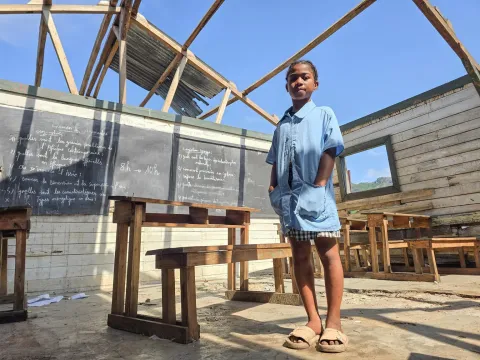
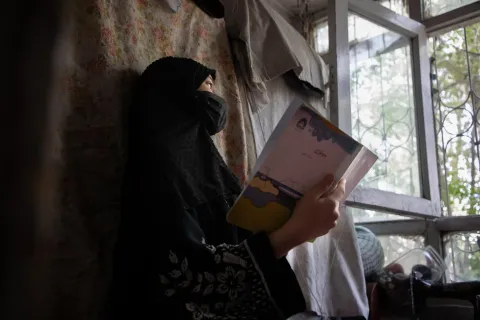
“Whether a clinic has medicines … whether a teacher remains in the classroom … whether a child receives the nutrition she needs to grow … whether a family has somewhere to turn when crisis strikes.
“In 34 countries, governments are now spending more on interest payments than on health. These countries are home to 1.1 billion children. And they account for an estimated 3.2 million deaths of children under the age of five, 97 million children in these countries are affected by stunting.
“This tells us something important: that children with the greatest needs are increasingly concentrated in countries carrying some of the heaviest debt burdens.
“This is more than a financing crisis. It is a generational crisis.
"And the consequences are not always immediately visible.
“As debt service consumes a growing share of public revenue, governments may preserve salaries while cutting medicines, school supplies, maintenance, or infrastructure. This means delivering less for children.
“And this brings us to a fundamental problem with the way the debt system operates. Debt can be rescheduled. Childhood cannot be rescheduled.
“A vaccination missed at a critical age cannot simply be administered to a child years later with the same effect.
“The consequences of inadequate nutrition during early childhood can last an entire lifetime.
“And a year of education lost is not automatically restored when fiscal conditions improve.
“For a creditor, three years can be spent negotiating restructured debt. For a child, those same three years can encompass an irreplaceable stage of development. This means that the speed of debt resolution is itself a development issue.
“Forty years ago, UNICEF helped change the global debate through a landmark publication called Adjustment with a Human Face.
“At a time when austerity dominated economic policy, UNICEF made a simple argument: we must not sacrifice human outcomes in the short term to achieve economic objectives in the long term.
“That principle matters just as much today. But we must go further. We must challenge the false choice between investing in children and restoring debt sustainability. Investing in children is part of debt sustainability.
“Health, education, and nutrition are not simply expenditures to be protected when fiscal space permits. They build human capacity on which future growth — and future public revenues — depend.
“Cut those investments today, and the consequences follow: a less healthy and educated workforce, lower productivity, slower growth, and a weaker revenue base.
“In other words, adjustment intended to restore a country’s capacity to service its debt can ultimately undermine that very capacity if it comes at the expense of children.
“But change is possible. During the pandemic, the Debt Service Suspension Initiative showed that bilateral creditors can move quickly when there is political will.
“And Zambia has shown what can be achieved by easing debt pressure. Following its default, IMF programme agreement and debt restructuring, the country significantly expanded school enrolment, teacher recruitment, and classroom construction. Fiscal space became opportunity for children.
“The question is how we build on these lessons in a more complex debt environment, and ensure that children are visible in decisions about sustainability, adjustment, and restructuring.
“Today, I hope our discussion can move from diagnosis to action around three questions.
“First: How can debt relief be delivered quickly enough to matter for children while protecting essential services as adjustment takes place?
“Second: How can we reform the international debt architecture so that debt sustainability assessments better recognize the long-term returns from investing in children?
“Third: How can we strengthen governments’ capacity to manage debt, mobilize domestic revenue, and protect investment in children including by assessing the impact on children before major fiscal decisions are taken?
“Excellencies …
“How we answer these questions will determine much more than the outcome of the current debt crisis. It will help determine the health, education, productivity, and prosperity of the generation that follows us.
“Because addressing debt and investing in children are not competing priorities.
"They are investments in the same future. And children cannot wait or us to get this right.
"Thank you all very much.
Media contacts
About UNICEF
UNICEF, the United Nations agency for children, works to protect the rights of every child, everywhere, especially the most disadvantaged children and in the toughest places to reach. Across more than 190 countries and territories, we do whatever it takes to help children survive, thrive, and fulfil their potential.
Follow UNICEF on X, Facebook, Instagram and YouTube