Global leaders unite to accelerate cervical cancer elimination efforts
New commitments at Bali Forum drive momentum to save hundreds of thousands of girls and women from cancer
BALI, Indonesia, 19 June 2025 – Governments, donors, multilateral institutions, the private sector and partners today announced significant policy, programmatic, and financial commitments to eliminate one of the most preventable cancers.
At the 2nd Global Cervical Cancer Elimination Forum, hosted in Bali, Indonesia, on 17-19 June, leaders announced a wave of new investments and policy pledges to expand access to HPV vaccination, screening and treatment – bringing the world closer to making cervical cancer the first cancer to ever be eliminated.
The forum is attended by more than 300 participants, among them are high-level delegates, such as Ministers of Health from Fiji, Indonesia, Kiribati, Papua New Guinea, Rwanda, Timor-Leste, and Vanuatu, as well as Vice Ministers from Costa Rica, Paraguay, and South Africa, demonstrating strong political commitment from countries across regions.
The Global Strategy for the Elimination of Cervical Cancer sets clear targets for 2030: 90 per cent of girls fully vaccinated with the HPV vaccine by age 15; 70 per cent of women screened with a high-performance test by age 35 and again at 45; and 90 per cent of women identified with cervical disease receiving appropriate treatment. Progress across all three pillars is essential to achieve and sustain elimination.
“In 2018, WHO issued a global call for action to eliminate cervical cancer on the world to act, and the commitments made here in Indonesia show that call is being answered,” said Dr Tedros Adhanom Ghebreyesus, WHO Director-General. “But we must go further and faster. Every girl who remains unvaccinated and every woman who lacks access to screening or treatment is a reminder that equity must be at the heart of our elimination strategy. Together, we can consign cervical cancer to the history books.”
Despite being preventable, cervical cancer still claims the life of a woman every two minutes – 94 per cent of them in low- and middle-income countries (LMICs). Less than five per cent of women in many LMICs receive cervical cancer screening due to health system limitations, cost barriers and logistical challenges.
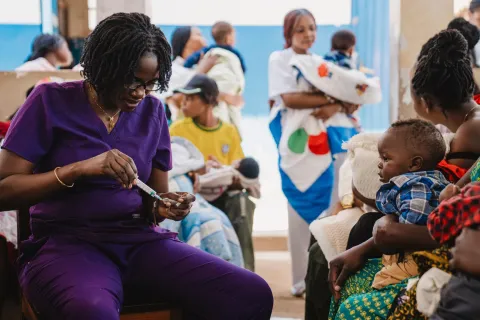
Vaccination against human papillomavirus (HPV) – the leading cause of cervical cancer – can prevent the vast majority of cases, averting 17.4 deaths for every 1000 girls vaccinated. Combined with screening and treatment—including for precancerous lesions and invasive cancer— it provides a path to elimination. However, as of 2024, only 46 per cent of low-income countries have introduced HPV vaccination nationally, compared to 98 per cent of high-income nations.
The Bali forum builds on momentum from Cartagena, Colombia, where nearly US$600 million was committed last year to scale up efforts. One hundred and ninety-four countries have adopted WHO’s global strategy to eliminate cervical cancer, and 75 countries globally have adopted the single-dose HPV vaccine, which expands access to the vaccine to even more girls and saves costs. Vaccination coverage is also improving: in Africa, first dose coverage rose from 28 per cent in 2022 to 40 per cent in 2023 – making it the region with the second-highest rate globally and empowering millions of girls to protect their health and realize their potential. There is increased vaccine supply thanks to market shaping efforts by Gavi, the Vaccine Alliance, and updated recommendations are helping to make cervical cancer screening and treatment more affordable.
The Ministry of Health of the Republic of Indonesia continues to accelerate the national HPV vaccination programme to reduce mortality rates from cervical cancer. Minister of Health Budi Gunadi Sadikin emphasized the urgency of this initiative, as cervical cancer remains one of the leading causes of death among women in Indonesia.
To address this issue, the Ministry of Health is not only expanding free HPV vaccination coverage for school-age girls but also strengthening early detection programmes for cervical cancer through DNA HPV test and co-testing with IVA (Visual Inspection with Acetic Acid) at health-care facilities. Additionally, the ministry is collaborating with various stakeholders, including local governments and community organizations, to enhance public education and awareness about the importance of early prevention.
“We cannot rely solely on treatment. Prevention is far more important. Therefore, in addition to HPV vaccination, we strongly encourage regular screening so that cancer can be detected at an early stage before it progresses,” said Minister of Health Budi Gunadi Sadikin.
Early detection significantly increases the chances of recovery and reduces treatment cost. For this reason, combining screening and vaccination is essential for effectively preventing and tackling cervical cancer.
Alongside gains in vaccination, countries are also reporting progress in expanding access to cervical cancer screening and treatment, aligned with WHO recommendations. Innovations such as self-sampling are improving reach and feasibility, especially in low-resource settings. Many countries are scaling up national screening programmes and investing in treatment services to ensure that women who test positive receive timely and appropriate care.
This growing global push, driven by renewed commitments from governments and partners at the forum, shows that it is possible to reverse the tide and prevent annual deaths from rising to over 410,000 by 2030, as currently estimated.
To sustain and accelerate this momentum, donors committed to a future free from cervical cancer are strongly urged to fully fund Gavi, which aims to vaccinate an additional 120 million girls between 2026-2030, saving 1.5 million lives.
“At its heart, this movement is about justice. It’s about ensuring that every girl and every woman, regardless of where she lives or what she earns, has access to basic, lifesaving care,” said Dr Saia Ma’u Piukala, WHO Regional Director for the Western Pacific. “As we build these services, we are not just preventing cancer, we are strengthening the bond between women and the health system. We are breaking down barriers. We are dismantling stigma. We are advancing the broader agenda for women’s health. Let us act now—so that every woman, everywhere, can live a healthy, dignified life.”
Continued support is essential for the coordinated efforts of governments and global partners across the full elimination strategy to help bring the world closer to a time when no girl or woman dies from a disease that the world has the power to eliminate. Further, the forum calls on countries to set ambitious national targets, align with global commitments, and strengthen collective action toward a cervical cancer-free world by 2030 through the Bali Declaration to Reaffirm Commitment to Cervical Cancer Elimination.
#####
Notes to Editors:
A full list and description of commitments can be found here and will be updated throughout the forum.
Dr Alec Ekeroma, Director General of Ministry of Health, Government of Samoa
“We stand united with the international community and our partners, in our mission to eliminate cervical cancer—a preventable yet deadly disease affecting women across the globe. For Samoa, this is not just a health issue, but a matter of justice and dignity. Each year, we see new cases—mostly in advanced stages—affecting women in their mid-40s. This is unacceptable for a disease that is entirely preventable,” said Aiono Dr. Alec Ekeroma, Director General of Ministry of Health, Government of Samoa. “At the Commonwealth Heads of Governments meeting in Samoa last October, we proudly launched Samoa’s Comprehensive Cervical Cancer Screening Program, a national commitment to save lives through early detection, treatment, and vaccination.”
Dr Chris Elias, President, Global Development, Gates Foundation:
“Seventy-five countries have now adopted a single-dose HPV vaccine schedule – a major milestone in the global effort to eliminate cervical cancer. This progress means more girls are being protected, and we’re moving closer to a future where cervical cancer no longer threatens women’s lives.”
Dr Sania Nishtar, CEO, Gavi, the Vaccine Alliance:
“In just a few years, our Vaccine Alliance has helped deliver HPV vaccines to more girls than in the entire previous decade- proving that rapid, large-scale progress is possible,” said Dr Sania Nishtar, CEO of Gavi, the Vaccine Alliance. “With vaccine supply no longer a barrier, we now have a critical window to protect millions more. We need to ensure that Gavi is funded for the next five years to build on this hard-won momentum and protect an additional 1.5 million lives by 2030. We have a unique opportunity to stop one of the most preventable cancers from continuing to claim lives."
Catherine Russell, Executive Director, UNICEF:
“We stand on the brink of a historic victory: the elimination of cervical cancer. HPV vaccination is not just a medical breakthrough, it is a promise of protection and a healthier future for every girl. In 2024, UNICEF helped vaccinate over 20 million girls, connected thousands more to vital health services, and sparked a wave of awareness through peer educators and faith leaders. Now, with our global partners, we are determined to reach 100 million girls – proving what we can deliver when the world comes together for children.”
Marisol Touraine, Chair of the Executive Committee, Unitaid:
“It is extraordinary to have the tools to eliminate a cancer - and we must not waste that opportunity. This is about women’s health and women’s futures. With an additional US$50 million commitment over the next two years, Unitaid is collaborating with countries to deliver screening and treatment solutions that address local needs while informing global progress. With the right support and sustainable investment, we can ensure that no woman is left behind on the path to elimination.”
Juan Pablo Uribe, Global Director, Health, Nutrition and Population, World Bank; Director, GFF:
"Cervical cancer elimination is a key priority for the World Bank Group as part of its efforts to reach 1.5 billion people with quality, affordable health services by 2030. In response to the growing burden and demand from countries, we are intensifying our efforts to ensure that screening, treatment, and vaccination are prioritized in health benefit packages and integrated within health system strengthening efforts. Through collaboration with the Global Financing Facility (GFF), we aim to unlock more resources and make progress in countries facing the highest burden, thereby advancing our commitment to global health equity for women, children and adolescents.” – Juan Pablo Uribe, Global Director, Health, Nutrition and Population, World Bank; Director, GFF
Media contacts
About UNICEF
UNICEF, the United Nations agency for children, works to protect the rights of every child, everywhere, especially the most disadvantaged children and in the toughest places to reach. Across more than 190 countries and territories, we do whatever it takes to help children survive, thrive, and fulfil their potential.
Follow UNICEF on X, Facebook, Instagram and YouTube